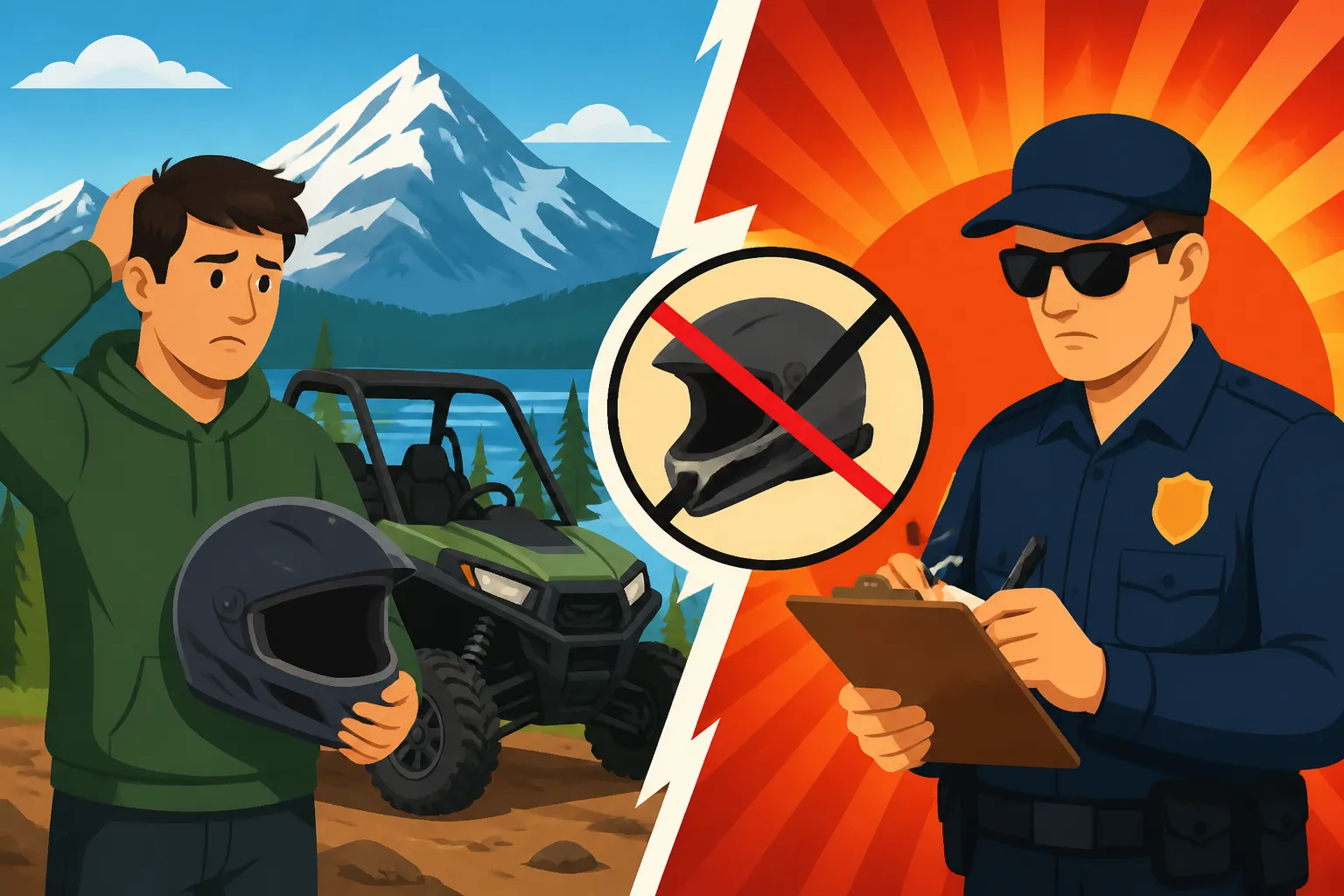
Why a Second Helmet Ticket Costs Up to $50
Riding ATVs and UTVs in Alaska is an incredible experience, offering unmatched access to our vast wilderness. But sometimes, the excitement can be overshadowed by the sudden reality of a citation, especially when it comes to something as important as helmet safety for our younger riders. Getting a ticket for a helmet violation can be frustrating, and a second one can feel downright punitive. This guide will walk you through Alaska's specific rules regarding helmet fines for minors, helping you understand why that second ticket can cost more and how to ensure your family stays safe and compliant on the trails.
Understanding Alaska's ATV Helmet Law for Young Riders
Let's be honest, nobody wants to get a ticket, especially when you're out enjoying the Alaskan outdoors. But the laws are there for a reason, primarily to keep everyone, particularly our most vulnerable riders, safe. Alaska has specific regulations concerning helmet use for younger operators and passengers, and understanding these is the first step to avoiding any penalties.
Who Needs to Wear a Helmet in Alaska?
The law in Alaska is pretty clear-cut when it comes to helmet requirements for young riders on ATVs and UTVs. If you or your passenger are under the age of 16, a helmet is not just a good idea; it's a legal requirement. This isn't just a suggestion; it's a mandate designed to protect children from serious injury in the event of a fall or collision. This applies whether they're operating the machine or simply riding along as a passenger. The law doesn't differentiate between the roles – if you're under 16 and on an APV, a helmet must be on your head.
Furthermore, it's not just any helmet. Alaska law specifies that the helmet must meet the safety standards set by the Consumer Product Safety Commission (CPSC). This means a regular bicycle helmet isn't going to cut it, nor is a novelty helmet designed for appearances rather than protection. These CPSC standards ensure that the helmet provides a minimum level of impact protection necessary for the kind of forces experienced in an ATV or UTV accident. Think of it as a crucial piece of safety gear, just as important as reliable brakes or a sturdy frame. We’ve explored this further in [What the CPSC Helmet Standard Actually Requires].
The Initial Sting: What to Expect for a First Offense
When a trooper pulls you over and discovers a minor not wearing a compliant helmet, the first reaction is often a sinking feeling. For a first offense related to Alaska's helmet law for riders under 16, the fine is typically set at $25. While $25 might not sound like a fortune, it's more than just a dollar amount. It's a reminder, often accompanied by a stern conversation from law enforcement, about the importance of safety.
Beyond the monetary fine, there's the inconvenience and stress of receiving a citation. It can put a real damper on what was supposed to be a fun day out on the trails. For many parents or guardians, this first ticket serves as a wake-up call, emphasizing the need to double-check helmet compliance before every ride. It’s a chance to re-evaluate your pre-ride routine and ensure that all young riders are properly geared up. In some cases, depending on the officer and the specific circumstances, a warning might be issued, but it's not something to rely on. The safest bet is always to be in full compliance. You can learn more about the rules in [Alaska ATV Helmet Law Age].
The Escalation: Why a Second Ticket is More Costly
If a first offense is a warning, a second one signals a more serious lack of compliance, and Alaska's laws reflect this by increasing the penalty. It's a system designed to encourage consistent adherence to safety regulations, especially when it comes to protecting children.
The Jump in Fine Amount for Subsequent Violations
Here’s where it gets more serious: if you receive a second citation for an underage rider not wearing a CPSC-compliant helmet, the fine escalates. While a first offense is typically $25, a second offense within a certain timeframe (often within a year, but check current regulations for specifics) can jump up to $50. This isn't just double the amount; it signifies that the state is taking a tougher stance on repeat violations. The increased fine serves as a stronger deterrent, pushing guardians and riders alike to take the helmet law more seriously.
This increase isn't arbitrary. It reflects the legislative intent to ensure consistent safety practices. The idea is that once you’ve been warned and cited for a first offense, there’s no excuse for a second. It means you’ve had the opportunity to correct the behavior and understand the rules, and failure to do so results in a higher penalty. The goal is not just to collect fines but to foster a culture of safety among all riders, particularly those responsible for minors.
Here's a quick look at the typical fine structure:
| Offense | Typical Fine Amount |
|---|---|
| First Offense | Up to $25 |
| Second Offense | Up to $50 |
Note: These amounts are illustrative and can vary. Always check current Alaska statutes for precise figures.
Beyond the Fine: Potential Secondary Consequences
While the increased fine for a second helmet ticket is certainly a concern, the repercussions can extend beyond just the dollar amount. Depending on where and how the ticket is issued, you might also face court costs, administrative fees, or other surcharges that can push the total cost well beyond the $50 mark. This means that a seemingly small infraction can quickly become a significant financial burden.
More importantly, repeated violations can draw increased scrutiny from law enforcement. Troopers and local authorities are often focused on public safety, and repeated instances of non-compliance, especially involving minors, can lead to more frequent stops or additional checks on your riding practices. While a single warning might sometimes be issued, as mentioned in [When a Trooper Gives a Warning Instead of a Ticket], consistent disregard for the law is unlikely to be met with leniency.
The most significant "consequence," however, isn't legal or financial; it's the increased risk to the young rider. Helmets are incredibly effective at preventing severe head injuries, which can have lifelong impacts. The true cost of not wearing a helmet isn't a fine; it's the potential for a preventable tragedy. Ensuring a proper, CPSC-approved helmet is worn by anyone under 16 is an investment in their safety and well-being.
Navigating Alaska's Helmet Requirements and Avoiding Future Tickets
Nobody wants to deal with citations, especially when they involve the safety of young riders. The key to avoiding repeat offenses and staying safe on Alaska's trails is a combination of understanding the rules, choosing the right gear, and adopting proactive safety habits.
Choosing the Right Helmet: CPSC Standards and Fit
The phrase "CPSC-compliant" might sound technical, but it's crucial. CPSC certification means the helmet has met rigorous safety standards for impact absorption and structural integrity. When you're shopping for an ATV or UTV helmet for a child (or anyone, for that matter), always look for this label. It's your assurance that the helmet offers a baseline of protection. Brands like SuperATV, while perhaps better known for accessories and parts, often stock or recommend helmets that meet these crucial safety specifications, or at the very least, you can find CPSC-certified helmets that are compatible with their aftermarket gear.
Beyond certification, fit is paramount. A helmet that's too big can shift around during a ride, obstructing vision and offering inadequate protection in a crash. One that's too small will be uncomfortable and might not cover critical areas of the head. When trying on a helmet:
- Snug Fit: It should feel snug all around the head, without excessive pressure points.
- No Movement: When you shake your head, the helmet shouldn't move independently.
- Eye Level: The front edge should sit just above the eyebrows, protecting the forehead without impeding vision.
- Chin Strap: The chin strap should be securely fastened, but not uncomfortably tight, preventing the helmet from coming off.
Remember, a helmet is only effective if it's worn correctly and fits properly. It's not just about having a helmet; it's about having the right helmet.
Proactive Steps for Compliance and Safety
To completely avoid those escalating fines and ensure maximum safety, a proactive approach is best. Here are some steps you can take:
- Always Double-Check Before You Ride: Make it a non-negotiable rule. Before anyone under 16 gets on an ATV or UTV, confirm their helmet is on, properly fastened, and CPSC-compliant.
- Keep Proof of Purchase: If you ever receive a citation and need to demonstrate in court that the helmet meets standards or that you've purchased one to comply, having a receipt or documentation can be helpful, as detailed in [What Proof of a Helmet Purchase the Court Wants].
- Invest in Safety Education: Consider enrolling yourself and any young riders in an ATV safety course. These courses, like those discussed in [Alaska Safety Course Options], provide invaluable training on safe riding techniques, equipment checks, and understanding local laws. They go beyond just helmets, covering overall machine operation and trail etiquette. Many organizations offer [Alaska Voluntary Safety Courses] that can significantly reduce accident risks.
- Regular Gear Inspections: Helmets don't last forever. Inspect them regularly for cracks, dents, or frayed straps, especially if they've been involved in an impact. If you notice any damage, it's time for a replacement. Even without an impact, helmet materials can degrade over time, so check the manufacturer's recommended replacement schedule.
- Educate Young Riders: Explain why helmets are important, not just that they're required. When kids understand the reasoning behind safety rules, they're more likely to embrace them. Many product lines, including those from companies like SuperATV, emphasize safety and durability in their designs, promoting a general awareness of secure riding practices.
Broader Context: Where and When Alaska's Helmet Laws Apply
Understanding the specifics of the helmet law is one thing, but knowing where and when it applies is equally crucial for any Alaskan ATV or UTV rider. Alaska's vast landscapes present diverse riding environments, each with its own set of rules.
Public vs. Private Land and Road Use
Alaska's helmet law for riders under 16 generally applies across the board when operating an APV, particularly on public lands and any roads where APV use is permitted. This means whether you're traversing state trails in the Mat-Su Valley, exploring designated public use areas, or riding on village streets where APVs are allowed, the law regarding helmets for minors holds true. [Alaska APV Road Rules Explained] details the specific conditions under which APVs can be ridden on public roads, and these rules often come hand-in-hand with helmet requirements for young riders.
It's important to remember that while some private land might feel like a free-for-all, the spirit of the law, which is to protect minors, often extends even there. While enforcement might be different, the risk of injury doesn't disappear just because you're on private property. Always prioritize safety, regardless of the legal nuances of land ownership. Certain communities and boroughs may also have specific local ordinances that further define or reinforce these rules, so it's always wise to check local regulations before heading out. For instance, [Alaska Municipal ATV Ordinances] can sometimes add layers to statewide laws.
Who Enforces the Rules: Troopers and Local Authorities
In Alaska, enforcement of ATV and UTV laws, including helmet regulations, primarily falls to the Alaska State Troopers, especially when you're riding on public lands and state trails. However, local police departments and other authorized agencies can also enforce these rules within their jurisdictions, such as on city or borough roads where APVs are allowed. [Trooper Patrols on Public Land] are a common sight in popular riding areas, and they are authorized to issue citations for violations.
While an officer might, at their discretion, issue a warning for a minor infraction, particularly for a first-time offense or if there are mitigating circumstances, this is by no means guaranteed. As discussed earlier, repeat offenses are far less likely to be met with a warning, leading directly to the higher fine. Their primary concern is public safety, and when a law designed to protect young riders is repeatedly broken, they are compelled to take a firmer stance.
Beyond just helmets, these authorities also check for other compliance issues. Ensuring your machine is properly registered, for example, is another common check, as is confirming your lights, brakes, and other equipment meet requirements. Reputable accessory providers like SuperATV offer a range of products that help ensure your machine is not only capable but also compliant with various safety and equipment regulations, from lights to winches, fostering a comprehensive approach to safe and responsible riding. Ultimately, knowing the rules and adhering to them is the best way to ensure a smooth, enjoyable, and ticket-free ride for everyone involved.
Disclaimer
This article is for general informational purposes only and does not constitute professional advice. Laws, prices and regulations vary by location and change over time. Consult a qualified professional for guidance on your specific situation.