Booking a Site at the Jim Creek Campground
A weekend at Jim Creek can unravel before you even unload the ATV: a campsite may be unavailable, a trailer may not fit comfortably, or the route you planned may cross ground with different access rules. This guide walks through how to plan a campground stay near the riding area, what to check before booking, and how to make camp work for your group and machines.
Plan the Jim Creek campground stay before you travel
Confirm how reservations work
Start with the Mat-Su Borough’s official information for Jim Creek Campground. Check whether the dates you want are reservable, what the booking process requires, and whether any sites are held for walk-in use. Do not assume that a campground has open spots simply because you can reach the recreation area; a busy summer weekend can bring more visitors than there are convenient places to camp.
When booking is available, read the site details rather than relying on the campground name alone. Check the permitted number of vehicles, the space available for a trailer, and any rules about tents, generators, fires, or extra equipment. A reservation is only useful if the site fits the way your group travels. If the online description leaves something important unclear, contact the borough before paying or setting out.
It also helps to save your confirmation where you can access it without cell service. Keep a copy on your phone and, if practical, another offline or printed copy with your trip documents. A screenshot of the confirmation and directions can save frustration if the connection drops on the drive toward Sullivan Road or once you are in the recreation area.
Choose dates with access and weather in mind
A campground reservation does not guarantee easy riding conditions. Rain can make routes muddy, high water can affect crossings, and conditions at the Knik River can change. Before you commit to a riding plan, look at the forecast, road conditions, and any notices from the land manager. If your group is traveling a long distance, build in flexibility rather than assuming every planned ride will be possible.
Think about what your party wants from the weekend. A family looking for a relaxed campout may prefer a quieter arrival and shorter rides. A group hoping to explore more of the area may want an early start, room to unload machines, and time to check access conditions before riding. For an overview of local options, [Alaska ATV Trails: Where to Ride] can help you compare Jim Creek with other areas around the state.
The busiest dates often take more planning, especially when people are traveling with a large trailer or a group of machines. If your preferred weekend is unavailable, consider shifting the trip by a day or choosing a different riding area rather than arriving without a workable backup. [Alaska Riding Near Anchorage] offers useful context for considering other nearby outings if Jim Creek does not fit your dates.
Understand stay limits before you reserve
Read the campground’s current stay rules before choosing a string of nights. Jim Creek has limits that can affect how long you stay and how soon you may return after leaving. The details matter if your plan is to camp, head home briefly, and come back for another stretch. Check [The 72-Hour Gap Between Stays at Jim Creek] for the specific issue of the gap between stays, and confirm the campground’s current terms before making plans around it.
A stay limit can also affect a group traveling in separate vehicles. Avoid assuming that changing campsites, switching the name on a reservation, or having one vehicle leave resets the clock. Follow the rule as written and ask the borough how it applies if your itinerary is unusual. A quick clarification beforehand is easier than trying to sort out a booking problem after you arrive.
Keep the arrival and departure window in mind, too. The stated schedule is [Check-In at Three, Out at Eleven]. Plan your drive, unloading, and departure around those times rather than treating the campsite as an all-day staging area. If your group wants to ride before setting up camp or after packing up, make sure that plan works with the campground rules and your access to the riding area.
| Planning item | What to check before booking | Why it matters |
|---|---|---|
| Reservation status | Whether your dates are reservable or walk-in | Avoids arriving without a campsite plan |
| Site dimensions and vehicle allowance | Space for your party, tow vehicle, and trailer | Helps prevent a difficult setup or parking problem |
| Stay limits | Maximum stay and any required gap before returning | Keeps a multi-day itinerary within the rules |
| Arrival and departure hours | Check-in and checkout times | Lets you plan unloading and riding realistically |
| Current campground notices | Closures, maintenance, or rule changes | Prevents surprises after you arrive |
| Riding access | Land status, route conditions, and permissions | A campsite booking does not grant access everywhere |
Pick a site that works for your people and machines
Check the site layout against your trailer
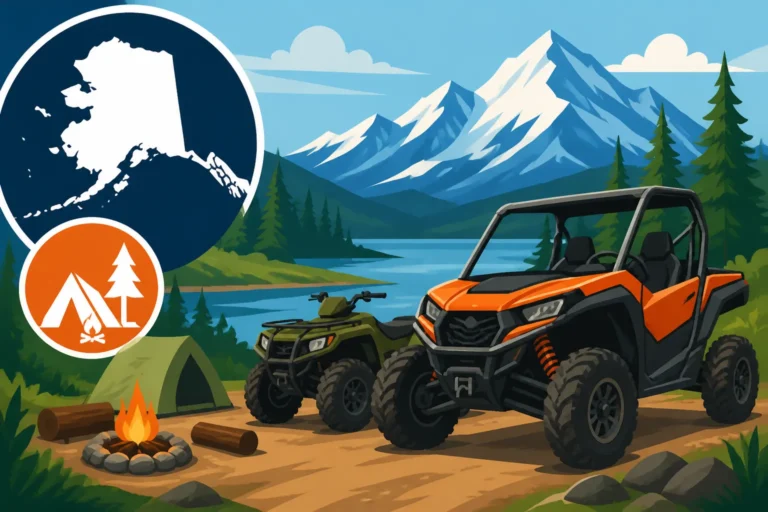
Jim Creek is a small campground, with [Alaska's 26-Site Campground at Jim Creek] offering a useful starting point for understanding the scale of the facility. A limited number of sites means it is worth checking the layout carefully, especially if you are bringing a wide trailer, a side-by-side, or more than one machine. Do not assume there will be room to maneuver just because your vehicle can reach the campground entrance.
Before booking, think through the full setup: tow vehicle, trailer, machines, tent or other sleeping arrangement, and the walking space your group needs. A site that works for a compact vehicle and one tent may feel cramped when a family arrives with a long trailer and several pieces of gear. If site dimensions are not clear, ask the campground operator rather than estimating from a generic map.
It is also sensible to plan where you will unload before you arrive. Avoid blocking the campground road while you sort out straps or rearrange cargo. Have tie-downs, ramps, helmets, and essential riding gear easy to reach. A few minutes of preparation at home can make arrival smoother for your group and for other campers trying to get to their sites.
Consider your group’s needs, not just availability
A site that looks fine on a booking screen may not be the best fit for your group. Families with children may want a layout that makes it easy to keep an eye on everyone. A group of adults may need more room to stage helmets, rain gear, tools, and food. If anyone in your party has mobility needs, ask about walking surfaces, parking, and the distance between the site and campground facilities.
Be realistic about sound and quiet time. ATV and UTV trips can involve early starts, gear checks, and the occasional machine that needs attention. Keep conversations and equipment noise considerate, especially around neighboring campsites. Leave room for other visitors to get in and out, and do not treat the campground as a private work area just because your group has booked a site.
If your group includes riders with different experience levels, agree on a simple plan before the first ride. Decide who will lead, where you will regroup, and what everyone should do if the group gets separated. This is especially useful when a confident rider wants to cover more ground than a beginner or a young rider is comfortable exploring.
Separate the campground from the riding area
Camping at Jim Creek puts you near a popular riding area, but it does not mean every nearby route is open to every vehicle or every rider. Treat the campsite as your base, then verify the access rules for the ground you intend to ride. Boundaries, closures, private inholdings, and changing conditions can affect where you can travel.
Use a map to plan, but do not treat a map app as permission to ride. onX Offroad can help you orient yourself, review routes, and notice land-ownership boundaries, but confirm important access questions with the relevant land manager. A line that appears connected on a screen may not be an authorized trail, and a route shown in an app may not reflect a temporary closure.
The area’s main access point is associated with [Jim Creek's Trailhead on Sullivan Road in Alaska]. Before you go, confirm your route from the road to the campground and understand where the campground, staging areas, and riding routes differ. A campsite reservation covers your stay at the campground; it is not a substitute for checking trail access, land permissions, or vehicle requirements.
Get to camp with a practical arrival plan
Prepare for the drive to Sullivan Road
Check your route before leaving, including the condition of the roads you will use and the space needed to turn with a trailer. A navigation app may suggest a route that is awkward for a long vehicle or may not reflect current road work. If you are coming from Anchorage, the Mat-Su Valley, or another part of the road system, allow extra time for traffic, fuel, and stops.
Make sure your load is secure before driving. Check that machines are tied down, loose gear is contained, and nothing can shift into a ramp or strap. Carry the tools you need to deal with a loose tie-down or a minor trailer problem. It is much easier to correct a load issue in a safe pullout than after reaching a crowded campground entrance.
Keep basic trip information together: reservation details, directions, contact information for your group, and any relevant permits or registration paperwork. Cell service can be inconsistent once you are away from major roads. Save maps for offline use, and let someone who is not on the ride know your general plans and when you expect to check in.
Arrive without creating a bottleneck
If the campground has a set check-in time, time your drive so you can enter and set up within the permitted window. Avoid arriving far ahead of your booking and expecting to occupy a site early. If you reach the area before check-in, use only a lawful, designated place to wait or ride, and do not block the campground entrance or another visitor’s access.
When you pull in, identify your assigned site and park carefully before unloading. Keep the campground road clear, watch for children and pedestrians, and avoid running a machine around the campground as a shortcut. The campground is a shared space, not an extension of the trail. Respect the posted speed rule, including [5 mph Past Tents], and follow any signs at the entrance or within the facility.
If you arrive and find a problem—such as a site that is occupied, a vehicle that cannot fit, or a mismatch between your confirmation and the site—pause before setting up somewhere else. Contact the campground operator or follow the directions on your booking confirmation. Taking an unassigned site can create a second problem for the next arriving camper and make it harder to resolve the original issue.
Make a weather and delay backup plan
Alaska travel can take longer than expected, especially when a trailer is involved. Decide in advance what your group will do if a vehicle breaks down, the road is delayed, or you arrive after the expected time. Keep enough fuel and basic supplies for the drive and avoid making your whole plan depend on a single tight arrival window.
Rain and changing ground conditions deserve particular attention around a riding area. A route that was manageable earlier may become muddy or difficult, and water levels can shift. Before committing to a crossing, assess it from a safe location. If the water, current, depth, or exit route makes you unsure, turn around rather than risking a machine or a rider.
Give your group a clear fallback location and time to regroup. If riders are using separate machines, agree on what to do when someone has to stop or turn back. A simple plan—stay together, stop at agreed points, and do not leave a rider alone—can prevent a small delay from becoming a stressful search.
Make camp comfortable and keep the campground safe
Pack for camp rather than only for the ride
It is easy to pack every tool for the machines and forget the things that make a wet or chilly night manageable. Bring clothing layers, rain gear, warm sleeping equipment, food, drinking water, and lighting for moving around camp after dark. Conditions can feel different once you are no longer moving on a machine, so do not rely on riding clothes alone for warmth.
Store food and waste responsibly. Keep your cooking area tidy, secure food according to local guidance, and pack out what you bring in. Leave the site clean when you depart, including small items such as zip ties, food wrappers, and broken bits of gear. A campsite should not become a repair shop’s discard pile just because the group has been riding all day.
Bring a small repair kit, but set expectations about where repairs happen. Minor adjustments may be manageable at your site if they do not create noise or spill fluids. Larger repairs, extended engine work, or washing a machine should be handled only where permitted. Check the campground’s rules before using generators, washing equipment, or doing work that could bother other visitors.
Keep machines and riders ready
Before unloading, inspect the machines for loose parts, tire issues, leaks, or damage from the trip. Confirm that brakes, lights, throttle controls, and other safety equipment work as intended. Wear a helmet and appropriate protective gear, even for a short ride from camp to a staging area. A quick pre-ride check is far less inconvenient than discovering a problem on a remote route.
Carry the items your route calls for, not just the gear you use on familiar local trails. Depending on the plan, that may include navigation, extra layers, first aid supplies, food, water, and a way to contact help outside ordinary cell coverage. onX Offroad can be part of your navigation setup, but download needed information before leaving reliable service and carry a backup way to orient yourself.
Riders should also understand the limits of their machines and their own experience. A side-by-side with passengers and cargo behaves differently from a lightly loaded quad, and a new rider may not be comfortable with the same terrain as an experienced one. Choose routes that match the least experienced person in the group, and agree that anyone can call for a turnaround without being pressured to continue.
Be a good neighbor at the campground
Noise travels easily in a campground, especially when people are close together. Keep voices and music low, follow quiet-hour rules, and avoid unnecessary engine starts. If you need to warm up a machine or load gear early, do it with consideration for nearby campers. The first sound of the morning should not have to be a revving engine outside someone else’s tent.
Keep children and pets supervised around vehicles, trailers, and campground roads. Secure machines when they are parked and keep keys away from young riders. Do not let a child sit on or start a machine without an adult’s close supervision. A campground may feel informal, but it still has moving vehicles and people walking through the same space.
Respect the site boundaries and shared facilities. Do not spread equipment into a neighboring site, leave a trailer across a common route, or assume an empty-looking area is yours to use. If you need extra room, ask the campground operator what is allowed rather than negotiating space with another camper after you have already unloaded.
Plan the rides around the campground stay
Verify land access and route conditions
Before riding, identify who manages the ground you plan to cross and what rules apply there. The Jim Creek area includes public recreation lands, but access can vary by parcel, route, season, and land manager. A trail map is a planning tool, not proof that every route is open. Check current notices and follow posted closures.
onX Offroad can help your group compare route options and understand where land boundaries may matter. Use it alongside official information, not as a replacement for it. If an access question is unclear, ask the relevant land manager before riding rather than relying on a trail line, a social media post, or a track recorded by another visitor.
Plan your route with a conservative turnaround point. In the Knik River area, braided channels, soft ground, weather, and changing water can make a route more demanding than it first appears. The [Alaska's Knik Glacier Trail] can be part of a longer outing, but do not treat a destination name as a promise that the full route will be safe or passable on the day you go.
Avoid letting a campsite booking drive risky decisions
A paid or reserved campsite can create pressure to “get the whole ride in,” especially when a group has traveled a long way. Try not to let that pressure influence decisions about water, mud, visibility, or rider fatigue. The safest choice may be a shorter loop or an early return to camp, even if that means leaving part of the plan for another trip.
Set a group pace and agree on where you will stop to reassess. A lead rider should not disappear over a rise while less experienced riders are still negotiating the previous section. If a rider is uncomfortable, stop in a safe place and talk through the options. Turning back is a sound trip decision, not a failed outing.
If conditions are poor, consider spending the day at camp or choosing another activity. You can enjoy a weekend without pushing a machine through uncertain terrain. A flexible itinerary makes the campground more valuable as a base: the group can rest, adjust plans, and ride when the conditions and everyone’s energy are right.
Leave camp ready for the next visitor
Before checkout, confirm the departure time and give yourself enough room to pack without rushing. Put away loose gear, secure the machines, and make sure the site is clean. Check under tents, around trailers, and near the cooking area for small items that are easy to overlook. Do not leave trash or broken equipment for the next camper.
Return the site to the condition required by the campground rules. If you notice a maintenance issue or damage, report it to the operator rather than leaving the next visitor to discover it. If your group had a particularly useful setup or learned that a certain trailer size is awkward at a particular site, make a note for next time.
When you leave, keep the campground speed limit and watch for pedestrians. Your last few minutes on site are still part of the stay, not a reason to rush. Once you are back on the road, confirm that your load is secure and that everyone knows the next stop or route home.
Disclaimer
This article is for general informational purposes only and does not constitute professional advice. Laws, prices and regulations vary by location and change over time. Consult a qualified professional for guidance on your specific situation.