Fuel Cached Along a Route
Alaska's vast and wild landscape calls to every ATV and UTV rider, promising unparalleled adventure and solitude. But anyone who’s planned an extended trip knows the gnawing anxiety of a dwindling fuel gauge when you're hundreds of miles from the nearest pump. The sheer distances and remote nature of many of our most incredible riding areas mean that simply carrying a few extra gallons on your machine might not be enough. This guide is dedicated to exploring the practice of caching fuel along your route, ensuring you can safely and legally extend your backcountry explorations without running on fumes.
Why Fuel Caching Becomes a Necessity in Alaska's Backcountry
Riding an ATV or UTV in Alaska isn't like tooling around a local trail system down south. Here, the scale is different, the distances are immense, and the convenience of a gas station every few dozen miles simply doesn't exist. This reality quickly turns fuel caching from a novel idea into a critical planning step for many serious riders.
The Vastness of Alaska's Trails and Limited Infrastructure
Imagine planning a multi-day trip deep into the Interior, perhaps along segments of the Denali Highway or a remote route toward a hunting camp. You're not just riding ten or twenty miles; you're often covering hundreds, pushing far beyond the limited range of a standard fuel tank. In places like these, infrastructure is sparse, to say the least. There are no convenience stores, no small-town gas pumps, and sometimes, no signs of human activity for a day's ride or more. This lack of reliable resupply points means that if you want to truly explore Alaska's immense backcountry, you have to become self-sufficient, and that often involves securing your own fuel sources along the way.
Consider a journey from Paxson west on the gravel portion of the Denali Highway. While there might be a few lodges or small communities that offer fuel, their availability can be seasonal, prices can be exorbitant, and their hours of operation unpredictable. Relying solely on these scattered options can severely restrict your itinerary or leave you stranded. For hunters, trappers, or cabin owners accessing remote properties, the ability to store fuel securely at a strategic point can be the difference between a successful trip and a long, cold walk home. It's about empowering yourself to tackle those longer, more ambitious routes that make Alaska riding so legendary.
Extending Your Range Beyond the Tank
Most modern ATVs and UTVs have fuel tanks ranging from four to eight gallons for ATVs, and eight to twelve gallons or more for UTVs. While that might seem like a lot, consider a machine averaging 15-20 miles per gallon. A full tank might get you 60 to 160 miles on an ATV, or 120 to 240 miles on a UTV. Now, factor in heavy loads, challenging terrain, slow speeds, or towing a sled, and those numbers drop dramatically. If your planned round trip is 200, 300, or even 400 miles, you'll quickly realize that a single tank, or even a couple of strapped-on jerry cans, won't cut it.
The alternative to caching is carrying all your extra fuel on the machine itself, which adds significant weight and can impact handling, suspension, and overall safety. Imagine strapping an extra ten or twenty gallons to your rack – that's 60 to 120 pounds of highly flammable liquid sloshing around, raising your center of gravity. Caching allows you to pre-position fuel, lightening your load for the initial leg of your journey and enabling you to pick up fresh supplies when you need them most, deep in the backcountry. This strategy is key for unlocking longer expeditions and ensuring you always have enough power to get back.
Legal and Ethical Considerations for Caching Fuel
While the practicality of caching fuel in Alaska is clear, it's not a free-for-all. Our state has vast tracts of public land, but it also has private holdings, Native Corporation lands, and federally protected areas, all with their own rules. Ignoring these can lead to fines, confiscation, or worse, permanently damaging the fragile environment we cherish.
Land Ownership and Permission
This is perhaps the most critical aspect of fuel caching. You simply cannot leave fuel on land you don't own or don't have explicit permission to use. Alaska's landscape is a patchwork of different land statuses: state lands, federal lands (managed by BLM, Forest Service, National Park Service, etc.), Alaska Native Corporation lands, village corporation lands, and private parcels. Each owner has the right to dictate what happens on their property. Leaving a fuel cache without permission is trespassing, and it can carry significant penalties.
Before you even think about stashing a fuel container, you absolutely must know who owns the land. Websites for the Alaska Department of Natural Resources (DNR) or tools like the Alaska Mapper can help you identify land ownership. For Native Corporation lands, you'll need to contact the specific corporation directly to inquire about their policies and obtain any necessary permits. For federal lands, check with the managing agency. Assume nothing. A quick call or email beforehand can save you a world of trouble and ensure you’re respecting the land and its owners. You might find that some areas have specific rules about leaving anything unattended, including fuel. Always remember, just because it's "the bush" doesn't mean it's unregulated. For more detailed information on navigating different land types, check out [Alaska Native Corporation Land Permissions] and [Alaska Village Corporation Land Rules].
Environmental Impact and Spill Prevention
Alaska's environment is incredibly sensitive, and a fuel spill, even a small one, can have devastating long-term consequences for local flora, fauna, and water sources. This is especially true for areas near streams, rivers, or wetlands, which are common along many riding routes. Therefore, preventing spills must be your absolute top priority when caching fuel.
This means using only approved, purpose-built fuel containers that are designed for transport and storage, not repurposed household containers. Ensure they are in excellent condition, with no cracks or faulty seals. When placing your cache, choose a stable, level spot away from water bodies and areas prone to flooding. Consider placing containers inside a larger, secondary spill-containment tub or heavy-duty plastic tote for an extra layer of protection, especially if leaving them for an extended period. Animals, particularly curious bears, can be attracted to the smell of fuel or might simply be destructive. Securing your cache against tampering by wildlife is crucial, not just for environmental protection but for your own safety when you return. Remember, leave the area better than you found it.
Fire Safety and Hazard Awareness
Fuel is, by its very nature, a highly flammable substance, and caching it in the wild presents a significant fire risk if not handled responsibly. This danger is amplified during dry summer months when [Alaska Fire Restrictions in a Dry Summer] might be in effect, making any accidental spark potentially catastrophic.
When selecting a cache location, prioritize areas that are naturally free of highly flammable materials like dry grass, deadfall, or dense brush. Avoid placing containers directly in the sun, as heat can build pressure within the container, potentially leading to leaks or a more volatile situation if opened. If possible, choose a shaded spot, perhaps under thick canopy or in a protected rock crevice, ensuring good ventilation. Keep in mind that natural events like lightning strikes or even accidental human activities in the area could ignite a poorly secured or improperly stored cache. Always think through the "worst-case scenario" and plan your caching strategy to minimize any potential fire hazard to both your property and the surrounding landscape.
Practical Strategies for Safe and Effective Fuel Caching
Once you understand the 'why' and the 'where' of fuel caching, it's time to dive into the 'how.' Proper technique ensures your fuel remains safe, accessible, and doesn't become a hazard to others or the environment.
Choosing the Right Containers and Equipment
The foundation of any successful fuel cache is the quality of your containers. This is not the place to cut corners with flimsy plastic jugs or old oil containers. You need robust, purpose-built fuel cans designed to withstand the rigors of the Alaskan environment. Look for containers made from durable, thick-walled plastic or metal, with secure, leak-proof caps and vent systems. Brands like SuperATV offer accessories and storage solutions that are often rugged and designed for demanding outdoor use, which could include compatible fuel storage options or mounting systems.
Consider the color of the containers; red is universally recognized for gasoline, yellow for diesel, and blue for kerosene. This clear labeling is not just for you but for anyone who might stumble upon your cache. Beyond the cans themselves, think about how you'll seal and protect them. Heavy-duty garbage bags or contractor-grade plastic sheeting can offer an additional layer of protection from moisture and curious critters. If you plan to leave them for months, investing in a hard plastic tote with a lockable lid can provide better security and containment. Remember that [Carrying Extra Fuel Safely] requires good containers, whether on your machine or in a cache.
Here's a comparison of common fuel container types:
| Container Type | Pros | Cons | Best Use for Caching |
|---|---|---|---|
| Standard Plastic Jug (e.g., Scepter) | Affordable, widely available, relatively light | Can crack in extreme cold, seals can fail, less UV resistant | Short-term, easily retrievable caches in milder conditions |
| Metal Jerry Can | Very durable, long lifespan, stackable | Heavy, can rust if scratched, requires proper venting | Long-term, secure caches where weight isn't a primary concern |
| Roto-Pax/Bladder | Extremely durable, modular, leak-proof | More expensive, can be bulky, unique mounting requirements | Long-term, high-security caches, easily strapped to machine |
| Plastic Tote (for containment) | Secondary containment, hides cans, deters small animals | Not fuel-rated itself, adds bulk, only for additional protection | Placing fuel cans inside for added security and camouflage |
Selecting Your Cache Location
Where you place your fuel cache is almost as important as how you pack it. The ideal location balances accessibility for you with obscurity from others and protection from the elements and wildlife. Don't pick a spot right next to a well-used trail where anyone can see it, but also don't bury it so deep in the brush that you can't find it again.
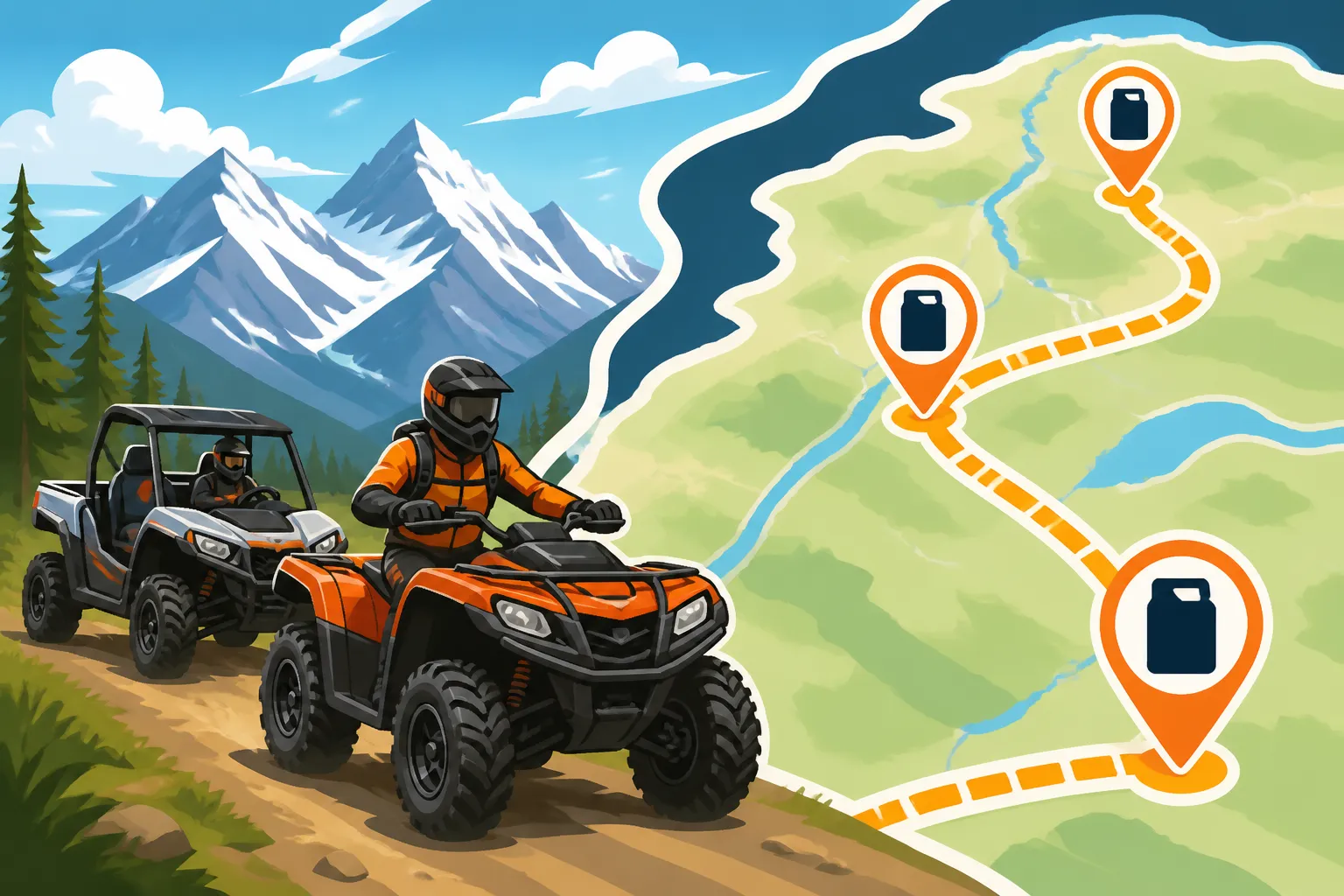
Think strategically: a sturdy, mature tree at a recognizable bend in the trail, a distinctive rock outcrop, or a dry, elevated area away from waterways. Record the GPS coordinates precisely – multiple times, if possible – and consider taking photos of the surrounding area. You might think you'll remember it, but after a long day of riding, or if snow has fallen, familiar landmarks can look entirely different. Obscuring your cache with natural materials like branches or rocks can help deter casual observers, but avoid making it look like a burial site, which might attract more attention. Choose a location where snow won't completely bury it or where runoff won't flood it. Consider how wildlife might interact with it; bears are famously curious and strong, so ensure your cache is secure and not easily accessed.
Retrieval and Post-Trip Responsibilities
The principle of "Leave No Trace" applies rigorously to fuel caching. It's not enough to simply use your fuel and ride off; you are responsible for retrieving every single item you cached, especially empty containers. Leaving empty fuel cans, even if they seem insignificant, is littering and detracts from the pristine beauty of Alaska's backcountry.
Plan your return trip to include a stop at your cache location to pick up all your containers and any other cached items. If your plans change, or if unforeseen circumstances prevent you from retrieving the cache immediately, make a specific plan to go back at a later date. This might mean a dedicated trip just for retrieval, or asking a trusted friend or fellow rider to pick it up for you. What if you arrive and find your cache disturbed, damaged, or gone? This is a risk with caching, which is why secure containers and discreet locations are vital. If the fuel is gone, you'll need to revert to your contingency plan, which could involve shortening your trip or relying on alternative fuel sources. This responsibility is part of the privilege of riding in Alaska's wilderness and contributes to upholding [Alaska Trail Etiquette Locals Expect].
Alternatives to Caching Fuel
While fuel caching is a valuable tool for extended backcountry trips, it's not the only solution, nor is it always the best one. Depending on your trip length, destination, and the nature of the terrain, other strategies might be more suitable or even safer.
Carrying Extra Fuel Directly on Your Machine
For many shorter to medium-range trips, simply carrying extra fuel directly on your ATV or UTV is the most straightforward option. This avoids the complexities of caching, land permissions, and retrieval. Modern machines and aftermarket accessories make this increasingly feasible and safe. You can purchase specialized fuel packs, like those from SuperATV, that are designed to mount securely to your racks or roll cage. These are often made from incredibly durable materials, have excellent sealing properties, and are shaped to integrate well with your machine's design, minimizing interference with handling.
The pros are obvious: your fuel is always with you, no need to worry about finding a cache or permission. The cons include the added weight, which can affect your machine's suspension and handling, especially on technical terrain. You also have the inherent fire risk of having more flammable liquid on board. Proper mounting is crucial; you don't want fuel cans rattling loose or interfering with your balance. Always ensure the containers are secured tightly, away from hot exhaust components, and that the weight is distributed evenly to maintain stability. Remember, while convenient, this method typically limits you to carrying maybe 5-10 extra gallons before the weight becomes unwieldy.
Planning for Fuel Stops and Turnaround Points
Sometimes, the simplest solution is the best: plan your route carefully to ensure you can reach known fuel points or turn around before your tank runs dry. This means meticulous route planning, accounting for mileage, fuel consumption based on terrain, and potential delays. Many backcountry routes in Alaska, even those that feel incredibly remote, might pass through or near small villages, lodges, or remote roadhouses that offer fuel, albeit at higher prices and with limited hours. Knowing your [Fuel Range Between Road Houses] can be a game-changer.
Utilize resources like detailed maps, GPS devices, and local knowledge to identify every potential fuel stop. Always call ahead if possible, especially for remote locations, to confirm fuel availability and operating hours. Build in a generous safety margin – never plan to run your tank completely dry before reaching the next stop. This conservative approach, coupled with carrying a [Choosing a Satellite Messenger for a Backcountry Ride], ensures that even if a planned fuel stop falls through, you have the means to call for assistance or assess your options safely. This strategy works well for trips along established corridors or those with shorter stretches between known services.
Riding with a Group and Sharing Resources
There's an old Alaskan saying: "Never travel alone." This wisdom extends to fuel management on ATV and UTV trips. Riding with a group offers a significant safety net and logistical advantages, including the ability to share resources like fuel. Instead of each rider needing to carry a full extra load, the burden can be distributed among multiple machines.
In a group setting, one or two machines might be designated as "fuel carriers," taking on the heavier load of extra gasoline, while others carry gear, food, or recovery equipment. This collaborative approach not only lightens the load for individual riders but also provides redundancy. If one machine develops a fuel leak or runs into unexpected consumption issues, there's a collective reserve to draw from. Before any group trip, it’s essential to have a thorough discussion about fuel plans, consumption rates, and who will carry what. This pooling of resources is a smart way to increase the overall range and safety of the entire group, especially on longer excursions into areas without easy access to fuel or services, such as exploring [Alaska State Land Riding Explained] or finding [Alaska Trails With Camping]. Many riders heading out for [Alaska Weekend Riding Itineraries] find this approach invaluable. And sometimes, one of your crew will know exactly where some [Alaska Riding Areas With Fuel Nearby] are.
Disclaimer
This article is for general informational purposes only and does not constitute professional advice. Laws, prices and regulations vary by location and change over time. Consult a qualified professional for guidance on your specific situation.