How an ATV Becomes Street Legal in Alaska
It can be incredibly frustrating to have a powerful all-terrain vehicle or side-by-side sitting in your garage, ready for action, only to realize that navigating public roads to get to the trails or even just to run an errand in town feels like walking a legal tightrope. Alaska's rules for riding ATVs and UTVs on public roads aren't always what riders from the Lower 48 might expect, and figuring out what it truly means to be "street legal" up here can feel like a maze. This comprehensive guide will cut through the confusion, explaining exactly what you need to know and do to legally operate your all-purpose vehicle (APV) on Alaska's roads where permitted, ensuring you understand the limitations and requirements.
Deciphering Alaska's APV Classification and Road Use Limitations
Let's be real, the dream of cruising down a paved road on your quad or side-by-side, heading straight to the grocery store or bypassing a muddy section of trail, is appealing. But in Alaska, the term "street legal" for an ATV or UTV isn't quite the same as it might be in some other states where you can pretty much license and insure your machine like a small car. Here, we operate under the "All-Purpose Vehicle" or APV classification, which comes with its own set of very specific rules, especially concerning road use.
First off, it’s important to understand that Alaska's state law generally restricts APVs from operating on public roads, streets, or highways. This isn't just a suggestion; it's the default. Your machine is primarily intended for off-road use. However, like many good rules, there are specific exceptions, and these exceptions are what allow for limited "street legal" use. These exceptions aren't about converting your machine into a car; they're about meeting specific conditions to allow you on certain roads under specific circumstances. It’s crucial to know that even when you meet these conditions, you won't be able to ride your APV on any road. Large highways, high-speed roads, and many urban areas remain off-limits. You can learn more about the specifics of this classification in [Registering an ATV Under Alaska's All-Purpose Vehicle Class].
Understanding What Constitutes an APV in Alaska
When we talk about an APV in Alaska, we're typically referring to machines with a dry weight of 1,200 pounds or less, a width of 50 inches or less, and three or more wheels. This definition primarily covers traditional ATVs and many smaller side-by-sides. However, the state statutes also allow for other vehicles to be classified as APVs if they meet specific criteria, like having a dry weight of 1,500 pounds or less and a width of 64 inches or less. This expanded definition helps include many modern side-by-sides (UTVs) that are becoming increasingly popular. The key here is that these machines are designed for off-highway travel, even if they might look beefy enough for the road.
The state explicitly excludes certain types of vehicles from being classified as APVs, regardless of their size or wheel count. For instance, snowmobiles (often called "snow machines" up here) are their own class and have different rules, particularly for winter road crossings or designated snow routes. Similarly, tracked vehicles, which you might see in more remote parts of the state, are generally not considered APVs for road use purposes, nor are homemade ATVs that haven't gone through proper safety certifications. Knowing your machine's exact classification is the first step toward understanding its road-use potential.
The Nuance of "Limited" Road Access
So, if APVs are generally restricted, where can you ride on a road? Alaska law carves out specific scenarios. You might be allowed to cross a highway, ride along a highway shoulder for a short distance (especially if it connects two legal riding areas), or use certain secondary roads with speed limits of 45 mph or less. These aren't blanket permissions; they are typically tied to getting from one place to another where off-road travel is permitted, or within specific communities that have chosen to allow APV road use. The emphasis is always on "limited" and "specific."
Think of it like this: your APV isn't getting a driver's license for unrestricted travel, it's getting a special pass to use certain sections of the sidewalk or crosswalk under very particular conditions. This means you need to be constantly aware of the road signs, speed limits, and local ordinances. For example, you might be able to ride on a village street in a rural community where APVs are a primary mode of transportation, but that same machine would be strictly forbidden on the streets of downtown Anchorage or Fairbanks. Understanding these boundaries is critical to avoiding fines and ensuring your safety.
Essential Equipment for Limited Road Use in Alaska
Once you understand the fundamental limitations of APV road use in Alaska, the next step is to ensure your machine is properly equipped to meet the requirements for those specific, limited road uses. It's not just about having a loud exhaust and bright lights; there are specific safety and visibility components mandated by state law when operating an APV on a public road or highway shoulder. Skipping these can land you a ticket, or worse, put you in a dangerous situation. These aren't typically factory-installed on off-road machines, so expect to make some aftermarket additions.
Many riders find themselves looking for reliable, durable parts that can stand up to Alaska's tough conditions while meeting legal requirements. Companies like SuperATV offer a wide range of accessories that can help you get your machine up to snuff, from turn signal kits to mirrors and horns. It's about making your off-road machine visible and communicative enough to interact safely with other traffic, even if only for a short distance.
Required Lighting and Reflectors
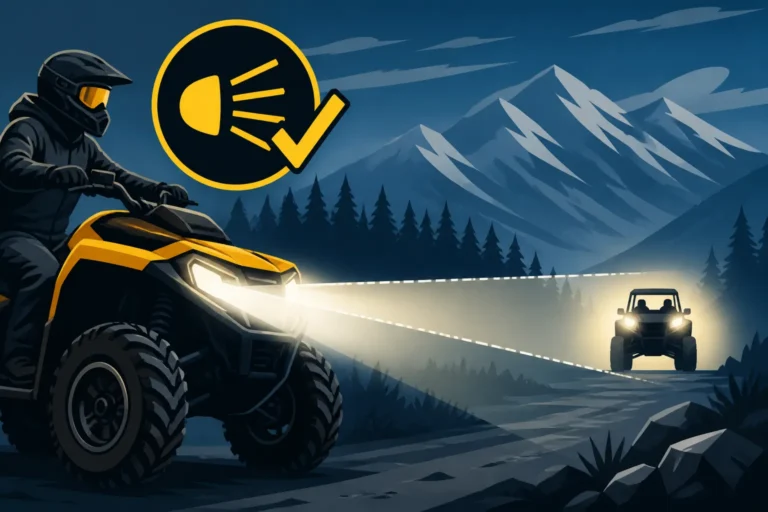
Visibility is paramount when you're sharing any stretch of road, no matter how brief, with other vehicles. Alaska state law mandates specific lighting requirements for APVs operating on public roads, especially after dark. Your machine must have at least one headlight that emits a white light visible from a distance of 100 feet. This isn't just for you to see the road; it's for oncoming traffic to see you. Just as important are taillights, which must emit a red light visible from at least 1,000 feet to the rear. This significantly increases your presence on the road for vehicles approaching from behind.
Beyond active lighting, reflectors are also a requirement. You'll need at least one red reflector on the rear of your machine, also visible from 1,000 feet. Many riders opt for additional reflective tape or decals on the sides to enhance their visibility further. It's not uncommon for factory-installed lighting on an ATV or UTV to be designed primarily for off-road use, meaning it might not meet the required brightness or visibility distances for road operation. This often means upgrading bulbs, adding auxiliary lights, or investing in a full road-legal lighting kit.
Safety and Communication Gear
Beyond lights, other safety and communication equipment are mandatory. Every APV being operated on a public road must have at least one mirror that provides a view of the highway for at least 200 feet to the rear. This is crucial for checking blind spots and monitoring traffic, just like in a car. Imagine merging onto a short shoulder stretch without knowing what's coming up behind you – it's a recipe for disaster. You'll also need a horn or other warning device capable of emitting sound audible from at least 200 feet. This is your way of alerting other drivers or pedestrians to your presence. Many aftermarket kits, including those you might find from a supplier like SuperATV, will include these essential components, often designed for easy installation.
Another critical, but often overlooked, piece of equipment is a muffler and emission control system. Your APV must be equipped with a muffler in good working order that prevents excessive noise and annoying smoke. Furthermore, it needs a spark arrester, which is a device designed to prevent the emission of flammable carbon particles. This is especially vital in Alaska's dry summer months, where wildfire risk is a constant concern. If your machine is modified with an aftermarket exhaust, ensure it still meets these noise and spark arrester requirements.
Table: Essential APV Road Use Equipment Checklist
To help you keep track, here's a quick checklist of the critical equipment your APV needs for limited road use in Alaska:
| Equipment Feature | State Requirement | Why It Matters | Common Aftermarket Solutions |
|---|---|---|---|
| Headlight | At least one white light, visible 100 ft. front | See and be seen by oncoming traffic | Brighter LED bulbs, auxiliary lights |
| Taillight | At least one red light, visible 1,000 ft. rear | Crucial for visibility to vehicles behind you | LED taillight upgrades, integrated light bars |
| Rear Reflector | At least one red reflector, visible 1,000 ft. rear | Passive visibility, especially if lights fail | Reflective tape, DOT-approved reflectors |
| Mirror | Provides 200 ft. view of highway to the rear | Essential for checking traffic, blind spots | Side mirrors, rearview mirrors (e.g., from SuperATV) |
| Horn/Warning Device | Audible from 200 ft. | Alerting other drivers, pedestrians | Electric horn kit, air horn |
| Muffler | In good working order, prevents excessive noise/smoke | Regulatory compliance, community respect | Stock replacement, quiet aftermarket exhaust |
| Spark Arrester | Prevents emission of flammable particles | Fire prevention, environmental safety | Integrated into muffler, separate add-on |
| Brakes | In good working order, capable of stopping machine | Fundamental safety, required by all vehicle laws | Regular maintenance, brake pad/rotor replacement |
| Tires | DOT-approved (if required by local ordinance/road type) | Grip and safety on varied road surfaces | Street-specific ATV/UTV tires |
| Mud Flaps | Behind rear tires (some jurisdictions/road types) | Prevents debris from hitting vehicles behind | Aftermarket mud flap kits, DIY solutions |
Driver Requirements for Riding an APV on Alaska Roads
It's not just the machine that needs to be ready for the road; the operator does too. Alaska has specific requirements for anyone who wants to operate an APV on the limited stretches of public road where it's allowed. These rules ensure that riders have the basic competencies and legal standing to share the road, even briefly, with cars and trucks. Don't assume that because you can ride your machine like a pro off-road, you're automatically cleared for asphalt.
Understanding these requirements is part of the broader picture of responsible APV use in Alaska. It’s about ensuring the safety of not just yourself, but also other drivers and pedestrians you might encounter. Ignoring these can lead to fines, citations, or even more serious consequences in the event of an accident.
Licensing and Age Restrictions
One of the most common questions is about driver's licenses. Yes, if you're going to operate your APV on a public road in Alaska, you need a valid Alaska Class D driver's license. This is the same license required to operate a standard passenger car. This requirement highlights that even for limited road use, the state treats your interaction with the road system seriously, expecting the same level of basic driving competence from an APV operator as from a car driver. If you're a visitor from out-of-state, your valid driver's license from your home state is generally accepted.
Beyond licensing, there are age considerations, especially for younger riders. While Alaska has specific rules for minors operating ATVs off-road, the moment an APV touches a public road, the rules typically align with standard vehicle operation. This means that to operate an APV on a public road, you generally must be old enough to hold a Class D driver's license. For specific scenarios involving younger riders and their parents, it's always best to check the latest regulations, especially if they involve crossing roads or specific community access. You can find more details on [Do You Need a License for an ATV in Alaska?].
Insurance Requirements
Another critical piece of the puzzle is insurance. Just like with a car, if you're operating an APV on a public road in Alaska, you are generally required to carry liability insurance. This insurance covers damages or injuries you might cause to others while operating your APV. Minimum liability coverage amounts are usually set by state law and are comparable to what's required for passenger vehicles. Don't skimp on this! An accident, even a minor one, can be incredibly costly without proper insurance.
While many off-road-only policies might not cover road use, some insurance providers offer specific endorsements or separate policies for APVs that cover limited road operation. It's crucial to check with your insurance agent to ensure your policy specifically covers the type of road use you plan to undertake. Carrying proof of insurance with you while riding is also a must, as a trooper can and will ask for it. This is not just a suggestion; it's a legal requirement designed to protect everyone on the road. For more information, see [Alaska ATV Insurance Requirements].
Safety Gear and Conduct
Even when you're legally allowed on the road, safety remains paramount. While helmets are not universally mandated for adult APV riders in Alaska, they are required for all riders and passengers under the age of 16. This applies whether they are riding off-road or on an allowed section of pavement. Always remember, a helmet is the best defense against serious head injury, regardless of age or experience level. It's always a good idea to wear one.
Beyond physical gear, your conduct on the road is equally important. APVs operated on public roads must obey all traffic laws, including speed limits, stop signs, yield signs, and signals. You must also operate your machine safely and responsibly, meaning no reckless driving, no impaired driving (Alaska's DUI laws apply to APVs on roads), and maintaining a safe distance from other vehicles. Remember, even in the limited scenarios where APVs are allowed on roads, they are still sharing that space with much larger, faster, and heavier vehicles. Defensive driving is key.
Navigating Local Ordinances: Where You Can and Can't Ride
Here’s where it gets truly granular and often frustrating: even if your APV is equipped correctly and you meet all the driver requirements, whether you can actually ride it on a particular road depends heavily on local ordinances. Alaska is a vast state with diverse communities, and what's permissible in a rural village might be strictly prohibited in a major borough. This patchwork of regulations means you can't just assume; you must check the local rules for every community you plan to ride in or through.
This local control is often what riders find most confusing, as a seemingly legal setup in one area can become illegal just by crossing a municipal boundary. It demands diligent research, but it's absolutely essential for avoiding citations and ensuring you're a respectful member of the community.
Communities That Allow Limited APV Road Use
Some communities in Alaska recognize the practical role APVs play in daily life, especially in areas with fewer paved roads or where they serve as essential transportation. These communities have often passed local ordinances that permit APV use on certain roads, typically those with lower speed limits (45 mph or less), or for specific purposes like accessing trails, connecting properties, or even for general transportation within the village. Examples often include rural villages or smaller towns where APV trails frequently intersect or parallel public roads.
It’s not uncommon for these ordinances to specify particular streets or districts where APVs are permitted, or to impose additional local requirements like speed restrictions or specific hours of operation. For instance, a village might allow APV travel on all unpaved roads and specific paved routes, while prohibiting them entirely from the main state highway that passes through. The key takeaway is to always look for posted signs, consult local government websites, or even call the local police department or borough office before you ride. [Which Alaska Towns Have Not Banned APVs?] is a good place to start your research.
Communities That Prohibit APV Road Use
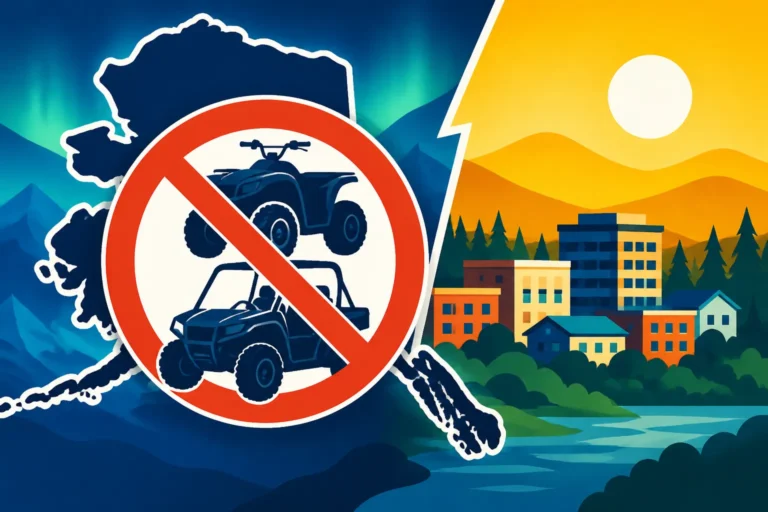
On the flip side, many urban and larger populated areas in Alaska have outright bans on APV road use. Cities like Anchorage, Fairbanks, and Juneau, for example, generally do not permit ATVs or UTVs on their streets, sidewalks, or public rights-of-way, except for specific, authorized events or emergency services. The rationale often stems from safety concerns due to high traffic volumes, higher speed limits, and the incompatibility of off-road vehicles with dense urban environments.
Attempting to ride your "street legal" APV in one of these prohibited zones, even for a short distance, will likely result in a citation. These communities often have clearly posted signs or widely publicized ordinances regarding APV restrictions. It's a common mistake for new residents or visitors to assume that because they've outfitted their machine with road-legal accessories, they can ride it anywhere. Always verify local rules before you venture out, especially if you're exploring a new area. [Alaska Bans APVs in Anchorage] and [Alaska Bans APVs in Fairbanks] cover some of these common restrictions.
Researching Local Ordinances
So, how do you find out these local rules? It takes a bit of legwork, but it's worth the effort.
- Check Municipal Websites: Most cities and boroughs in Alaska have their municipal codes and ordinances available online. Look for sections related to "all-purpose vehicles," "ATVs," "UTVs," or "off-highway vehicles."
- Contact Local Law Enforcement: A quick call to the local police department or Alaska State Troopers detachment in the area you plan to ride can often provide clear guidance. They are the ones who will be enforcing the rules, so their interpretation is important.
- Look for Posted Signs: Many communities or trail systems will have signs indicating where APV use is allowed or prohibited on roads.
- Ask Locals: If you're in a rural area, ask residents or local businesses. They often have firsthand knowledge of community customs and specific permissions.
Always aim for the most current information, as ordinances can change. When in doubt, it’s always safer to assume a road is off-limits until you confirm otherwise.
The Reality of "Street Legal" in Alaska: It's Not the Lower 48
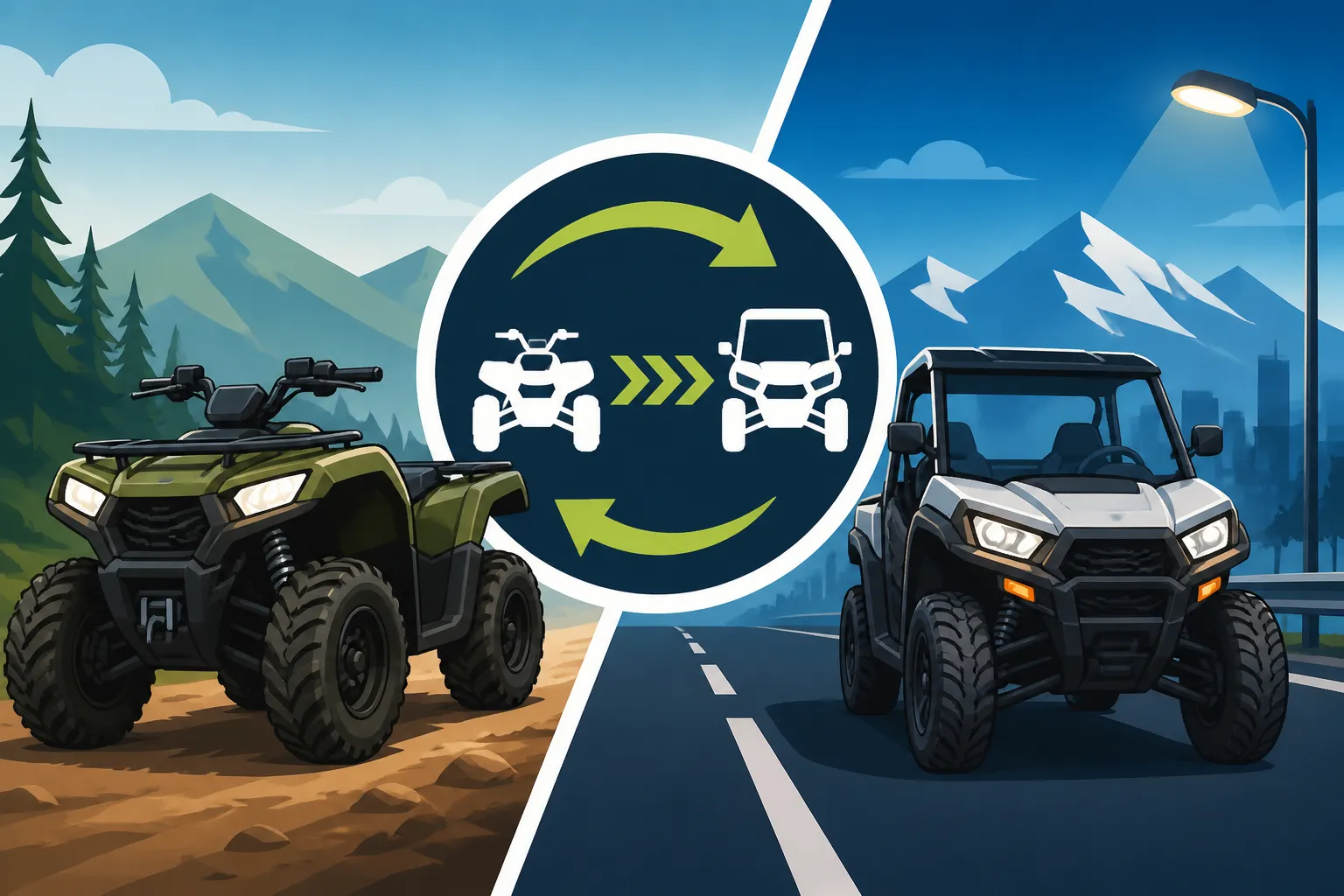
When people talk about making an ATV or UTV "street legal," they often picture a seamless transition from trail to pavement, driving their machine to work or across town just like a car. In many Lower 48 states, with enough modifications and proper registration, this can indeed be the reality. However, Alaska's approach to "street legal" for All-Purpose Vehicles is fundamentally different. It's not about achieving the same status as a passenger car; it's about qualifying for very specific, often geographically limited, exceptions to a general rule of restriction.
This distinction is crucial for setting realistic expectations and understanding the true scope of your APV's road capabilities in the Great Land. Misunderstanding this can lead to frustration, fines, and potentially dangerous situations.
More About Exceptions Than General Access
The core of Alaska's APV road use policy is built around exceptions, not broad permission. Your APV is still considered an off-highway vehicle first and foremost. The "street legal" modifications you make – adding turn signals, mirrors, a horn, etc. – don't magically transform it into a vehicle that can traverse any public road at will. Instead, these modifications allow you to comply with the requirements for specific, sanctioned road uses, such as crossing a highway, using a low-speed shoulder, or operating within a community that has a specific ordinance allowing it.
This means that even a fully equipped, registered, and insured APV might still find itself limited to certain types of roads, designated connectors between trails, or only within certain municipal boundaries. It's not a green light for statewide road travel; it's more like a conditional pass for very particular routes. This is a common point of confusion for those accustomed to more lenient rules in other states, and it requires a mental shift in how you view your APV's capabilities on public roads here in Alaska. You'll want to remember this when considering [Alaska APV Road Rules Explained].
Registration and Titling Nuances
While equipping your machine for limited road use is a big part of the picture, registration and titling are equally important. All APVs operated on public land in Alaska, whether on a trail or a legally permitted road segment, must be registered with the Alaska Division of Motor Vehicles (DMV). This involves completing the necessary paperwork, proving ownership, and paying the applicable fees for a two-, four-, or six-year term. Once registered, you'll receive a decal that must be affixed to your machine. [Alaska APV Titling Required Since 2022] clarified that most APVs now also require a title, which is another layer of official recognition.
The registration process itself doesn't grant you blanket road access. Instead, it legitimizes your machine for any public use, including those limited road exceptions. A trooper checking your machine on a permitted road segment will expect to see a valid registration decal and proof of ownership, alongside your driver's license and insurance. This all ties back to the state's intent: to regulate APVs for responsible use, whether on a remote trail or a short stretch of pavement.
The Bigger Picture: Safety and Respect
Ultimately, making your ATV or UTV "street legal" in Alaska is about more than just checking off a list of equipment and paperwork. It's about safety, respect for the rules, and being a responsible member of the riding community. Alaskans value their access to the outdoors, and that access is maintained through careful adherence to regulations and consideration for others. When you're operating an APV, even on an approved road segment, you're representing the entire riding community.
This means prioritizing safety by always wearing appropriate gear, including a helmet, and ensuring your machine is in top mechanical condition. It means respecting local residents by adhering to noise ordinances and staying off prohibited roads. And it means understanding that while your APV might have limited road capabilities, its primary purpose remains off-highway adventure. Embrace the unique challenges and freedoms that come with riding in Alaska, and you'll find countless miles of incredible experiences, both on and off the limited paved paths.
Disclaimer
This article is for general informational purposes only and does not constitute professional advice. Laws, prices and regulations vary by location and change over time. Consult a qualified professional for guidance on your specific situation.