Alaska Rules for a Visiting Canadian Rider
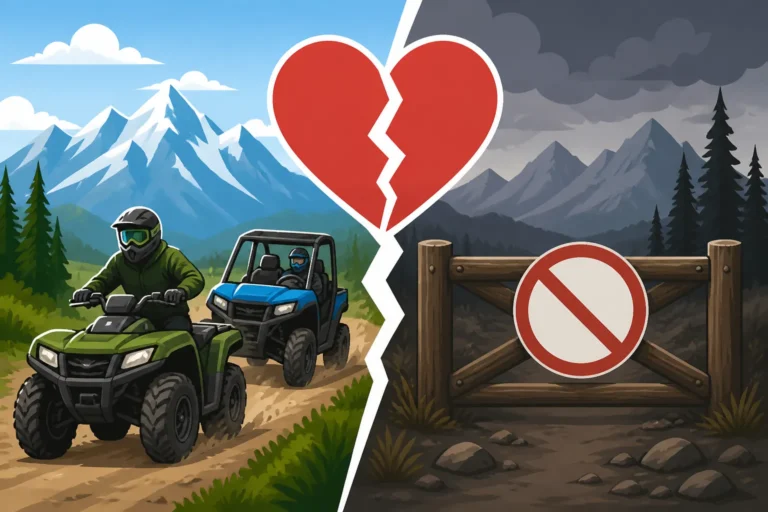
Heading north to explore Alaska's stunning backcountry on your ATV or UTV is an incredible adventure, but it's easy to get tangled up in the specific regulations that might differ significantly from what you're used to back home in Canada. Many visiting riders get frustrated by the seemingly endless maze of rules, wondering if their machine is even legal to ride here. This comprehensive guide will help clear up the confusion, outlining Alaska's specific requirements for visiting Canadian riders, from registration and licensing to road use and land access, so you can enjoy the Last Frontier without unwelcome surprises.
Understanding Alaska's APV System for Canadian Visitors
When you're bringing your quad or side-by-side across the border, the first thing to understand is how Alaska classifies off-highway vehicles. Here, ATVs, UTVs, and even dirt bikes are often referred to as "All-Purpose Vehicles," or APVs. This classification comes with its own set of rules that might not directly align with the provincial or territorial designations you're familiar with. The key distinction often revolves around whether you intend to ride on public lands or utilize state-maintained trails. Unlike some Canadian provinces that have blanket reciprocity agreements, Alaska has specific requirements that out-of-state machines must meet, and this is where many visitors find themselves needing clarification. It's not about whether your machine is registered in Canada, but whether it meets Alaska's criteria for operation within its borders, especially if you plan on exploring beyond private property.
Does an Out-of-State Machine Need Alaska Registration?
This is perhaps the most common question Canadian riders ask, and it's a critical one. Generally, if you plan to operate your ATV or UTV on public lands, including state-maintained trails, designated public access areas like the Knik River Public Use Area, or even crossing state land to reach private property, your machine will need an Alaska APV registration decal. This is a point of frequent confusion because many Canadian jurisdictions have agreements that honor out-of-province registrations. Alaska, however, has its own system, and while your Canadian registration is valid for ownership purposes, it doesn't automatically grant you permission to ride on public lands here.
Think of it this way: the Alaska decal proves that your machine has been recognized and permitted for use on Alaskan public land. It's not just a revenue generator; it's part of the state's system for managing recreational vehicle impact and ensuring accountability. The good news is that the process for an out-of-state machine isn't overly complex. You'll typically need to visit a local DMV or a partner office. You'll need proof of ownership, such as your Canadian registration or title, and potentially a bill of sale, especially if the machine is relatively new to you. They'll issue you a decal that needs to be prominently displayed on your machine. For more detailed information on this, you might find it helpful to read [Does an Out-of-State Machine Need Alaska Registration?] and [Alaska Rules for an Out-of-State Decal]. Remember, this doesn't replace your Canadian registration; it's an additional requirement for operating on Alaskan public lands.
Driver's License and Insurance Requirements
Just like back home, you'll need a valid driver's license to operate an ATV or UTV in Alaska. For Canadian visitors, a valid Class 5 (or equivalent) driver's license from your province or territory is generally accepted. You don't need to obtain an Alaskan driver's license for a temporary visit. The key is that your license must be current and in good standing. This isn't just a recommendation; it's a legal requirement, especially if you plan to use your machine in any capacity that might involve road crossings or designated road-legal sections.
When it comes to insurance, Alaska has specific mandates. If you intend to operate your APV on any public road, highway, or even across a highway in Alaska, you are required to have liability insurance. This is a non-negotiable safety net. While your Canadian vehicle insurance might cover some aspects of off-road use, it's crucial to confirm with your insurance provider before your trip whether your policy extends to liability for ATV/UTV operation in Alaska, particularly for road use. Many Canadian policies have geographical limits or specific exclusions for off-road vehicles when crossing international borders. If your current policy doesn't provide adequate coverage, you might need to seek a temporary policy or rider. Don't risk it; getting caught without proper insurance can lead to significant fines and legal headaches. For specifics, check out [Alaska Requires a Class D License] and [Alaska Requires Liability Insurance for an APV].
Riding in Alaska: Roads, Trails, and Equipment
Alaska offers an incredible expanse of terrain for ATV and UTV enthusiasts, from vast public lands to winding trails. However, the rules for where and how you can ride are strictly defined and often different from what you might be used to in Canada. While some areas in Canada might be more lenient with road use for off-highway vehicles, Alaska tends to be much stricter. Understanding these distinctions is crucial for a smooth and legal riding experience. Breaking these rules, even unknowingly, can lead to fines or even the impoundment of your machine, which is definitely not how you want your Alaskan adventure to end.
Alaska APV Road Rules Explained
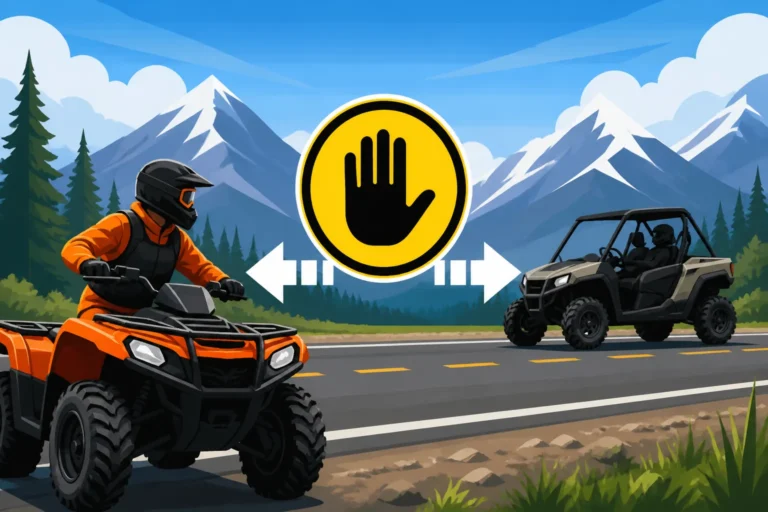
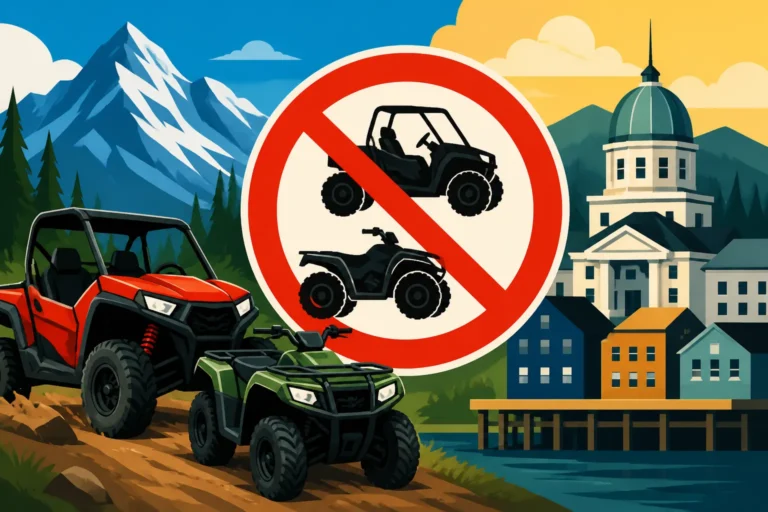
One of the biggest differences Canadian riders encounter in Alaska is the strict limitation on APV road use. Unlike some rural areas in Canada where ATVs might be common sights on secondary roads, Alaska generally bans APVs from paved public roads and highways. There are very limited exceptions, such as crossing a highway at a 90-degree angle, or using specific roads posted at 45 mph or lower in communities that have not opted to ban APVs on their local roads. Even in these limited scenarios, there are conditions: you must have working headlights, taillights, a stop light, a mirror, and a muffler, among other requirements. The intent is clear: APVs are primarily for off-road recreational use, not for general transportation on the road system.
It's vital to research the specific ordinances of any community you plan to ride near. For instance, Anchorage, Fairbanks, and Juneau generally prohibit APVs on their roads. Many smaller communities, however, have differing rules. The safest bet for Canadian visitors is to assume that road use is prohibited unless you have clear, local information to the contrary. When in doubt, stick to designated trails and public use areas. Understanding the precise rules for crossing a highway or using a shoulder can be complex, and ignoring them can lead to a roadside encounter with an Alaskan State Trooper. Dive deeper into this topic by reading [Can You Ride an ATV on the Road in Alaska?].
Essential Equipment for Alaska Trails
Alaska's diverse terrain, from rocky climbs to muddy bogs and glacial silt, demands robust equipment, and the state also has specific legal requirements for what your machine must have. Beyond personal protective gear like helmets (mandatory for riders under 16, highly recommended for all), your ATV or UTV needs to be properly outfitted.
Here's a quick rundown of critical equipment:
- Spark Arrester: Absolutely essential. This prevents wildfires by trapping sparks from your exhaust. If your machine doesn't have one, or if it's damaged, you could face fines. Many aftermarket exhaust systems, like those from SuperATV, come with integrated spark arresters, but always double-check.
- Lights: Headlights and taillights are required, especially if you're riding at dawn, dusk, or in low-visibility conditions. Even if you don't plan to ride after dark, Alaska's weather can change quickly, making good lighting critical.
- Brakes: Your machine must have functional brakes. This sounds obvious, but regular maintenance is key, especially after crossing rivers or hitting muddy trails.
- Muffler and Emission Controls: Alaska has noise regulations, and your machine must have an adequate muffler to keep sound levels in check. Removing emission control devices is illegal.
- Mud Flaps: Some areas may have requirements for mud flaps behind the tires, especially for larger UTVs, to prevent debris from being thrown up.
- Reflectors: Often overlooked, but important for visibility, particularly if you're crossing roads or riding near traffic.
Beyond legal requirements, practical considerations for Alaskan riding include a winch, good tires for varied terrain (maybe some deep-tread options from a brand like SuperATV for those notorious mud bogs), a sturdy skid plate to protect the underside, and perhaps a snorkel kit if you anticipate deep water crossings. Many Canadian riders come well-equipped, but always review Alaska's specific list. [Alaska OHV Equipment Requirements] offers more detail on these mandates.
Practical Tips and Preparations for Canadian Riders
Venturing into Alaska on your ATV or UTV is an unforgettable experience, but proper planning, especially for international visitors, is key to a safe and enjoyable trip. From understanding where you can ride to knowing what to expect at the border, a little foresight goes a long way. The Alaskan wilderness is vast and beautiful, but it's also unforgiving, and being prepared means you can focus on the adventure rather than potential pitfalls.
Land Access and Permits in Alaska
One of the most complex aspects of riding in Alaska is understanding land ownership and access rules. Unlike large tracts of Crown land in Canada where access might be more straightforward, Alaska has a patchwork of state, federal, and Native Corporation lands, each with its own regulations.
- State Lands: Much of Alaska's public land is managed by the State. The Alaska Department of Natural Resources (DNR) issues a statewide general permit for ATV use on most state lands. While your machine will need an Alaska decal, as a Canadian visitor, you generally fall under the same permit requirements as residents. However, state parks and other designated areas often have specific rules or require additional passes. It's crucial to know if you're entering a state park.
- Federal Lands: Areas like National Forests, BLM lands, and National Wildlife Refuges have their own rules. These can vary significantly, with some areas allowing motorized access on designated trails and others having strict prohibitions. Always check with the specific land management agency.
- Native Corporation Lands: A significant portion of Alaska is owned by Native Corporations. These are private lands, and you must obtain permission or a land use permit from the specific corporation that owns the land before riding on it. Trespassing can lead to serious legal consequences.
Before heading out, it's highly recommended to consult land status maps and contact the relevant land managers. Never assume access. [Alaska State Land Riding Explained] and [Alaska Land Ownership and Who to Ask] are excellent resources for navigating these complex rules. For planning big trips, especially if you're looking at specific areas, contacting local offices for the DNR, Forest Service, or BLM can save you a lot of trouble.
Border Crossing and Machine Preparation
Crossing the US-Canada border with an ATV or UTV requires specific documentation. You'll need your passport, your vehicle's registration (from Canada), and potentially a bill of sale or proof of ownership, especially if you're not the registered owner. Customs officials may inquire about the purpose of your trip and how long you intend to stay. Be prepared to show proof of your return journey if asked. For detailed guidance on this, refer to [Customs Paperwork From Canada].
Beyond paperwork, preparing your machine for the journey to Alaska is critical. The long drive up the Alaska Highway can be tough on trailers and machines. Ensure your trailer's tires, brakes, and lights are in excellent condition. Secure your ATV/UTV properly to prevent shifting or damage. Consider bringing spare parts for your trailer, like wheel bearings or a spare tire, as repair services can be scarce and expensive in remote areas. On your machine itself, a thorough pre-trip inspection, including fluid levels, tire pressure (and a plug kit), and battery health, is a must. Many riders opt for heavy-duty components from companies like SuperATV specifically for the rugged Alaskan environment, so ensure everything is in top shape.
Safety and Emergency Preparedness
The Alaskan wilderness is beautiful but can be incredibly remote. Cell phone service outside of towns and along major highways is virtually nonexistent. This means you need a robust plan for emergencies.
Consider these essentials:
- Satellite Messenger or Satellite Phone: A personal locator beacon (PLB) or satellite messenger (like a Garmin inReach or Zolex) is not optional; it's a lifesaver. This allows you to send emergency messages and your location even when there's no cell service. [Carrying a Satellite Messenger for a Backcountry Ride] explains why this is so important.
- Trip Plan: Always leave a detailed trip plan with someone responsible back home or with a trusted contact in Alaska. Include your route, expected return time, and who to contact if you don't check in.
- First Aid Kit: A comprehensive kit, and the knowledge to use it, is essential. Think about treating minor injuries, severe bleeding, and even hypothermia.
- Survival Gear: Even on a day trip, carry extra layers of clothing, emergency food and water, a fire starter, and a sturdy knife. Weather can change in minutes.
- Navigation: While GPS is great, also carry a paper map and compass, and know how to use them. Electronics can fail.
- Bear Spray: Bear encounters are a real possibility. Carry bear spray and know how to deploy it effectively.
- Group Riding: Whenever possible, ride with at least one other machine. There's safety in numbers, especially if a breakdown occurs or someone gets stuck.
Being prepared for the unexpected isn't about being paranoid; it's about being realistic about the unique challenges of the Alaskan backcountry. Enjoy the incredible scenery, but always prioritize safety. [No Cell Coverage Off the Road System] underscores the critical need for alternative communication methods when you're out exploring.
Table: Key Differences for Canadian Riders in Alaska
| Feature | Common Canadian Provincial Approach (General) | Alaska APV Approach (Specific) |
|---|---|---|
| Public Land Reg. | Provincial registration often sufficient; permits for Crown land | Alaska APV Decal required for state/federal public land use |
| Road Use | Varies; some provinces allow limited road use | Highly restricted; generally banned on paved roads/highways |
| Driver's License | Provincial Class 5 (or equivalent) valid | Valid Canadian Class 5 (or equivalent) accepted |
| Insurance | Mandatory liability, often covers out-of-province | Mandatory liability for road use; check Canadian policy for Alaska APV coverage |
| Land Ownership | Crown land often accessible with permits | Patchwork of state, federal, Native Corp. (private) lands; specific permits needed |
| Helmet Law (Age) | Varies by province (e.g., under 16/18) | Required for riders under 16; highly recommended for all |
| Spark Arrester | Generally required | Required |
| Cell Service | Spotty in remote areas | Virtually non-existent off the road system; satellite communication essential |
Disclaimer
This article is for general informational purposes only and does not constitute professional advice. Laws, prices and regulations vary by location and change over time. Consult a qualified professional for guidance on your specific situation.