Tundra That Will Not Recover
Alaska’s tundra can look tough, but its plants, soils, and frozen ground are vulnerable to repeated ATV and UTV traffic. A track that seems minor in summer may leave a visible scar long after a machine passes. Here’s why tundra damage can persist, how riding conditions affect the risk, and what to check before choosing a route.
Why tundra tracks can last so long
Tundra is not a single layer of sturdy ground. It is a mix of low-growing plants, organic material, mineral soil, and, in many places, permafrost beneath the surface. The ground may be frozen for much of the year, but that does not make it a durable road. During the thawed season, the surface can be soft and saturated, and the living layer above the frozen ground can be thin.
Plants such as mosses, lichens, and dwarf shrubs grow slowly in cold environments with short growing seasons. They may take years to fill in a disturbed patch, and recovery depends on conditions such as moisture, temperature, and how deeply the surface was damaged. Tire lugs can crush or uproot plants, while repeated passes can press down vegetation and expose soil.
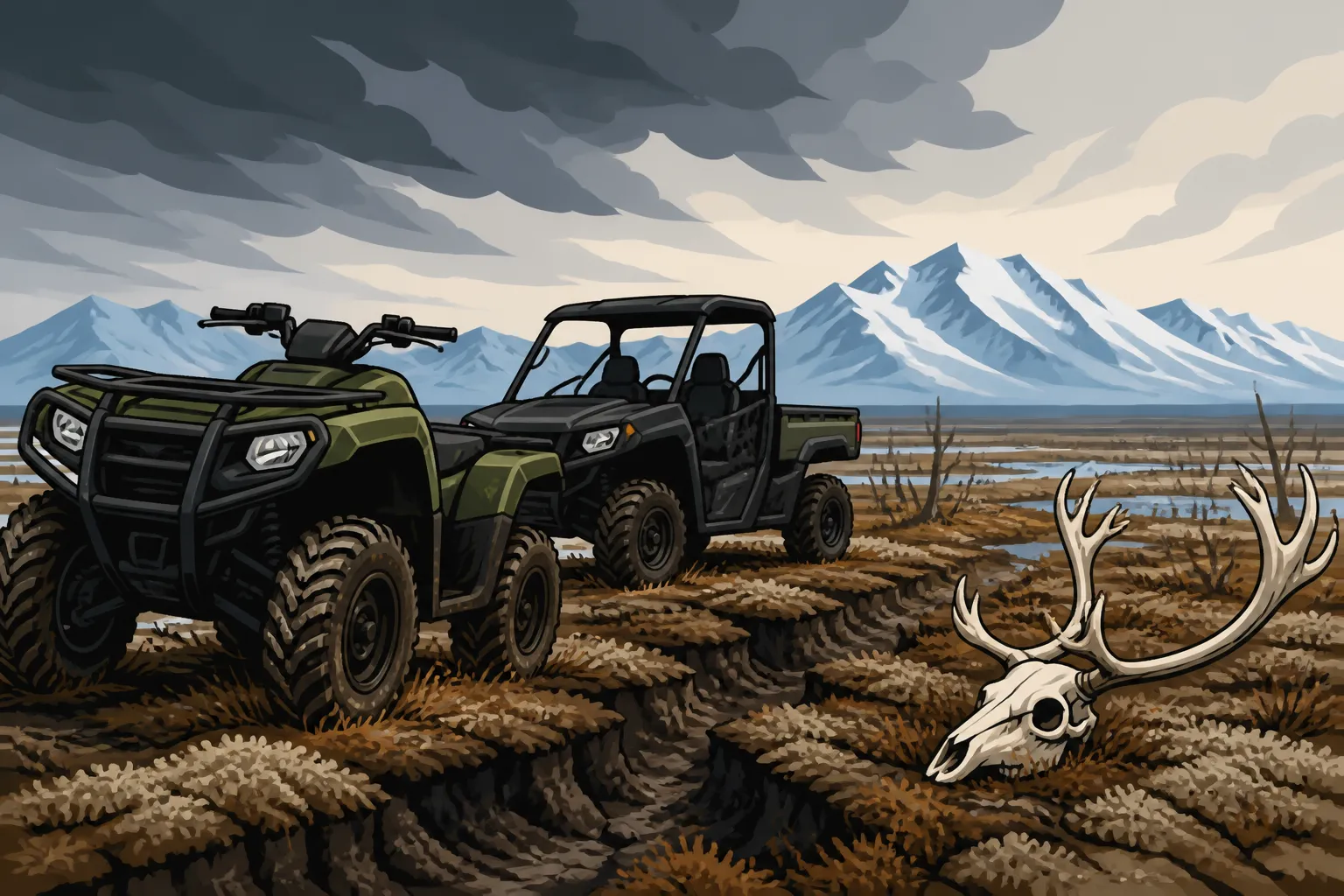
Once the ground cover is broken, the damage can spread beyond the original tire tracks. Exposed soil may dry, erode, or become muddier. Water can collect in depressions, flow along ruts, or carry loosened soil downhill. In some locations, disturbing the insulating surface layer can also affect the temperature and stability of the ground below. The exact consequences vary by site, but the common thread is that a small-looking disturbance can change how the surface holds water and supports plants.
That is why “will not recover” is best understood as a warning about timescale and uncertainty, not a claim that every tire mark is permanent. Some disturbed ground may gradually revegetate. Other scars can remain visible for a very long time, especially where the surface is repeatedly crossed or where erosion and water movement reinforce the damage. A rider cannot reliably tell from one visit how quickly a particular patch will recover.
The type of terrain matters, too. Tundra, wetland, stream bank, and alpine ground are not interchangeable terms, but they can overlap. A route may cross several kinds of sensitive ground in a short distance. Alaska Tundra and Wetland Conditions explains why surface conditions matter, while Alaska Tundra Damage and Riding focuses on the relationship between vehicle travel and long-lived marks.
| Condition | Why it raises the risk | Better choice |
|---|---|---|
| Soft, thawed ground | Tires can sink, crush vegetation, and form ruts | Wait for firmer conditions or use an established route |
| Wet ground or standing water | Tracks can deepen and redirect water flow | Turn around rather than widening a muddy path |
| Repeated passes over vegetation | Compacts and breaks the surface cover | Keep to designated routes and avoid creating shortcuts |
| A fresh rut or damaged patch | Another line beside it can multiply the affected area | Do not ride around the obstacle; stop and reassess |
| Frozen ground | Can be firmer, but does not automatically make every route legal or safe | Check access rules, closures, and local conditions |
How riding conditions turn a track into a lasting scar
The machine’s weight and tire pressure matter, but they do not tell the whole story. A relatively light machine can still cause damage if it spins its tires, makes repeated passes, or crosses a vulnerable patch when the ground is saturated. A heavier machine can increase pressure on the surface, especially when loaded with passengers or gear. Neither machine type is automatically harmless.
Technique can reduce some risks, but it cannot make an unauthorized or unsuitable route acceptable. Sudden throttle, aggressive turning, and wheelspin tend to disturb the surface more than steady travel. Trying to muscle through a bog can dig a deeper hole. Turning around in a small area may churn vegetation into a wider patch, and riding side by side can create multiple tracks where one line might otherwise have sufficed.
A common mistake is treating a visible rut as an invitation to go around it. That often makes the affected area wider: the first machine leaves a rut, the next shifts to the side, and later riders establish several parallel lines. If the route is too soft to travel without leaving a deep mark, the practical response is to stop and turn back when safe—not to create a new path beside the damaged one.
Frozen conditions also require judgment. Frozen ground may support a machine better than thawed ground, but the word “frozen” does not guarantee a stable surface across the whole route. Snow can conceal water, thin ice, open channels, or changing ground conditions. Nor does frozen ground grant permission to cross land or enter a closed area. Frozen Ground and Why It Matters offers more context on why season and surface condition are separate from access permission.
Pay attention to signs of vulnerability before you commit to a route:
- The tires sink or leave deep impressions with little effort.
- Water squeezes up around the tire tracks.
- Vegetation is flattened or torn, rather than simply brushed aside.
- The route is already rutted, and avoiding the ruts would require riding over undisturbed ground.
- A stream bank, wetland edge, or thawing slope is beginning to break apart.
- The route has a closure sign, barrier, or other clear indication that travel is not allowed.
These are reasons to reassess, not challenges to overcome. If conditions change during the ride, turn back before a narrow track becomes a broad damaged area. Alaska Wetland Travel Restrictions Explained is useful when a route crosses wet ground, but it is still important to check the rules that apply to the specific parcel and route.
Permission matters as much as the ground
A responsible tundra ride starts with two separate questions: Is the ground suitable for vehicle travel today, and are you allowed to ride there? A machine that leaves little visible impact can still be on land where access is restricted. Conversely, permission to travel in an area does not mean every surface or route is appropriate in every condition.
Alaska’s statewide general permit is not a blanket authorization for every parcel, trail, or season. Its scope has limits, and other land managers or landowners may set separate rules. Alaska’s Statewide General Permit for ATV Use explains what the permit authorizes; check the rules for the land you intend to cross rather than assuming one permit covers the whole trip.
Start by identifying who manages the route and the ground beside it. Boundaries may be less obvious on the landscape than on a map, and a route that appears continuous can pass between different ownership or management areas. Use current land information and confirm uncertain access with the relevant manager or owner. Alaska Land Ownership and Who to Ask and Checking a Land Status Map can help organize that process.
Do not treat an existing track as proof that it is authorized. It may be old, private, informal, or no longer open. Follow posted signs and closures, and do not assume that an unmarked route is available for motorized use. If you encounter a closure or a route that appears to cross sensitive ground, stop before proceeding and check rather than relying on another rider’s tracks. Signs That Mark a Closure covers clues that should prompt a closer look.
Land status and surface condition can change over short distances. A permitted route may reach a wetland, stream, or fragile slope where travel is restricted or unwise. If a route is damaged, avoid widening it or making a new bypass. Where appropriate, report damage or a problem with route conditions to the responsible land manager; Reporting Trail Damage on Alaska State Land can help clarify that step for state land.
A practical plan for minimizing tundra damage
Use a simple decision process before and during the ride. It will not eliminate impact, but it can help keep a small problem from becoming a lasting scar.
- Confirm the route and land status. Check who manages the area, whether motorized travel is allowed, and whether any closures or seasonal limits apply. Do not rely on a general permit as proof that every segment is open.
- Check the ground, not just the forecast. Recent rain, thaw, standing water, and local drainage can make a route softer than expected. Conditions can vary between the trailhead and the intended turnaround point.
- Choose established, authorized routes. Avoid cross-country shortcuts and do not create a second line around a muddy or damaged section. If the established route cannot be traveled without damaging it, turn back.
- Ride smoothly and stay on the route. Avoid wheelspin, sharp turns, repeated passes, and unnecessary stops on soft vegetation. Keep your group in a single line where appropriate instead of spreading out across undisturbed ground.
- Set a conservative turnaround point. Decide in advance that deep ruts, soft ground, or a closure will end that route attempt. A destination is not worth damaging the ground or getting stuck.
- Reassess as conditions change. A route that was firm on the way out may soften with sun or changing weather. Do not assume that because a machine crossed earlier, it is safe or responsible to cross again.
- Leave the site as you found it. Do not pull vegetation, widen the trail, or attempt an improvised repair that could make the disturbance worse. If you see significant damage or an unclear closure, note the location and contact the appropriate land manager.
If you travel with a group, agree on these limits before anyone reaches a soft patch. Riders who are separated may make different choices, and one machine’s bypass can become the new route for everyone behind it. Keep the group together enough to communicate, but avoid crowding the edge of a trail or moving across undisturbed tundra to regroup.
The best choice may be to postpone the ride. That can be frustrating when travel plans are set, but a short delay is usually easier to manage than recovery from a stuck machine or a route damaged by repeated attempts. Carrying recovery gear does not make every crossing acceptable; it is a backup for emergencies, not a reason to push into ground that cannot support the machine.
Tundra deserves a cautious approach because its recovery can be slow and uncertain. Check both access and conditions, stay on authorized routes, and turn around before your tires begin making a new one.
Disclaimer
This article is for general informational purposes only and does not constitute professional advice. Laws, prices and regulations vary by location and change over time. Consult a qualified professional for guidance on your specific situation.