What You Get Instead of a License Plate
When you're new to the vast, wild beauty of Alaska, or perhaps just new to the world of off-highway vehicles, you might find yourself a little confused about the registration process for your ATV, UTV, or snowmachine. Many folks expect to get a traditional license plate, just like they would for a car or truck, but the reality for All-Purpose Vehicles (APVs) here in the Last Frontier is quite different. This guide will walk you through exactly what you'll receive from the State of Alaska to legally identify your machine, why it’s different from road vehicles, and what you need to do with it.
Understanding Alaska's Decal System for OHVs
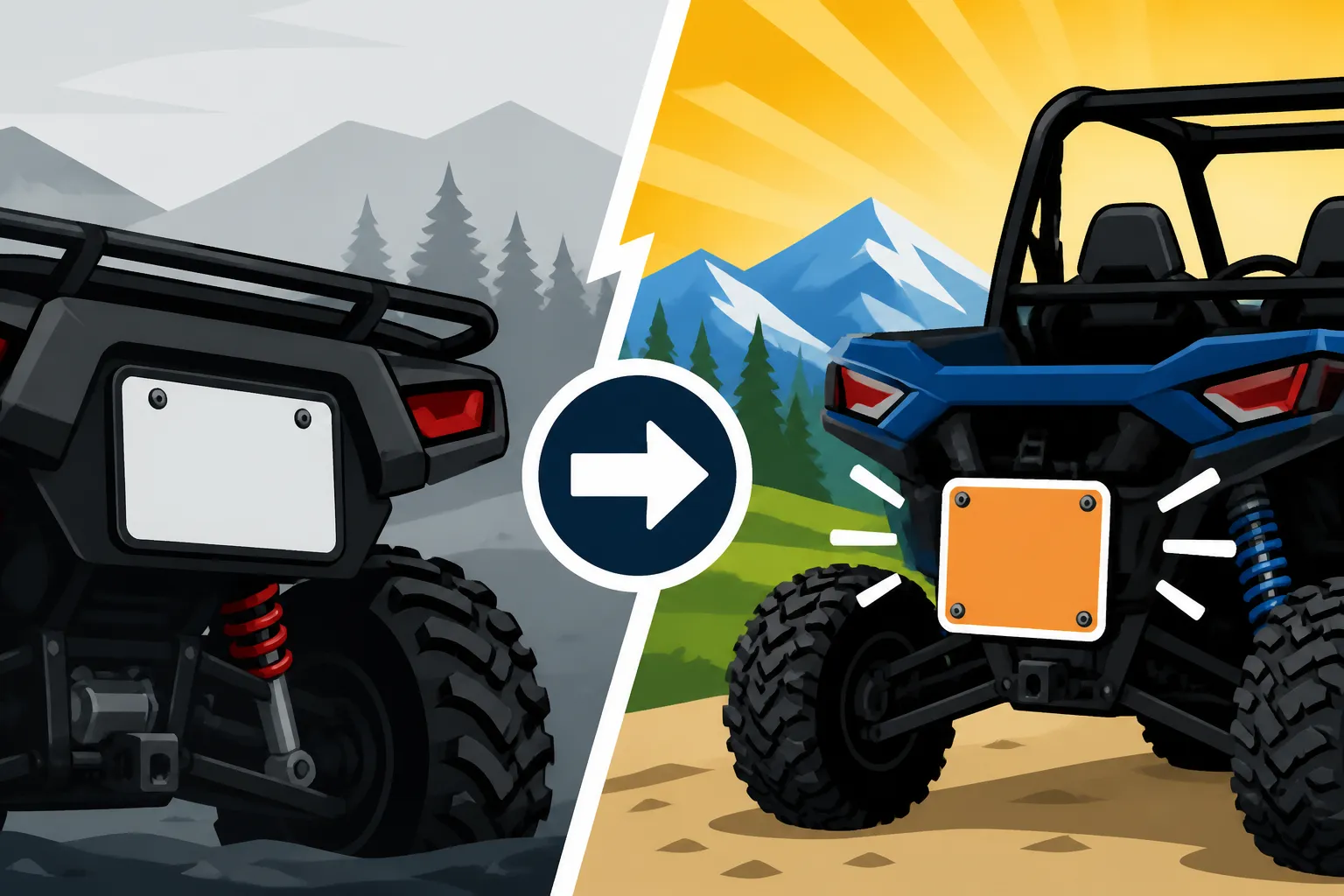
Unlike cars, trucks, or motorcycles that proudly display a metal license plate, your ATV, UTV, or snowmachine in Alaska operates under a decal system. This decal serves as your official proof of registration, much like a sticker you might put on your car's plate in other states, but here, it's the primary identifier. It’s a distinct visual marker that tells law enforcement and other riders that your machine is properly registered to explore Alaska's incredible trails and backcountry.
What the Alaska Registration Decal Looks Like
When you successfully register your All-Purpose Vehicle (which is Alaska's broad term covering ATVs, UTVs, and snowmachines), you won't be handed a stamped piece of metal. Instead, you'll receive a durable, brightly colored decal. These decals are designed to stand up to the rigorous Alaskan environment – the biting cold, the relentless sun, the mud, and the snow. Each decal has a unique registration number printed on it, which is the official identifier for your specific machine. This number is unique to your registration, not necessarily tied to the VIN, though both are recorded. [Why Your Decal Number Is the Registration Number] This isn't just a fancy sticker; it’s your machine’s legal ID in the backcountry.
The color of these decals often changes with each registration period, which helps easily identify current registrations at a glance. For instance, a green decal might indicate a current two-year registration, while a blue one could signify a four-year term. This rotating color scheme is a practical way for wardens and troopers to quickly assess if a machine is current on its registration, especially when out in the field where pulling over every rider for a detailed check isn't always feasible. It’s an efficient system that makes visual checks quick and simple, even from a distance.
The Significance of the "All-Purpose Vehicle" Class
Alaska groups ATVs, UTVs, and snowmachines under a special category known as "All-Purpose Vehicles," or APVs. This classification is crucial because it dictates how these machines are registered and what rules apply to their operation. The state has acknowledged that these vehicles serve a unique purpose in Alaska, often bridging the gap between recreation, subsistence, and essential transportation in remote areas. Because of their specialized use, they have different registration requirements than conventional on-road vehicles.
The APV classification means that these machines are primarily intended for off-road use, even though some limited on-road travel might be permitted in specific areas or under particular conditions. This distinction is why they receive a registration decal rather than a traditional license plate. A license plate is designed for display on the rear of a vehicle, in a position that’s generally clear of mud, snow, and trail debris. For an ATV or UTV, especially one that regularly traverses rough terrain, a fragile metal plate would quickly become obscured, bent, or simply torn off. The decal, designed for more flexible placement, is a more robust solution. [Alaska's APV Class Explained]
Why No License Plate for Your Alaska ATV or UTV?
It’s a fair question: why do regular cars get plates, but my trusty quad just gets a sticker? The answer boils down to the unique nature of off-highway vehicles and the environment they operate in here in Alaska. While it might seem odd at first, there are very practical reasons why the state opted for a decal system instead of traditional license plates for APVs.
Designed for Off-Road Durability and Visibility
Imagine trying to keep a standard metal license plate clean and intact after a day of sloshing through the Knik River Public Use Area or carving tracks through fresh powder out on a Mat-Su Valley trail. It simply wouldn't work. License plates are prone to bending, snapping off, getting caked in mud, or becoming impossible to read once you've hit the rough stuff. The decal, by contrast, is much more adaptable. It’s a flexible sticker that adheres directly to the machine's body, often on a more protected surface, reducing the likelihood of damage or obscuring.
Furthermore, the placement requirements for the decal are specific to ensure visibility in varied conditions. For instance, on a snowmachine, it typically goes on the tunnel or side panels, while on a side-by-side, it might be on the cowling or fender. These locations are chosen to maximize the chances of the decal remaining visible, even when the machine is covered in trail grime or snow spray. [Keeping a Decal Readable in Mud] It's a pragmatic approach to registration for vehicles that are designed to get dirty and go where pavement ends.
Simplicity and Cost-Effectiveness
From an administrative standpoint, issuing decals is generally simpler and more cost-effective than manufacturing and distributing metal plates. For a state with a vast landmass and a relatively dispersed population, streamlining the registration process for a large number of recreational and utility vehicles makes sense. This helps keep the overall cost of registration lower for the consumer, too.
The current system also integrates well with the chosen registration terms. You can register your APV for two, four, or even six years at a time. [Alaska Registration Terms of Two, Four or Six Years] A new decal is issued for each renewal, making it clear when your registration is current and when it’s expired. This system is efficient and reduces the bureaucratic overhead that might come with managing thousands of metal plates for off-road vehicles that often change hands or are used seasonally.
Focus on Public Land Access
The primary trigger for needing an Alaska APV registration decal is using your machine on public land. If you only ever ride your ATV or UTV on private property, you typically don’t need to register it with the state. This highlights that the decal system is largely about managing and regulating access to Alaska’s incredible public domain, ensuring that riders are identified and accountable when utilizing shared resources.
The state wants to know who is operating on its lands, primarily for safety, environmental protection, and funding for trail maintenance. The registration fees collected from these decals contribute directly to maintaining and improving the very trails and areas that riders enjoy. [Alaska Registration Before Riding Public Land] So, while you don't get a "plate," you get a key that unlocks access to millions of acres of wild Alaskan landscapes, and a system that helps sustain those lands.
Where to Put Your Alaska Registration Decal
Receiving your decal is just the first step; knowing where to properly display it is equally important to ensure your machine is legally compliant. Improper placement can lead to questions from authorities, so it's essential to get it right. The rules are pretty straightforward but vary slightly depending on the type of APV you own.
Decal Placement on ATVs and UTVs
For most ATVs and side-by-sides (UTVs), the Alaska registration decal needs to be placed in a conspicuous location on the machine itself. This typically means on the left side of the machine, on a fixed body panel or cowling. The idea is that it should be easily visible from the side when someone is looking at your machine. Think about an Alaska Trooper pulling up alongside your machine on a trail—they should be able to spot that decal without having to circle your quad or ask you to point it out.
For a quad, this might mean the fender, the fuel tank shrouds, or another prominent flat surface that faces outward. For a side-by-side, it could be on the driver’s side door, the rear fender, or the tunnel. The critical thing is that it should be relatively flat, clean, and in a spot where it won’t be easily obscured by riders, gear, or the inevitable mud splatter. [Alaska Decal Placement on a Side-by-Side] Always prioritize visibility and accessibility when choosing your final placement.
Decal Placement on Snowmachines
Snowmachines have slightly different placement requirements, often due to their unique body design and the specific challenges of winter riding. For snowmachines, the decal should be placed on the left side of the tunnel, just forward of the rear suspension. This location is generally visible when someone is seated on the machine or standing beside it. It's less prone to being covered by snow thrown up from the track or by gear strapped to the machine's rear rack.
The exact language often specifies "the left tunnel side, visible when seated." [Alaska Decal Placement on the Tunnel Side] This ensures that even during a brief stop on the trail, a passing official can readily see the registration without you needing to dismount or move your machine around. It’s a small detail that makes a big difference in ensuring compliance and smooth interactions with law enforcement out in the vast Alaskan backcountry.
Ensuring Your Decal Stays Visible
Beyond initial placement, you have a responsibility to keep your registration decal in good condition and clearly visible. This means regularly cleaning off mud, snow, or ice that might obscure it. If your decal starts to peel, fade significantly, or become otherwise unreadable due to wear and tear, you’ll need to apply for a replacement.
While it's rare, some riders might try to place their decal in an inconspicuous spot, perhaps to avoid detection or simply because they don't like the look of it. However, this is a surefire way to invite a citation. The whole point of the decal system is clear identification. Always err on the side of maximum visibility to avoid any issues when you're out enjoying Alaska's trails.
What to Do If Your Decal is Lost or Damaged
Life in Alaska is tough on gear, and your APV registration decal is no exception. Whether it's been ripped off by a stray branch, faded into obscurity by the endless summer sun, or simply peeled away over years of use, dealing with a lost or damaged decal is a common occurrence. Thankfully, the process for getting a replacement is relatively straightforward.
Applying for a Replacement Decal
If your decal goes missing or becomes unreadable, you'll need to apply for a replacement through the Alaska Department of Administration, Division of Motor Vehicles (DMV), or one of their partner offices. This isn't just a suggestion; it’s a requirement. Operating an APV on public land without a valid, clearly visible registration decal is the same as operating an unregistered machine, and it can lead to fines and other penalties.
The process typically involves filling out a specific form and paying a small fee. You'll need to provide your machine's information, including its Vehicle Identification Number (VIN) and your previous registration details. It’s a good idea to keep a copy of your initial registration paperwork in a safe place at home, even if you carry a digital copy on your phone when riding. This makes it much easier to provide the necessary information for a replacement. [Alaska Decal Replacement If Lost]
Navigating Ownership Documentation Challenges
Sometimes, a lost decal is just one piece of a larger paperwork puzzle. For example, if you bought a used machine and somehow misplaced the original bill of sale, or if the previous owner never provided one, getting a replacement decal (or even renewing your initial registration) can become complicated. In such cases, you might need to establish clear proof of ownership. This could involve an affidavit naming a seller if the original bill of sale is missing or perhaps working with the DMV to verify the chain of ownership.
For formalizing documents like affidavits or bills of sale, especially if you're dealing with a private sale where original paperwork is lost, resources like LawDepot can be incredibly helpful. They offer templates for various legal documents that can assist you in creating the necessary paperwork to demonstrate ownership, which is crucial for any registration or titling task. Having properly documented proof of ownership, whether it's an original manufacturer's certificate of origin or a formal bill of sale, is always your best defense against potential issues, whether you're trying to get a replacement decal or sell your machine down the line. [Alaska Bills of Sale for a Used Machine]
Staying Compliant and Prepared
The best way to avoid issues with your decal is to be proactive. When you receive your new registration decal, apply it carefully to a clean, dry surface, following the placement guidelines. Take a photo of your machine with the new decal clearly visible – this can serve as helpful proof if you ever need it. Also, consider carrying a laminated copy of your registration certificate with you when you ride, perhaps in a waterproof bag, in addition to the decal on your machine.
While Alaska issues a decal and not a license plate, the intent is the same: clear identification and accountability for owners using public lands. Understanding this system, where to place your decal, and how to maintain it will ensure your adventures on Alaska’s trails remain legal and hassle-free. Happy riding!
Disclaimer
This article is for general informational purposes only and does not constitute professional advice. Laws, prices and regulations vary by location and change over time. Consult a qualified professional for guidance on your specific situation.