Alaska Game Retrieval by Quad
Retrieving game by quad can save a long carry, but it does not make every route or hauling method legal. In Alaska, hunters need to check the rules for the species and hunting area, confirm they can travel across the land in question, and protect meat during the trip out. A little planning helps avoid a costly mistake—or spoiled game.
What a Quad Can and Cannot Do for Game Retrieval
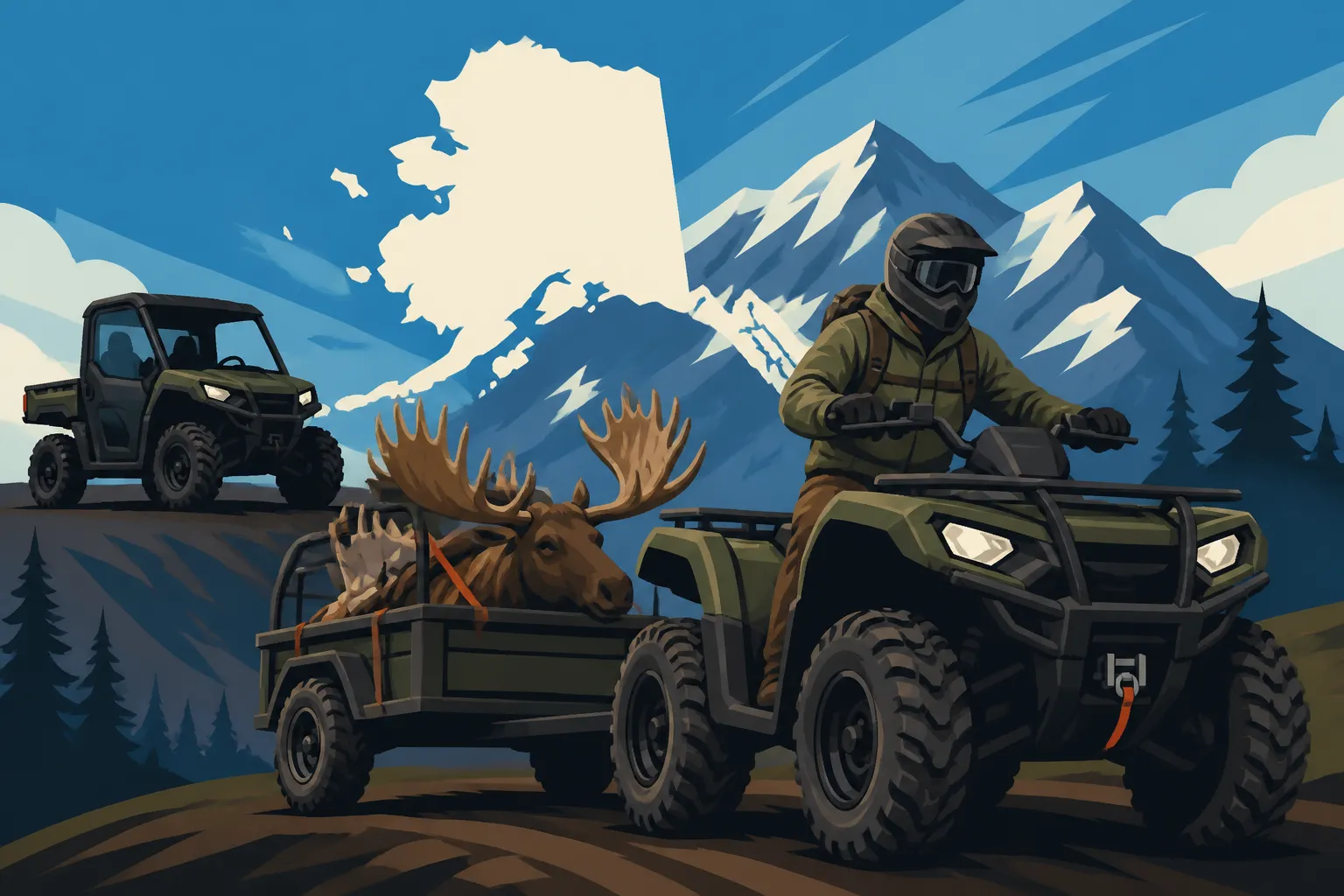
A quad or side-by-side can help carry harvested game from a lawful location to a vehicle, camp, or other place where transport is allowed. But using a machine does not change the hunting rules, create access across someone else’s land, or make a closed route open. Treat the hunt, land access, travel route, and transport of the animal as separate questions.
Before leaving, check the current hunting regulations for the species, game management area, and season. Requirements can differ by hunt and may cover harvest reporting, tags, evidence of sex, salvage of edible meat, sealing, and how the animal must be transported. General information about vehicle use during hunting is covered in Alaska Hunting Regulations and Machines, but the applicable hunt regulations are the place to confirm requirements for a specific harvest.
It also helps to distinguish retrieval from hunting. Rules that restrict the use of a motorized vehicle to pursue, harass, or take game may not be the same as rules for moving an animal after a lawful harvest. The distinction is not a reason to assume a planned route is allowed. Check the rules for the location and activity, and ask the appropriate land manager or wildlife office if the wording is unclear.
| Question | What to confirm before riding |
|---|---|
| Is the harvest lawful? | Species, season, hunt area, permit or tag conditions, and any reporting or sealing requirements |
| Is the route open to your machine? | Land ownership, access permission, seasonal closures, and vehicle restrictions |
| Can the game be hauled this way? | Meat salvage, evidence-of-sex rules, required identification, and transport conditions |
| Will the trip protect the meat? | Temperature, distance, load security, and how quickly the animal can be cooled |
| Does aircraft use affect the hunt? | Whether the same-day airborne rule or another hunt-specific restriction applies |
A quad is a tool for moving the load, not a substitute for checking the rules. In particular, do not assume that a trail used by local riders is open to all machines, or that a route is legal for hunting access because it appears on a map. Alaska Game Transport by Machine covers the transport question in more detail.
Confirm Land Access and Route Rules
A retrieval route may cross several kinds of land, each with its own access rules. The area where the animal was taken may be different from the route back to the truck. Check the entire planned route, including trailheads, stream crossings, and any short cut across private or restricted ground.
Alaska’s statewide general permit applies only to the land and uses it covers. It does not automatically authorize travel through state parks, private property, designated areas, or land managed by another agency. Start with Alaska General Permit Requirements, then confirm who manages the specific ground you plan to cross. A trailhead pass, where one is required, is not the same thing as permission to ride across land.
Land status can be hard to judge from a trail map alone. Public-looking ground may include private inholdings, and a route may pass from one manager’s land to another’s. Use current land-status information and contact the relevant manager or landowner when access is uncertain. If the route crosses Native corporation or village land, find out whether permission or a land-use permit is needed before entering. Alaska Native Land Access Permits explains why access should be checked rather than assumed.
Check seasonal and terrain restrictions
The fact that a route is physically passable does not mean it is open. Wetlands, tundra, stream corridors, and soft ground can be especially vulnerable to damage from tires. Seasonal restrictions may apply, and conditions can change quickly after rain, thaw, or freeze-up. Review Alaska Wetland Travel Restrictions Explained and any local closure notices before deciding to ride.
Do not widen a trail or drive around a muddy section to avoid getting stuck. That can create damage and put the machine onto ground where travel is not allowed. If the route is too soft or a closure blocks the way, turn back and use a permitted alternative—or carry the load by another method.
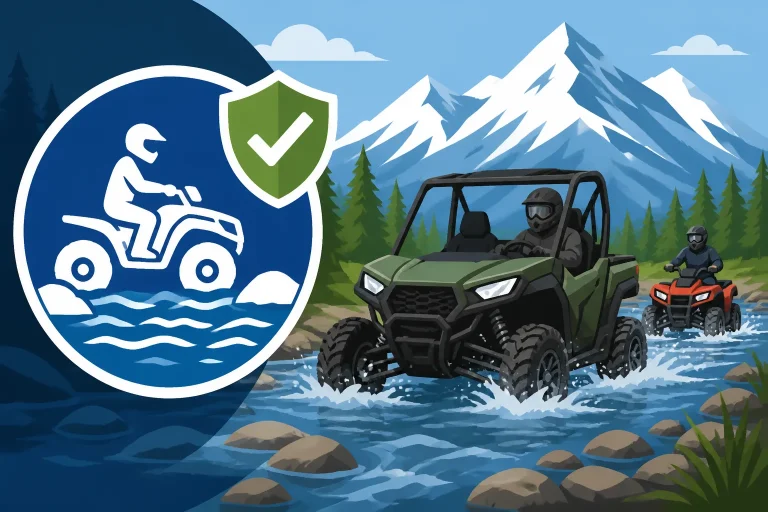
Water crossings deserve their own check. A stream that looks shallow from the bank may have a soft bottom, a strong current, or a channel that is deeper than it appears. Crossing a salmon stream can raise additional habitat concerns; see Crossing a Salmon Stream and confirm requirements with the relevant land manager. Never assume a successful crossing on an earlier trip means conditions are safe now.
A practical route check should answer:
- Who manages each part of the route?
- Is motorized travel allowed for your machine and purpose?
- Are there seasonal closures or ground-condition restrictions?
- Do you need a permit, permission, or trailhead pass?
- Is there a safe alternative if water or mud makes the planned route impassable?
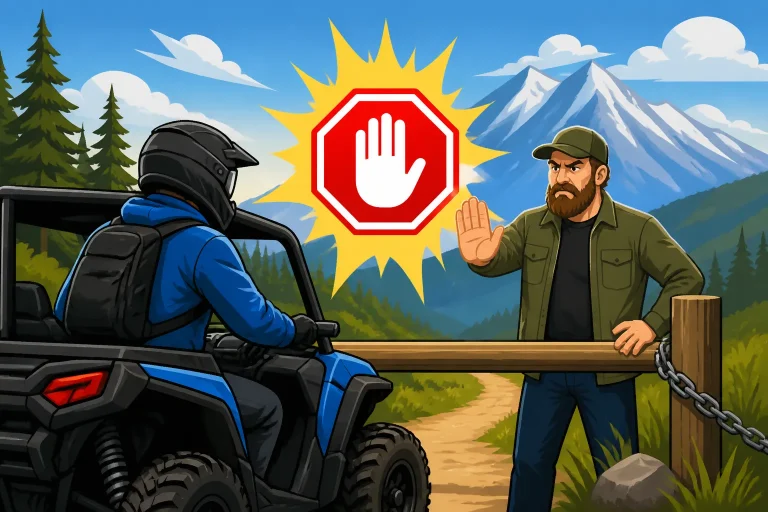
If the route depends on crossing land you cannot identify, getting verbal approval from an unknown person on the trail is not a reliable substitute for checking with the landowner or manager.
Plan the Load-Out Around Meat Care
Once the harvest is complete, time and handling matter. A quad can reduce carrying effort, but it may also add time if the machine is parked far from the animal, the route is rough, or the load needs multiple trips. Plan for the animal to be field dressed and handled according to the applicable regulations, and work out how each part will travel before loading anything.
Meat should be protected from dirt, fuel, exhaust, rain, and unnecessary heat. Keep it clean and allow air to circulate where appropriate; tightly wrapping warm meat in a way that traps heat can work against cooling. Use clean game bags or other suitable coverings, and separate meat from equipment that could contaminate it. Keep the load out of mud and away from hot machine components.
Transport rules may require parts of the animal to remain identifiable or require specific evidence to accompany the meat. Requirements vary by species and hunt, so do not cut, pack, or separate parts in a way that makes required identification impossible. Confirm any tagging, sealing, reporting, or evidence-of-sex instructions before the hunt, rather than trying to reconstruct them at the trailhead.
Secure the load and protect the machine
Keep the weight low and balanced. A high or shifting load can make a quad unstable, particularly on side slopes, ruts, wet ground, or uneven stream banks. Secure the load so it cannot slide into the wheels, obstruct the rider, or fall onto the trail. Check the machine’s load limits and avoid carrying more than it can safely handle.
Use clean, sound tie-downs and inspect them during the trip. If you are buying straps through a retailer such as Amazon, check the stated working-load rating, inspect the stitching and hardware, and choose a setup suited to the load and machine. A strap’s breaking strength is not the same as its working-load rating, and a poor attachment point can fail even when the strap is sound.
A useful load-out plan includes:
- A clear division of the animal into manageable loads, consistent with applicable transport rules.
- Enough clean game bags and tie-downs for the planned trip.
- A route that avoids steep sidehills, deep mud, and uncertain water crossings.
- A way to keep meat away from fuel cans, oily gear, exhaust, and dirty machine parts.
- A backup plan if the machine breaks down or weather changes.
Do not overload the quad simply to make one trip. Several stable trips may be slower, but they are generally safer than riding with a top-heavy or unsecured load. If the route is too rough to transport meat without damage or contamination, consider a safer method of carrying it out.
Avoid Common Retrieval Mistakes
The most troublesome problems often begin with an assumption: that a familiar trail is open, that an animal can be hauled by any route, or that the transport rules are the same for every species. A short checklist before riding can prevent those errors.
First, confirm that the harvest and hunt conditions are lawful. Check the season, area, permit conditions, and any restrictions that apply to the specific hunt. The same-day airborne rule is a separate issue for hunters who have flown; a quad does not cancel or change that restriction. Its application depends on the hunting circumstances and regulations, so review The Same-Day Airborne Rule for Alaska Hunters if aircraft use is part of the trip.
Second, check the route—not just the destination. A permitted harvest does not grant access across private land, a closed area, or a route that prohibits motorized travel. Confirm whether the route is open to your type of machine and whether a permit or landowner’s permission is required.
Third, leave room for changing conditions. Rain can turn a firm trail into deep mud; thaw can make tundra vulnerable; and a river channel may shift. Carry enough fuel for the full route and a reasonable contingency, and let someone know where you intend to travel and when you expect to return. Carrying Extra Fuel Safely can help with planning for a remote trip.
Finally, keep the animal and the machine clean and secure. Do not let meat drag, scrape against tires, or sit in a hot, closed space longer than necessary. Keep required tags or documentation with the animal as directed by the applicable regulations. If you are stopped or asked about the load, clear identification and orderly paperwork make it easier to explain what you are carrying.
When a rule is unclear, pause before riding. Contact the relevant wildlife office for hunt and transport questions, and the land manager or landowner for access questions. Those are different authorities, and an answer about one does not necessarily settle the other.
Disclaimer
This article is for general informational purposes only and does not constitute professional advice. Laws, prices and regulations vary by location and change over time. Consult a qualified professional for guidance on your specific situation.