What If Someone Else Claims Your Registered Quad?
It’s a nightmare scenario that no Alaskan rider wants to face: you’ve meticulously registered your beloved all-purpose vehicle (APV) with the state, you’ve got your decals proudly displayed, and then, out of the blue, someone else comes forward, claiming that very same quad or side-by-side is actually theirs. This can be incredibly frustrating and confusing, leaving you wondering about your rights and what steps you can possibly take to protect your investment and prove rightful ownership. This guide will walk you through the nuances of Alaska's APV registration and titling, explain what to do if your registered machine is contested, and offer practical advice to help prevent such disputes from ever happening.
Understanding Alaska's APV Registration System
When you register your ATV or UTV in Alaska, you're primarily establishing its legal right to be operated on designated public lands and trails. It’s an administrative process that assigns an identification number and provides you with a decal, confirming you've met the state's requirements for public use. However, this registration, while crucial for compliance, isn't always the definitive proof of ownership you might think it is.
How Registration Establishes Ownership and Its Limits
Think of your APV registration as a license plate for a car. It tells the state who is responsible for operating that particular vehicle, who should receive notices regarding its use, and who is accountable for any infractions while it's out on the trails. It links you to that machine in the state's database, providing public access officials and law enforcement with a contact point. The state issues a decal, not a plate, and that decal carries your machine's unique registration number. For example, your decal number is essentially [Why Your Decal Number Is the Registration Number] for the state to track your machine's compliance.
However, the key distinction here is that registration doesn't always equate to legal title. While it certainly supports your claim of ownership, especially if you were the one who registered it in the first place, it doesn't automatically override all other forms of ownership documentation, particularly a legal title or a rock-solid bill of sale. If someone else presents a compelling case supported by a valid title or a stronger ownership history, your registration alone might not be enough to resolve the dispute in your favor without further investigation.
The Importance of a Clean Title
In Alaska, the title document is the gold standard for proving who legally owns an APV. While registration grants the right to operate the machine, the title proves the right to own it, sell it, or transfer it. Since January 1, 2022, Alaska began requiring titles for APVs, making this document even more critical for all-purpose vehicles purchased or transferred after that date. This means if you bought your quad recently, you should absolutely have a title in your name. [Alaska APV Titling Required Since 2022] highlights this important change.
A clean title indicates that there are no outstanding liens or other claims against the machine, and that the person named on the title is the rightful owner. If you have a title in your name and someone else tries to claim your registered quad, your title provides very strong evidence to counter their claim. Without a title, especially for newer machines, resolving disputes can become significantly more complex, often relying on other forms of proof like a detailed bill of sale or previous registration records.
Decals and Registration Numbers
Every time you register your APV with the Alaska Division of Motor Vehicles (DMV) or one of its partner offices, you’ll receive a distinctive decal. This decal, which you typically place on the tunnel side of your snowmachine or a visible spot on your ATV/UTV, prominently displays your unique registration number. This number is how the state identifies your specific machine within its records. It confirms that the machine has met the necessary requirements for use on public lands and that the associated fees have been paid. This decal acts as a visible marker for law enforcement, signaling that your machine is in compliance.
However, it’s important to remember that while the decal links the machine to you in the state's operational database, it doesn't necessarily prevent someone else from having an older, perhaps even fraudulent, claim to the physical machine itself. For instance, if a machine was stolen years ago and then resold multiple times without proper titling, the original owner might have a stronger claim, even if you’ve recently registered it and received your decals.
Scenarios Where Someone Might Claim Your Quad
Disputes over APV ownership can arise from various situations, some more common than others. Understanding these scenarios can help you prepare or even avoid them.
Disputes After a Private Sale
One of the most frequent sources of ownership disputes comes from private sales. You find a great deal on a used quad, meet the seller, exchange cash, and ride off into the sunset. But what if the paperwork isn't quite right? Maybe the bill of sale is handwritten and vague, or perhaps the seller didn't provide a previous title because they "never got around to it." Years later, the original owner, or even another previous owner, suddenly appears, claiming the machine was never legally transferred to the person who sold it to you. This is why [Alaska Bills of Sale for a Used Machine] are so vital. A detailed bill of sale, including VIN, make, model, purchase price, date, and signatures of both buyer and seller, is critical.
Sometimes, a seller might have sold the machine to multiple people, intentionally or accidentally, leading to conflicting claims. Or perhaps the seller wasn't the legal owner in the first place. Without a clean title or a rock-solid bill of sale, your registration can become contested. In such cases, having a formal, ironclad document is paramount. You might consider using templates from services like LawDepot to ensure your bill of sale covers all the necessary legal bases, reducing the chance of ambiguities that could lead to someone else claiming your registered quad. A clear bill of sale protects both parties, but especially the buyer.
Unresolved Estate Issues
Another complex scenario arises when an APV is part of an estate that wasn't properly settled. Imagine you purchase a quad from an individual who inherited it after a family member passed away. They provided you with a bill of sale, and you successfully registered it. However, if the deceased's estate wasn't fully probated, or if there were other heirs who weren't aware of the sale, they might later claim the machine. [A Machine Left in an Alaska Estate] can be particularly tricky, as ownership might legally still reside with the estate until proper procedures are followed.
These situations can be emotionally charged and legally intricate, as they involve family dynamics and probate laws. Even if you have a valid registration, the deceased's estate or other heirs might have a legal claim, especially if the person who sold it to you didn't have the legal authority to do so. Ensuring that any machine purchased from an estate has gone through the proper legal channels, with documentation showing the seller's authority to dispose of the property, is crucial to prevent future claims.
Lending or Storing a Machine
It’s common in Alaska for friends and family to help each other out, whether it's lending a quad for a hunting trip or storing a side-by-side at a cabin over the winter. Most of the time, these arrangements work out fine. But what happens if that friendship sours, or if the person storing your machine decides it’s actually theirs? We’ve heard stories of people lending their APVs, only for the borrower to refuse to return it, claiming it was a gift or compensation for a debt. Similarly, if you leave your machine for long-term storage at someone else's property, and a disagreement arises, they might try to assert a claim of ownership, perhaps even attempting to register it in their own name if they lack scruples.
Even with your current registration, proving that the machine was merely loaned or stored can be challenging without a written agreement. A simple, dated document outlining the terms of the loan or storage, signed by both parties, can save immense heartache. Services like LawDepot offer templates for personal property agreements or loan agreements that can formalize these casual arrangements, providing vital legal protection should a dispute arise and someone tries to claim your registered quad.
Theft and Recovery Complications
This is perhaps the most distressing scenario. Your registered quad is stolen. You report it to the police, and thankfully, it's eventually recovered. However, during the time it was missing, the thief may have tried to sell it, perhaps creating fraudulent paperwork. A subsequent "buyer," believing they made a legitimate purchase, might have even managed to register it in their name. When the police recover the machine, there might be two individuals, both with state registrations, claiming ownership.
In these situations, law enforcement will rely heavily on the VIN (Vehicle Identification Number) and your original proof of ownership, such as a title or a previous comprehensive bill of sale, to determine the rightful owner. Your registration, especially if it predates the theft and matches the VIN, is a strong piece of evidence. However, the subsequent "buyer's" registration, even if issued by the state, would be considered invalid if the machine was stolen. [Checking an Alaska Machine for a Theft Report] is a standard procedure for law enforcement in such cases to determine the true owner.
Steps to Take When Your Registered Quad Is Claimed
Discovering that someone else is claiming your registered quad can be a bewildering experience. It's important to remain calm and follow a clear, strategic approach to protect your rights.
Gather Your Proof of Ownership
The very first and most critical step is to consolidate all documentation proving your ownership. This includes, but is not limited to:
- The Certificate of Title: If your APV was purchased or transferred after 2022, you should have a title in your name. This is your strongest piece of evidence.
- Bill of Sale: A comprehensive, detailed bill of sale with the VIN, date of sale, purchase price, and signatures of both buyer and seller is essential, especially for machines that predated the titling requirement or if the title is missing.
- Current Registration Document and Decal: Your valid Alaska APV registration shows you are the registered operator.
- Insurance Policy: An active insurance policy listing you as the policyholder and the APV as the insured item provides further proof of your connection to the machine.
- Receipts: Any receipts for accessories, repairs, or maintenance that include the APV's VIN can further support your claim.
- Photos: Photos of you with the machine, especially if they are timestamped, can also be helpful contextual evidence.
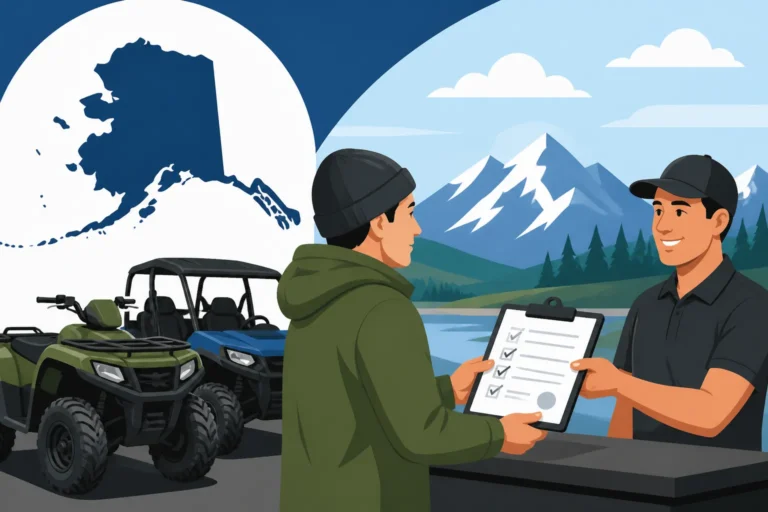
Make copies of everything. Have a [Alaska Registration Paperwork Checklist] available to ensure you haven't overlooked any important documents. The more concrete evidence you have, the stronger your position will be.
Attempt Direct Communication (with Caution)
Once you’ve gathered your documents, consider attempting to communicate directly with the person making the claim, if you feel safe doing so and if the situation doesn't involve suspected theft. Sometimes, these disputes arise from misunderstandings, miscommunications, or errors in paperwork. A calm, factual conversation, supported by the evidence you've collected, might resolve the issue without further escalation.
However, proceed with caution. If the individual is aggressive, threatening, or clearly unwilling to engage rationally, discontinue communication immediately. Any communication should ideally be in writing (email or certified mail) so you have a clear record. You might even consider having a legal professional draft a formal letter asserting your ownership and requesting they cease their claim, perhaps using a template from a service like LawDepot for a formal demand letter. This clearly establishes your position and may prompt them to reconsider their claim.
Involve Law Enforcement for Theft or Fraud
If you suspect the machine was stolen from you and then subsequently claimed by another party, or if you believe the other party is attempting fraud, it is absolutely essential to contact law enforcement immediately. File a police report detailing the theft or fraudulent claim. Provide them with all your documentation, especially the VIN and any previous theft reports. The police can then investigate the origin of the machine, cross-reference VINs, and determine if the machine is listed as stolen. Law enforcement will perform [Checking an Alaska Machine for a Theft Report] through national databases.
If the machine was stolen and later found in someone else's possession, even if they claim they purchased it legitimately, the police will typically seize the vehicle and work to return it to the rightful, original owner. This is where your detailed records become invaluable.
Legal Options and Civil Action
If direct communication fails and law enforcement cannot resolve the dispute (for instance, if it's a civil matter rather than a criminal one), your next step will likely involve legal counsel. Consulting with an attorney specializing in property law or civil disputes is crucial. They can assess the strength of your case, review your documentation, and advise you on the best course of action.
This might involve sending a formal demand letter from the attorney, initiating a civil lawsuit to establish rightful ownership (a "quiet title" action), or seeking a court order for the return of your property. This process can be lengthy and potentially expensive, but it's often necessary to definitively protect your legal rights and recover your machine. Your attorney will guide you through the complexities of Alaska's legal system.
Preventing Claims and Protecting Your Investment
An ounce of prevention is worth a pound of cure, especially when it comes to valuable assets like your APV. Taking proactive steps can significantly reduce the likelihood of someone else ever claiming your registered quad.
Maintain Impeccable Records
This cannot be stressed enough: keep every single piece of paperwork related to your APV. This includes:
- Original Bill of Sale: Whether new or used, ensure it's detailed, includes the VIN, date, price, and signatures. For new machines, the [Alaska Warranty Cards for a New Machine] can also serve as proof of purchase if a specific bill of sale isn't issued initially.
- Certificate of Title: Store this in a safe, secure place, separate from the machine itself. Do not carry the original title on your person or store it in the machine.
- Registration Documents: Keep current and past registration cards.
- Service and Repair Records: These can help establish a timeline of your possession and investment in the machine.
- Photographs: Take photos of the VIN, the machine itself, and any unique features, especially when you first acquire it.
- Communications: Keep records of any significant communications with previous owners or mechanics.
Store these documents in a fireproof safe or a secure digital backup. A clear [Alaska Bills of Sale for a Used Machine] is your first line of defense in a dispute.
Secure Your Machine Properly
Physical security is just as important as documentation. Take all necessary precautions to prevent theft or unauthorized use:
- Secure Storage: Whenever possible, store your APV in a locked garage, shed, or fenced yard.
- Locks: Use strong chains, disc locks, or wheel locks when the machine is stored or parked.
- GPS Trackers: Consider installing a hidden GPS tracker for added peace of mind and recovery assistance if it is stolen.
- Loaner Agreements: If you lend your machine to a friend or family member, put it in writing. A simple, dated document stating the terms of the loan (duration, responsibilities, acknowledgment of your ownership) signed by both parties, can prevent future misunderstandings. LawDepot offers templates for these types of agreements. This avoids situations where a casual loan becomes a contested claim.
Understand Registration vs. Titling Fully
One of the biggest areas of confusion for many riders is the distinction between registration and titling. While you might register your APV for two, four, or six years at a time, receiving your decals, this is primarily for operational purposes. It doesn't, on its own, guarantee legal ownership against a stronger claim.
Always strive to have a proper title in your name, especially for machines purchased or transferred after January 1, 2022. If your machine predates this requirement and you don't have a title, ensure your bill of sale and other records are impeccable. If you are in a situation where you might need to pursue [Alaska NTI Title Steps] (No Title Issued), understand the process fully. Never assume that simply having the registration decal on your quad makes you the undisputed owner. Understanding this difference is fundamental to protecting your investment.
Comparison: Proof of Ownership vs. Proof of Registration
To clarify the distinct roles of ownership and registration documents, here’s a helpful comparison:
| Feature | Proof of Ownership (Title) | Proof of Registration (Decal/Card) |
|---|---|---|
| Primary Purpose | Establishes legal ownership and proprietary rights. | Permits legal operation of the vehicle on public lands. |
| Issued By | State DMV (after verification of ownership history and liens). | State DMV or partner offices (upon payment of fees). |
| Key Information | Owner's name, VIN, make, model, year, lienholder (if any). | Registered owner's name, VIN, registration number, expiration. |
| Transferability | Required for legal transfer of ownership. | Not directly transferable; new owner must re-register. |
| Legal Weight in Dispute | Strongest evidence of legal right to the machine. | Strong evidence of operational rights; supports ownership claim. |
| Required for Sale | Essential for clear, legal sale and transfer. | Not directly required for sale, but often expected by buyers. |
| Frequency of Update | Only updated upon sale, transfer, or lien change. | Renewed periodically (e.g., [Alaska Registration Terms of Two, Four or Six Years]). |
| Physical Item | Paper certificate with official seals. | Decal attached to the machine, matching registration card. |
Disclaimer
This article is for general informational purposes only and does not constitute professional advice. Laws, prices and regulations vary by location and change over time. Consult a qualified professional for guidance on your specific situation.