Why Alaska Will Not Register a Homemade Quad
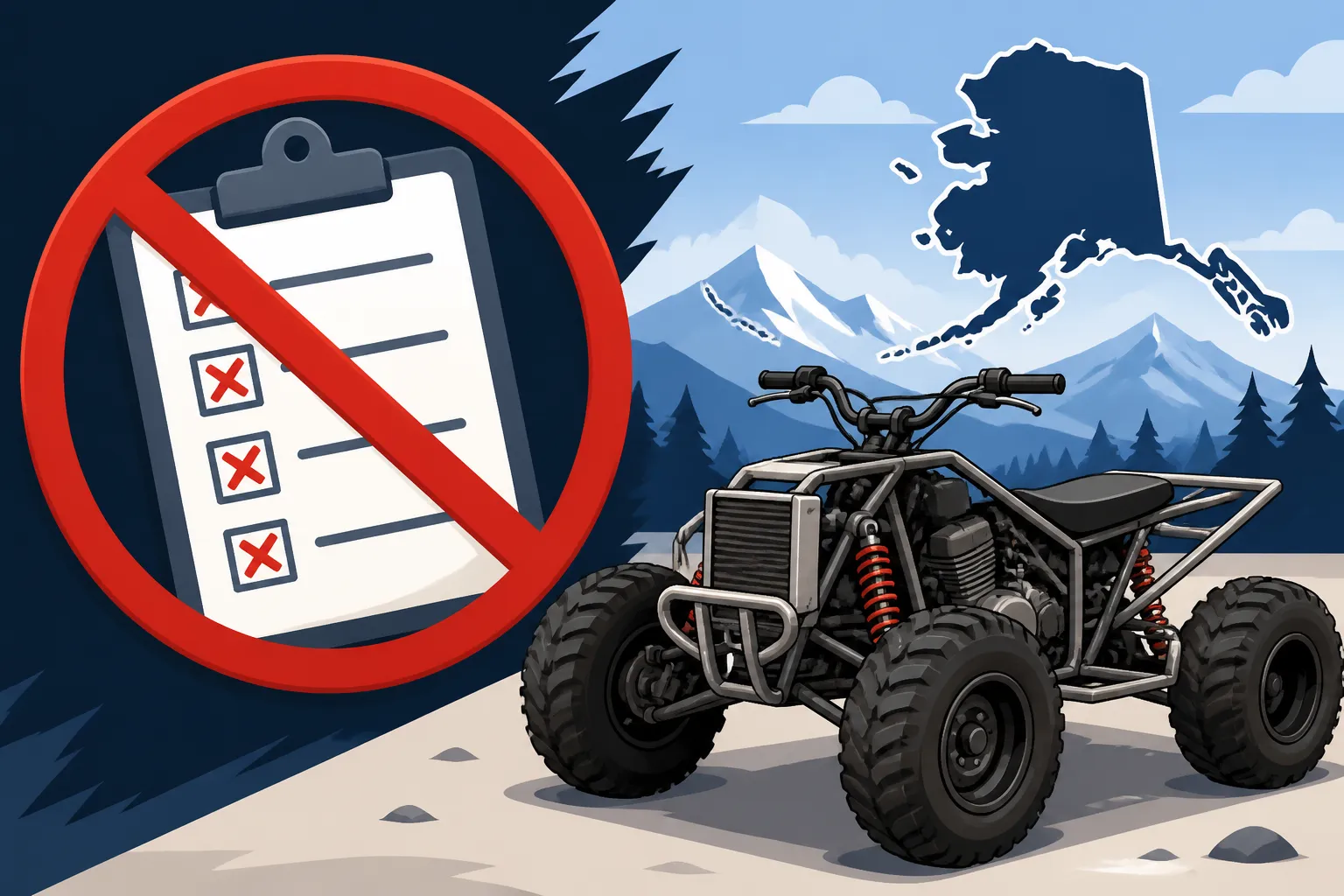
It's incredibly frustrating when you pour your heart, sweat, and resources into building something unique, something that perfectly suits your vision for tearing up the trails, only to discover that the state of Alaska won't recognize it for public use. Many passionate Alaskans dream of fabricating their very own quad or side-by-side, a truly custom machine. But the hard truth is, Alaska's Division of Motor Vehicles (DMV) has clear guidelines, and a homemade all-purpose vehicle (APV) simply doesn't meet the requirements for registration. This guide will walk you through exactly why your incredible custom creation, no matter how well-built, faces these registration hurdles and what your options are.
The Fundamental Roadblock: Why Homemade Doesn't Meet State Standards
You might have the skills of a master fabricator, and your homemade quad could be a work of art, stronger and more customized than anything you could buy off a dealer lot. But when it comes to getting that all-important decal for public land access, Alaska's DMV isn't looking at your craftsmanship; they're looking for specific documentation and adherence to a system designed around manufactured vehicles. It's a system built on traceability and established protocols, and homemade machines, by their very nature, exist outside that framework.
The Critical Role of the Vehicle Identification Number (VIN)
Think of a Vehicle Identification Number (VIN) as your machine's DNA. It's a unique 17-character code that identifies the manufacturer, make, model, and year of the vehicle, along with its specific production details. Every factory-built ATV or UTV has one, stamped into the frame and recorded on its official documentation. This VIN is crucial for everything from tracking ownership history and recalls to identifying stolen machines. It’s the cornerstone of vehicle identification in virtually every state, including Alaska.
When you've built a quad from scratch, there's no official manufacturer to assign a VIN. While some states have provisions for assigning VINs to custom-built automobiles (like hot rods), Alaska's APV registration system isn't set up for this process for off-road machines. There's no mechanism for a state inspector to certify your welding, engine placement, or brake lines to the same standard as a factory production line, and therefore, no way for them to issue a state-generated VIN for registration as an APV. Without this fundamental identifier, your machine lacks the very first piece of information required for official recognition.
Proof of Ownership: A Missing Link
Beyond the VIN, proving ownership is another major hurdle for homemade quads. When you register a manufactured APV in Alaska, you're typically asked for an original Manufacturer's Certificate of Origin (MCO) for a new machine, or a bill of sale and possibly a transferred title for a used one. These documents directly link the vehicle, by its VIN, to its legal owner, establishing a clear chain of custody from the factory floor to your garage.
For a homemade machine, what constitutes "proof of ownership" for the entire vehicle? You might have receipts for the engine, axles, frame tubing, and seats, but these are for components, not the finished vehicle itself. There's no single document that states, "This complete quad was built by [Your Name] on [Date] and is now owned by [Your Name]." Alaska's system needs definitive proof of the whole machine, not just its constituent parts. While you can use [Alaska Affidavits Naming a Seller] for certain situations with used machines where original paperwork is lost, this applies to existing vehicles, not those fabricated from scratch where the original "seller" is essentially you, the builder, without a legal manufacturing entity.
Safety Standards and Liability Concerns
Modern ATVs and UTVs undergo rigorous testing before they ever hit the market. Manufacturers conduct extensive crash tests, evaluate emissions, ensure braking efficiency, and design features to meet various safety standards set by organizations like the Consumer Product Safety Commission (CPSC). They are built with specific weight limits, passenger capacities, and structural integrity in mind, all backed by engineering data. This is why when you buy a new machine, you get a warranty and a promise of a certain level of safety and reliability.
A homemade quad, no matter how carefully constructed, hasn't gone through any of these formal certifications. The state, by registering a vehicle, implicitly acknowledges a certain level of compliance and safety. Registering a homemade machine would mean the state potentially taking on an enormous liability risk, essentially vouching for the safety of a vehicle that has no independently verified safety record or design standards. This is a risk the state is simply unwilling to take, particularly for machines intended for public land use where accidents can occur and involve others.
What Alaska's APV Class Requires (and Excludes)
The Alaska DMV categorizes off-road vehicles for registration purposes into a specific class known as "All-Purpose Vehicles" or APVs. This class has a clear definition of what it includes and, just as importantly, what it excludes. Understanding these parameters helps clarify why your homemade project falls outside the scope.
Defining "All-Purpose Vehicle" for Registration
So, what exactly is an APV in Alaska's eyes? Generally, it's a motorized vehicle designed to travel on unimproved surfaces, with three or more tires, a seat designed to be straddled by the operator (for ATVs), or side-by-side seating (for UTVs), and weighing under 1,000 pounds (for ATVs) or up to 2,000 pounds (for UTVs), depending on specific dimensions and characteristics. The key here is "designed to travel" and often, implicitly, "manufactured for that purpose." The entire legal framework for APVs, as outlined in statutes and regulations, presumes a factory-built machine with a traceable history and specific characteristics. For a deeper dive into what qualifies, you can look at [Alaska's APV Class Explained].
A homemade quad, while it might technically fit the description of having three or more tires and a straddle seat, doesn't fit the spirit of the law from a registration standpoint. The legal definition, combined with the documentation requirements, points directly to commercially produced machines. The state isn't equipped to inspect and certify a one-off fabrication to fit this category, especially when it lacks the foundational elements like a manufacturer-assigned VIN and MCO.
Specific Exclusions Beyond "Homemade"
It's not just homemade machines that are excluded from APV registration. Alaska's regulations are quite specific about other vehicle types that cannot be registered as an APV. For example, [Alaska Excludes Tracked Vehicles] like Sno-Cats or certain types of excavators, even if they're used off-road. Similarly, [Alaska Excludes Three-Wheelers] from the APV class, despite their off-road nature, due to specific safety concerns and classifications.
These exclusions highlight the state's intent to define a very particular category of off-road vehicle for registration. The purpose of these exclusions is to ensure that only certain types of machines, meeting specific criteria, are given the decal that permits them to operate on public lands. When you see how narrowly defined the APV class is, it becomes clearer why a homemade vehicle, which fundamentally deviates from the "manufactured vehicle" baseline, cannot be accommodated within the existing system. The DMV’s job is to register vehicles that fit established categories, not to create new categories for custom builds.
The Importance of a Manufacturer for Parts and Support
Beyond initial registration, having a manufacturer behind your machine offers a crucial layer of support and accountability. If there's a safety recall, the manufacturer is responsible for notifying owners and providing fixes. If you need a replacement part, there's a standardized inventory and supply chain. Repair manuals, troubleshooting guides, and factory-trained technicians all rely on the consistent design and production standards of a manufacturer.
For a homemade quad, none of this infrastructure exists. While you might be brilliant at sourcing parts and making repairs, the state's registration system doesn't account for this individual capability. The lack of a formalized manufacturer means there's no entity to take responsibility for long-term safety, parts availability, or engineering support. This further solidifies the state's stance against registering such machines for public use, where their ongoing safety and maintenance are factors in public safety.
Navigating the Realities: Where Can a Homemade Quad Be Ridden?
So, if your meticulously crafted machine can't get an Alaska APV registration, what are your options? Does this mean your project was all for naught? Not necessarily, but it does mean adjusting your expectations and understanding the very specific boundaries within which your homemade quad can legally operate. The key distinction, as with many regulations concerning off-road vehicles, boils down to land ownership.
Private Land: The Primary (and Often Only) Option
This is where your homemade quad shines! If you own private land, or have explicit permission from a private landowner, you are generally free to ride your custom-built machine to your heart's content on that private property. When a machine is strictly ridden on private land, Alaska's APV registration requirements typically don't apply. This is an important distinction, and you can learn more about it in [When a Quad on Private Land Needs No Alaska Decal].
On private land, the state's concern about VINs, MCOs, and manufacturer safety standards takes a backseat to the landowner's discretion. You're essentially responsible for your own safety and the safety of anyone you invite to ride on your property. This is why many Alaskans who enjoy fabricating unique machines do so with the understanding that their creations will be enjoyed on their own vast acreage, or perhaps a friend's mining claim, rather than on public trails managed by state or federal agencies. Just be mindful of local borough or city ordinances that might have noise restrictions or other rules, even on private property.
Challenges with Insurance, Sales, and Enforcement
While riding on private land is permissible, owning a homemade quad without state registration still presents practical challenges. Getting insurance can be incredibly difficult, if not impossible. Insurance companies rely on VINs and recognized manufacturers to assess risk and value. Without that, they have no reliable way to identify the vehicle or determine its insurable value, making most standard policies out of reach. This means any accident, even on private land, could lead to significant out-of-pocket expenses.
Selling a homemade quad also becomes a major headache. Most buyers, especially those looking to use the machine for anything beyond strictly private land, will be wary of a vehicle without a VIN, clear proof of ownership, or the ability to be registered. It makes the transaction risky and complex, and often significantly devalues your creation. Furthermore, if you were to accidentally or intentionally ride your unregistered, homemade machine on public land, you could face penalties. Troopers can issue citations for [Alaska Penalties for Riding Unregistered], and they have the authority to impound vehicles. The lack of proper identification would only complicate such an encounter.
When Customization is Still an Option (on a Registered Machine)
It's important to differentiate between a fully homemade quad and a heavily customized, factory-built quad. Alaska's registration rules apply to the original vehicle chassis and core identity. If you start with a manufactured ATV or UTV that does have a VIN and proper documentation, you can customize it extensively without losing its registration status. Many Alaskan riders modify their machines with upgraded suspension, larger tires, winches, snorkels, and custom bodywork.
As long as the original VIN is intact and readable, and the machine can still be identified by its original manufacturer's information, these modifications are generally fine. The state isn't concerned with what you've added, but rather with the foundational identity of the vehicle as it left the factory. So, if you crave a unique machine but also want public land access, your best bet is to start with a standard, registerable APV and then let your customization skills run wild from there. This allows you to combine your passion for building with the practicality of legal trail access.
Practical Advice for Alaskan Enthusiasts
The dream of building your own off-road beast is undeniably appealing, especially in a place like Alaska where self-reliance and ingenuity are so valued. While the state's registration rules might seem like a barrier, they are in place for specific reasons related to safety, liability, and traceability. Understanding these rules is the first step toward making informed decisions about your off-road adventures.
Focus on Factory-Built for Public Land Access
If your primary goal is to explore Alaska's incredible network of public trails, forest service roads, and designated riding areas, then the most straightforward and reliable path is to purchase a factory-manufactured ATV or UTV. These machines come with the necessary VIN, Manufacturer's Certificate of Origin (MCO), and inherent compliance with safety standards that allow for proper registration. Once registered, you can then focus your creative energy on customizing that machine to make it truly your own, without jeopardizing your ability to ride legally on public lands.
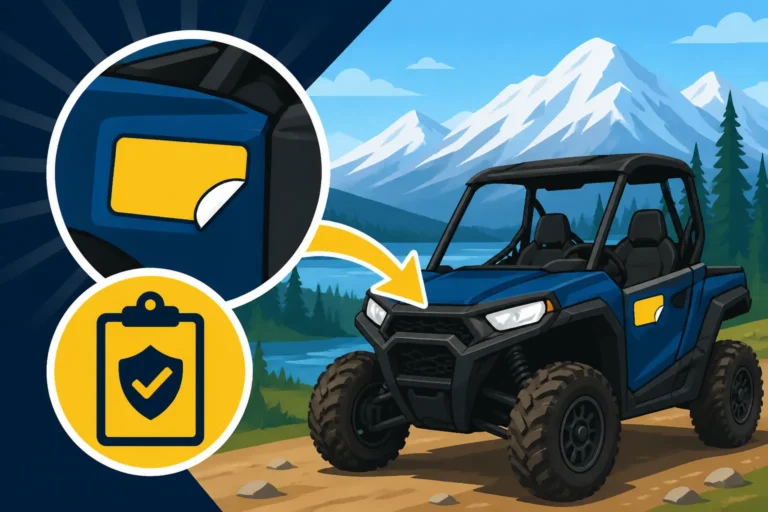
This approach ensures you can obtain the required [Alaska Decal Placement on the Tunnel Side] or [Alaska Decal Placement on a Side-by-Side] and confidently enjoy areas like the Knik River Public Use Area or the Denali Highway, knowing your machine is compliant.
Understanding Local Ordinances and Land Ownership
Regardless of whether your machine is homemade or factory-built, it is absolutely crucial to understand [Alaska Land Ownership and Who to Ask] before you ride. This goes beyond just registration. Alaska has a patchwork of federal, state, borough, city, and Native Corporation lands, each with its own rules and regulations regarding off-road vehicle use. Even on private land, you need permission.
For a homemade quad, this means if you plan to ride anywhere other than your own property, you need to ensure you have explicit permission from the landowner. Some remote cabins, village access trails, or mining claims might seem like "anywhere goes," but trespass laws still apply. Always verify land status and permission, as this is a fundamental responsibility of any Alaskan rider.
The Path to Enjoying Alaska's Backcountry Legally
Ultimately, the desire to explore Alaska's vast and rugged backcountry on an ATV or UTV is a powerful one, and it's a core part of the Alaskan lifestyle for many. To do so legally and responsibly, especially on public lands, means adhering to the state's registration requirements. This includes ensuring your machine has a valid VIN, proper ownership documents, and is within the definition of an APV.
If you have a machine that fits the bill, make sure you complete your [Alaska Registration Before Riding Public Land]. It’s a relatively simple process that opens up a world of adventure. While the dream of a fully homemade, trail-legal quad might not align with current Alaska regulations, there are still countless ways to enjoy the off-road experience with a customized, registered machine.
Here’s a quick comparison to help solidify the differences:
| Feature | Factory-Built ATV/UTV | Homemade Quad/UTV |
|---|---|---|
| VIN | Always present, unique, manufacturer-assigned | Not present, cannot be state-assigned for APVs |
| Proof of Ownership | MCO, Bill of Sale, Transferred Title | Receipts for parts, no single vehicle document |
| Registration for Public Land | Possible with proper documentation | Not possible under current Alaska APV rules |
| Safety Standards | Designed and tested to industry/federal standards | No formal testing or certification |
| Liability | Manufacturer liability, insurance options available | Builder/owner assumes all liability, hard to insure |
| Resale Value | Established, based on make/model/condition | Very difficult to sell, low or no market value |
| Legal Riding Areas | Public lands (with registration), private lands | Strictly private land (with permission) |
| Customization | Extensive modifications possible after purchase | Can be built entirely to spec, but limited use |
Disclaimer
This article is for general informational purposes only and does not constitute professional advice. Laws, prices and regulations vary by location and change over time. Consult a qualified professional for guidance on your specific situation.