Why Your Decal Number Is the Registration Number
It can be confusing when you're getting your off-highway vehicle (OHV) ready for the Alaska trails. Unlike cars or trucks that get license plates, your ATV or UTV in Alaska receives a small decal. Many folks wonder if this little sticker is really all there is to prove their machine is street-legal (for limited road use) or trail-ready. This guide will dive deep into why that decal number is, indeed, your official registration number and what that truly means for you as an Alaskan rider.
Understanding Alaska's APV Registration System
Navigating the nuances of vehicle registration in Alaska, especially for All-Purpose Vehicles (APVs) like ATVs and UTVs, can sometimes feel like trying to find a specific trail marker in a blizzard. You're used to seeing license plates for cars, trucks, and even snowmachines in some areas, so when you get a little sticker for your quad, it's natural to wonder if you've missed a step. But the truth is, Alaska's system for APVs is distinct, and that decal is far more significant than it might appear.
Decals as Proof of Registration
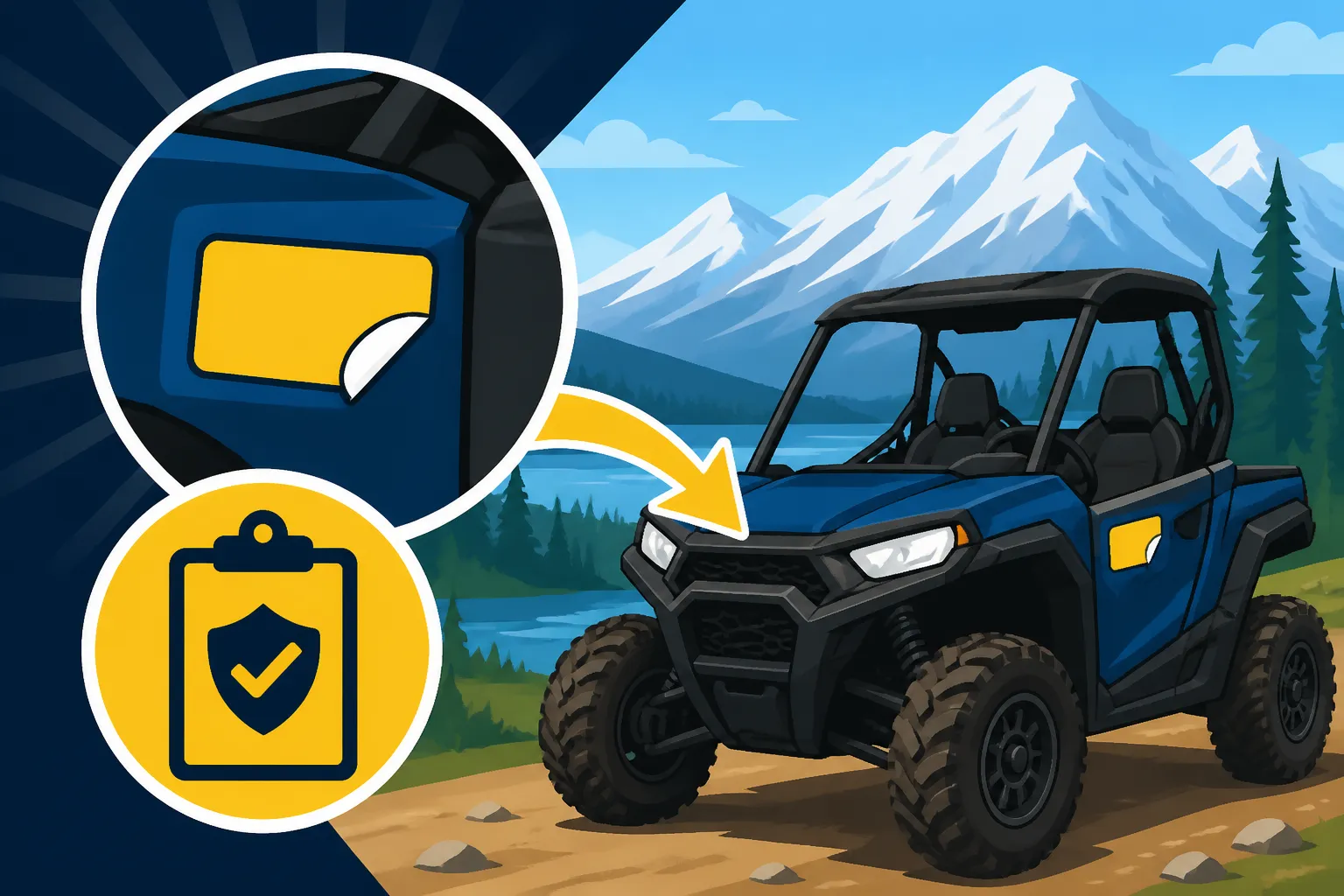
In Alaska, for your ATV, UTV, or dirt bike (vehicles specifically classified as APVs), the decal you receive is the only physical proof of registration you'll get. There's no separate paper certificate to carry around, no license plate to bolt on. This small, adhesive sticker, adorned with a unique series of numbers and letters, serves as your machine's official identifier in the state's registration database. When a state trooper or other law enforcement officer stops you on a public trail or road, they're looking for that decal, clearly displayed, to verify that your machine is legally registered for public land use. It’s the visual cue that tells them you've done your part to comply with state regulations. Think of it as a mobile, weatherproof registration card, always affixed to your machine. It confirms that you've paid the required fees and entered your vehicle's details into the state's system. [Alaska Issues a Decal, Not a Plate]
This approach simplifies enforcement and reduces the amount of paperwork you need to physically carry while out riding. Imagine trying to keep a paper registration dry and intact through creek crossings, mud bogs, or a sudden downpour on the Denali Highway. The durable decal is designed to withstand the rugged Alaskan environment, ensuring that your registration status remains visible and verifiable. It's a pragmatic solution for a state where machines are often exposed to extreme conditions. The specific placement requirements, which we’ll discuss later, are all about ensuring this vital piece of information is readily accessible for inspection, whether you're parked at a trailhead or actively riding.
The Unique Decal Number
Every decal issued by the State of Alaska for an APV carries a unique alphanumeric sequence. This isn't just a random string; it's the direct link to your specific registration record in the state's database. This number is your registration number. When you fill out forms, or discuss your machine with the DMV, this is the identifier they'll use. It's how your vehicle is tracked for things like ownership transfers, renewals, and even in the event of theft recovery. This unique number ensures that each registered APV has its own distinct identity within the system, preventing confusion and ensuring accurate record-keeping. It's essential that this number remains legible and intact throughout the registration period.
For law enforcement, this unique number is a powerful tool. A trooper can quickly run the decal number to pull up registration details, verify ownership, and check for any outstanding issues or theft reports related to that specific machine. This instantaneous verification is why the decal is so crucial. It provides immediate, on-the-spot proof of compliance. Without a visible, valid decal number, an officer would have no way to confirm your machine's legal status, potentially leading to citations or other enforcement actions. It's not just a sticker; it's your machine's fingerprint in the state's registration system, and understanding its importance is key to hassle-free riding in Alaska. Why Your Decal Number Is the Registration Number
The Journey from Application to Decal
Getting that little decal on your ATV or UTV in Alaska might seem straightforward, but it's the culmination of a clear process designed to ensure proper ownership and accountability. It's not just about slapping a sticker on; it's about establishing a legal connection between you and your machine, which that decal then represents. This journey begins with a specific application and requires verifiable proof of who truly owns the machine.
The Vehicle Transaction Application (Form V1)
The cornerstone of the APV registration process in Alaska is the Vehicle Transaction Application, often referred to as Form V1. This is the document you'll fill out, whether you're registering a brand-new machine or bringing an older, previously unregistered quad into the system. It's a comprehensive form that gathers all the essential details about you as the owner and your specific APV. You'll provide information like your name, address, and contact details, along with the make, model, year, and crucially, the Vehicle Identification Number (VIN) of your machine. This VIN is paramount, as it's the unique manufacturing identifier for your ATV or UTV, much like a social security number for a person. Every piece of information you provide on this form contributes to the official record that will eventually be linked to your decal number. [The Vehicle Transaction Application Every OHV Owner Files]
Filling out Form V1 accurately is critical. Any errors or omissions can delay your registration or even lead to rejection. It’s where your intention to legally register your APV becomes a formal declaration. Once processed and approved, the state uses the data from this form to generate your unique registration number, which is then printed on your decal. So, while the decal itself is a small sticker, it’s the physical manifestation of all the information and declarations made on your Form V1. Services like LawDepot can be incredibly helpful for understanding what goes into official documents like these, especially if you're preparing other related paperwork for your machine.
Ownership Documentation and Verification
Before the state will issue you a decal with its unique registration number, you must conclusively prove that you are the legal owner of the APV. This isn't just a formality; it's a vital step to prevent fraud and ensure that only legitimate owners can register machines. The type of documentation required depends on whether your machine is new or used, and where you acquired it. For a brand-new machine purchased from a dealer, you'll typically present the Manufacturer's Certificate of Origin (MCO) and a bill of sale. The MCO is the "birth certificate" of your machine, detailing its original manufacturing information. [Using a Warranty Card as Proof of Ownership]
If you're registering a used APV, the process usually involves a bill of sale from the previous owner. This document must clearly identify both the buyer and seller, the machine's VIN, the purchase price, and the date of sale. Sometimes, if a bill of sale isn't readily available or is incomplete, an affidavit naming the seller might be required. This is a sworn statement affirming the details of the transaction. For more complex situations, such as inheriting a machine or buying one with lost paperwork, additional steps like waiting periods or specific affidavits may be necessary. The state meticulously verifies these documents to ensure a clear chain of ownership before that registration decal is ever printed. This rigorous process is what gives the decal number its legal weight; it signifies that a proper change of hands has been recorded and validated. [Alaska Bills of Sale for a Used Machine], [Alaska Affidavits Naming a Seller]
Beyond the Decal: What It Doesn't Do
While your APV decal number is undeniably the key to your machine's registration in Alaska, it's important to understand its limitations. Many new riders, or those coming from states with different systems, might mistakenly believe the decal serves multiple purposes. However, the decal is specifically for registration, and other critical aspects of ownership and legal status are handled by separate, albeit related, processes.
Decals vs. Titles in Alaska
One of the biggest areas of confusion revolves around the difference between a registration decal and a vehicle title. For many years, Alaska did not issue titles for most APVs. You simply registered your machine, received a decal, and that was that. However, this changed in 2022. Since then, Alaska does require titling for most APVs, and a title is a completely separate document from your registration decal. The decal indicates that your machine is registered to operate on public lands and roads, meaning you've paid your fees and the state acknowledges its presence. A title, on the other hand, is the official legal document proving ownership of the machine. It's like the deed to a house, establishing who has the legal right to claim the property. [Alaska APV Titling Required Since 2022]
While the registration decal confirms your machine is good to go for riding, the title is what you truly need to legally sell it, use it as collateral for a loan, or transfer it to another person. Without a title (if one is required for your machine), even with a valid registration decal, you don't have full legal proof of ownership in the most definitive sense. This distinction is crucial, especially when buying or selling. While your decal number is linked to your registration record, it doesn't convey the same legal standing as a title. It's possible to have a registered machine without a title (especially for older machines, or those under certain circumstances that fall under [Alaska No Title Issued Registrations]), but having both the registration decal and a proper title (when required) provides the most comprehensive and secure legal standing for your APV.
The Role of Decals in Transfers and Sales
When it comes time to sell your registered APV in Alaska, the decal number certainly plays a role, but it's not the primary document for transferring ownership. The decal confirms the machine's current registration status and provides a quick reference number, but the actual transfer of ownership hinges on the title (if one exists) or a properly executed bill of sale. For instance, if you're selling a machine that has a title, you'll endorse that title over to the new owner. If your machine is older and falls under the 'no title issued' category, a comprehensive bill of sale becomes even more vital as the core document of transfer. [Selling a Registered Machine in Alaska]
The decal number helps link the machine to its previous owner's registration record, which is useful for the buyer when they go to register the machine in their name. They'll need to provide proof of ownership (title or bill of sale) and then apply for a new registration decal in their name. It's not a direct transfer of the decal itself. The buyer will receive a brand-new decal with a new, unique registration number, reflecting their ownership. So, while the decal is a snapshot of current registration, it's the underlying ownership documents that facilitate the legal transfer of the machine from one person to another. When you're [Buying From a Private Seller in Alaska], always prioritize getting the correct ownership documents, even if a current decal is present on the machine.
Practical Implications for Alaska Riders
Understanding the purpose and significance of your APV decal number isn't just about legal compliance; it has real, practical implications for every time you hit the trails or venture onto designated public roads in Alaska. From where you stick that decal to how you manage its lifespan, knowing the rules can save you a headache and ensure your riding experience is as smooth as possible.
Decal Placement and Visibility
Alaska law is quite specific about where your APV registration decal must be placed, and for good reason. The primary goal is visibility and accessibility for law enforcement. For most ATVs, the decal needs to be placed on the rear left side of the machine, typically on the tunnel side or fender, in a location where it is clearly visible when you are seated on the machine. For side-by-sides (UTVs), the placement is usually on the rear left side as well, often on the frame or a flat surface of the bed. The decal should be affixed firmly to a clean, flat surface so it won't peel off, become obscured by mud, or be damaged by brush. [Alaska Decal Placement on the Tunnel Side]
Imagine a wildlife trooper patrolling a remote trail. They need to quickly identify registered machines. If your decal is tucked away, covered in mud, or peeling off, it makes their job harder and could lead to you being stopped for inspection, even if you are legitimately registered. Keeping your decal clean and visible is part of your responsibility as a registered owner. If you're planning a particularly muddy ride, consider how you might keep that crucial number clean or perhaps carry a small brush to quickly clear it off if needed. Remember, the decal isn't just for you; it's how the state identifies your machine's legal status, so making it easy to see is paramount. [Alaska Decals Visible When Seated]
Renewals and Term Lengths
Your decal number is intrinsically tied to your APV's registration term. In Alaska, you have the flexibility to choose a registration term of two, four, or six years when you first register or renew your machine. Each term has a corresponding fee, with longer terms offering a slight cost savings over time. Regardless of the term you choose, every single APV registration in Alaska expires on September 30th of the final year of its term. This standardized expiration date simplifies the renewal process for the state and makes it easier for riders to remember. [Two, Four or Six Years at a Time], [Every OHV Registration Term Expires on September 30]
When it's time to renew, your unique decal number is how the DMV identifies your existing registration record. You won't get a new decal number for the same machine; rather, you'll receive new decals reflecting the renewed registration period, but the underlying identifier remains linked to that original number in the system. Keeping track of your renewal dates is important to avoid riding an unregistered machine, which can lead to fines. Many riders set reminders for early September to ensure they're renewed before the deadline. While Alaska doesn't offer online OHV registration, you can process renewals in person or by mail. For managing the paperwork associated with renewals, including keeping copies of your current registration application and payment proofs, utilizing platforms that help organize legal documents, like LawDepot, can provide a structured way to keep everything straight, especially if you have multiple machines.
Common Misconceptions and Troubleshooting
Even with a clear understanding of the APV registration system, questions and unexpected situations can arise. Knowing how to handle these common scenarios and correcting misconceptions about your decal number can save you a lot of hassle and potential fines out on the trails.
What to Do if Your Decal is Lost or Damaged
It happens. You're blasting through a mud bog, weaving through alder thickets, or loading your machine onto a trailer, and suddenly, your precious registration decal is gone or rendered unreadable. Don't panic, but don't ignore it either. Riding an APV on public land or designated roads without a visible, valid decal is equivalent to riding unregistered, and it can lead to a citation. The state provides a process for obtaining a replacement decal. You'll typically need to fill out another Vehicle Transaction Application (Form V1), indicate that you're requesting a replacement decal, and pay a small fee. This process ensures that a new, readable decal is issued for your machine, maintaining its legal registered status. [Alaska Decal Replacement If Lost]
It's a good practice to photograph your decal once it's affixed, along with your VIN, and keep these photos on your phone or in a cloud storage. While a photo isn't a substitute for the physical decal, it can serve as secondary proof and help expedite the replacement process if needed. The key is to address a lost or damaged decal as quickly as possible. Don't put off getting a replacement, as the consequences of riding unregistered can be more costly than the replacement fee.
Interacting with Law Enforcement
Encountering a state trooper, Alaska Wildlife Trooper, or local law enforcement officer while riding your APV is a possibility, especially on public lands or designated roads. When this happens, your registration decal is the first thing they'll look for. They'll expect it to be clearly visible, legible, and current. If they stop you, they may ask for proof of your driver's license (a Class D license is generally required for APV road use in Alaska) and potentially your proof of insurance, if applicable to your riding location. [What a Trooper Can Ask to See], [Alaska Requires a Class D License]
Your decal number allows them to quickly confirm that your machine is registered and that the registration is valid. Being able to point to your decal and having your other documents readily available will make the interaction smooth and efficient. It reinforces that you are a responsible rider who understands and adheres to the state's regulations. Should there be any doubt about ownership (perhaps you're riding a friend's machine), having a copy of the bill of sale or an affidavit, even a digital one, could be beneficial. For maintaining easily accessible records of important documents like bills of sale or affidavits, services like LawDepot offer templates and organizational tools that can help keep your paperwork in order, making it easier to provide proof if requested by an officer.
Decal vs. Title: A Quick Comparison
To help clarify the roles of your APV decal and a vehicle title in Alaska, here's a quick comparison. Remember, while related, they serve distinct legal purposes.
| Feature | Registration Decal | Vehicle Title (Post-2022 APVs) |
|---|---|---|
| Purpose | Authorizes machine use on public land/roads. | Establishes legal ownership. |
| Physical Form | Adhesive sticker on the machine. | Paper document, usually mailed to owner/lienholder. |
| Identification | Contains unique registration number. | Contains unique title number and VIN. |
| Issued By | Alaska DMV | Alaska DMV |
| Visibility | Must be displayed clearly on the machine. | Kept in a safe place, not carried on machine. |
| Transfer of Machine | Replaced by new owner's decal upon registration. | Endorsed/signed over to new owner. |
| Proof Of | Current legal right to operate in public areas. | Definitive legal ownership. |
| Lien Holder Role | Not typically held by a lien holder. | May be held by a lien holder until paid off. |
Remember, while the decal is your proof of registration for riding, the title (when applicable) is your ultimate proof of who legally owns the machine.
Disclaimer
This article is for general informational purposes only and does not constitute professional advice. Laws, prices and regulations vary by location and change over time. Consult a qualified professional for guidance on your specific situation.