Why a Tracked Machine Cannot Be an APV
It's a common misconception, especially for those new to Alaska's incredible backcountry, that if it looks like an off-road vehicle and goes off-road, it must be an All-Purpose Vehicle (APV) for registration purposes. However, if your machine rolls on tracks instead of wheels, you're looking at a different set of rules entirely. This guide will meticulously break down why tracked machines, despite their utility and popularity in the Last Frontier, simply do not qualify as APVs under Alaska state law, and what that means for owners and enthusiasts.
Understanding Alaska's APV Definition
When the state of Alaska talks about All-Purpose Vehicles, or APVs, it has a very specific image in mind, largely shaped by the traditional form factor of most ATVs and UTVs. This definition is crucial because it dictates everything from how you register your machine to where you can legally operate it on public lands. Failing to understand this distinction can lead to frustration, or worse, an unexpected citation from a trooper.
What Constitutes an All-Purpose Vehicle in Alaska?
At its core, an Alaska APV is defined by its wheeled nature. The law generally refers to vehicles designed for off-highway travel, propelled by an internal combustion engine, and primarily supported by tires. Think of the classic quad, a side-by-side (UTV), or even some specialized multi-wheel vehicles designed for rough terrain. These machines typically have handlebars or a steering wheel, a saddle or bucket seating, and are manufactured for recreational or utility use on unpaved surfaces. They are designed to "roll" over obstacles, with their tires providing traction and suspension. This focus on tires and wheels is a fundamental aspect of the [Alaska APV Class Explained].
The intent behind this definition is to categorize vehicles that fit a certain operational profile, safety standard, and impact on the environment. While many tracked machines might seem to fulfill the spirit of "all-purpose" use in Alaska's challenging environment, the letter of the law draws a clear line in the sand regarding their propulsion system. This distinction isn't arbitrary; it's rooted in how these different types of vehicles interact with various terrains, especially sensitive areas like tundra or wetlands.
Why Tracked Machines Don't Fit the Mold
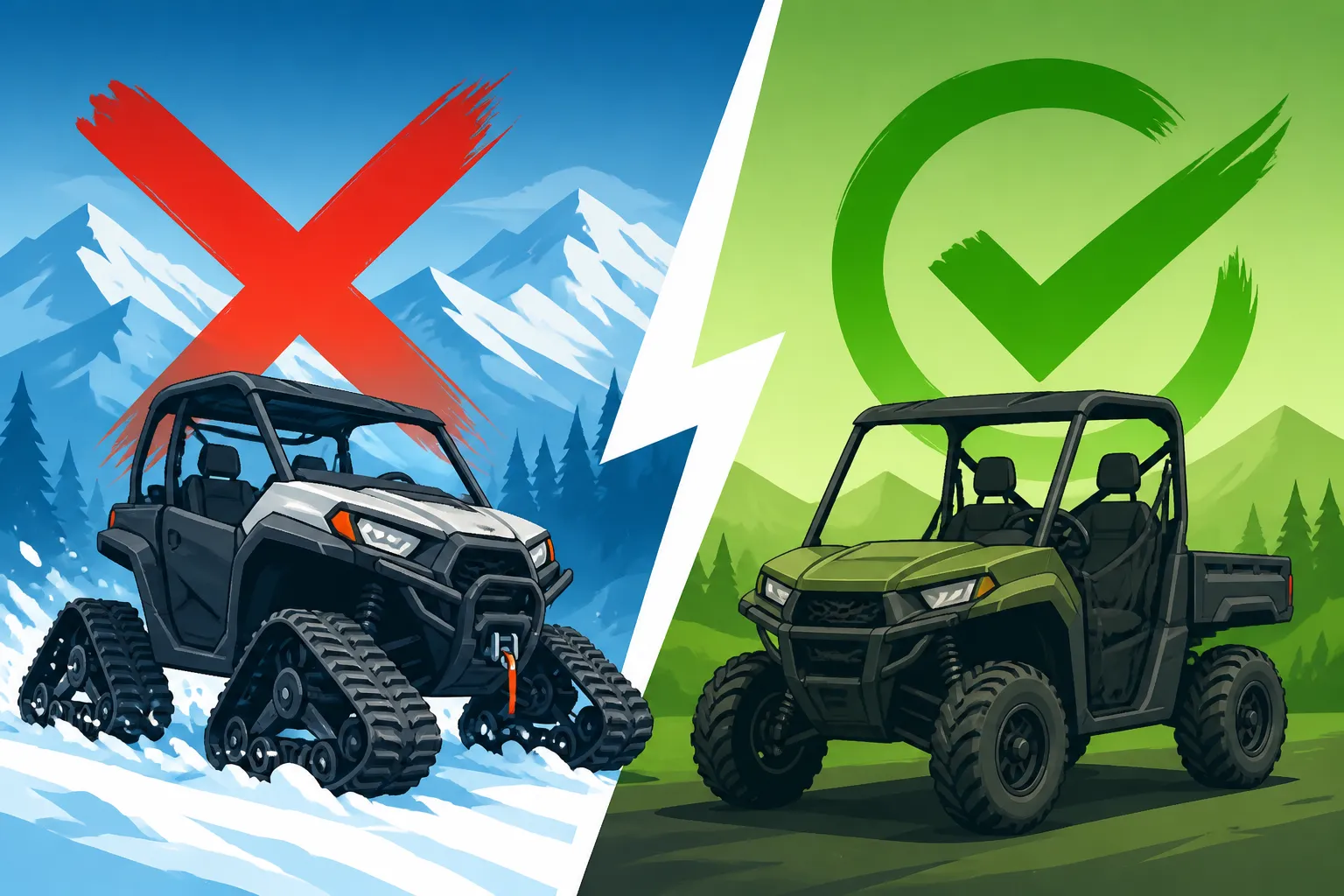
The primary reason a tracked machine cannot be registered as an APV in Alaska is precisely its tracks. The state's definition of an APV explicitly excludes vehicles that are not primarily supported by wheels. Tracked vehicles, by their very design, distribute their weight over a much larger surface area using continuous tracks, similar to a tank or bulldozer. While this design is incredibly effective for flotation over snow, mud, or soft ground, it places them outside the APV classification. This exclusion isn't just about semantics; it reflects different operational characteristics and potential impacts, which often necessitate separate regulatory frameworks.
Imagine the difference in footprint between a four-wheeled ATV and a tracked vehicle. The ATV concentrates its weight at four points, while the tracked machine spreads it across two long, broad surfaces. This fundamental difference in how they move and interact with the ground is why [Alaska Excludes Tracked Vehicles] from the APV class. This isn't to say tracked machines are less capable or less valuable in Alaska; it simply means they fall under different legal classifications and, therefore, different rules for registration and use.
The Core Legal Distinction: Wheels vs. Tracks
The legal framework in Alaska for registering off-highway vehicles makes a definitive split based on the mode of propulsion and ground contact. An APV, as defined, uses wheels and tires to move. A tracked machine, whether it's a dedicated snow machine or a UTV fitted with track kits, uses tracks. This might seem like a minor detail, but it's a major legal differentiator. The state recognizes a category for "snow machines," which inherently implies a tracked vehicle designed for snow travel, and sets forth specific registration requirements for them, entirely separate from APVs.
This distinction prevents a tracked vehicle from being registered as both an APV and a snow machine, or from attempting to fit into a category it wasn't designed for. It simplifies enforcement and clarifies what documents are needed for each type of machine. If you're pondering why your tracked UTV can't get an APV decal, it boils down to this: the legal definition is precise, and tracks simply don't equate to wheels in the eyes of Alaska's Department of Motor Vehicles (DMV). This clarity helps avoid confusion about which set of rules to follow when preparing your vehicle for the trails or for sale, ensuring proper compliance regardless of the specific machine you operate.
Common Tracked Machines in Alaska and Their Status
Alaska's diverse terrain and extreme weather conditions make tracked vehicles indispensable for many, from subsistence users to recreationists. However, understanding their legal classification is key to responsible ownership. It's not just about the typical snow machine; there's a broader range of tracked vehicles in use, each with its own place in the state's regulatory landscape.
Snow Machines: A Separate Category
When most Alaskans think of tracked vehicles, the snow machine (or snowmobile) is usually the first thing that comes to mind. These iconic machines are, by their very nature, tracked. They are designed specifically for travel over snow and ice, using a continuous track for propulsion and skis for steering. Because they are tracked, they are explicitly excluded from the APV classification. Instead, Alaska has a separate and distinct registration system for snow machines.
This means that if you own a snow machine, you'll need to follow the specific procedures for [Alaska Excludes Snowmobiles From APV] and register it as such. This includes obtaining a snow machine decal, which is different from an APV decal, and adhering to snow machine-specific rules for operation, equipment, and areas of use. While both APVs and snow machines are popular recreational vehicles, their different propulsion systems put them into entirely different legal categories, requiring owners to understand and comply with two separate sets of regulations.
Purpose-Built Tracked Vehicles: Industrial, Not Recreational APVs
Beyond snow machines, there's a whole world of other purpose-built tracked vehicles found in Alaska. These can range from small compact utility loaders with tracks, mini-excavators, or tracked dumpers used for construction and landscaping, to more specialized vehicles designed for traversing extremely boggy terrain or steep slopes. These machines are almost universally considered industrial or specialized equipment, not recreational APVs.
Their primary design intent is for work, not for sport or general utility as an APV is defined. As such, they typically do not fall under the recreational vehicle registration categories for either APVs or snow machines. They might require different types of vehicle identification, business registrations, or operational permits depending on their use (e.g., if used in commercial operations). While they might traverse similar terrain to APVs, their classification ensures they are governed by rules more appropriate to their design and function. An individual using a compact tracked loader on their private property, for example, is not operating an APV, and the machine would not be eligible for APV registration.
ATV/UTV Conversions with Track Kits: Still Not APVs for Registration
Perhaps one of the most confusing areas for owners is when they modify a standard wheeled ATV or UTV by installing an aftermarket track kit. These kits replace the tires and wheels with a set of four individual tracks, dramatically increasing flotation and traction in snow, mud, or soft ground. While the base vehicle might have originally been an APV, the moment it's equipped with tracks, its classification changes for registration purposes.
Even though it started life as a quad or a side-by-side, once tracks are installed, it ceases to meet the "primarily supported by tires" definition of an APV. Functionally, it acts much like a snow machine or other tracked vehicle. Therefore, an ATV or UTV converted with track kits cannot be registered as an APV. This often catches owners by surprise, especially those who bought a wheeled machine and later added tracks for winter use. They may find themselves in a gray area regarding registration, as the state views the functional nature of the machine over its original design for registration purposes. Owners in this situation need to confirm with the DMV whether their tracked conversion qualifies for snow machine registration or if it falls into another, possibly unregistered, category for specific types of use.
The Practical Implications for Owners
Understanding that a tracked machine isn't an APV has significant practical implications for owners in Alaska. It affects everything from where you can ride to what documentation you need to prove ownership. Navigating these nuances is crucial to avoid legal headaches and ensure responsible use of your vehicle.
Where Can You Ride a Tracked Machine in Alaska?
Since tracked machines are not considered APVs, their legal access to various lands, particularly public lands, differs significantly. An APV decal grants access to designated APV trails and areas on state land, provided other rules are followed. For tracked machines, particularly snow machines, there are specific snow machine trails and usage areas. However, for other tracked vehicles not classified as snow machines, general public land access can be much more restricted.
The core principle here is that [Public Property as the Trigger] for registration. If you're operating a tracked machine on private land, including your own property or land you have explicit permission to use, then state registration as an APV or snow machine might not be required. This is why [When a Quad on Private Land Needs No Alaska Decal] – the same logic often extends to any off-highway vehicle, including tracked ones, when confined to private property. However, venturing onto state, federal, or borough lands, even for access to remote cabin sites or hunting areas, means you must comply with the specific regulations for that land type and vehicle class. Operating a tracked excavator for personal use on a public trail, for example, would likely be prohibited, as it's not a designated recreational vehicle for that trail system. Always check with the land manager (DNR, Forest Service, BLM, Native Corporation, etc.) before riding a tracked machine on any non-private land.
What About Insurance and Licensing for Tracked Vehicles?
Just as registration differs, so too can the requirements for insurance and operator licensing. For APVs, Alaska has specific [Alaska ATV Insurance Requirements] and [Do You Need a License for an ATV in Alaska?] rules, especially concerning road crossings and certain public lands. For snow machines, there might be different or fewer mandates depending on the specific use case, though carrying insurance is always a wise decision for any valuable asset.
For other non-APV tracked machines, particularly industrial ones, insurance requirements will typically follow commercial vehicle or equipment insurance policies, which are much more robust and cover liability for property damage or injury during their operation. Licensing for operators will depend on the type of equipment; a standard driver's license might suffice for some, while others might require specialized training or commercial licenses if used for work. Always assume that if your machine is not specifically registered as an APV or snow machine, you'll need to proactively secure appropriate insurance coverage and verify any licensing requirements to protect yourself and others.
Necessary Documentation for Ownership and Sale
Whether your machine is tracked or wheeled, proving ownership is paramount. For APVs, this might involve a bill of sale, a Manufacturer's Certificate of Origin (MCO), or even an affidavit. For tracked machines, especially snow machines, similar documentation is required for registration and transfer of ownership. Even for tracked vehicles that don't fall into a recreational registration category, a clear paper trail is essential for buying, selling, or even simply demonstrating that the vehicle belongs to you.
When buying or selling any used machine in Alaska, a comprehensive bill of sale is critical. This document protects both the buyer and the seller by clearly stating the terms of the sale, the machine's VIN, and the agreed-upon price. You can find templates and guidance for creating these important documents through services like LawDepot, which offers customizable legal forms to ensure all necessary details are included. For new machines, a manufacturer's statement of origin or similar factory paperwork will serve as proof of initial ownership. Always keep these documents safe and consider having multiple copies. This is especially true for [Alaska Bills of Sale for a Used Machine] or [Buying From a Private Seller in Alaska], where clear documentation can prevent future disputes.
Navigating Ownership and Use
Owning a tracked machine in Alaska comes with its own set of challenges and responsibilities. The key to a smooth experience is proactive research, understanding your vehicle's classification, and knowing where to turn for reliable information. It's about being a well-informed and responsible operator, regardless of whether your machine has tracks or wheels.
The Importance of Understanding Vehicle Classification
The biggest takeaway for any Alaskan considering or owning a tracked machine is the absolute necessity of understanding its correct legal classification. Simply put, an APV is a wheeled vehicle. A tracked vehicle is not an APV. This distinction affects registration, where you can ride, and what equipment might be required. Mistaking one for the other can lead to fines, impoundment, or denial of access to cherished riding areas.
Alaska's unique environment often blurs the lines between different types of off-road vehicles, but the law tries to maintain clear categories for safety and environmental protection. For instance, a person might assume their tracked UTV should follow the same rules as a wheeled one when crossing a road, only to find out it falls under entirely different guidelines. Being informed means you can confidently plan your adventures, ensure your machine is properly documented, and avoid unintentional infractions. It's about knowing the rules of the game for your specific piece of equipment, ensuring you have the correct documentation whether it's an APV registration or a proper bill of sale created with tools from LawDepot.
Resources for Owners of Tracked Machines
For owners of tracked machines, especially those that don't fit neatly into the "snow machine" or "APV" categories, finding accurate information is paramount. Your local Alaska DMV office is always a good starting point for registration questions. However, for nuanced questions about land access, you'll need to consult the specific land management agency responsible for the area you wish to use. This could be the Alaska Department of Natural Resources (DNR) for state lands, the U.S. Forest Service or Bureau of Land Management (BLM) for federal lands, or even individual Native Corporations for their private lands.
Additionally, organizations like the Alaska State Snowmobile Association (ASSA) can be invaluable resources for snow machine owners, providing information on trails, events, and legislative updates. For other tracked vehicles, consulting equipment dealers or specialized forums can offer practical advice, though legal advice should always come from official sources. Remember that [Alaska Land Ownership and Who to Ask] is critical before venturing out, as rules vary widely. It’s also wise to keep current on any specific municipal or borough ordinances, as local rules can sometimes add another layer of complexity to statewide regulations.
Potential Future Changes or Exceptions
While the current legal framework in Alaska is clear about tracked machines not being APVs, laws and regulations are always subject to change. As technology evolves and the use of different off-road vehicles becomes more widespread, there's always a possibility that new classifications or exceptions could be introduced. For example, some jurisdictions in the Lower 48 have begun to grapple with classifications for highly specialized tracked vehicles that blur the lines between recreational and utility use.
However, for now, the distinction remains firm. Owners should not assume that because a tracked vehicle is increasingly common or seems functionally similar to an APV, it will automatically be treated the same. Staying informed through official state channels, advocacy groups, and reputable news sources is the best way to keep abreast of any potential changes. Until such changes occur, the current rule holds: if it's got tracks, it's not an APV, and you'll need to understand and comply with its specific legal status. When preparing documents for a new purchase or sale, even for these unique machines, using a reliable service like LawDepot for a bill of sale can give you peace of mind that your ownership is properly recorded.
| Feature | All-Purpose Vehicle (APV) | Tracked Machine (e.g., Snow Machine, Tracked UTV) |
|---|---|---|
| Primary Propulsion | Wheels and tires | Continuous tracks |
| Registration Class | APV (requires APV decal) | Snow machine (requires snow machine decal) or other |
| Primary Use | General off-road recreation, utility | Snow travel, extreme mud/bog, specific utility |
| Road Crossing Rules | Specific rules apply, often require license, insurance | Varies, often more restrictive or prohibited |
| Tundra/Wetland Impact | Can cause significant damage if ridden improperly | Can have lower ground pressure, but still restricted |
| Common Examples | Quads, Side-by-sides, Dirt bikes | Snowmobiles, tracked ATVs/UTVs, industrial crawlers |
Disclaimer
This article is for general informational purposes only and does not constitute professional advice. Laws, prices and regulations vary by location and change over time. Consult a qualified professional for guidance on your specific situation.