Alaska Rules for Riding a Frozen River
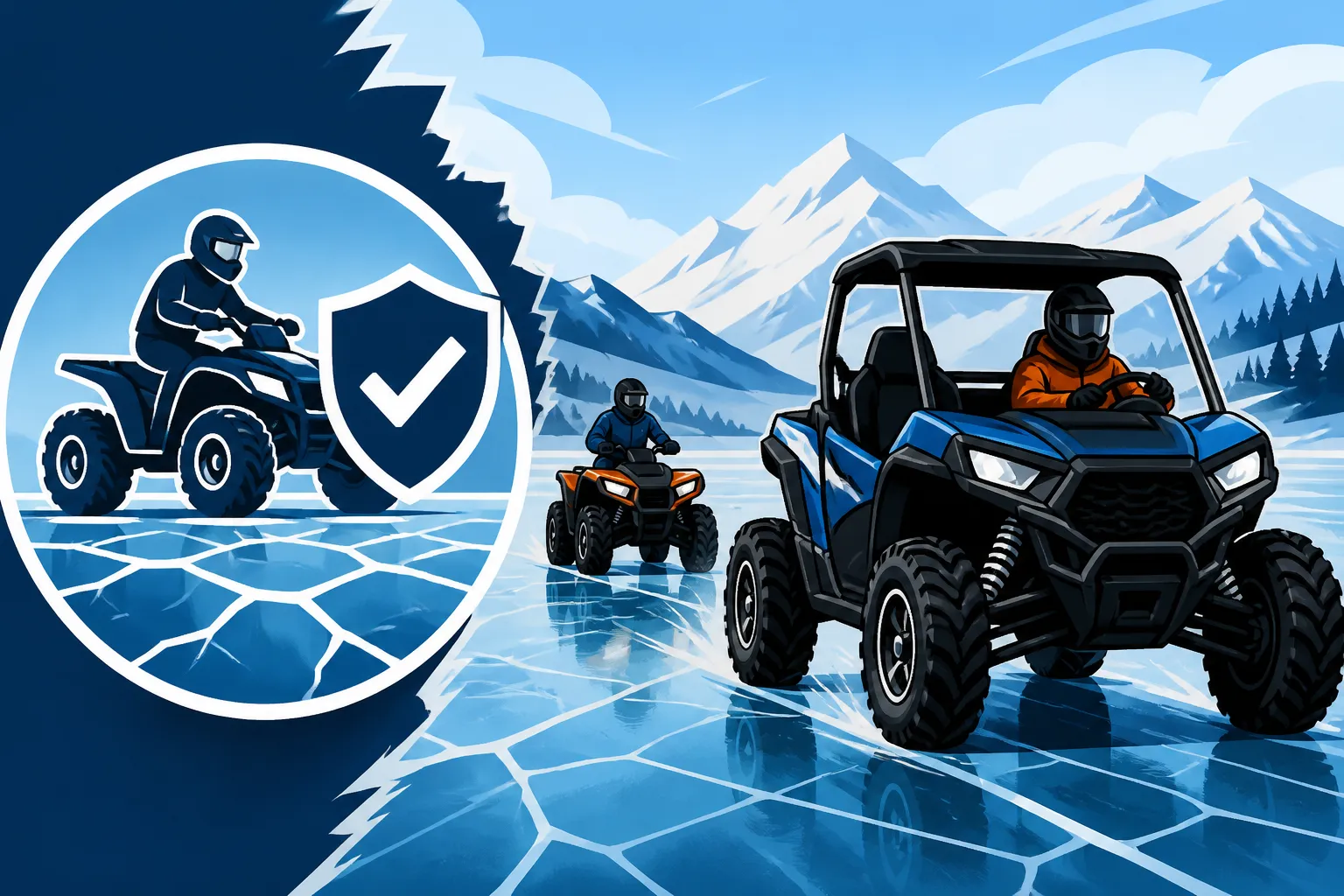
Riding Alaska's frozen rivers on an ATV or UTV is one of the most incredible, breathtaking, and sometimes terrifying experiences the Last Frontier offers. It can open up miles of remote backcountry for subsistence, hunting, or simply enjoying the vast winter wilderness, but it also carries immense risks if you don't know the rules – both written and unwritten. This guide will help you understand the unique challenges and essential safety precautions required to navigate Alaska's frozen waterways responsibly.
The Allure and Inherent Dangers of Frozen River Riding in Alaska
For generations, Alaskans have embraced winter's transformative power, turning impassable summer rivers into temporary highways. The sheer convenience and unparalleled access that a frozen river provides can be a game-changer for accessing remote cabins, hunting grounds, or simply exploring areas otherwise unreachable. However, this convenience is built on a foundation of ice, and that foundation is rarely uniform or predictable.
Why Alaskans Ride Frozen Rivers
Imagine a winding river that, for six months of the year, is a barrier of rushing water. Then, with the deep freeze of winter, it transforms into an expansive, smooth highway, opening up vast stretches of land for travel. This is the reality for many Alaskans. For those in rural communities, frozen rivers are critical transportation corridors, connecting villages, delivering supplies, and enabling subsistence activities like trapping and hunting. You might see someone hauling firewood on a sled behind their ATV, or a group heading out for a caribou hunt, using the river as their main route.
Recreationally, there's nothing quite like the feeling of cruising across a wide-open expanse of ice, with snow-covered mountains towering around you. It's a freedom that's hard to find anywhere else, offering breathtaking views and access to unique winter camping spots. For many, it's a way of life, an essential part of the Alaska winter experience. This is especially true for those with machines equipped with tracks, like those available from companies such as SuperATV, which greatly enhance traction and flotation on snow-covered ice.
The Unseen Perils Beneath the Ice
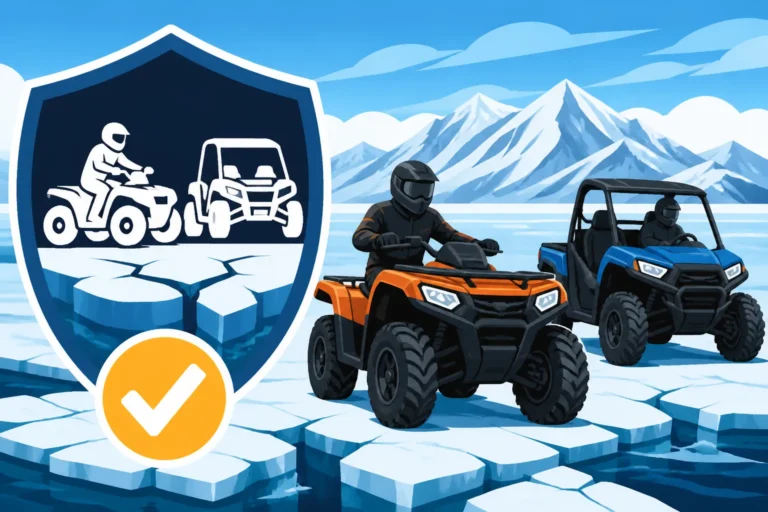
Beneath that seemingly solid surface lies a world of unseen dangers that can turn a beautiful ride into a life-threatening situation in an instant. The biggest hazard, of course, is varying ice thickness. A river is not a frozen lake; currents continue to flow beneath, constantly eroding the underside of the ice, especially around bends, submerged obstacles, and areas of turbulent flow. What might be two feet thick in one spot could be inches thick just yards away. [Ice Thickness Before You Cross] is not a suggestion, it's a life-saving necessity.
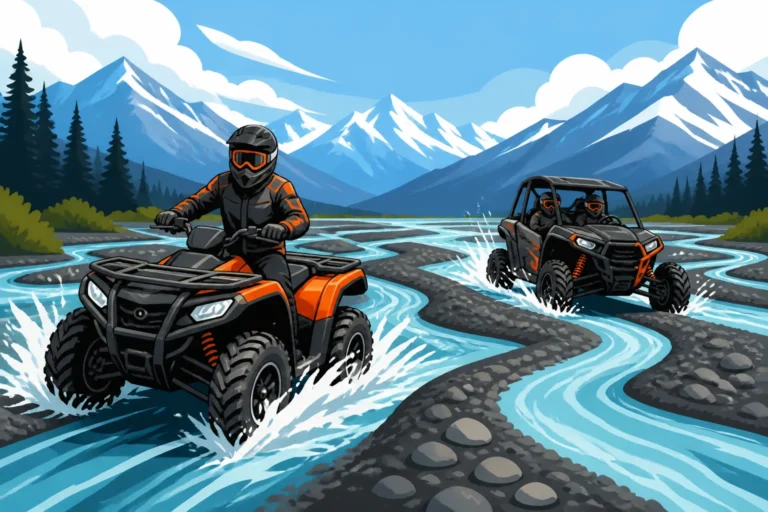
Then there's overflow. This is a common and incredibly dangerous phenomenon where water seeps up through cracks in the ice and flows over the surface, then freezes. It creates a slushy, wet mess that can quickly freeze around your machine, trapping it, or conceal thin ice beneath. [Overflow on a Frozen River] can appear suddenly, sometimes even in relatively mild temperatures, and getting stuck in it is a serious backcountry emergency.
Other perils include pressure ridges, which form when ice sheets collide and buckle, creating unstable humps and cracks that can damage your machine or lead to breakthroughs. Open leads, where the ice has cracked and pulled apart, are another constant threat, especially on larger rivers or tidal flats. The constant shift and groan of river ice can be unsettling, a stark reminder that you're riding on a dynamic, living surface.
Essential Preparations Before Venturing Onto a Frozen Waterway
The key to a safe and enjoyable frozen river ride isn't just knowing the dangers, but proactively mitigating them through meticulous preparation. This means doing your homework, equipping yourself, and being ready for the worst-case scenario.
Checking Ice Thickness and Conditions
Before you even load your machine, the first step is always to gather as much recent information as possible. Talk to locals, check with nearby lodges, or consult online forums where experienced riders share conditions. These sources can offer invaluable insights into areas of known thin ice, recent overflow events, or pressure ridge formations. However, remember that conditions can change rapidly, so always verify on your own.
When you arrive at the river, the absolute first thing to do is check the ice yourself. Don't just look for tracks and assume it's safe. Use an ice auger or an axe to make test holes at regular intervals, especially near the banks, around bends, and where the current appears swifter. A common rule of thumb for safe ATV/UTV travel is a minimum of 6-8 inches of clear, solid ice, but more is always better, especially for heavier machines or if you're pulling a loaded sled. Look for clear, blue ice; cloudy or "snow ice" is much weaker. Pay particular attention to areas where feeder creeks enter the main river, as these often have thinner ice due to warmer water.
| Vehicle Type | Minimum Ice Thickness (Clear, Solid Ice) | Notes |
|---|---|---|
| Person on Foot | 4 inches | Always exercise extreme caution; distribute weight. |
| Snowmachine/ATV | 6-8 inches | Varies with weight of machine and rider; ideal for single track. |
| Side-by-Side (UTV) | 8-12 inches | Heavier than ATVs, requires more robust ice. |
| Light Truck | 12-15 inches | Only on well-established ice roads, with extreme caution. |
| Heavy Truck/Plow | 18-30+ inches | Specialized ice road construction, rarely for recreational travel. |
If you encounter overflow, the best advice is to turn around. If you must proceed, do so very slowly, checking the depth and consistency, and be prepared to get wet. Always remember that what freezes on top of overflow can hide much thinner ice beneath. Sometimes, a diversion onto the riverbank is the safer, albeit slower, option, assuming you have permission to do so.
Equipping Your Machine and Yourself for Safety
Your machine needs to be winterized and ready for extreme cold. This means checking fluids, battery, and tires (or tracks). A powerful winch, perhaps a heavy-duty model from SuperATV, is practically mandatory for self-recovery or assisting others. Good lighting is essential, especially if you plan to be out during the short winter days or chasing aurora borealis. Carrying [Carrying Extra Fuel Safely] is also critical, as distances can be vast and fuel stops non-existent.
For yourself, dressing in layers is paramount. Hypothermia is a silent killer in Alaska, and getting wet on a frozen river can be a death sentence without proper gear. Waterproof outer layers, insulated boots, gloves, and a helmet are a must. A dry bag containing a complete change of clothes, fire starting materials, a small stove, and high-energy food can be a lifesaver. Beyond personal gear, essential survival items include an ice pick (worn around your neck for easy access if you go through the ice), a saw, a shovel, a first-aid kit, and an axe. Consider carrying an emergency survival kit with items like snares, fishing line, and a small tarp.
For communication, cell service is often nonexistent in the backcountry. A satellite messenger or satellite phone, like those mentioned in [Choosing a Satellite Messenger for a Backcountry Ride], is an absolute necessity. Always leave a detailed trip plan with someone reliable, including your route, expected return time, and who to call if you don't check in. Traveling with at least one other machine is also highly recommended; there is safety in numbers.
Navigating Frozen Rivers Legally and Responsibly
Riding an ATV or UTV on a frozen river in Alaska isn't just about personal safety; it's also about respecting the land, wildlife, and the rights of others. Understanding land ownership, environmental regulations, and local customs is crucial.
Understanding Land Ownership and Access
Alaska's land ownership is a complex patchwork of state, federal, private, and Native Corporation lands. While many frozen rivers might appear to be public access points, the adjacent land, and even sometimes the riverbed itself, can be privately owned or managed by specific entities. Ignorance is no excuse for trespass. Before you plan your route, especially if you intend to exit the river onto the bank or cross private property, you need to know [Alaska Land Ownership and Who to Ask].
For state lands, you might be covered by Alaska's Statewide General Permit for ATV Use, but this often excludes state parks or legislatively designated areas. Federal lands (like BLM or National Forest lands) usually have their own rules. Native Corporations, which own vast tracts of land, almost always require permits for access, even for crossing. [Alaska Native Corporation Land Permissions] are essential to secure beforehand. Always assume you need permission until you confirm otherwise. Penalties for trespass can range from fines to impoundment of your machine, which is a headache you absolutely want to avoid. If in doubt, stick to known public access points and routes.
Environmental Impact and Ethical Riding
Even in winter, your machine can have an impact on the environment. While the ground is frozen, riding off designated trails or established riverbeds onto adjacent sensitive tundra can cause significant damage that takes decades to heal. This is particularly true if you ride during "breakup" or "freeze-up" when the ground is soft or not fully frozen. Adhering to [Winter Travel on Frozen Ground] principles is vital.
Wildlife is another consideration. Many animals, like moose and caribou, use river corridors in winter. Harassing wildlife, intentionally or unintentionally, is not only illegal but unethical. Give animals a wide berth, and if your presence causes them to alter their behavior, you're too close. Also, remember that frozen rivers are often salmon streams. While you're not riding in the water, heavy erosion from machines or improper waste disposal can still affect water quality when the thaw comes. [Stream Crossing Rules] still apply, even when frozen. Always pack out everything you pack in, and leave no trace.
Consider noise as well. While the backcountry is vast, sound carries far in cold, still air. Excessive noise from aftermarket exhausts can disturb residents in remote cabins or detract from the wilderness experience for others. While there are no specific statewide sound limits, being mindful and choosing quieter machines or mufflers is a sign of respect. Some aftermarket parts, like those offered by SuperATV, are designed with performance and environmental responsibility in mind, aiming for efficient operation without excessive noise.
What to Do in an Emergency on the Ice
Despite all your preparations, emergencies can happen. Mechanical breakdowns, getting lost, or worse, going through the ice, are real possibilities. Knowing how to react calmly and effectively can mean the difference between a close call and a tragedy.
Dealing with Breakthroughs and Overflow
If your machine goes through the ice, the first priority is getting yourself out. Use your ice picks immediately to pull yourself onto the solid ice. Kick your legs to get momentum. Once you're out, roll away from the hole to distribute your weight. Do not stand up immediately. Get to a safe, stable area, assess yourself for injuries, and immediately begin efforts to warm up. Get into your dry clothes, start a fire if possible, and get warm. Hypothermia sets in rapidly when wet in sub-zero temperatures.
Recovering your machine is a secondary concern. If you're alone and far from help, it might be safer to focus on self-preservation and leave the machine for later recovery with proper equipment and assistance. If you have partners and the situation allows, use winches, ropes, and mechanical advantage to pull the machine out. Remember, a wet machine will freeze quickly, making recovery harder and potentially damaging it further.
Getting stuck in overflow is less immediately life-threatening than breaking through, but it can quickly become dangerous due to exposure. If you feel your machine bogging down, try to reverse out if possible. If you're stuck, do not spin your tires or tracks, as this will only dig you deeper and melt the ice, exacerbating the problem. Use your shovel to clear the slush, and use a winch, if available, to pull yourself out, ideally anchoring to a partner's machine or a solid tree on the bank. If you're solo, you might need to use a "dead man" anchor (burying a shovel or log in the snow) if no trees are nearby. Once free, try to get to higher ground or a known solid path quickly to avoid freezing up.
Communication and Survival in the Backcountry
If you find yourself in an emergency, your satellite messenger is your lifeline. Initiate an SOS if you or a member of your party is injured or in immediate danger. For less critical situations, use it to text your designated contact with your location and situation. Be as precise as possible about your coordinates and what help you need. Without cell service, you are truly alone until help arrives, and that could take many hours, or even days, depending on your location and weather conditions.
Survival in the Alaskan backcountry often boils down to a few key principles: shelter, fire, and water. Know how to build a basic snow shelter or improvise one from your machine. Always carry waterproof matches, a lighter, and fire starters. While water is abundant in winter, accessing it can be challenging. Melt snow or ice (if safe) in a pot; never eat raw snow, as it can lower your body temperature. Having survival skills, even basic ones, can greatly increase your chances of enduring a difficult situation until rescue arrives. Even small details, like carrying [Alaska Rules for Riding With a Dog] if you have a canine companion, can be part of an overall preparedness plan for the unexpected.
Remember, the vast beauty of Alaska's frozen rivers is matched only by their unforgiving nature. Respect the environment, respect the risks, and prepare meticulously. The ultimate goal is to have an incredible experience and return home safely to tell the tale.
Disclaimer
This article is for general informational purposes only and does not constitute professional advice. Laws, prices and regulations vary by location and change over time. Consult a qualified professional for guidance on your specific situation.