Alaska’s 45 mph Road Limit for APVs
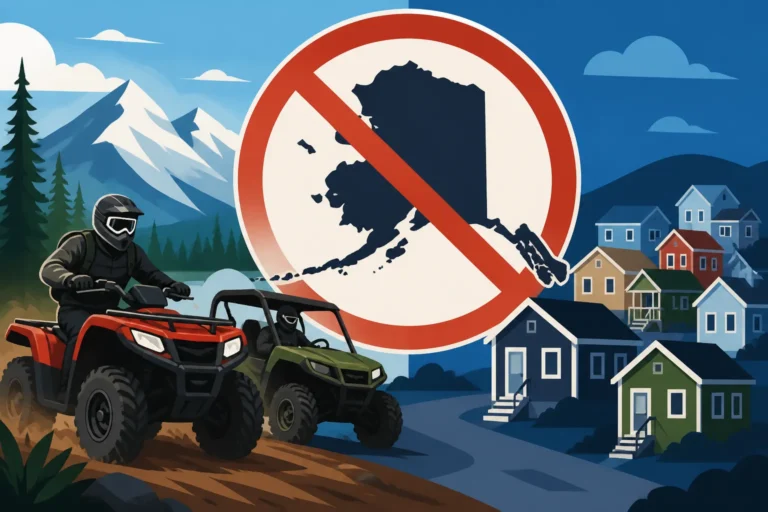
Oh, the open road in Alaska! There's nothing quite like the freedom of exploring our vast and rugged landscape on an ATV or UTV. But let's be honest, figuring out exactly where you can ride your All-Purpose Vehicle (APV) on the actual pavement can feel like navigating a legal labyrinth. Many riders get frustrated, unsure if that quick hop from the trail to the gas station is going to land them in hot water. This guide is here to clear up one of the most common questions: Alaska's 45 mph road limit for APVs, what it means, and how to stay on the right side of the law.
Understanding Alaska's All-Purpose Vehicle APV Classification
Before we dive into speed limits, it’s crucial to understand what Alaska actually considers an "All-Purpose Vehicle" or APV. This isn't just a fancy term; it's the legal framework that dictates how and where you can operate your machine, especially when it comes to shared roads. Many folks just call their quad an ATV or their side-by-side a UTV, but the state has a specific definition that includes these machines and sets the stage for everything else.
What Defines an APV in Alaska?
In Alaska, an APV is defined quite broadly, encompassing a range of off-highway vehicles that are designed for use on unimproved terrain. Think of your standard four-wheel ATV, your multi-passenger side-by-side, or even a six-wheel amphibian. The key is that these machines are built for off-road travel, but the state recognizes that there are times when they might need to traverse a paved or maintained public roadway. This legal classification is what allows for that limited, specific road access, distinguishing them from traditional automobiles and motorcycles. It's not about how many wheels it has, but its fundamental design purpose.
This definition also impacts how you register your machine. While it might seem like a simple piece of paper, the registration process ties directly into its APV classification. Understanding this foundational concept is the first step toward responsibly enjoying Alaska’s trails and knowing your rights and limitations on the road system. The Department of Motor Vehicles (DMV) uses this classification to determine what kind of decals you get and what rules apply. You can learn more about this by checking out [Alaska APV Class Explained].
Why the APV Classification Matters for Road Use
The APV classification is absolutely central to understanding road access. Without it, your ATV or UTV would be treated no differently than any other off-road vehicle, likely making any form of road use illegal. This specific designation carves out an exception, allowing APVs to operate on certain public roads under strict conditions, including the 45 mph speed limit we'll discuss. It acknowledges that these vehicles play a vital role in many Alaskan communities, particularly in rural areas where traditional roads might be sparse, or where people need to connect trails.
However, this isn't a free pass to treat your side-by-side like a car. The APV classification comes with a whole host of responsibilities and equipment requirements that traditional street-legal vehicles already possess. It’s a carefully balanced act designed to allow necessary travel while prioritizing safety for all road users. For instance, while a car needs headlights, the specific requirements for an APV on the road are tailored to its design. It's about recognizing the unique nature of these machines and providing a legal pathway for their limited road integration.
Machines Excluded from the APV Definition
It's just as important to know what isn't considered an APV under Alaska law, because if your machine falls into one of these categories, different or no road-use rules apply. Snowmachines, for example, are a huge part of Alaskan life, but they are not APVs. They have their own set of regulations and rules for trail and road use, which are distinct. Similarly, three-wheelers are specifically excluded from the APV definition, due to safety concerns and design differences compared to a standard four-wheel ATV.
Beyond these specific exclusions, any vehicle not primarily designed for unimproved terrain, or one that cannot meet the basic safety requirements for an APV (like certain homemade contraptions), might also fall outside the definition. This means you can't just slap a decal on anything and expect it to be road-legal under the APV rules. It's critical to verify your machine fits the APV bill before you even think about hitting the pavement, otherwise, you could face penalties for operating an unregistered or improperly classified vehicle. You might find more detail on this in [Machines Alaska Will Not Register as an APV].
The Core of the Law: Alaska's 45 mph Road Limit
Now that we understand what an APV is, let's get to the heart of the matter: that crucial 45 mph speed limit. This isn't just a suggestion; it's a legal mandate that applies to APVs operating on permissible public roads in Alaska. Ignoring it isn't just dangerous; it can lead to citations and fines, taking the fun right out of your ride.
Where the 45 mph Limit Applies
Alaska's law states that an APV may be operated on a public highway or roadway where the posted speed limit is 45 miles per hour or less. This is a critical distinction. It means you can't take your side-by-side onto the Parks Highway where the speed limit is 65 mph, even if you promise to only go 45. The posted limit of the road dictates whether your APV is allowed there at all. If the sign says 50, 55, or 65, your APV is legally prohibited from that section of the road. This often surprises people who think they can simply drive slower.
This rule typically applies to secondary roads, local streets, and some state-maintained gravel roads. In many smaller communities, or when you’re riding between a trail and a local business, you'll often find these lower speed limits. Always be on the lookout for speed limit signs. If there's no sign, the default unposted speed limit in an urban district is often 25 mph, and outside an urban district, it might be higher, but you must verify the posted limit to ensure it's 45 mph or less before proceeding. Ignoring these signs could mean you're not just speeding, but illegally operating your APV on that particular road.
Why This Specific Speed Limit? Safety and Traffic Flow
The 45 mph limit isn't arbitrary; it's rooted deeply in safety considerations and maintaining reasonable traffic flow. APVs, while incredibly versatile, are not designed with the same safety features, stability, or braking capabilities as a traditional automobile. At higher speeds, the risk of rollover, loss of control, and severe injury in the event of a collision increases dramatically. Their narrower wheelbase, higher center of gravity, and open-air design simply aren't built for highway speeds alongside cars and trucks.
Furthermore, a significant speed differential between APVs and other vehicles can create hazardous situations. Imagine a large truck doing 65 mph coming up on an APV doing 45 mph; that's a 20 mph closing speed that can be very dangerous for everyone involved, especially on our narrower, sometimes unpaved Alaskan roads. The 45 mph threshold aims to mitigate these risks by keeping APVs on roads where they can more safely integrate with existing traffic and where drivers are generally expecting lower speeds. It's about minimizing the chance of serious accidents while still allowing for practical transportation.
Consequences of Exceeding the Limit
Disregarding the 45 mph road limit for your APV in Alaska can lead to a range of unpleasant consequences, both legal and practical. First and foremost, you're likely to receive a traffic citation. This could mean a fine, which can quickly add up, and potentially points on your driver's license, affecting your insurance rates. Alaskan law enforcement, including Alaska State Troopers and local police, are generally familiar with APV regulations and will enforce them, especially when it comes to road use. They are trained to look for [What a Trooper Can Ask to See] and will know the specific limits.
Beyond the immediate legal repercussions, there's the much more serious risk of an accident. As discussed, APVs aren't built for high-speed road travel. Exceeding the limit, even on a road where APVs are otherwise permitted, dramatically increases your chances of losing control, having a severe accident, or causing one with another vehicle. The consequences could involve serious injury, damage to your machine, or even worse. It's simply not worth the risk for a few extra miles per hour. Always prioritize safety and adherence to the law; those few minutes you might save aren't worth the potential costs.
Conditions for APV Road Use Beyond Speed
While the 45 mph speed limit is a major factor, it's far from the only condition you need to meet to legally ride your APV on Alaska's roads. There’s a whole checklist of other requirements, from driver licensing to specific equipment your machine must have, all designed to ensure that when an APV shares the road, it does so as safely as possible. Think of it as making your trail machine as "street-aware" as possible.
Licensing and Insurance Requirements
Operating an APV on any public road in Alaska requires that the driver hold a valid Class D driver's license – the same license you need to drive your car or truck. You can't just hop on your side-by-side with a learner's permit or no license at all and expect to be legal on the pavement. This ensures that anyone operating an APV on public roads has demonstrated a basic level of driving competence and knowledge of traffic laws. You can check out [Alaska Requires a Class D License] for more detailed information.
In addition to a valid driver's license, Alaska law also mandates liability insurance for APVs operated on public roads. This isn't optional; it's a critical safety net. Just like with your car, if you're involved in an accident, this insurance helps cover the costs of damages or injuries you might inflict on other people or property. It’s peace of mind, both for you and for other road users. Always carry proof of insurance with you, along with your driver's license, whenever you're operating your APV on a public road. A simple waterproof bag for your documents can save you a lot of hassle. For more on this, see [Alaska Requires Liability Insurance for an APV].
Essential Equipment for Road Legality
Your APV needs to be equipped with certain items to be considered road-legal, even on those 45 mph or less roads. This isn't just about safety; it's about making your machine visible and functional in a way that aligns with standard road traffic. You can't just take your stock trail machine and expect it to pass muster. For a comprehensive look at what's needed, refer to [Alaska OHV Equipment Requirements].
Here's a breakdown of some key requirements:
- Lights: You need at least one headlight that emits white light visible from 100 feet ahead, and a taillight emitting red light visible from 100 feet to the rear. If you're riding after dark, these lights are absolutely non-negotiable.
- Brakes: Your APV must have working brakes capable of stopping the vehicle safely. This sounds obvious, but ensuring they're in good repair is critical.
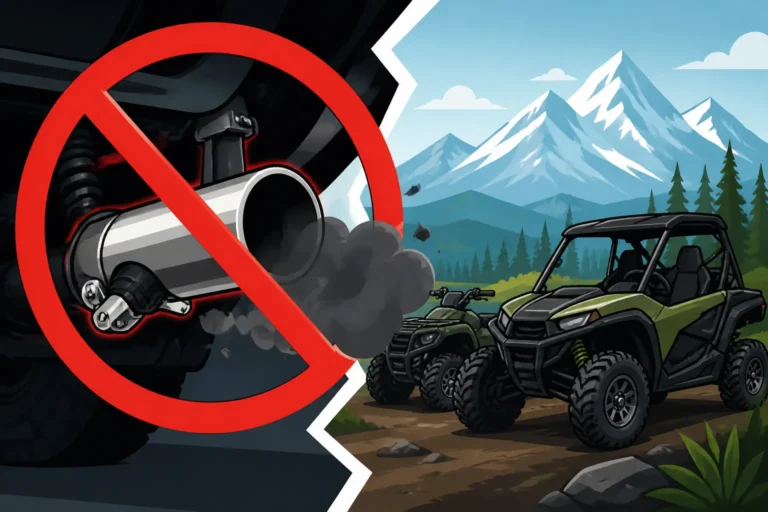
- Muffler: A muffler is required to keep noise levels reasonable. Exhaust cutouts or modifications that make your machine excessively loud are generally not permitted on public roads.
- Spark Arrester: To prevent wildfires, your exhaust system must be equipped with a spark arrester that is in good working order. Many aftermarket exhaust systems, like those from SuperATV, come with spark arresters, but always double-check.
- Mirrors: At least one rearview mirror is typically required to allow the operator to see traffic approaching from the rear.
- Reflectors: Additional reflectors may be required, particularly on the sides and rear, to enhance visibility, especially at night or in low light conditions.
- Tires: Your tires must be in good condition, without exposed cords or excessive wear.
- Self-closing throttle: This is a safety feature that ensures the engine returns to idle if the throttle grip is released.
Failing to have any of these pieces of equipment can result in a citation and could jeopardize your safety and the safety of others. It’s always a good idea to do a pre-ride check before you head out onto any public road.
Specific Road Types Where APVs Are Permitted
Even with the 45 mph rule and all the right equipment, APVs aren't permitted on all roads with low speed limits. Generally, you're looking at specific designations:
- Secondary Roads and Local Streets: These are the most common places you'll find APVs legally operating. Think of the streets within smaller towns, access roads, or residential areas where the speed limit naturally stays at or below 45 mph.
- Gravel and Unpaved State Roads: Many of Alaska's state-maintained roads, particularly in rural areas, are gravel. If the posted speed limit is 45 mph or less, APVs can generally use these. This is especially true for routes that connect communities or provide access to popular trailheads.
- Crossing a Highway: You might be allowed to cross a highway with a higher speed limit if it's the most direct route to another authorized roadway or trail, but this is a very brief maneuver and not for continuous travel. This is a point of frequent confusion; crossing is usually permitted, but riding along a high-speed highway is not. You can read up on [Crossing a Highway on a Quad in Alaska] for more information.
Crucially, APVs are not allowed on interstate highways, limited-access highways, or any road where the posted speed limit exceeds 45 mph, regardless of your intention to drive slowly. Always consult local ordinances too, as these can impose further restrictions. This patchwork of rules can be tricky, which is why local knowledge and careful observation of signage are your best friends.
Local Ordinances: Where the Rules Change
Alaska is a vast state, and while there are statewide APV laws, the real complexity often comes down to local regulations. Boroughs, cities, and even specific communities have the authority to implement their own ordinances regarding APV use, and these can significantly impact where you can and cannot ride, even on roads that would otherwise meet the statewide 45 mph criteria. What might be perfectly legal in one town could be strictly prohibited just a few miles down the road.
How Boroughs and Cities Can Further Restrict APVs
While state law sets the baseline for APV road use, it also grants local governments the power to enact more restrictive measures. This means a borough or city council can decide that, even if a road has a 35 mph speed limit, APVs are still not allowed. They can pass ordinances that limit access to certain streets, restrict operating hours, or even ban APV road use entirely within their municipal boundaries. This power is often exercised due to concerns about noise, safety in densely populated areas, or simply to maintain the character of a community.
These local rules often stem from public input, safety studies, or specific traffic patterns unique to that area. It's not uncommon for a community to have a core area where APVs are completely banned, but then allow access on the outskirts or specific routes leading to trails. Therefore, relying solely on state law without checking local regulations is a common mistake that can lead to unexpected fines or confrontations with local law enforcement. Always assume local rules might be stricter.
Communities That Have Banned APV Road Use
Several of Alaska's larger and more populated communities have taken advantage of their authority to ban APV road use within their city limits, regardless of the state's 45 mph rule. This often comes as a surprise to new residents or visitors who might be accustomed to more lenient rules in other parts of the state or even the Lower 48. These bans are usually city-wide, making it illegal to operate an APV on any public street or highway within their municipal boundaries.
Some prominent examples of communities that generally prohibit APV road use include:
- Anchorage: Operating APVs on public roads within the Municipality of Anchorage is largely prohibited. There are very limited exceptions, typically related to sanctioned events or private property access, but for general riding, expect a ban. For more information, see [Alaska Bans APVs in Anchorage].
- Fairbanks: Similar to Anchorage, Fairbanks typically has strict bans on APV road use within city limits. See [Alaska Bans APVs in Fairbanks] for details.
- Juneau: The capital city also maintains prohibitions on APV road use.
- Wasilla and Palmer: While the Mat-Su Valley is a popular riding area, the incorporated cities of Wasilla and Palmer themselves have specific ordinances restricting or banning APV road use on most of their streets.
- Kenai and Soldotna: These Kenai Peninsula towns also have their own rules, generally restricting APV use on public roads.
It’s easy to get confused if you're riding in an area like the Mat-Su Valley where adjacent state land might be open to APVs, but the moment you enter an incorporated city, the rules change drastically. Always be aware of municipal boundaries.
Checking Local Regulations Before You Ride
Given the variability of local ordinances, the golden rule for APV riders in Alaska is: always check local regulations before you ride on any public road. This isn't just a suggestion; it's a necessity to avoid legal trouble and ensure you're riding respectfully within the community. Don't rely on assumptions or what you heard from a friend; laws can change.
How do you check?
- City or Borough Clerk's Office: The most reliable source is often the local city or borough clerk's office. They can provide copies of relevant ordinances or direct you to where they are published online.
- Police Department (non-emergency line): You can often call the local police department's non-emergency line and ask about APV road use rules. While they enforce the laws, they can also inform you of them.
- Community Websites: Many municipal websites have sections dedicated to local ordinances or FAQ for residents and visitors.
- Local Riding Clubs: Connect with local ATV/UTV clubs. Experienced riders are usually well-versed in the specific local rules and can offer valuable insights.
- Look for signage: Pay close attention to signage at city limits or at trailheads. Sometimes, signs will clearly state "APV Prohibited" or "No OHV Access on City Streets."
Taking these steps is a small investment of time that can save you significant headaches, fines, and potential legal issues. It’s part of being a responsible rider in a state that offers incredible opportunities for APV adventures. You might find this useful: [Alaska APV Road Rules Explained].
Practical Scenarios and Common Rider Questions
Even with a clear understanding of the 45 mph limit and local rules, specific situations can still throw riders for a loop. Alaska’s unique landscape and scattered communities often mean riders need to use public roads for short distances to connect trails, access services, or simply get home. Let’s tackle some of the most common real-world scenarios and questions that come up.
Crossing a Higher Speed Highway
This is perhaps one of the most frequently asked questions. You're out on a great trail, and suddenly, you need to get to the other side of a major highway, like the Glenn Highway, which has a speed limit well above 45 mph. Can you do it? Generally, yes, a direct crossing is often permitted, even across roads with higher speed limits. The intent is to allow APVs to move from one legal riding area to another, not to travel along the high-speed road.
However, "direct crossing" is the key. This means entering the roadway at a 90-degree angle, proceeding safely across to the other side, and exiting the roadway as quickly and directly as possible. You cannot drive down the shoulder for a mile to get to a safer crossing point, nor can you use the crossing as an excuse to travel on the highway. Always stop, look both ways multiple times, and yield to all oncoming traffic. Visibility is paramount, and it's best to choose a crossing point where you have a clear view and other drivers can see you easily. This specific allowance is covered in [Crossing a Highway on a Quad in Alaska].
Riding from a Trailhead to a Town
Imagine you've just finished an epic ride at Jim Creek, and you need to grab some lunch or fuel up in Palmer. Can you ride your APV directly into town? This is where the local ordinances become incredibly important. While the roads leading to Palmer might be 45 mph or less and thus state-legal for APVs, the moment you cross into Palmer's incorporated city limits, the rules likely change. As mentioned, communities like Palmer, Wasilla, and Anchorage generally ban APV use on city streets.
So, while you might legally ride up to the edge of town, you would likely need to trailer your machine the rest of the way in. This can be frustrating, especially if you're just trying to get a burger. This scenario highlights why it's so vital to know not just the state law but also the specific rules of the municipality you intend to enter. It's a common mistake for riders to assume "open roads" on the outskirts mean open roads everywhere. Always check that city's website or call ahead to clarify before you plan your route.
What Troopers Look For During a Stop
If you're riding your APV on an Alaskan road and an Alaska State Trooper or local law enforcement officer pulls you over, they'll be checking for a few key things to ensure you're in compliance. Knowing what they're looking for can help you be prepared and avoid trouble. They are not out to get you, but they are there to enforce safety and the law.
Here's a list of common checks:
- Driver's License: Do you have a valid Class D driver's license? This is foundational.
- Registration/Decal: Is your APV properly registered with the state, and is the current decal visibly placed on your machine? [Alaska Decal Placement on the Tunnel Side] and [Alaska Decals Visible When Seated] explain where these go.
- Proof of Insurance: Do you have valid liability insurance for your APV, and can you show proof of it?
- Equipment Compliance: They will quickly assess if your machine has the required equipment: working headlights, taillights, brakes, a muffler with a spark arrester, and a rearview mirror. They might even check your tires for excessive wear.
- Speed Limit: Were you exceeding the posted speed limit, or operating on a road where the posted limit was over 45 mph?
- Local Ordinances: Are you operating within an area that prohibits APV road use, such as a city that has enacted a ban?
- Safe Operation: Are you operating the APV safely, without reckless behavior, under the influence, or with too many passengers for the machine's design?
Being prepared with all your documents, having a legally equipped machine, and knowing the local rules will go a long way in ensuring a smooth interaction and avoiding citations. For a comprehensive list of what law enforcement might ask to see, check out [What a Trooper Can Ask to See].
Safety and Responsible Riding on Alaska Roads
Riding an APV on public roads, even under the 45 mph limit, presents a different set of challenges and risks than off-road trail riding. The presence of cars, trucks, and paved surfaces means you need to adjust your riding style and machine preparation to prioritize safety. Being a responsible rider isn't just about following the law; it's about minimizing risk for yourself and everyone else sharing the road.
Visibility and Defensive Riding Techniques
Visibility is your best friend when riding an APV on the road. Your machine is smaller, often less illuminated, and moves differently than a car, making it harder for other drivers to spot you, especially in Alaska's varied light conditions (think long summer days and short winter ones).
- Wear Bright Colors: Always wear highly visible clothing, preferably fluorescent or neon colors, especially during the day.
- Use Your Lights: Keep your headlights and taillights on, even during daylight hours. This dramatically increases your conspicuity.
- Reflectors: Ensure your machine has adequate reflectors, especially if you're riding at dawn, dusk, or night. Companies like SuperATV offer various lighting and reflector kits that can enhance your visibility.
- Defensive Riding: Assume other drivers don't see you. Scan ahead, be aware of blind spots, and be prepared for sudden stops or turns by other vehicles. Avoid riding in the blind spots of larger vehicles.
- Hand Signals: Familiarize yourself with standard motorcycle hand signals for turning and stopping, as your APV might not have turn signals or brake lights as prominent as a car's.
These practices aren't just good ideas; they can be life-savers. On a road, you are much more vulnerable than inside a car.
Sharing the Road with Larger Vehicles
Sharing the road with cars, trucks, and even semi-trucks requires a different mindset than trail riding. These vehicles are much heavier, faster, and have different handling characteristics than your APV.
- Maintain Lane Position: Ride in a consistent lane position that allows you to be seen and gives you room to maneuver, not hugging the shoulder where you might be less visible or encounter debris.
- Be Predictable: Signal your intentions well in advance. Avoid sudden swerving or erratic movements.
- Allow Passing Room: If traffic is backing up behind you, and it's safe to do so, find a spot to pull over and allow vehicles to pass. This reduces frustration and can prevent risky passing maneuvers by other drivers.
- Watch for Debris: Paved roads can accumulate debris from larger vehicles or winter sanding operations. Be extra vigilant for rocks, gravel, or other hazards that could affect your APV's smaller tires.
- Wind Shear: Be mindful of wind shear from passing trucks, which can momentarily destabilize a lighter APV.
Respectful road sharing means being an active participant in traffic, not just an observer. Your safety, and the safety of others, depends on it.
Preparing Your Machine for Road Use
Before you take your APV onto any public road, a thorough inspection and preparation are essential. This goes beyond the basic pre-ride check for trails.
- Tire Pressure: Ensure your tire pressure is set appropriately for road use, which might be different than for soft trails. Over or under-inflated tires can affect handling on hard surfaces.
- Brakes: Test your brakes thoroughly. Ensure they are responsive and capable of stopping your machine quickly and smoothly.
- Lights and Electrics: Check all lights (headlights, taillights, brake lights), turn signals (if equipped), and horn (if equipped) are fully functional. Ensure all electrical connections are secure.
- Mirrors: Verify your rearview mirror (or mirrors) are clean, properly adjusted, and provide a clear view behind you.
- Fluid Levels: Check engine oil, coolant, and brake fluid levels.
- Loose Components: Look for any loose bolts, nuts, or components that could vibrate off or cause issues on a paved road.
- Cleanliness: While it's an APV, trying to keep it reasonably clean, especially lights and reflectors, enhances visibility for others. Glacial silt can quickly obscure everything.
A well-maintained and properly equipped machine is crucial for a safe and legal road ride. Don't cut corners on preparation when you're going to be sharing the road with other vehicles.
The Future of APV Road Access in Alaska
The rules and regulations surrounding APV road access in Alaska are not static; they can and do evolve. As the popularity of ATVs and UTVs continues to grow across the state, and as communities consider their unique transportation needs, there's always potential for changes to existing laws or the introduction of new ones. Staying informed and, for some, even advocating, can be part of the responsible rider's journey.
Advocacy for Expanded Road Access
Many APV riders and clubs in Alaska actively advocate for expanded or clarified road access, particularly in rural and semi-rural areas where APVs are crucial for subsistence, transportation, and recreation. These efforts often focus on:
- Consistency: Working towards more consistent regulations across different boroughs and cities, reducing the current patchwork of rules that can be confusing.
- Connectivity: Advocating for specific designated routes that allow APVs to connect existing trail systems or access essential services in towns.
- Economic Impact: Highlighting the economic benefits that APV tourism and local use bring to small communities, which can be a powerful argument for increased access.
- Safety Education: Promoting rider safety courses and equipment standards to demonstrate that APV riders are committed to responsible and safe operation on public roads.
These advocacy efforts are often spearheaded by local ATV/UTV clubs and organizations that represent riders' interests at the local and state legislative levels. They understand the practical needs of riders in Alaska's unique environment.
Potential Changes to APV Laws
As communities grow and traffic patterns shift, APV laws are often reviewed and discussed. Some potential areas where changes might occur include:
- Helmet Laws: While Alaska has specific helmet laws for riders under 16, there's always discussion around broader helmet mandates for all APV riders, particularly on roads. [Alaska ATV Helmet Law Age] provides current details.
- Designated Routes: Some communities might explore creating officially designated APV routes through town, similar to how snowmachine corridors exist in winter, to provide safe and legal passage without allowing full street access.
- Equipment Upgrades: There could be discussions about requiring additional safety equipment for road-legal APVs, such as turn signals or more robust lighting standards, especially as UTV technology advances.
- Age Restrictions: Changes to minimum age requirements for operating APVs on roads, or for carrying passengers, could also be considered. [Alaska Rules for a Teen Rider] covers current regulations.
It's important to remember that any changes typically involve a legislative process, public hearings, and local input. Staying connected with local news and rider groups can help you keep abreast of potential shifts.
Staying Informed About Regulations
For any APV owner, staying informed about current and upcoming regulations is key to responsible and enjoyable riding. The rules can be complex, and ignorance of the law is never an excuse.
- Alaska DMV Website: Regularly check the Alaska Division of Motor Vehicles (DMV) website for the most up-to-date state statutes and regulations concerning APVs.
- Local Government Websites: Bookmark the websites for your local borough and any cities you plan to ride through. Look for sections on ordinances, public safety, or specific vehicle regulations.
- APV Clubs and Organizations: Join a local or statewide APV club. These groups often have the latest information on trail closures, regulatory changes, and local advocacy efforts. They're also great for meeting fellow riders and sharing knowledge.
- Alaska State Troopers Website: The AST website sometimes publishes public safety advisories or explains specific traffic laws, which can be useful.
- Community Boards and News: Pay attention to public notices in local newspapers, community council meetings, and online forums, especially if you live in or regularly visit a specific area.
Being proactive about understanding the laws ensures that you can continue to enjoy the incredible freedom and access that APVs offer in Alaska, while doing so safely and legally. For all questions about APV use in Alaska, from equipment to land access, always ask first.
APV Road Use Quick Reference
Here's a quick summary table of key considerations for APV road use in Alaska, based on current regulations. This isn't exhaustive, but it hits the major points.
| Feature / Requirement | Description |
|---|---|
| Speed Limit | Maximum 45 mph, AND the posted road speed limit must be 45 mph or less. Cannot ride on roads posted higher than 45 mph. |
| Driver's License | Required: Valid Alaska Class D (standard driver's license). |
| Insurance | Required: Liability insurance for the APV, with proof carried by the operator. |
| Registration | Required: Current APV registration and decal clearly displayed on the machine. |
| Headlight | Required: At least one white headlight, visible 100 ft ahead. |
| Taillight | Required: At least one red taillight, visible 100 ft to the rear. |
| Brakes | Required: Functional braking system capable of safe stopping. |
| Muffler | Required: Effective muffler to prevent excessive noise. Exhaust cutouts prohibited. |
| Spark Arrester | Required: In good working order to prevent fires. Aftermarket parts from companies like SuperATV often include these. |
| Rearview Mirror | Required: At least one mirror providing a clear view to the rear. |
| Reflectors | Required: Additional reflectors (sides/rear) for enhanced visibility, especially at night. |
| Self-Closing Throttle | Required: Ensures throttle returns to idle when released. |
| Local Ordinances | CRITICAL: Check city/borough specific rules. Many communities (e.g., Anchorage, Fairbanks) ban APV road use entirely. These supersede state law. |
| Highway Crossing | Generally permitted for direct crossing (90-degree angle) to access another legal road/trail. Not for extended travel along the highway. |
| Youth Riders | Riders under 16 must wear a helmet. Specific age restrictions may apply to road operation; consult [Alaska Rules for a Teen Rider]. |
Disclaimer
This article is for general informational purposes only and does not constitute professional advice. Laws, prices and regulations vary by location and change over time. Consult a qualified professional for guidance on your specific situation.