Braided Channels That Move
Navigating Alaska's breathtaking backcountry on an ATV or UTV is an experience like no other, but it comes with a steep learning curve, especially when it involves crossing the state's iconic, yet notoriously unpredictable, braided glacial rivers. These aren't your typical clear-water creeks; they are dynamic, powerful forces of nature that demand immense respect and careful preparation. Many a rider has underestimated these waterways, finding themselves in a perilous situation far from help. This guide aims to equip you with a deep understanding of what makes these channels so dangerous and how to approach them safely, so your Alaskan adventure remains one for the memory books, not the emergency log.
Understanding Alaska's Braided Rivers: What Makes Them So Unpredictable?
When we talk about "braided channels that move" in Alaska, we're almost always referring to the state's magnificent, yet menacing, glacial rivers. These aren't static waterways; they are living, breathing entities that shift, deepen, and reroute with alarming speed. Understanding their fundamental nature is the first step toward respecting their power.
The Anatomy of a Braided River: More Than Just Water
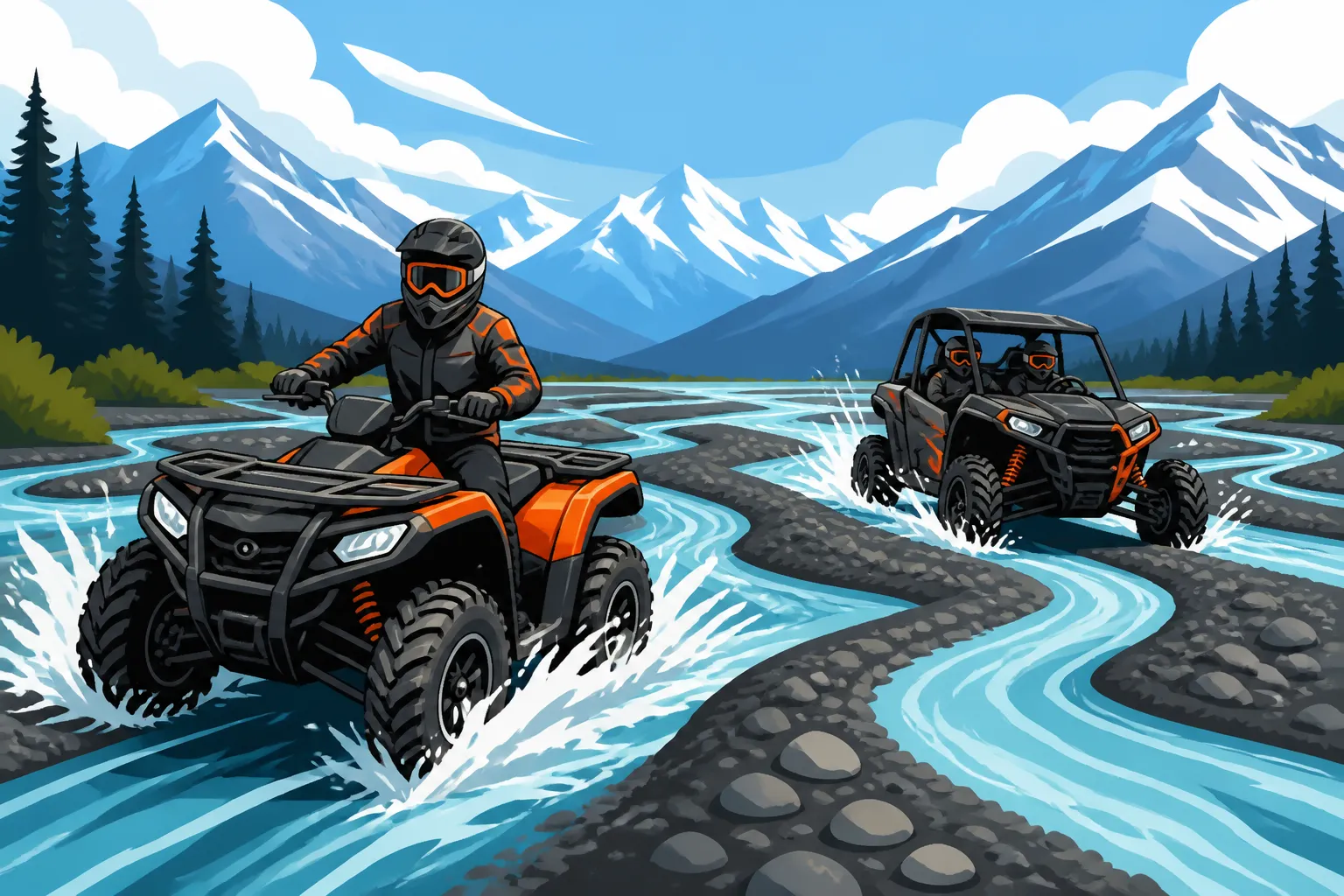
Imagine a river that isn't a single, defined channel but rather a wide, shallow expanse of water crisscrossed by countless temporary channels, sandbars, and gravel islands. That's a braided river. These waterways are fed by glacial melt, which means they carry an enormous load of fine sediment, often called "glacial flour," giving the water its characteristic opaque, milky-blue or gray appearance. This turbidity is a critical factor, as it completely obscures what lies beneath the surface. You can't see the bottom, can't gauge depth, and certainly can't spot hidden obstacles.
Unlike clear mountain streams where you might pick your way across by eye, a braided glacial river offers no such visual cues. The very ground you drive on through these riverbeds is a constantly changing tapestry of loose rock, shifting silt, and unknown depths. The sheer volume of water, combined with the continuous erosion and deposition of sediment, creates an environment where no two crossings are ever truly the same, even on the same day. For riders who are not accustomed to these conditions, the appearance of the water itself can be deceiving, lulling one into a false sense of security about its depth and current.
Why They "Move" and the Impact of Time and Weather
The "moving" aspect of these braided channels is perhaps their most treacherous characteristic. Their flow is dictated by the rhythm of the glaciers that feed them, making them highly susceptible to temperature fluctuations and weather events. On a warm, sunny Alaskan day, glacial meltwater can increase dramatically from morning to afternoon, causing river levels to rise several inches or even feet in a matter of hours. A channel that was shallow and crossable at 9 AM might be a raging, deep torrent by 3 PM. This phenomenon is often observed, and understanding [Water That Rises by Afternoon] is paramount for any rider.
Rain events only exacerbate this unpredictability. Even a moderate rainfall can swell these rivers rapidly, turning already challenging crossings into outright impassable barriers. The increased water volume also magnifies the current's power, making it easier for machines to be swept downstream. Furthermore, the constant flow of water continually erodes and reshapes the riverbed. A gravel bar you used yesterday might have completely vanished today, replaced by a deep channel, or vice versa. This means that relying on past experience alone, even from a few hours prior, can be a grave mistake. Every single crossing attempt demands a fresh assessment, a new calculation of risk, and a willingness to [Turning Back at a Deep Channel] if conditions are unfavorable.
The Critical Dangers of Attempting Braided River Crossings
The seemingly serene appearance of a wide, braided river can be incredibly deceptive. Beneath that murky surface lie numerous hazards that can quickly turn an exciting backcountry adventure into a life-threatening ordeal. Understanding these dangers is essential for any rider venturing into Alaska's wild terrain.
Hidden Hazards Beneath the Surface: What You Can't See
The biggest challenge with Alaska's glacial rivers is their opaque water. What you cannot see is precisely what can hurt you or disable your machine. One of the most common dangers is sudden drop-offs. The riverbed, composed of shifting silt and gravel, can have abrupt changes in depth that are completely invisible from above. A section that looks shallow might suddenly plunge your ATV or UTV into water deep enough to swamp your engine, or worse, completely submerge you.
Beyond hidden drop-offs, riders frequently encounter soft spots or quicksand-like conditions. The fine glacial silt, when saturated, can create areas where tires sink rapidly, trapping your machine almost instantly. Once stuck in this way, recovery becomes incredibly difficult, especially if the current is strong. Large, unseen rocks, logs, or other debris are also major threats. Hitting one of these at speed can cause severe damage to your machine's suspension, differentials, or axles, and could even cause your machine to flip, potentially pinning you underneath. This is why having robust undercarriage protection, like [Skid Plates for River Rock], is not just a recommendation but often a necessity for Alaskan riding. Without them, even a small, unseen rock can cause thousands of dollars in damage and leave you stranded.
The Power of Current and Cold Water Shock: More Than Just a Dip
Even in seemingly shallow water, the current of a glacial river can be deceptively powerful. It's often strong enough to push an ATV or UTV sideways, causing you to lose control, especially if the riverbed is uneven or soft. Once a machine starts to be swept downstream, regaining control is incredibly difficult, and the risk of rolling or being carried into deeper, faster water increases dramatically.
Beyond the physical force of the water, there's the extreme cold. Glacial meltwater is frigid, even on the warmest summer days, typically hovering just above freezing. Immersion in this water can lead to rapid onset of hypothermia, which quickly impairs judgment, motor skills, and decision-making. More immediately dangerous is cold water shock. The sudden exposure to icy water can trigger an involuntary gasp reflex, disorientation, and panic. If you're not wearing a flotation device and this happens, there's a serious risk of inhaling water and drowning. This is particularly true if you are swept off your machine, especially if you are wearing heavy riding gear that becomes waterlogged. The combined effects of strong current, zero visibility, and extreme cold make falling into these rivers an incredibly dangerous situation, one that every rider should strive to avoid at all costs.
Essential Preparations and Techniques for Safe River Crossings
Approaching a braided river crossing in Alaska isn't something to take lightly. It requires careful planning, proper equipment, and a disciplined approach. Cutting corners here can have severe consequences, so take the time to prepare yourself and your machine thoroughly.
Before You Even Approach the Water: Scouting and Gear
The most critical step in any river crossing is to scout the area thoroughly before attempting to drive through it. This means getting off your machine and walking the intended path if it's safe to do so. Feel the bottom for hidden rocks, soft spots, and sudden drop-offs. Gauge the depth with a stick or by wading in (if the current and depth are clearly manageable). Never assume that what looked fine from a distance is actually safe. Always be on the lookout for [Reading a Glacial River Before You Cross] and for potential hazards that might become more apparent once you're on foot.
Consider the time of day and recent weather. Has it been unusually warm, leading to increased glacial melt? Has it rained recently upstream? These factors will directly influence the water level and current. If, after careful scouting, you have any doubt whatsoever about the safety of a crossing, the best and smartest decision is always to turn back. As mentioned before, [Turning Back at a Deep Channel] is a sign of good judgment, not a failure.
Traveling with a group is highly recommended, as multiple machines and riders provide crucial support for recovery in case someone gets stuck. Always ensure someone knows your route and expected return time by [Filing a Trip Plan With Someone]. Your machine itself needs to be properly equipped. For those planning to tackle significant water crossings, aftermarket additions like a snorkel kit – available from reputable brands such as SuperATV – can reroute your air intake higher, significantly reducing the chance of hydro-locking your engine. Likewise, a powerful [Winches for a Stuck Machine] is non-negotiable for tackling these environments, along with essential recovery gear like tow straps, tree savers, and a robust first-aid kit. Companies like SuperATV offer heavy-duty skid plates and robust winch systems designed to withstand the rigors of Alaskan off-roading, providing that extra layer of protection and recovery capability.
Executing the Crossing Safely: Strategy and Control
Once you've scouted and deemed a crossing safe, executing it properly is key. Here's a quick checklist to keep in mind:
| Factor | Consideration |
|---|---|
| Scouting | Walk the path, gauge depth/current, identify hazards. Never assume. Look for [Water That Rises by Afternoon] and [Reading a Glacial River Before You Cross]. |
| Buddy System | Always cross with at least one other machine. Solo crossings are extremely risky. |
| Gear Check | Ensure winches are functional, recovery straps are accessible, and personal safety gear (PFD, dry clothes) is ready. Equip your machine with upgrades from brands like SuperATV, such as snorkels, skid plates, or heavy-duty suspension. |
| Pace | Maintain a consistent, moderate speed. Too slow, and the current can push you; too fast, and you create a large bow wave that can swamp your engine. |
| Angle | Point your machine slightly upstream, angling against the current. This helps maintain stability. |
| Throttle | Keep a steady throttle. Avoid abrupt acceleration or deceleration, which can cause loss of traction or control. |
| Visibility | Ensure your path ahead is clear. Use a spotter if available. |
| Foot Placement | Keep your feet firmly on the footrests. Do not put your feet down if you feel stuck, as they can get caught or crushed. |
As you begin the crossing, maintain a consistent, moderate speed. The goal is to create a "bow wave" in front of your machine that pushes the water away from your engine's air intake and exhaust. Too slow, and the water level around your engine rises; too fast, and your bow wave can wash over your hood or splash back, swamping your vital components. Angle your machine slightly upstream to counter the current, maintaining a steady, controlled approach.
It's also crucial to minimize creating a large wake behind you, as this water can sometimes surge back and swamp your machine, especially if you're riding a UTV. Keep your feet on the footrests and never put them down if you feel stuck or start to lose balance; you could easily get them pinned under the machine or injured by unseen objects. If your engine stalls during the crossing, try to restart it immediately. However, if you suspect water has entered the air intake, stop trying. Restarting a hydro-locked engine will cause catastrophic internal damage. This brings us to the next critical section: what to do if things go wrong.
Dealing with a Stuck or Swamped Machine
Even with the best preparations and techniques, things can go wrong when crossing Alaska's dynamic rivers. Being mentally prepared for these scenarios and knowing how to react immediately can make all the difference in minimizing damage and ensuring personal safety.
Recovery Procedures for a Stuck Machine: Getting Out Safely
If your ATV or UTV gets stuck in a braided channel – perhaps in deep silt or on a hidden rock – the first rule is to remain calm. Panicking will only make the situation worse. Immediately assess the situation: is the water still rising? Is the current pulling your machine significantly? Your priority is to get the machine out of the water as quickly and safely as possible.
If you have a [Winches for a Stuck Machine], this is where it earns its keep. Securely attach your winch cable to a strong anchor point, such as another ATV/UTV, a sturdy tree (using a tree saver strap to protect the bark), or a large, immovable rock. Slowly and steadily winch your machine out. Avoid aggressive throttle use and spinning your tires, as this often digs you deeper into soft ground. If you're with a group, a combination of winching and strategic pushing can be highly effective. Equipping your rig with quality aftermarket components, from lift kits to enhanced protection offered by companies like SuperATV, can make a real difference in navigating challenging terrain, including river crossings and recovery.
In some situations, if the water level is stable or receding (as might happen overnight with glacial melt), and if you and your group are safe and warm, you might consider waiting until conditions improve before attempting a full recovery. This decision should only be made if there is no immediate danger to personnel or significant risk of further damage to the machine from rising water. Always prioritize personal safety over equipment.
When Your Machine Gets Swamped: Immediate Actions and Long-Term Consequences
The absolute worst-case scenario for a river crossing is when your machine gets swamped, meaning water enters the engine's air intake and fills the combustion chambers. If this happens, the most crucial thing to remember is this: DO NOT, under any circumstances, try to restart a swamped engine. Attempting to restart an engine with water in the cylinders will cause "hydro-lock," bending connecting rods, damaging valves, and leading to extremely costly, often irreparable, internal engine damage.
Your immediate focus should be to get the machine out of the water. Once it's on dry ground, begin the recovery process by removing the spark plugs (for gasoline engines) and cranking the engine over manually (if possible) or very briefly with the starter to expel any water from the cylinders. Then, drain all fluids – engine oil, differential fluids, transmission fluid – as water will contaminate them. Flush with fresh oil multiple times. This is a complex, time-consuming process and often requires professional mechanical help as soon as possible. The fine [Alaska Glacial Silt and Machines] carry in the water can also get into every component, causing long-term corrosion and wear.
Throughout any recovery effort, personal safety must remain the top priority. In remote Alaskan wilderness, [First Aid Hours From a Hospital] can be extensive, and [No Cell Coverage Off the Road System] is the norm. This underscores the importance of carrying a satellite messenger for a backcountry ride, which can be a literal lifesaver for communicating with the outside world. If you've been immersed in cold water, get into dry, warm clothes immediately to prevent hypothermia. Focus on getting everyone to safety before attempting to salvage a machine. After all, machines can be replaced; lives cannot.
Disclaimer
This article is for general informational purposes only and does not constitute professional advice. Laws, prices and regulations vary by location and change over time. Consult a qualified professional for guidance on your specific situation.