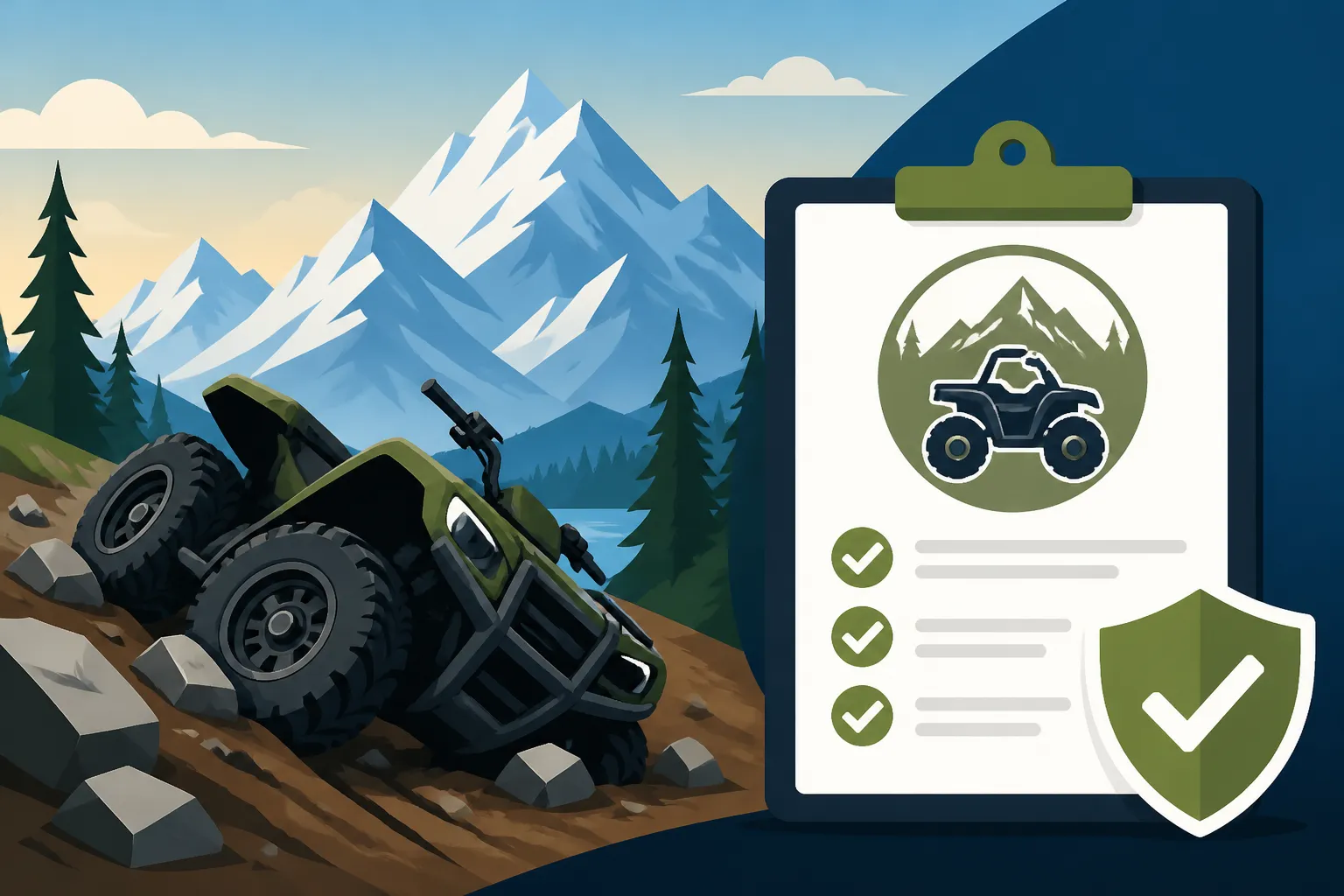
Alaska Accident Reporting for an ATV Crash
Hitting the trails on your ATV or UTV in Alaska is an experience like no other – the vast wilderness, the stunning scenery, the pure freedom. But when an unexpected accident or crash throws a wrench into that adventure, it can feel incredibly overwhelming, especially when you're miles from anywhere with limited cell service. This guide is here to walk you through the essential steps for reporting an ATV or UTV crash in Alaska, helping you understand your responsibilities and navigate the official channels when an incident occurs.
What Constitutes an ATV Crash in Alaska?
The first hurdle many riders face after an incident is figuring out if what just happened even counts as an "accident" in the eyes of the law. Out here in Alaska, sometimes a fender bender on a gravel road feels worlds away from a rollover deep in the bush, but the legal definitions can be surprisingly broad. It's not just about two machines colliding; it's about any incident involving an ATV or UTV that results in certain outcomes.
Understanding Alaska's Definition of an Accident
In Alaska, an ATV or UTV "accident" for reporting purposes generally involves any incident where the machine is in motion and results in injury, death, or significant property damage. This means it's not just a head-on collision on a trail. It could be a single-vehicle rollover when navigating a tricky hill, a side-by-side sliding off a bank and hitting a tree, or even a smaller impact with a rock that causes substantial damage to your machine or other property. The key is often the consequence, not necessarily the specific type of impact.
Imagine you're out on a weekend trip near Willow, enjoying the trails, and you take a corner a bit too wide. Your quad catches a rut and you go over, thankfully not too fast, but you land awkwardly. Your arm immediately starts throbbing, and you suspect a fracture. Even if no other vehicle was involved and you were the sole occupant, that incident would likely meet the criteria for an accident requiring attention due to personal injury. Or perhaps you're cruising along and hit a submerged log in a stream crossing, bending your frame and causing thousands of dollars in damage. That, too, counts, even without injury, due to the property damage threshold.
The important thing to remember is that "significant" property damage often has a monetary value attached to it, even if that specific number isn't always at the forefront of your mind when you're shaking off an impact. While I can't give you a current dollar amount, the rule of thumb is usually if the repair costs are more than minor cosmetic fixes, or if the machine is rendered inoperable, it's worth considering for reporting. Always err on the side of caution if there's any doubt, especially when injuries are involved.
When a Trooper Gets Involved
There are specific situations where law enforcement absolutely must be notified, or where they will almost certainly become involved. The Alaska State Troopers are often the primary agency for incidents outside of organized municipal areas, but local police departments, park rangers, or even federal land management officers (like BLM or Forest Service personnel) might respond depending on where the incident occurs.
If an ATV or UTV accident involves serious injury, a fatality, or if impairment (such as alcohol or drugs) is suspected, contacting 911 or the local State Trooper dispatch is non-negotiable. These are grave situations that require immediate official investigation. For instance, if you're riding with a friend in the Mat-Su Valley and they crash, sustaining a head injury, you need to call for help immediately. The troopers will then take the lead in documenting the scene, interviewing all parties, and gathering evidence. They'll assess the damage, measure skid marks, take photos, and generally create an official record of what transpired. This official report becomes a crucial document for insurance claims, potential legal proceedings, and sometimes even for public safety analysis.
Even in less severe cases, if the accident occurs on public lands managed by a state or federal agency, such as the [Knik River Public Use Area in Alaska] or a state park, contacting the managing agency might be necessary. They might need to assess trail damage, manage any environmental impact, or simply be aware of an incident on their property. It’s always better to make the call and let them determine the appropriate response rather than assuming it’s not necessary, especially when injuries or substantial property damage are involved.
Immediate Steps After an ATV Accident in Alaska
When the dust settles, literally and figuratively, after an ATV crash, instinct often takes over. But having a clear, step-by-step plan can make a world of difference in a stressful situation. In Alaska's vast and often remote landscapes, these initial actions are even more critical, as help might be hours away.
Prioritizing Safety and Assessing Injuries
Your absolute first priority after any ATV or UTV crash is the safety of everyone involved. This means checking yourself and any passengers or fellow riders for injuries. Even if you feel okay in the immediate aftermath, adrenaline can mask pain. Ask yourself and others if anything hurts, if you can move all limbs, and if there are any visible signs of injury. For serious injuries – a suspected broken bone, deep cuts, head trauma, or loss of consciousness – calling for emergency medical services (911 or local equivalent) is paramount.
If you are in a remote area, which is highly likely when riding ATVs in Alaska, getting a cell signal can be a real challenge. This is where preparedness truly pays off. Carrying a satellite messenger or an emergency locator beacon (like a PLB or InReach device) is not just a good idea; it can be a literal lifesaver. These devices allow you to send SOS signals and communicate with emergency responders even when miles from cellular coverage. [Choosing a Satellite Messenger for a Backcountry Ride] can seriously expedite help getting to you. If your machine is blocking a trail or poses a hazard, and it's safe to do so, try to move it off the main path to prevent further accidents. If not, setting up some form of warning, like waving down oncoming riders or using reflective materials, is crucial.
Securing the Scene and Gathering Information
Once immediate safety and medical needs are addressed, the next critical step is to secure the scene (if safe) and start gathering as much information as possible. This data will be vital for any official reports, insurance claims, or potential legal proceedings. Begin by taking photographs or videos with your phone of everything: the position of the machine(s), any damage to the ATV, damage to other vehicles or property, tire marks, debris, and the general surroundings. Capture wide shots and close-ups from multiple angles. Documenting the trail conditions, weather, and any hazards (like rocks, trees, or hidden ruts) can also be incredibly useful.
Next, collect contact information from everyone involved: names, phone numbers, addresses, and insurance details of other drivers or passengers. If there are any witnesses, be sure to get their names and contact information as well. Write down the make, model, year, and vehicle identification number (VIN) of all machines involved. You'll also want to note the registration decal numbers. [Why Your Decal Number Is the Registration Number] is a detail often overlooked but critical for official identification. It’s also important to remember that this isn't the time to admit fault. Stick to factual observations and information gathering. You can be empathetic without taking responsibility for the incident until a full investigation determines fault.
Notifying Authorities and Land Managers
Knowing who to call is just as important as knowing when to call. As mentioned, if there are serious injuries, fatalities, or suspected impairment, dial 911 for the Alaska State Troopers immediately. Be prepared to give them as precise a location as possible. In remote areas, this might mean GPS coordinates from a satellite messenger or a detailed description of landmarks. If you happen to be in a municipality with its own police force, contact their non-emergency line unless it’s a life-threatening emergency.
Beyond law enforcement, consider the land you’re on. If your accident occurred on state land, a state park, or federal property, you may also need to inform the managing agency. For example, if you crashed within a specific State Park boundary, you'd contact the Alaska State Parks office responsible for that area. They might need to know about trail damage, potential environmental spills (like gas or oil), or anything that impacts their recreational areas. [Alaska State Land Riding Explained] outlines who manages what, and this knowledge becomes especially important in these situations. Sometimes, they might even dispatch a ranger to assess the situation or assist with recovery. A quick call to the appropriate land manager can save you headaches down the road and ensure you're complying with all regulations.
Formal Reporting Requirements and Your Responsibilities
Once the immediate crisis is handled, the paperwork and official processes begin. This is where it’s easy to feel overwhelmed, but understanding Alaska’s formal reporting requirements can help you navigate this complex phase with confidence.
Filing an Official Accident Report
In Alaska, if an ATV or UTV accident results in injury or death, or property damage exceeding a certain monetary threshold (which I cannot specify numerically, but generally means significant damage that would lead to costly repairs or total loss), you are required to file an official accident report with the Alaska Department of Administration, Division of Motor Vehicles (DMV). This isn't just for cars; it applies to all-purpose vehicles (APVs) as well. The timeframe for filing these reports is typically within a short window, often around 10 days from the date of the crash. Missing this deadline can lead to complications, so it's best to address it as soon as you're physically able.
The official report will ask for detailed information, much of which you should have already gathered at the scene. This includes personal identification, details of any other parties involved, witness information, detailed descriptions of the ATVs or UTVs, the date, time, and exact location of the crash, and a narrative describing how the accident occurred. It will also require information about injuries sustained and an estimate of property damage. Be as accurate and thorough as possible. Remember, this report becomes a formal record, and inconsistencies could cause issues later. If law enforcement responded to your accident, they will usually file their own report, but you might still be required to file a separate report with the DMV if the thresholds are met. Always check with the DMV or a legal professional to ensure you're meeting all requirements.
Insurance and Legal Considerations
Immediately after addressing the immediate aftermath and any official reports, contacting your insurance provider is a critical next step. Even if you believe the accident was minor or only involved your own machine, it's wise to inform your insurer promptly. They can guide you through the claims process and explain what your policy covers, whether it's for damage to your machine, medical expenses, or liability for damage to other property or injuries to others. [Alaska Insurance Requirements for an APV] are important to understand before you even hit the trails, as having proper coverage can save you immense financial stress after a crash.
Beyond insurance, legal considerations can quickly arise, especially if there were serious injuries, fatalities, or if negligence is suspected. If, for instance, the accident involved impairment, [Alaska DUI Law and Off-Road Machines] applies to ATVs and UTVs just as it does to cars, leading to severe legal penalties. In cases of significant damage or injury, it may be prudent to consult with an attorney to understand your rights and obligations. They can help you navigate insurance claims, liability issues, and any potential lawsuits. While we all hope to never need them, accessories from brands like SuperATV, such as heavy-duty bumpers, brush guards, or skid plates, can sometimes mitigate damage in an impact, potentially reducing repair costs and insurance claims. It’s a small investment that can provide big protection, though it won't prevent the need for reporting.
Damage to Public or Private Property
ATV crashes don't always just involve the machine itself or other riders. Sometimes, an accident can result in damage to external property – a fence line on private land, a trail marker on public ground, a small outbuilding, or even environmental damage like a fuel spill. If your machine causes damage to property that does not belong to you, you have a responsibility to report it and potentially make restitution.
If the damaged property is on public land, you'll need to report it to the managing agency (e.g., Alaska State Parks, DNR, BLM). They will assess the damage and inform you of the necessary steps for repair or compensation. If the damage occurs on private property, you are legally obligated to make a good faith effort to notify the owner. Ignoring this could lead to charges like criminal mischief or trespass. [Alaska Trespass Law for Riders] clarifies the importance of respecting property boundaries and the consequences of failing to do so. In these situations, liability insurance can be incredibly beneficial. Companies like SuperATV also offer robust undercarriage protection and skid plates, which, while not preventing all damage, can definitely reduce the severity of impacts to your machine, and potentially, to the ground or structures you might hit. Thinking ahead about protection can prevent some of the more frustrating aspects of property damage after a crash.
Navigating the Aftermath: Recovery and Prevention
An ATV or UTV crash is more than just an incident; it's an event that impacts you physically, emotionally, and financially. The steps you take after the formal reporting can significantly influence your recovery and help prevent future occurrences.
Machine Recovery and Repair
Once the dust has truly settled and reports are filed, the practical challenge of dealing with a damaged machine often comes to the forefront. If your ATV or UTV is broken down in a remote location, getting it out can be an adventure in itself. This might involve calling a specialized towing service that can handle off-road recovery, or, in truly remote areas, coordinating with local bush mechanics who have the right equipment. Sometimes, air transport via helicopter or small plane might be the only option for recovery if the machine is severely damaged and inaccessible by ground.
After recovery, you’ll face the decision: repair or salvage? For older machines, or those with extensive frame damage, the cost of repair might exceed the value of the ATV. It's a tough call, often influenced by sentimental value versus economic reality. If you decide to repair, finding a reputable mechanic who understands the intricacies of ATV and UTV systems is key. [Alaska Machines Stored Over Winter] often need maintenance, and a crash might highlight underlying issues. For those who enjoy tackling repairs themselves, be sure to source quality replacement parts. Brands like SuperATV offer a wide range of aftermarket parts, from axles and ball joints to complete suspension kits, which can not only replace damaged components but also upgrade your machine's durability and performance after a crash.
Learning from the Incident and Future Safety
Every accident, no matter how minor, is an opportunity for critical self-reflection and learning. Once you’ve processed the event, take time to honestly analyze what happened. Was it excessive speed for the conditions? Unfamiliar terrain? A mechanical failure that could have been prevented with better maintenance? Operator error due to inexperience or momentary distraction? Understanding the root cause is the first step toward preventing a repeat.
To enhance future safety, consider refreshing your skills or even taking a formal ATV safety course. [Alaska Voluntary Safety Courses] are available and can significantly improve your riding proficiency, hazard awareness, and emergency response. Upgrading your safety gear is also paramount. Ensure your helmet meets current safety standards, and always wear appropriate protective clothing. [Alaska ATV Helmet Law Age] reinforces the importance of head protection, especially for young riders. Regular, thorough machine maintenance is non-negotiable; things like checking brakes, tire pressure, and fluid levels can prevent many mechanical failures. For those looking to improve their machine’s handling and stability, SuperATV provides components like upgraded control arms, shocks, and wider stances that can make your ride more predictable and safer on challenging Alaskan terrain.
Emotional and Physical Recovery
Finally, it’s crucial not to overlook the personal toll an accident takes. Physical injuries, even seemingly minor ones, need proper medical attention and time to heal. Don’t rush back onto the trails if you're still recovering or experiencing pain. Lingering physical symptoms can impair your ability to safely operate an ATV.
Beyond the physical, ATV accidents can be emotionally traumatic. The shock, fear, and stress can lead to anxiety, difficulty sleeping, or a reluctance to ride again. It’s okay to acknowledge these feelings. Talk to friends, family, or if necessary, a mental health professional. Taking a break from riding to process the experience is a healthy response. Many riders find that gradually easing back into less challenging trails, or riding with trusted companions, can help rebuild confidence. Remember, the goal is to enjoy the incredible experience of riding in Alaska safely and responsibly for years to come.
Here's a quick reference for reporting requirements in Alaska:
| Incident Type | Required Reporting Parties | Key Actions |
|---|---|---|
| Minor Accident | None (if no injury/minor damage) | Assess self/passengers, move machine if safe, photograph damage, inform property owner (if applicable) |
| Major Accident | Alaska State Troopers (or local police), DMV, Insurance Provider | Prioritize safety, call 911 for serious injury/death/impairment, gather all info, file DMV report within ~10 days |
| Damage to Public Land | Relevant Land Managing Agency (e.g., State Parks, BLM) | Inform agency after initial safety/reporting, document damage, cooperate with assessment |
| Damage to Private Land | Private Property Owner | Notify owner immediately (if possible), exchange info, inform insurance, cooperate on restitution |
Disclaimer
This article is for general informational purposes only and does not constitute professional advice. Laws, prices and regulations vary by location and change over time. Consult a qualified professional for guidance on your specific situation.