Alaska Rules for Riding a Village Street
It’s a common scenario across Alaska: you’ve got your trusty ATV or UTV, and you need to get from your cabin to the store, or from your house to the community center. But the moment your tires hit pavement or maintained gravel, a wave of uncertainty can wash over you. Are you even allowed to ride your machine on a village street? This guide is here to untangle the often-confusing web of state laws and local ordinances, offering clear, actionable advice so you can ride confidently and legally through Alaska's unique communities.
The Unique Landscape of Alaska's Village Streets
Life in Alaska, especially off the main road system, is incredibly different from anywhere else. In many villages, an ATV or UTV isn't just a recreational toy; it's a primary mode of transportation. These machines are used for everything from hauling groceries and firewood to getting to the fishing boat or the hunting grounds. This essential role often means that the rules for riding on village streets have evolved differently than in more urbanized areas, creating a patchwork of regulations that can feel overwhelming.
Why Village Rules Differ from Urban Areas
Think about Anchorage or Fairbanks. These cities have strict rules, often banning ATVs and UTVs from paved public roads altogether, or limiting them to very specific contexts. This is largely due to traffic volume, road design, and the general expectation of passenger vehicles. Now, picture a small Alaska village where the "main road" might be a gravel path, and the primary vehicle for many residents is an ATV. The legal framework has to acknowledge this reality. What seems like an anomaly in the Lower 48 or even in Alaska's larger cities is simply how many villages operate day-to-day. You’re not just trying to have fun; you're trying to live your life. This fundamental difference in use and necessity is why village rules are often more permissive, yet still require careful understanding.
Understanding Local Ordinances and State Law
The key to navigating village streets is knowing that state law provides a baseline, but local ordinances can add layers of restriction or, sometimes, specific allowances. Alaska's state laws, which we'll dive into shortly, define what an All-Purpose Vehicle (APV) is and the general conditions under which it can be operated on a public road. However, communities have the power to create their own municipal ordinances that can be stricter than state law. For example, a village council might ban APVs from certain roads near the school, impose curfews, or even designate specific routes. The challenge is that these local rules aren't always widely published or easily accessible to someone just passing through, or even a new resident. It truly becomes a matter of local knowledge and diligent research.
Essential State-Level Rules for APV Road Use
Before you even consider specific village rules, it's crucial to understand the foundational state laws that govern APV operation on public roads in Alaska. These are the non-negotiable requirements that apply statewide, unless a local ordinance explicitly provides a specific carve-out or more stringent rule. Ignoring these can lead to fines and citations, no matter how remote your location.
Speed Limits and Road Types
Alaska state law sets a clear guideline: an APV generally cannot be operated on a highway or street with a posted speed limit exceeding 45 miles per hour. This means if you're on a road with a 55 mph speed limit, your machine is not allowed, even if you’re only going 20 mph. For village streets, this usually isn't an issue as most community roads are well below this threshold. The important thing to remember is that this 45 mph limit is not the actual speed you can drive, but rather the maximum speed limit of the road itself. Always obey the posted speed limit signs on any street you're riding on. Additionally, state law distinguishes between various types of roads, and APVs are generally restricted from limited-access highways, which you typically won't encounter within a village. For a deeper dive into the broader legal framework, check out [Alaska APV Road Rules Explained].
Licensing, Registration, and Insurance
Just like driving a car, operating an APV on a public street in Alaska comes with specific requirements for the operator and the machine itself. These are not suggestions; they are mandatory:
- Driver's License: If you're going to ride an APV on a public street, you absolutely need a valid driver's license. This isn't a special "ATV license," but your standard Class D driver's license. This applies to anyone, regardless of age, who is operating the machine on a street or highway. Don't assume that because you're in a village, this rule doesn't apply. Troopers and local law enforcement can and do enforce this. You can find more details on operator requirements in [Do You Need a License for an ATV in Alaska?].
- Registration: All APVs that are operated on public land or public rights-of-way (which includes village streets) must be registered with the State of Alaska. This involves a one-time registration process and requires you to display a decal on your machine. There are some exemptions, like riding exclusively on your own private land, but for village street use, registration is a must. Failing to register means you're breaking the law before you even leave your driveway. Learn more about the process in [Do You Need to Register an ATV in Alaska?].
- Liability Insurance: This is another critical, and often overlooked, requirement for APV use on public roads. Alaska law mandates that any APV operated on a highway or street must be covered by a liability insurance policy. This isn't just a good idea; it's the law. This insurance helps protect you and others in case of an accident. Even if you only plan to ride a short distance, ensure you have this coverage in place. Understanding the specifics can be found in [Alaska ATV Insurance Requirements].
Equipment Requirements for Street Legality
To be legally ridden on a village street, your APV needs to meet certain equipment standards that enhance safety and visibility. These aren't just for show; they're designed to make your machine more visible to other traffic, which, even in a quiet village, is crucial. Aftermarket parts can sometimes help meet these requirements, but always ensure they are compliant. Brands like SuperATV offer a range of accessories that can help equip your machine for various riding conditions, including those that make it more visible.
Here's a breakdown of the essential equipment:
- Headlights and Taillights: Your machine must have at least one headlight that emits white light visible from 100 feet ahead and at least one taillight that emits red light visible from 1,000 feet behind. These must be on and functional when operating at night or during periods of reduced visibility.
- Brakes: A functional braking system is non-negotiable. It needs to be capable of stopping the machine safely and effectively.
- Muffler and Emission Controls: Your APV must be equipped with a muffler that is in good working order and prevents excessive or unusual noise. Modifying your exhaust system to make it louder is typically illegal for street use. Emission control devices, if originally equipped, must also be present and operational.
- Spark Arrester: To prevent wildfires, especially crucial in dry Alaska summers, your APV must have an effective spark arrester that has been approved by the U.S. Forest Service.
- Reflectors: At least one red reflector must be mounted on the rear of your APV, visible from 1,000 feet. Additional side reflectors can improve visibility.
- Mud Flaps: Some regulations may require mud flaps or fenders to prevent debris from being thrown up by your tires, which can be a hazard for other vehicles or pedestrians.
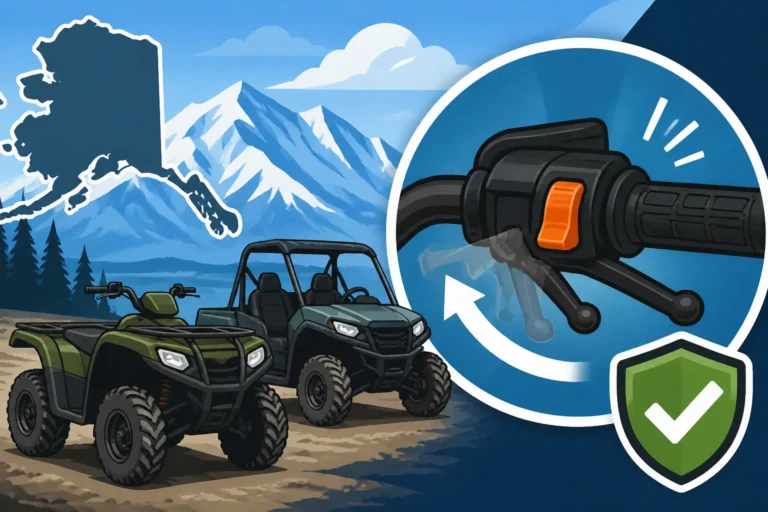
- Self-Closing Throttle: The throttle must be designed to close automatically when the operator removes their hand.
- Intact Body Panels: While not always explicitly listed, generally, your machine should be in reasonably good condition with all body panels intact to prevent hazards.
Meeting these equipment standards is critical not just for legal compliance but for your own safety and the safety of others in the community. For a full list and explanation, refer to [Alaska OHV Equipment Requirements].
Navigating Local Village Ordinances
While state law sets the foundation, local village ordinances are where the real nuance comes in. What's perfectly fine in one community might be strictly prohibited just a few miles away. This can be frustrating, especially for visitors or those new to an area, but it reflects the unique needs and priorities of each village.
How to Research Specific Village Rules
This is often the trickiest part. Unlike larger cities with websites publishing their municipal codes, many smaller Alaska villages may not have their ordinances readily available online. Here are the best ways to find out the rules:
- Contact the Village Council or City Clerk: This is your absolute best resource. A quick phone call or visit to the village office can clarify exactly what the local rules are. They can tell you about specific roads that might be off-limits, any curfews for APVs, or designated routes for subsistence travel.
- Ask Local Residents: If you're new to the area or visiting, strike up a conversation with local residents. They often know the unwritten rules, common practices, and which streets are typically used for what. This informal knowledge can be invaluable.
- Look for Posted Signs: While not comprehensive, some villages may have signs posted at community entrances or specific intersections indicating APV restrictions or allowances. Always keep an eye out for these.
The key is proactive inquiry. Don't assume; always ask. This is especially true given how important APVs are to daily life in many communities. You can read more about the variability in [Alaska Municipal ATV Ordinances].
Common Restrictions and Special Provisions
Village ordinances can introduce a variety of specific rules that go beyond state law:
- Road-Specific Bans: A common restriction is banning APVs from certain roads, particularly those near schools, clinics, or heavily trafficked areas, even if they fall within the 45 mph state limit. This is often done to ensure pedestrian safety or reduce noise in sensitive zones.
- Curfews: Some villages may impose curfews for APV operation, particularly at night, to reduce noise complaints and ensure peace for residents.
- Age Restrictions: While state law covers licensing, a local ordinance might add stricter age requirements for operating APVs on village streets, especially for minors.
- Designated Routes for Subsistence/Essential Travel: On the flip side, many villages recognize the critical role APVs play in subsistence activities. Ordinances might designate specific routes or provide exemptions for hunters, trappers, or those performing essential tasks like hauling water or fuel. These provisions often allow APVs access to areas or roads that would otherwise be restricted. For instance, a trail leading directly from a village to a trapping line might double as a village street for a portion of its length, as explored in [Alaska Rules for Riding a Trail to Town].
- Vehicle Size Limitations: In some very tight or residential areas, there might be restrictions on larger UTVs or side-by-sides, favoring smaller, more maneuverable ATVs.
It's clear that while the state offers a baseline, individual villages craft rules that fit their unique environments. You might even find that certain communities have completely banned APV road use, so it's always best to check. For a broader perspective, you could look at [Can You Ride an ATV on the Road in Alaska?] and [Alaska Communities That Ban APV Road Use].
Practical Tips for Responsible Village Riding
Riding your APV on a village street isn't just about knowing the rules; it's about being a respectful and responsible member of the community. Even where permitted, common sense and courtesy go a long way in ensuring continued access and positive relationships with residents.
Prioritizing Safety and Courtesy
Imagine yourself as a pedestrian or a driver of a larger vehicle. How would you want an APV rider to behave? This perspective is key to safe and courteous operation:
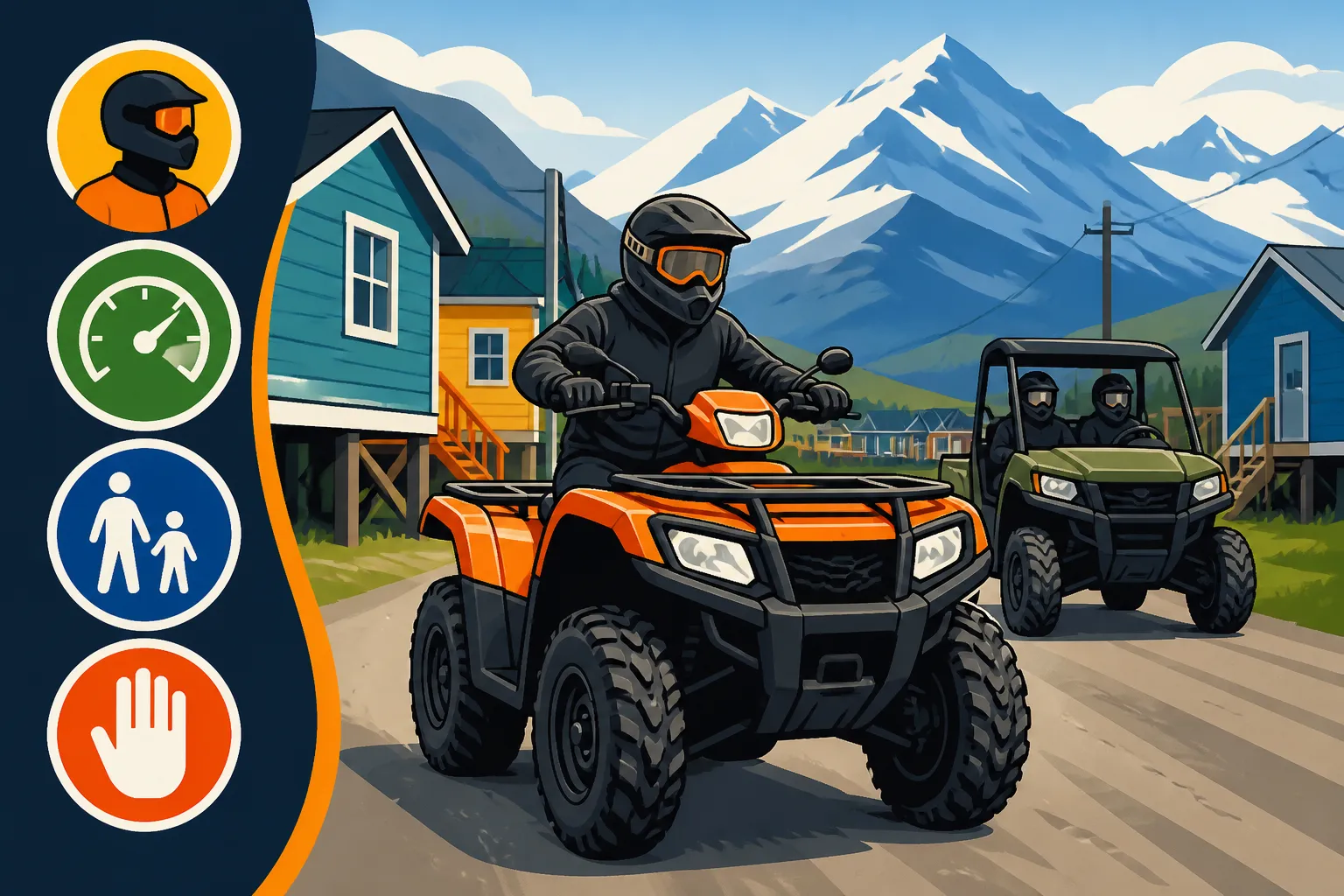
- Maintain Low Speeds: Even if the posted speed limit is 25 mph, slow down even further when passing homes, schools, or groups of people. Excessive speed kicks up dust, creates noise, and is simply unsafe in a residential environment.
- Yield to Pedestrians and Other Vehicles: Always give way to walkers, cyclists, and cars. Remember, your APV might be common, but you're sharing the road. Be predictable, use hand signals if appropriate, and make eye contact.
- Minimize Noise: Loud machines are a major source of complaint. Ensure your muffler is working correctly and avoid unnecessary revving. Be especially mindful early in the morning or late at night. If your machine is equipped with aftermarket exhaust, double-check that it still complies with noise regulations.
- Watch for Children and Animals: Kids playing and loose animals are common in villages. Be constantly aware of your surroundings, anticipate unexpected movements, and be ready to stop quickly.
- Helmet Use: While state law mandates helmet use for riders under 16, it's always a good idea for all riders to wear a helmet, especially on streets. It's a simple safety measure that can prevent serious injury. Read more about the specifics in [Alaska ATV Helmet Law Age].
Documentation and Preparedness
Being prepared isn't just about having the right gear; it's also about having the right paperwork. Troopers or local law enforcement can, and will, ask to see your documentation, even in remote areas.
- Carry Your Documents: Always have your valid driver's license, APV registration, and proof of liability insurance with you. Keep them in a waterproof bag or container, perhaps in a storage box on your machine (SuperATV makes some great weatherproof storage options for UTVs and ATVs). This prevents them from getting wet, muddy, or lost. For more on what authorities might request, see [What a Trooper Can Ask to See].
- Know the Local Rules: If you're in a village you don't know well, try to get a copy or simply be aware of the key local ordinances. Being able to explain that you've done your homework can go a long way if you're ever stopped.
- Be Prepared for the Elements: While on village streets, you might be close to amenities, but Alaska weather can change rapidly. Always have appropriate layers, emergency supplies, and a means of communication, even for a short ride.
- Check Machine Condition: Before heading out, do a quick check of your machine. Are your lights working? Are your tires properly inflated? Are your brakes responsive? These simple checks can prevent breakdowns and make your ride safer, especially if you plan to venture out of the village to a trail system afterward.
In conclusion, navigating Alaska's village streets with your ATV or UTV requires a blend of adhering to state laws and understanding the unique local rules. By doing your homework, equipping your machine properly, and riding with respect and caution, you can safely and legally enjoy the convenience and freedom your APV provides in these distinct Alaskan communities.
| Requirement | State Law (General) | Typical Village Ordinance (Variable) |
|---|---|---|
| Operator | Valid Driver's License Required (Class D) | May have additional age restrictions for minors |
| Machine | Registered with State, Decal Displayed | N/A (State registration always required for public use) |
| Insurance | Liability Insurance Required | N/A (State insurance always required for public street use) |
| Speed Limit | Road must be posted 45 mph or lower (obey posted limit) | May impose lower speed limits on specific streets |
| Equipment | Headlight, Taillight, Brakes, Muffler, Spark Arrester, Reflectors, Self-closing throttle | May specify additional local requirements (e.g., mud flaps in specific areas) |
| Road Access | Restricted from limited-access highways | May ban APVs from certain roads (e.g., near schools, main thoroughfares) |
| Time of Day | Generally no state-level curfew | Often impose curfews, especially at night |
| Special Provisions | N/A | May designate routes for subsistence, essential travel, or specific uses |
Disclaimer
This article is for general informational purposes only and does not constitute professional advice. Laws, prices and regulations vary by location and change over time. Consult a qualified professional for guidance on your specific situation.