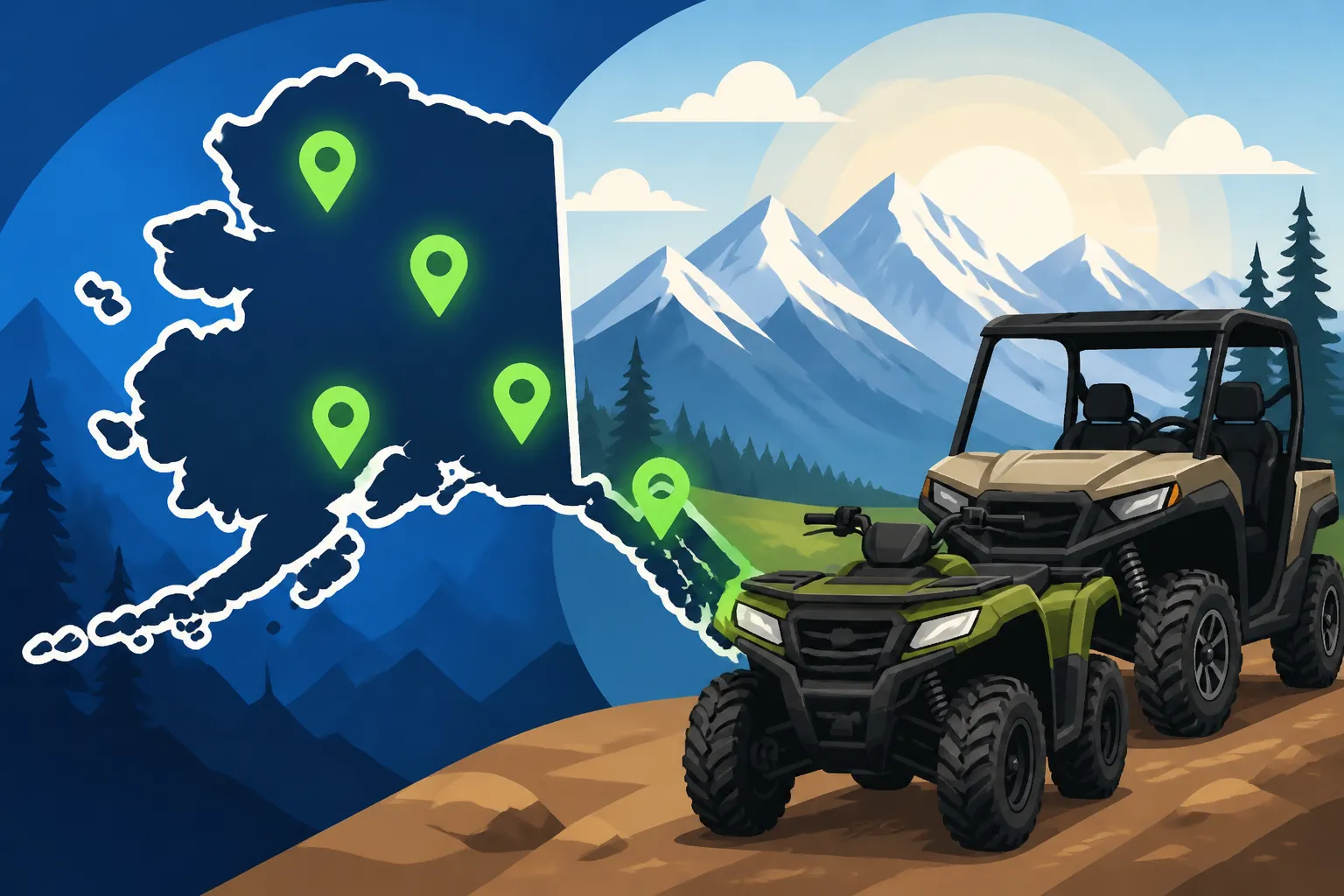
Which Alaska Towns Have Not Banned APVs?
It's incredibly frustrating when you're itching to take your ATV or UTV out for a spin, only to wonder if you're even allowed to drive it down the road to get to the trail, or even to the grocery store in a pinch. Alaska's rules for All-Purpose Vehicles (APVs) on public roads can feel like a confusing labyrinth, with different communities having different regulations. This guide is here to cut through that confusion, helping you understand where you might not face an outright ban and what you need to know to ride legally and responsibly in those areas.
Understanding Alaska's APV Road Rules: The Statewide Picture
Riding an APV on a public road in Alaska isn't as simple as just firing it up and going. The state sets a general framework, but crucially, it also gives local municipalities — cities and boroughs — the power to create their own ordinances. This means what's perfectly fine in one community might land you a hefty ticket just a few miles down the road. It's this patchwork of rules that often leaves riders scratching their heads, feeling like they need a lawyer just to figure out where they can ride.
The Statewide Framework for APV Road Use
At a fundamental level, Alaska state law generally allows APVs on public roads, but with some significant caveats. You can't just treat your quad like a regular car. For instance, there are strict speed limits, typically topping out at 45 mph for APVs on public roads. Beyond that, you're required to have a valid driver's license, proper registration (which in Alaska means a decal, not a license plate), and liability insurance. Your machine also needs to meet certain equipment standards – we're talking about working headlights, taillights, brakes, a proper muffler, and a spark arrester. If you're riding a youth quad, there are additional age and supervision rules.
The core frustration here for many riders is that even with all these state-level requirements met, a local ordinance can still shut down road access entirely. For instance, while the state might technically allow it, a city council can pass a law that says, "Nope, not on our roads." This is why a lot of the questions we get aren't about the general state rules, but about the exceptions and local bans. You might have your machine set up perfectly, with all the right [Alaska OHV Equipment Requirements] and your [Alaska APV License and Insurance Rules] in order, only to find the street outside your friend's cabin is off-limits due to a city ordinance.
The 45 mph Rule and Its Implications
One of the most defining aspects of APV road use in Alaska is the statewide 45 mph speed limit. This isn't just a suggestion; it's law. If the posted speed limit on a road is 45 mph or lower, and no local ordinance prohibits APVs, then you might be able to ride your machine on it, provided you meet all other state requirements. However, if that road's speed limit jumps to 50 mph, 55 mph, or higher, your APV is explicitly prohibited from riding there.
This 45 mph rule effectively funnels APV road access to smaller, often rural roads, or specific segments of larger highways where the limit temporarily drops. It means you won't be cruising down major arteries like the Glenn Highway or parts of the Parks Highway on your quad. Even in communities that haven't outright banned APVs, this rule naturally limits where you can go. It creates a situation where you might be able to ride down a main street in a small town, but not the connecting highway that gets you there. Many riders find this restrictive, as it often means trailering their machines even for relatively short distances to get to legal riding areas, instead of simply being able to drive them from home. Understanding [Alaska's 45 mph Road Limit for APVs] is crucial, as it’s a constant across the state, even in areas with more lenient local rules.
Communities That Have Not Enacted Full APV Road Bans
Okay, so where can you actually ride on the roads without hitting a wall of "no trespassing" signs for APVs? This is where the local ordinances come into play, and it requires a bit of detective work on your part. While many of Alaska's larger cities have implemented blanket bans, numerous smaller towns, villages, and vast stretches of unincorporated borough land offer more flexibility.
Navigating the Patchwork of Local Ordinances
The key thing to understand is that just because a town hasn't banned APV road use doesn't mean it's a free-for-all. What it does mean is that the state's general rules are likely in effect, possibly with some specific local additions or restrictions rather than a complete prohibition. Think of it less as a green light everywhere, and more like a yellow light with specific instructions for certain intersections. Some communities might allow APVs on all roads, some only on specific designated routes, and others might have time-of-day restrictions or specific rules for crossing major highways.
The biggest challenge is that there isn't one central database for every single city and borough's APV ordinance. It often requires you, the rider, to be proactive. Before you ever hit the pavement, you really need to be [Checking a City Code Before You Ride]. This means looking up the local municipal code online, or even making a phone call to the city clerk's office or local law enforcement. It can be a hassle, but it's far better than getting pulled over and facing a fine, especially if you're new to an area or just passing through.
Examples of Towns (and Boroughs) Where Road Use May Be Permitted
While I can't provide an exhaustive, real-time list, I can give you some insights into types of communities where you are more likely to find less restrictive APV road access. Generally, you'll find more open policies in:
- Rural Villages and Bush Communities: Many of Alaska's smaller, off-road-system communities rely heavily on ATVs and UTVs for transportation, subsistence, and daily life. In places like Nome and Bethel, APVs are an integral part of getting around, and their local ordinances reflect this by allowing road use, albeit with specific rules. For example, [Nome's Citywide OHV Access in Alaska] is quite well-known, as is [Bethel's ATV Ordinance in Alaska], which outlines specific routes and conditions for APV use. These aren't blanket "anything goes" situations, but they're certainly not the outright bans you find in Anchorage or Fairbanks.
- Smaller Towns on the Road System: Beyond the major hubs, many smaller towns lack the population density or have a more ingrained culture of APV use, leading to fewer restrictions. While these communities are too numerous to list exhaustively, think about the general pattern: the further you get from a large population center, the more likely you are to find roads where APVs are permitted under state law, often because no local ordinance has been enacted to specifically prohibit them.
- Unincorporated Borough Areas: Even within some of the larger boroughs, the actual city limits might ban APVs, but the surrounding unincorporated areas (outside any specific city's jurisdiction) may revert to state law, which is generally more permissive.
It's crucial to differentiate between "not banned" and "explicitly allowed everywhere." In many cases, "not banned" simply means the state rules apply. Always assume restrictions exist and verify locally.
Beyond City Limits: Borough and Unorganized Borough Considerations
Stepping out of an incorporated city often means entering borough land. In Alaska, boroughs have some powers akin to counties in other states, and they too can enact ordinances. However, many parts of Alaska fall into "unorganized boroughs," vast areas where there is no local borough government. In these immense swaths of land, typically only state law applies. This is where you'll find the greatest freedom, but also the greatest need for self-reliance and awareness of land ownership.
For example, large sections of the Mat-Su Borough outside of towns like Wasilla or Palmer might allow APV road use on local roads where the speed limit is 45 mph or less, provided there isn't a specific borough-wide ordinance overriding state law. Similarly, in the massive unorganized boroughs of the Interior or Southwest Alaska, [Alaska Rules for Riding a Village Street] might be highly localized, but on the connecting trails and unpaved roads between villages, state law often governs, permitting APV travel under the usual conditions.
It’s always a good idea to remember that [Alaska Boroughs With Their Own Rules] do exist, and just because one part of a borough is permissive, doesn't mean another is. For riders looking to explore, these areas often represent the best opportunities for long-distance APV travel on public ways, connecting to vast trail networks or remote cabins. Just make sure your machine is in top condition; a remote breakdown is no fun! Brands like SuperATV offer robust aftermarket parts that can give you extra peace of mind when venturing far from paved roads and repair shops.
What to Know Before You Ride on Any Alaska Road (Even Where Allowed)
Even in the most APV-friendly communities, riding on public roads isn't without rules. It's not just about what's not banned, but what's explicitly required to keep you, other drivers, and the community safe. Thinking your machine is "street legal" just because you can technically ride it on a road in a certain town is a common mistake that can lead to tickets and headaches.
Essential Equipment and Rider Requirements
Before your tires touch any public pavement, you need to ensure both you and your machine are compliant with state law. This means:
- Registration: Your APV needs to be registered with the State of Alaska, and you must display the current decal in the correct location on your machine. Remember, [Alaska Issues a Decal, Not a Plate] for APVs.
- Driver's License: You must possess a valid Class D (standard passenger vehicle) Alaska driver's license. [Do You Need a License for an ATV in Alaska?] The answer is yes, for road use.
- Insurance: Liability insurance is a non-negotiable requirement for APVs on public roads. This protects you and others in case of an accident.
- Equipment: This is where many riders get caught out. Your APV must have:
- Working headlights visible for at least 100 feet.
- Working taillights and reflectors visible for at least 1,000 feet from the rear.
- Functional brakes.
- A securely attached muffler that limits noise.
- A spark arrester, especially crucial during dry seasons to prevent wildfires.
- A self-closing throttle.
- Intact body panels (no jagged edges).
- Mud and snow flaps if required for the type of machine.
Neglecting any of these can result in a citation, even in areas where road use is generally permitted. Many riders upgrade their machines with enhanced lighting or other safety features from companies like SuperATV, not just for off-road performance but also to ensure they meet or exceed road requirements.
The "Spirit of the Law" and Local Expectations
Beyond the letter of the law, there's the "spirit of the law," which often boils down to common courtesy and responsible behavior. Even in communities where APVs are allowed on roads, excessive noise, speeding, or riding recklessly can quickly turn public opinion against riders. This can lead to increased enforcement, or even worse, new local ordinances banning APVs where they were once permitted.
Think about the impact you're having. Are you churning up dust for homeowners? Are you revving your engine loudly late at night? Are you respectful of pedestrians and other vehicles? [Alaska Noise Complaints About Quads] are a real thing, and they often trigger community discussions about stricter regulations. Being a good ambassador for the sport means riding considerately. This includes riding only on designated paths or roads, not cutting across private property, and always operating your machine safely. A positive reputation can go a long way in ensuring these access points remain open for years to come.
Always Verify: How to Check Current Local Ordinances
Because rules can change, and interpretations can vary, the single most important piece of advice is to always verify the current local ordinances for any community where you plan to ride an APV on a public road. Don't rely on old information or anecdotal evidence.
Here's how you can do it:
- Visit the City/Borough Website: Most municipalities have their full municipal code available online. Look for sections related to "All-Purpose Vehicles," "Off-Highway Vehicles," "ATVs," or "UTVs."
- Call the City Clerk or Local Police Department: If you can't find clear information online, a quick phone call to the city clerk's office or the local police (non-emergency line) can often clarify matters. Be polite and specific with your questions.
- Check Signs: Pay attention to any posted signs at city limits or along roads. Sometimes, APV restrictions are clearly marked.
- Consult Local APV Clubs: Sometimes, local riding clubs or user groups are very knowledgeable about current regulations and can offer practical advice.
Remember, what a local DMV clerk might know about state registration (like [Questions Worth Asking a DMV Clerk] about decals or titles) is different from the specific local road rules enforced by a city police department. It's your responsibility as the rider to ensure you're compliant everywhere you go. A little research upfront can save you a lot of trouble and ensure you have a safe and enjoyable ride.
Here's a quick comparison of hypothetical APV road access scenarios in different Alaska communities:
| Community Type | Typical APV Road Access | Key Considerations | Example Vibe |
|---|---|---|---|
| Major City | Largely Prohibited | Blanket bans, heavy enforcement, few exceptions. | Anchorage, Fairbanks, Juneau |
| Smaller Town | Permitted with Specific Rules | Often follows state law (45 mph, equipment) with local ordinances for certain roads or times. | Palmer, Wasilla (outside strict town centers), Valdez |
| Rural Village/Bush | Integral, Permitted with Rules | Essential for transportation, rules often govern routes (not blanket bans). | Nome, Bethel, villages off the road system |
| Unincorporated Borough | Generally Permitted (State Law) | Absence of local ordinances means state law applies, less enforcement density. | Vast areas of Mat-Su Borough, Interior Alaska |
| Designated Recreation Area | Highly Specific, Park Rules | Rules vary widely by park/area, often limited to access roads or specific trails. | Knik River Public Use Area, Jim Creek |
Disclaimer
This article is for general informational purposes only and does not constitute professional advice. Laws, prices and regulations vary by location and change over time. Consult a qualified professional for guidance on your specific situation.