Brakes a Trooper Will Check
There’s nothing quite like hitting the trails or cruising a permitted gravel road on your ATV or UTV in Alaska. But that incredible freedom comes with a big responsibility: keeping your machine in prime working order. One area that riders sometimes overlook until it’s too late is their brakes. It’s not just about your safety, which is paramount in our wild landscapes; it’s also about legal compliance. This guide will walk you through exactly what an Alaska State Trooper or local law enforcement might look for when it comes to your machine’s braking system and how to ensure you’re always ready for inspection and, more importantly, for whatever the trail throws at you.
Why Your Brakes Matter on Alaska Trails and Roads
In Alaska, your ATV or UTV isn't just a toy; it's often a crucial tool for hunting, fishing, trapping, or simply getting around where roads don't go. Because of this reliance, and the sheer variety of terrain we navigate, your braking system is arguably one of the most vital safety features on your machine. It’s not just about coming to a complete stop when you want to; it’s about control, safety, and being prepared for anything.
More Than Just Stopping: Safety First in Alaska's Backcountry
Picture this: you're cruising along a winding trail through dense timber, perhaps in the Mat-Su Valley or near the Kenai Peninsula, and a moose suddenly bolts across your path. Or maybe you're descending a steep, rocky grade after a rain shower, with glacial silt making the ground slick under your tires. In these moments, reliable brakes aren't a luxury; they're your lifeline. They give you the ability to react instantly, to maintain control on treacherous descents, and to prevent collisions with wildlife, trees, or other trail users. A split second of hesitation or a loss of braking power can turn an enjoyable ride into a dangerous situation, miles from any help. We all love the thrill of the ride, but we also want to make it home safely.
The Trooper's Eye: What Law Enforcement Looks For
When an Alaska State Trooper or a local police officer pulls you over, whether it's on a designated APV route or during a routine check at a trailhead, they're looking for evidence that your machine is operating safely and legally. For brakes, this isn't just a cursory glance. They want to see that your brakes are fully functional and capable of bringing your machine to a controlled stop. This inspection is part of ensuring compliance with [Alaska OHV Equipment Requirements]. They might ask you to demonstrate your brakes, checking for a firm pedal or lever feel, effective stopping power, and that your machine doesn't pull excessively to one side when braking. They’re assessing your readiness for the road or trail, and how you’d handle an emergency stop.
What Alaska Law Says About Your Machine's Brakes
Understanding the specific legal requirements for your ATV or UTV's brakes in Alaska is crucial, especially if you plan to operate on public roads or trails where law enforcement is present. While the specifics can sometimes feel a little vague in the regulations, the general expectation is crystal clear: your brakes must work effectively and safely.
The Basics: Functioning Brakes on All Wheels
Alaska statutes generally require that your all-purpose vehicle (APV) — which includes most ATVs and UTVs — be equipped with a braking system that is adequate to control the movement of, and to stop and hold, the vehicle. This typically means brakes on all wheels. It's not enough for them to just "sort of" work; they need to provide reliable stopping power. A common test is whether the brakes can stop the machine within a reasonable distance from a given speed and hold it stationary on an incline. If your machine struggles to stop or drifts when parked on a hill, it's a red flag. This requirement ties directly into the broader [Alaska OHV Equipment Requirements] that ensure machines are fit for public use. If a trooper observes your machine struggling to stop, or if your brake pedal feels "spongy" and gives too much, you could be facing a citation for an equipment violation, which nobody wants after a fun day of riding.
Brake Lights and Other Related Equipment
While the brake system itself ensures you can stop, brake lights ensure that others know you are stopping. If you’re riding on a public road or even certain designated trails, especially during twilight or after dark, your brake lights are just as important as your stopping power. Alaska law requires APVs operating on roads to have functional taillights and brake lights. [Alaska Lighting Rules on a Machine] dictate visibility standards, often requiring taillights and brake lights to be visible from a specific distance, usually 1,000 feet to the rear. If a trooper notices your machine's brake lights aren't illuminating when you apply the brakes, or if they are dim or broken, that's another equipment violation. This is especially critical when you consider riding conditions in Alaska, where visibility can change rapidly due to weather, dust, or [Alaska Rules for Riding After Dark]. A working brake light is a simple yet effective way to prevent rear-end collisions and demonstrate that your machine meets all necessary safety standards.
Common Brake Problems Troopers Notice and How to Prevent Them
Many riders can go years without a major brake issue, but the demanding conditions of Alaska can really put a strain on these critical components. When a trooper performs a spot check, they're often looking for tell-tale signs of neglect or failure that could indicate a dangerous machine. Knowing these common problems can help you stay ahead of the curve.
Worn Pads, Discs, and Drums
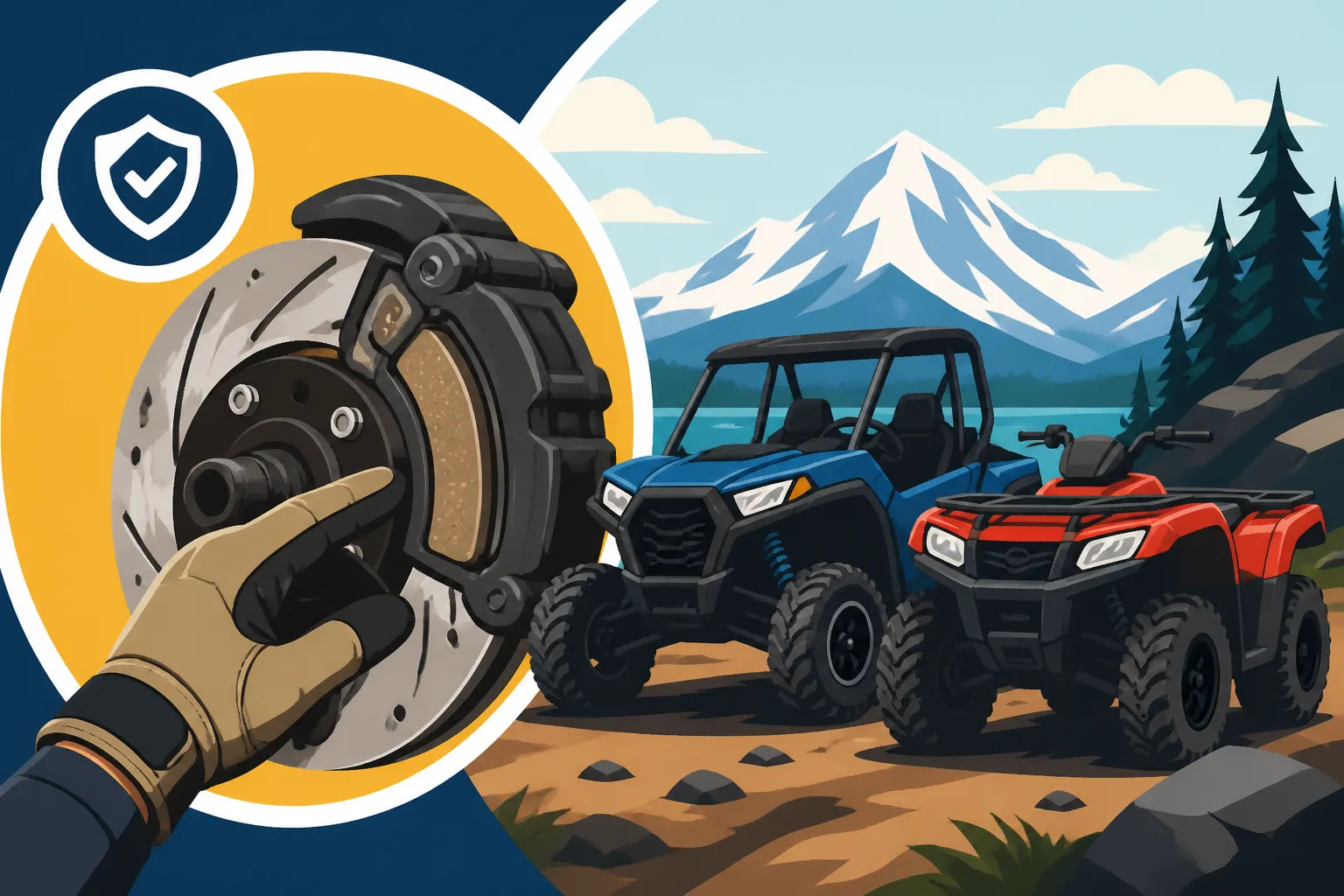
The most frequent culprit for poor braking performance is worn-out friction material – the brake pads or shoes. Over time, these components wear down from repeated use, especially if you ride aggressively or frequently navigate steep terrain. When pads get too thin, they lose their ability to grip effectively, leading to reduced stopping power and increased stopping distances. You might hear a squealing, grinding, or scraping noise, which usually indicates the pads are severely worn and the metal backing plate is contacting the rotor or drum. This is not only unsafe but can quickly damage your rotors or drums, leading to a much more expensive repair. Regular visual inspection is key. Look for cracks, uneven wear, or if the friction material is getting thin. If you need reliable replacements that can stand up to Alaska’s tough environment, you might look for reputable aftermarket brands like SuperATV for replacement parts designed for durability.
Fluid Leaks and Spongy Pedals
Most modern ATVs and UTVs use a hydraulic braking system, relying on brake fluid to transfer the force from your brake pedal or lever to the calipers or wheel cylinders. If you notice your brake lever or pedal feels "spongy" or goes almost to the floor/grip before engaging, that's a serious red flag. This often indicates air in the brake lines, or worse, a brake fluid leak. Air in the lines compresses, reducing the hydraulic pressure needed to activate the brakes. A leak, on the other hand, means you're losing fluid, which can quickly lead to total brake failure. Always check your brake fluid reservoir level regularly. If it's low, top it off with the correct fluid type and then meticulously inspect your brake lines, calipers, and master cylinder for any signs of leakage. A small drip can quickly become a torrent, leaving you without brakes when you need them most.
Improper Adjustment and Frozen Components
It's not always about wear and tear; sometimes it's about adjustment. For machines with cable-actuated brakes or parking brakes, ensuring they are properly adjusted is vital. A loose cable won't engage the brakes effectively, while an overly tight one can cause drag or premature wear. The parking brake, in particular, should be able to hold your machine securely on an incline. Beyond mechanical adjustments, Alaska's harsh environment introduces unique challenges. Water can seep into brake lines or accumulate around calipers, freezing solid in colder temperatures. This ice can prevent calipers from engaging or releasing, leading to either no brakes or brakes that drag unnecessarily. Before riding in freezing conditions or after [Alaska Machines Stored Over Winter], always check your brakes thoroughly to ensure no ice buildup is interfering with their operation.
Keeping Your Brakes in Top Shape for Alaska Adventures
Proper brake maintenance isn't just about passing a trooper's inspection; it's about extending the life of your machine, enhancing your safety, and ensuring your Alaska adventures are always fun, not frightening. A proactive approach will save you headaches and money in the long run.
Regular Inspections and Maintenance Schedule
Developing a routine for checking your brakes is perhaps the single most important step you can take. Before every major ride, do a quick visual check: are there any obvious leaks? Does the brake lever or pedal feel firm? Do the brake lights work? Beyond that, incorporate more thorough inspections into your regular maintenance schedule. Check brake pad thickness, inspect rotors and drums for grooves or warping, and look at your brake lines for any cracks or bulges. Always ensure your brake fluid reservoir is at the proper level and that the fluid itself is clean. If it looks dark or murky, it's time for a flush and refill. Here's a simple checklist to help you stay on track:
| Component | What to Check | Why It Matters | Frequency |
|---|---|---|---|
| Brake Pads/Shoes | Thickness, even wear, no glazing or cracks | Optimal stopping power, prevents rotor/drum damage | Pre-ride, Monthly |
| Brake Discs/Drums | No deep grooves, warping, rust | Smooth, consistent braking | Monthly, Annually |
| Brake Fluid | Level, color (clear to amber), no cloudiness | Hydraulic pressure for effective braking | Monthly, Biannually |
| Brake Lines/Hoses | No cracks, leaks, bulges, chafing | Prevents fluid loss, maintains pressure | Pre-ride, Monthly |
| Calipers/Wheel Cylinders | No leaks, smooth operation, pins lubricated | Ensures proper pad engagement | Annually |
| Lever/Pedal | Firm feel, proper travel, no sponginess | Direct control over braking | Pre-ride |
| Parking Brake | Holds machine securely, easy engagement | Safety when parked on inclines | Pre-ride, Monthly |
| Brake Lights | Functioning when brake applied, brightness | Visibility for other riders/vehicles | Pre-ride |
Upgrades and Replacements for Alaskan Conditions
For many riders, stock brakes are perfectly adequate. However, if you frequently push your machine to its limits, carry heavy loads, or traverse particularly challenging environments (like deep mud, steep mountains, or extensive [Alaska River Crossings]), you might consider upgrading your braking system. Heavy-duty brake pads or drilled/slotted rotors can offer improved heat dissipation and better performance under strenuous conditions. Steel-braided brake lines, for instance, are less prone to expansion under pressure than rubber lines, providing a firmer, more consistent brake feel.
When choosing replacement parts, especially for performance or longevity, consider brands known for their durability and quality. For example, SuperATV offers a range of components designed to withstand tough off-road use, making them a popular choice among riders who demand more from their machines in places like Alaska. Investing in high-quality brake components can provide an added layer of confidence, ensuring your machine is always up to the task and meeting all [Alaska OHV Equipment Requirements] for safety and reliability. Remember, a machine that stops well is a machine you can trust, no matter how wild the trail gets.
Disclaimer
This article is for general informational purposes only and does not constitute professional advice. Laws, prices and regulations vary by location and change over time. Consult a qualified professional for guidance on your specific situation.