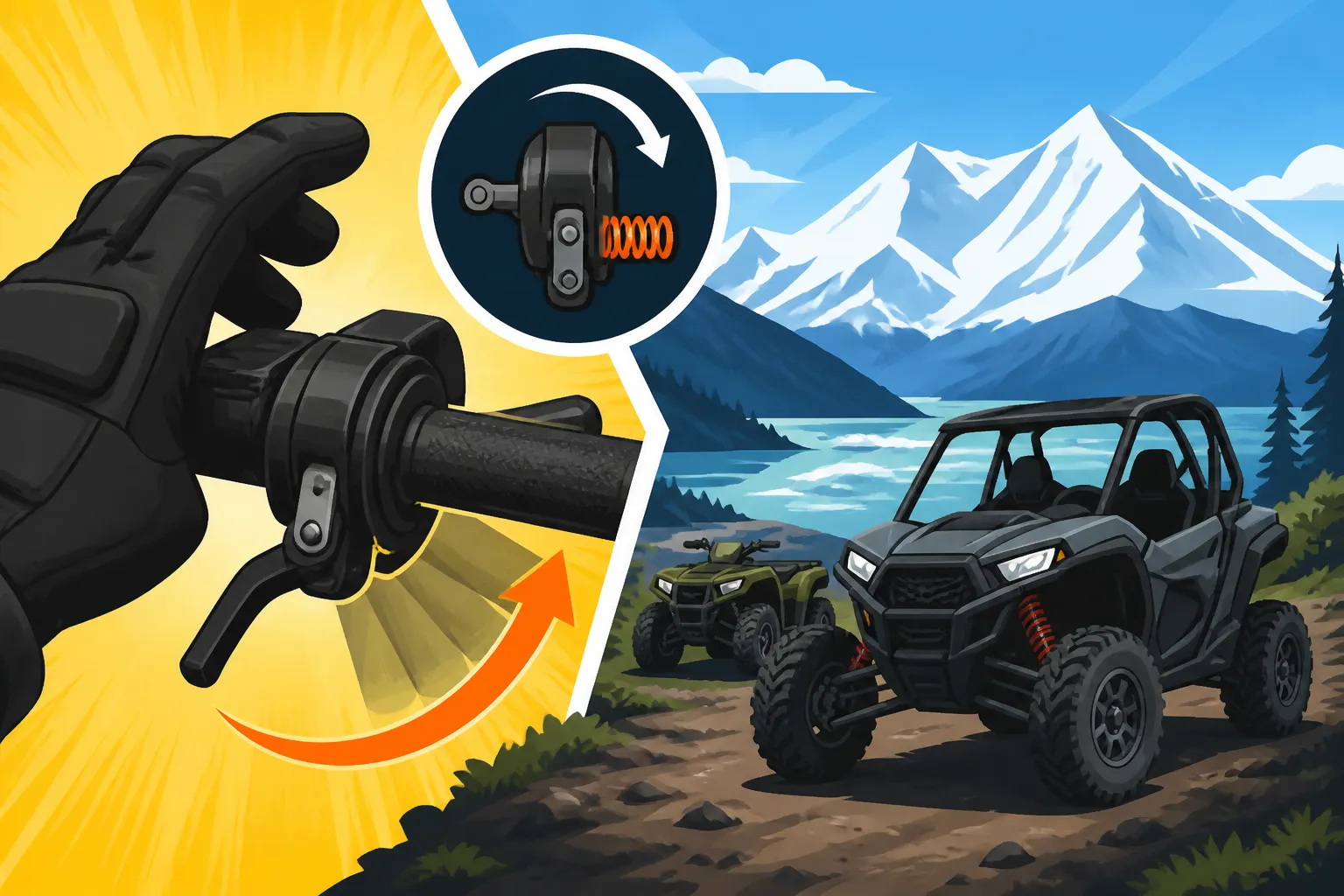
Testing a Self-Closing Throttle Before an Alaska Ride
There's nothing quite like the thrill of hitting an Alaska trail on your ATV or UTV, especially when the crisp air fills your lungs and the vast landscape unfolds before you. But that feeling can turn to a pit in your stomach in an instant if your machine doesn't respond as it should. One of the most critical, yet often overlooked, components for safe riding is your self-closing throttle. A throttle that sticks, hesitates, or fails to snap back instantly can lead to terrifying moments and serious accidents, particularly when you're far from help in the Alaskan backcountry. This guide will walk you through exactly how to test your self-closing throttle to ensure your next adventure is as safe as it is exhilarating.
Understanding the Crucial Role of Your Self-Closing Throttle in Alaska
Imagine riding along a winding trail near the Knik River Public Use Area, enjoying the scenery, when suddenly a moose steps out from the brush. Your instinct is to hit the brakes and ease off the throttle. But what if your throttle decided to stay open, pushing you forward instead of letting you slow down? This terrifying scenario highlights why a properly functioning self-closing throttle isn't just a convenience; it's a fundamental safety mechanism that protects you, your passengers, and those around you.
Why a Sticky Throttle is More Than Just an Annoyance
A sticky or slow-returning throttle is a direct threat to your control over the machine. When you release the throttle lever or twist grip, you expect an immediate, decisive return to the idle position, cutting power to the engine. If this doesn't happen, your ATV or UTV will continue to accelerate or maintain speed, even if you're trying to stop or slow down. This can lead to a range of dangerous situations. Think about navigating a tight turn on a muddy trail; if your throttle sticks, you could overshoot the corner, potentially hitting trees, going off a bank, or even rolling the machine.
Beyond the immediate danger, a malfunctioning throttle can also cause unexpected wear and tear on your brakes and drivetrain as you constantly fight against the engine's power. It forces you to rely solely on your brakes for deceleration, which isn't how these machines are designed to operate safely. In Alaska, where trails can be unforgiving with sudden dips, climbs, and blind corners, having anything less than absolute control is an invitation for disaster. It transforms a pleasant ride into a high-stakes gamble you really don't want to take.
Alaska's Unique Riding Challenges Demand Reliability
Alaska's environment poses unique challenges that demand every component on your ATV or UTV functions flawlessly. Extreme cold can cause cables to stiffen, lubricants to thicken, and plastics to become brittle, all of which can impede throttle movement. Dust and fine glacial silt, common on many trails, can work its way into throttle housings and cable sheaths, causing friction and sticking. Then there are the numerous water crossings you might encounter, from small streams to braided rivers; water ingress can lead to corrosion and binding.
When you're miles out in the wilderness, perhaps on a hunting trip or simply exploring, the nearest repair shop could be hours, or even days, away. A throttle failure in these remote conditions isn't just inconvenient; it can be life-threatening if it leads to an accident or leaves you stranded. This is why thorough pre-ride checks, including a rigorous throttle test, are even more critical here than in less demanding environments. Every piece of equipment, from your lights to your brakes, needs to be reliable, and the throttle is no exception. It’s part of the comprehensive [Alaska OHV Equipment Requirements] that ensure your machine is fit for the wild.
Step-by-Step Guide to Testing Your ATV or UTV's Throttle
Performing a self-closing throttle test is quick and simple, but it's a step many riders unfortunately skip. Make it a routine part of your pre-ride checklist, just like checking your tire pressure or fuel level. This small investment of time can prevent a major incident down the trail.
Pre-Ride Checks: The Foundation of Safe Operation
Before you even think about starting your engine, take a moment for a visual inspection of your throttle assembly. Look closely at the throttle cable itself. Are there any visible kinks, fraying, or wear spots along its length, especially where it exits the housing or enters the engine? A damaged cable is a ticking time bomb. Next, inspect the throttle housing on the handlebars. Is it secure? Are there any cracks or signs of impact? Make sure it's not loose or binding against other controls.
Gently operate the throttle lever or twist grip. It should move smoothly and freely through its entire range of motion, without any resistance or grittiness. As you release it, watch how quickly it snaps back to the closed position. There should be no hesitation, no sluggishness. Listen for any unusual sounds like grinding or squeaking. This initial check can often reveal issues before they escalate, giving you a chance to address them while you're still in the garage, not on a remote trail. Just like ensuring your headlights are visible as per [Alaska Lighting Rules on a Machine], your throttle needs to be in perfect working order.
The "Snap Back" Test: How to Perform It
This is the definitive test for your self-closing throttle. You'll perform it twice: once with the engine off, and then with the engine running at idle.
Engine Off Test:
- Fully Depress/Twist and Release: With the engine off, fully squeeze or twist your throttle grip as if you were giving it maximum acceleration.
- Observe Return Speed: Immediately release the throttle completely. It should snap back to the closed (idle) position instantly and forcefully. There should be no perceptible delay or lingering.
- Check Handlebar Positions: Now, turn your handlebars all the way to the left, and repeat the full squeeze/twist and release. Then, turn them all the way to the right and repeat again. The throttle should snap back just as quickly and freely in every position. This checks for any cable binding that might occur when the handlebars are turned, which is a common issue with poorly routed or damaged cables. If the throttle's return is sluggish or sticky in any position, you have a problem.
Engine On Test (at Idle):
- Start the Engine: Start your ATV or UTV and allow it to warm up slightly, ensuring it's idling smoothly.
- Quick Blip and Release: While the engine is idling, give the throttle a quick "blip" – a rapid squeeze/twist and immediate release.
- Monitor RPM Drop: Listen carefully to the engine's RPM. It should rev up quickly and then drop back to its normal idle speed just as quickly, without any hanging or slow deceleration. If the RPM hangs high for even a second before settling back down, your throttle is not closing properly.
- Handlebar Position (Engine On): Repeat the blip-and-release test with the handlebars turned fully left and fully right, just as you did with the engine off. Again, listen for any difference in how the engine returns to idle. Any change indicates a problem with cable routing or binding. This test is crucial for detecting subtle issues that might not be obvious when the engine is off.
| Throttle Test Observation | Indication | Action Needed |
|---|---|---|
| Instant, crisp snap back | Functioning correctly | Good to go for now, but continue routine checks |
| Slow or sluggish return | Cable binding, lubrication issue, spring wear | Lubricate cable, inspect for kinks, consider replacement |
| Sticks partially open | Severe binding, debris, broken return spring | Immediate inspection and repair, do not ride |
| Returns differently | Cable routing issue, housing interference | Reroute cable, adjust housing, check for external obstruction |
| RPM hangs high | Throttle not fully closing, air leak | Inspect cable, carburetor/EFI linkage, look for air leaks |
What to Do When Your Throttle Fails the Test
Discovering a problem with your throttle, especially right before a big ride, can be frustrating. However, it's far better to find it in your garage than out on a remote trail. A failed throttle test means your machine is not safe to ride until the issue is resolved.
Troubleshooting Common Throttle Issues
If your throttle doesn't perform perfectly during the snap-back test, don't panic. Many issues are relatively simple to diagnose and fix:
- Cable Inspection and Lubrication: The most common culprit is a sticky throttle cable. Carefully inspect the entire length of the cable for kinks, bends, or damage. Even minor damage can create friction. If the cable appears intact, it likely needs lubrication. You can use a dedicated cable luber tool to inject lubricant (like a specialized cable lube or light oil) directly into the cable housing. This can dramatically improve its smoothness and return action. Brands like SuperATV offer robust cables that resist the elements, which can be a worthy upgrade if you frequently ride in harsh conditions.
- Throttle Housing and Grip Interference: Sometimes, the throttle mechanism itself gets sticky. Dirt, mud, or debris can accumulate inside the housing. Disassemble the housing (following your service manual) and clean it thoroughly. Also, check your handlebar grips. Aftermarket grips, especially those that are slightly too long or improperly installed, can rub against the throttle housing or the end of the handlebar, preventing the throttle from returning fully. Handguards can sometimes also interfere if they're not positioned correctly.
- Carburetor/EFI Linkage: For carbureted machines, inspect the return spring on the carburetor. Over time, these springs can lose tension or break. For both carbureted and EFI machines, check the linkage where the cable connects to the throttle body. Ensure there's no debris, corrosion, or binding here. All components should move freely.
Remember, even small issues like these can compromise your safety. Ensuring all your equipment, including less obvious things like reflectors and mud flaps, meets requirements is important. This is just as critical as having reliable lighting, as discussed in [Alaska Lighting Rules on a Machine].
The Imperative of Immediate Repair
Riding with a faulty throttle is an extremely dangerous gamble. It's not something you can "deal with later" or "just be extra careful" about. The risks of sudden, uncontrolled acceleration leading to a loss of control are simply too high, especially in the rugged and often isolated terrain of Alaska. If your throttle fails the test, do not ride your machine. Period.
Your first step should be to identify the precise cause of the malfunction. If it's a simple lubrication issue, address that immediately. If the cable is frayed, kinked, or damaged, it needs to be replaced. Do not try to patch a damaged cable; its integrity is paramount. If the return spring is weak or broken, replace it with a new one. When sourcing parts, consider quality aftermarket components like those from SuperATV, known for their durability, especially if you're looking to upgrade from stock. If you're unsure about the repair or if the issue seems complex, take your machine to a qualified mechanic. They have the tools and expertise to diagnose and fix the problem safely. Proper maintenance of all your machine's systems is part of being a responsible rider, a mindset that aligns with understanding details like [Alaska General Permit Requirements] for riding on state land.
Beyond the Test: Maintaining Throttle Health for Alaskan Adventures
Testing your self-closing throttle before each ride is a crucial habit, but it's part of a larger picture of ongoing maintenance that ensures your ATV or UTV is always ready for Alaska's diverse conditions.
Routine Maintenance for Longevity
To keep your throttle operating smoothly for years to come, incorporate these maintenance tasks into your routine:
- Regular Cleaning and Lubrication: After every muddy, dusty, or wet ride, thoroughly clean your throttle assembly and cable. Use a degreaser if necessary, then re-lubricate the cable. This prevents grime buildup and corrosion, which are major enemies of smooth throttle operation. Pay particular attention to the cable entry and exit points, as these are common areas for debris ingress.
- Inspect for Wear and Tear: Periodically remove the throttle housing and check the internal components, including the springs, cam, and pivots, for signs of wear. Look for stretched or weakened return springs, or any plastic parts that might be cracking. These components are relatively inexpensive to replace and can prevent a failure down the road.
- Proper Winterization and De-winterization: If you store your machine for the winter, ensure the throttle cable is properly lubricated before storage. During de-winterization in the spring, perform another thorough cleaning and lubrication. This prevents issues that can arise from parts seizing or corroding over months of inactivity. For guidance on preparing your machine for storage, check out [Alaska Machines Stored Over Winter].
The Role of Quality Components and Professional Help
When it comes to your throttle, skimping on quality parts is a false economy. Always opt for OEM-quality replacement cables, springs, and housing components, or reputable aftermarket brands like SuperATV that are known for their robust construction. Cheap, low-quality parts are more prone to failure, especially in the demanding Alaskan environment, and can put your safety at risk. Investing a little more upfront can save you significant headaches and potential dangers later on.
While many throttle issues are within the scope of a confident DIY mechanic, don't hesitate to seek professional help if you're uncomfortable or unsure. A mechanic can quickly diagnose complex issues, such as internal carburetor problems, EFI sensor malfunctions, or subtle cable routing errors that might be difficult for an amateur to spot. Getting your machine thoroughly checked and any issues addressed before you head out is crucial. Think of it as part of your overall preparation, much like completing your [Alaska Registration Before Your First Ride] – it’s a non-negotiable step for safe and legal operation.
Disclaimer
This article is for general informational purposes only and does not constitute professional advice. Laws, prices and regulations vary by location and change over time. Consult a qualified professional for guidance on your specific situation.