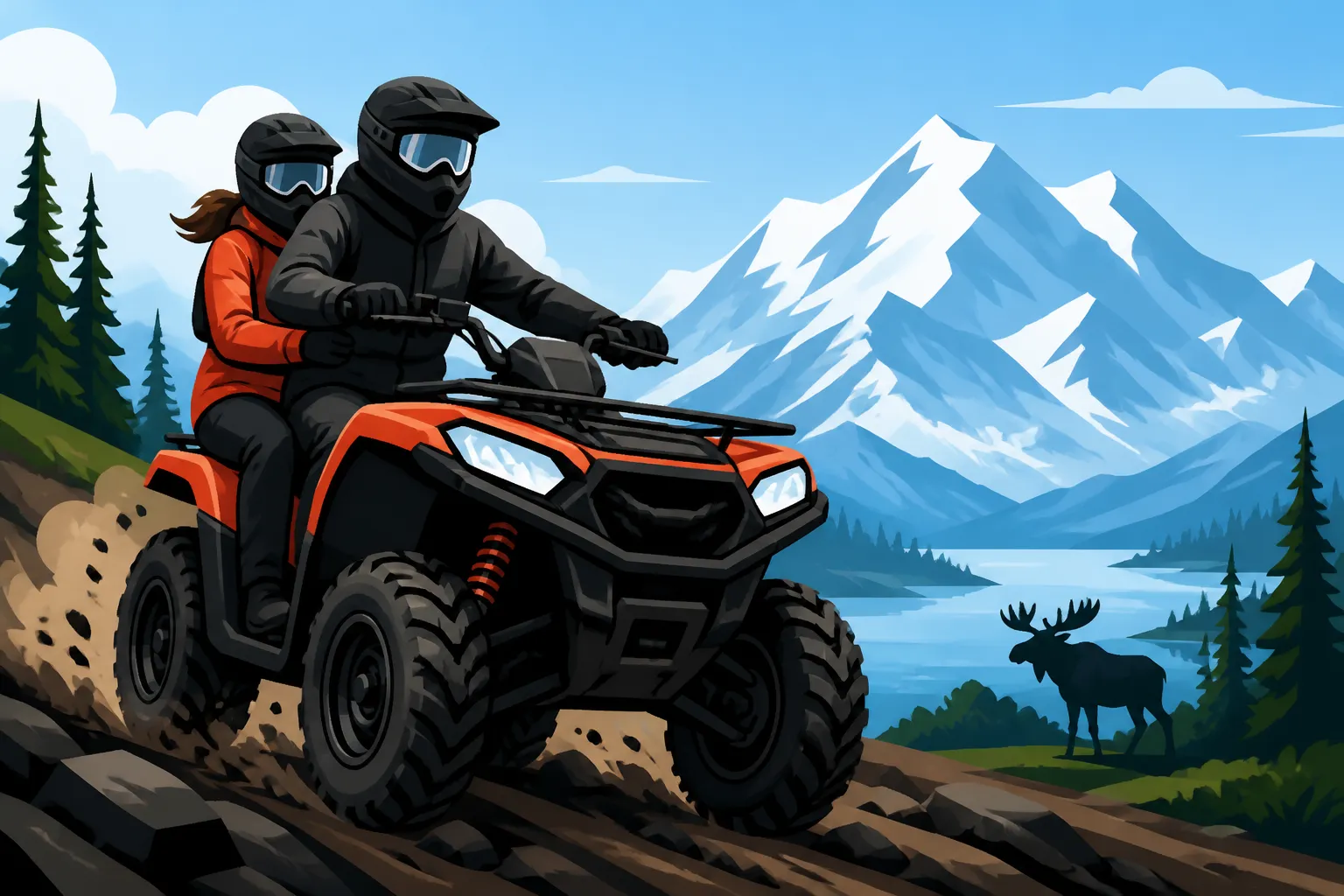
Riding Two Up on a Single-Seat Quad in Alaska
It’s a common sight out on the trails, or even just leaving the driveway: a single-seat ATV with two people crammed on it. Maybe it’s a quick hop down the road to a neighbor’s, or perhaps it’s an attempt to save space on the trailer, but trying to squeeze an extra rider onto a quad designed for one person is fraught with danger and legal headaches here in Alaska. This guide is here to untangle the confusion, explain why it's a bad idea, and lay out the rules and safe alternatives for riding with a passenger.
Why a Single-Seat Quad Isn't Built for Two
Let's be real for a moment. Most of us have probably seen it, or maybe even been tempted to do it. You've got your trusty quad, a buddy wants to come along, and it seems like a simple solution. But those single-seat ATVs are engineered with very specific parameters in mind, and adding a second person completely throws that out the window.
Think about the design itself. The seat is sculpted for one rider to shift their weight, maintain balance, and interact with the machine's controls. When you add a second person, especially if they're sitting behind the primary rider, it fundamentally changes the center of gravity. This makes the machine incredibly unstable, particularly when turning, going over bumps, or trying to climb or descend hills. The suspension system, the braking power, and even the steering geometry are all calibrated for a single rider's weight. Overloading it can lead to compromised handling, reduced braking efficiency, and excessive wear and tear on components that weren't designed for that stress. It's not just about comfort; it's about the very physics of how the machine operates safely. Manufacturers explicitly state these limitations for a reason – their machines are rigorously tested, and adding an extra person simply falls outside of those tested, safe operating conditions.
Alaska's Rules on Passengers and Machine Capacity
Here in Alaska, the state has clear guidelines about who can ride where, especially when it comes to passengers on All-Purpose Vehicles (APVs). It's not just a suggestion; it's law, and it’s meant to keep everyone safe on our vast and sometimes unforgiving terrain.
First off, it's critical to understand what Alaska defines as an [Alaska APV Class Explained]. Generally, this category includes ATVs, UTVs, and other off-road machines. For ATVs, the rule of thumb is quite simple: if the ATV was designed and manufactured with only one designated seating position, it is only legally permitted to carry one rider. Trying to squeeze two people onto a single-seat quad immediately puts you in violation of this, and for good reason. The seating on a single-seat ATV does not provide a safe, secure, and independent position for a passenger. There are no proper footrests, handholds, or an appropriately designed seat to absorb impacts or allow the passenger to brace themselves.
Now, if you're looking at a machine that is built for more than one person, like a purpose-built two-up ATV or a side-by-side (UTV), then the rules are different. These machines come from the factory with additional seats, footrests, and safety features specifically for passengers. They are designed with a longer wheelbase, heavier-duty suspension, and often more powerful brakes to accommodate the extra weight and different handling characteristics. It's worth checking [Alaska Rules for Passengers on a Quad] to understand the specifics. Remember, the law is there to prevent injuries, and a trooper isn't going to care if your buddy "just jumped on for a second." The moment you're observed with an illegal passenger, you're looking at a potential citation.
The Real-World Dangers of Doubling Up
Beyond the legalities, the safety implications of riding two-up on a single-seat quad are substantial and incredibly serious. This isn't just about getting a ticket; it's about potentially catastrophic injury or worse, for both you and your passenger.
When you add a second person to a single-seat quad, you dramatically alter the machine's dynamics. Imagine trying to navigate a narrow, winding trail with an extra 100-200 pounds of shifting weight behind you. Your ability to steer quickly, lean into turns, or even maintain balance over uneven terrain is severely compromised. A sudden rut, an unexpected drop-off, or even just a quick brake application can easily throw off the machine's stability, leading to a loss of control and a rollover. We've all had those moments where we nearly lost control on a solo ride; now imagine that with another person's body weight working against you. Braking distances increase significantly, making emergency stops much more challenging, especially on loose gravel or muddy surfaces common here in Alaska. Visibility can also be an issue, as your passenger might obstruct your view of gauges or critical trail features. Furthermore, the passenger themselves is in a precarious position. Without proper handholds, footrests, or a dedicated seat, they can be easily ejected during a bump or turn. This is why you'll often see specific requirements for safety gear for all riders, including passengers, and even specific helmet laws for younger riders, like those mentioned in [Alaska Helmet Law for Riders Under 16]. Even if you both have helmets, the inherent instability of the machine with an extra person is still a huge factor.
Legal Repercussions and What Troopers Check
Getting caught with an extra passenger on a single-seat ATV in Alaska isn't just a slap on the wrist. Alaska State Troopers and local law enforcement are well aware of the regulations concerning APVs, and they're always on the lookout for unsafe riding practices.
If a trooper observes you riding two-up on a single-seat quad, you're likely to face a citation. The specific penalty can vary, but it's not going to be cheap. You could be fined, and in some cases, repeated offenses could lead to more severe consequences. It's similar to other traffic violations where unsafe operation or disregard for vehicle capacity can result in penalties. Moreover, if an accident were to occur while you were carrying an illegal passenger, the legal ramifications could be far more severe. Your insurance company might deny coverage if you were operating the vehicle outside of its intended design and legal limits. This means you could be personally liable for any medical bills, property damage, or legal fees for both yourself and your passenger. A trooper may perform [Alaska Equipment Checks by Troopers] and will certainly verify proper registration and observe how many occupants are on the machine. Ignorance of the law is rarely an excuse, and the state's intent is clear: safety first. It's far better to ride legally and safely than to face the legal and financial burden that comes with an accident, especially when it could have been avoided by following basic safety guidelines. For context on potential costs of violating ATV rules, you might want to review information on [Alaska Ticket Costs for Road Riding].
Safe and Legal Alternatives for Group Riding
So, you want to bring a buddy or a family member along for the ride? That's awesome! Exploring Alaska's incredible trails is often best experienced with others. The good news is, there are plenty of safe and legal ways to do it without jeopardizing anyone's safety or breaking the law.
The primary solution is to invest in a machine specifically designed for multiple riders. This typically falls into two categories:
- Purpose-Built Two-Up ATVs: Many manufacturers produce ATVs with extended chassis and two designated seats, often marketed as "2-Up" or "Touring" models. These machines are engineered from the ground up to safely accommodate two riders. They feature longer wheelbases for stability, upgraded suspension to handle the increased weight, and dedicated footrests and grab handles for the passenger. The seats are contoured to provide comfort and security for both individuals.
- Side-by-Sides (UTVs): These are perhaps the most popular option for group riding in Alaska. UTVs come with bench or bucket seating for two, three, four, or even six passengers, enclosed roll cages, seatbelts, and often advanced suspension systems that provide a much smoother and safer ride for everyone. They offer storage capacity for gear, making them ideal for longer trips, hunting, or just family outings. Brands like
SuperATVoffer a range of accessories for UTVs, from windshields to suspension upgrades, enhancing the experience and capability of these multi-passenger machines, ensuring they’re even better equipped for Alaska’s rugged conditions. If you're looking for temporary options, you can also explore [Alaska ATV Rentals: What They Cost] or [Alaska Side-by-Side Rentals] to try out a machine designed for more than one person before committing to a purchase.
To help you visualize the differences, here's a quick comparison:
| Feature | Single-Seat ATV | Two-Up ATV | Side-by-Side (UTV) |
|---|---|---|---|
| Designed Capacity | 1 Rider | 2 Riders | 2-6+ Riders |
| Passenger Legality | Illegal (for passenger) | Legal (for passenger) | Legal (for passengers) |
| Stability (with 2) | Extremely Poor | Good | Excellent |
| Braking (with 2) | Compromised | Optimized | Optimized |
| Comfort for Passenger | None | Good, dedicated seating | Excellent, car-like seating |
| Safety Features | None (for passenger) | Dedicated footrests, handles | Seatbelts, roll cage, doors |
| Ideal Use | Solo riding, sport | Touring, moderate trails | Group riding, utility, comfort |
When considering a multi-passenger machine, always prioritize safety. Make sure everyone, especially children, wears appropriate [Choosing a CPSC Helmet for a Young Rider] and other protective gear. Taking an [Alaska Safety Course Options] can benefit all riders, regardless of machine type. Ultimately, enjoying Alaska's stunning backcountry with friends and family should be about creating lasting memories safely, not risking it all on an improperly equipped machine.
Disclaimer
This article is for general informational purposes only and does not constitute professional advice. Laws, prices and regulations vary by location and change over time. Consult a qualified professional for guidance on your specific situation.