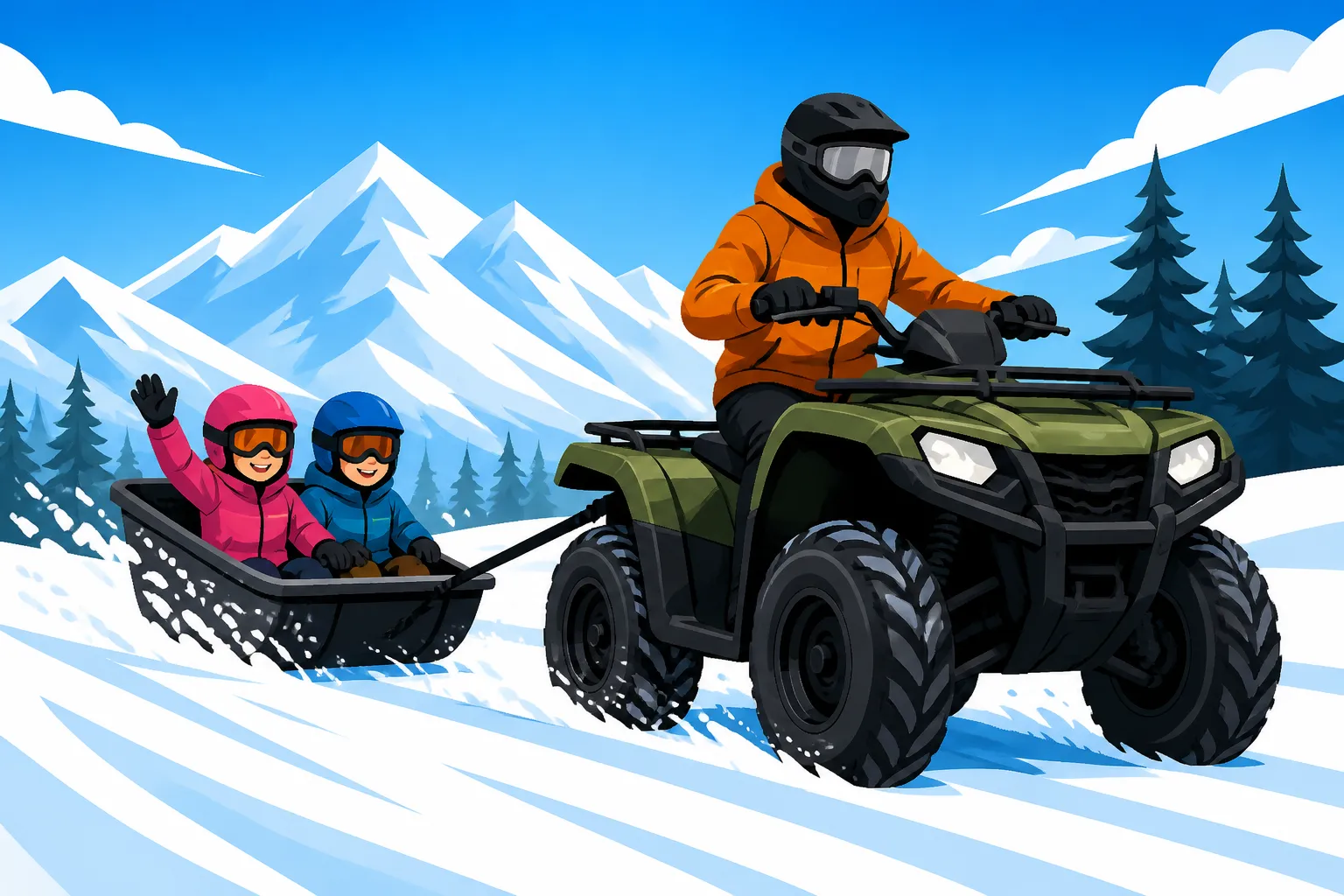
Children Riding in a Towed Sled
Ah, the joys and challenges of winter travel in Alaska with the whole family! Many of us rely on our ATVs and UTVs not just for recreation, but as essential transportation, especially once the snow flies and the rivers freeze. And for families, the question inevitably comes up: "How can we bring the little ones along safely, particularly in a towed sled?" It's a common dilemma, as official guidance can feel a bit sparse, leaving many of us to wonder about the rules, the best practices, and honestly, what's truly safe. This guide is here to cut through that uncertainty, offering realistic advice and covering the nuances of children riding in a towed sled behind your ATV or UTV in Alaska.
The Basics of Towed Sleds and Children in Alaska
When the snow flies and the trails get packed, a towed sled often becomes an indispensable part of Alaskan family travel. It's not just about fun; it's about necessity, practicality, and sometimes, a cherished tradition.
Why Towed Sleds are Common for Families in Alaska
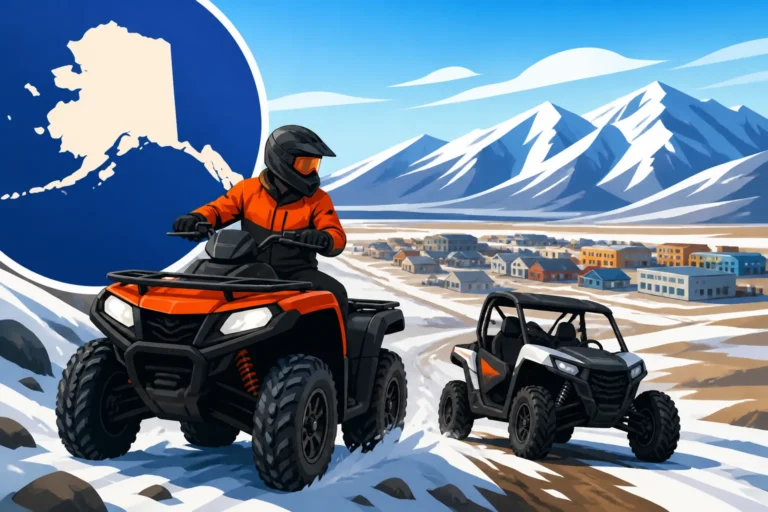
Let's be real, out here in Alaska, our ATVs and UTVs aren't just toys for weekend warrior adventures (though they're great for that too!). For many families, especially those living off the road system or heading out for a day of ice fishing, hunting camp prep, or subsistence activities, these machines are our workhorses. They haul our gear, get us to our cabins, and sometimes, they're the only way to get around.
The challenge comes when you have multiple passengers, particularly young children. A standard ATV might only safely carry one rider plus the driver, and even a two-up model or a side-by-side might struggle to comfortably accommodate a full family and all the associated gear for a day out in the elements. This is where the towed sled becomes a hero. It allows you to transport extra people, especially the little ones who might not have the stamina or the physical capability to ride on the machine itself for extended periods. Imagine trying to keep a toddler warm and secure on the back of a quad for an hour-long ride to the ice-fishing spot – it's just not practical, or safe. A sturdy sled, often enclosed or semi-enclosed, offers a much more protected and often warmer environment for young passengers. It’s part of the fabric of winter life here, a pragmatic solution to a very Alaskan problem.
Alaska's General Rules for Towed Sleds
Now, let's talk about the legalities. It's a bit of a gray area, and that's precisely why many Alaskans feel a bit in the dark. Alaska statutes, much like an old trail map, don't always have a clear, labeled path specifically for "children in towed sleds behind ATVs." The law tends to focus more on the operation of the all-purpose vehicle (APV) itself rather than every single thing it might tow.
However, a lack of explicit prohibition doesn't automatically mean it's a free-for-all. What Alaska does have are general safety guidelines that apply broadly to all vehicle operation, including APVs, and these are often interpreted with child safety at the forefront. This means while there might not be a specific rule saying "your child in a sled must have X," law enforcement can and will intervene if they perceive reckless endangerment or a clear safety hazard. This general framework means that even if a specific regulation for a towed sled with passengers isn't on the books, common sense, responsible operation, and the overarching principle of child protection will always be the guiding factors for any trooper or law enforcement officer you might encounter. On public lands, rules can sometimes be more strictly interpreted, while on private land, you might have more leeway, but your responsibility for safety remains paramount. For more on general towing, check out [Alaska Rules for Towing a Sled].
Safety Considerations When Children are Aboard
When you're towing precious cargo like your children, safety isn't just a suggestion; it's the absolute priority. Alaskan winters are beautiful but unforgiving, and overlooking even small details can lead to serious trouble.
Essential Safety Equipment for Children in Sleds
Even though they're not directly riding the ATV, children in a towed sled are still exposed to potential hazards like sudden stops, bumps, or even rollovers in extreme circumstances. Therefore, equipping them properly is non-negotiable.
First and foremost: helmets. Yes, even in a sled. A child in a sled is still subject to impacts if the ATV suddenly stops, hits a bump, or if the sled itself somehow tips. A properly fitted, CPSC-approved helmet is essential to protect against head injuries. It might seem like overkill to some, but think of it this way: the sled is part of the "vehicle" system, and anyone in that system needs head protection. Ensure it fits snugly and doesn't obscure their vision or hearing. You can learn more about standards in [What the CPSC Helmet Standard Actually Requires].
Next, consider warmth and protection from the elements. This is Alaska, after all! Layering is key: thermal underwear, fleece, and a waterproof/windproof outer shell. Blankets, sleeping bags, and even small, portable heaters (safely installed and vented, of course) can make a huge difference in comfort and preventing hypothermia. Many families get creative, turning small ice shacks into towed "kid carriers" that offer incredible wind protection and warmth. Even for an open sled, a sturdy wind deflector or a tarp can drastically improve the experience.
Finally, restraints. While a traditional sled might just have a rope, when carrying children, you need to think about securing them within the sled. This isn't about strapping them in so tight they can't move, but rather ensuring they won't be ejected or tossed around violently by bumps or sudden movements. Think about a small harness, a car seat secured to the sled's frame (if the sled is robust enough), or even simple lap belts if the sled has a bench seat. The goal is to keep them contained and stable.
Safe Operating Practices for the Driver
As the driver, you are entirely responsible for the safety of your towed passengers. Your driving style and awareness need to shift dramatically when you have children in tow.
The most critical rule is speed. You absolutely must drastically reduce your speed. What feels like a comfortable cruising speed when you're riding solo can feel like a terrifying blur for a child in a sled, and it gives you far less reaction time to obstacles. Slow down, anticipate, and brake gently. Think of driving a school bus on a slippery road—that level of caution.
Terrain selection is equally important. Stick to smooth, known trails. Avoid rough, bumpy terrain, steep slopes, or areas where you might encounter deep snow, overflow, or unexpected obstacles. Glacial river crossings, for instance, demand extreme caution; you need to know the ice thickness and be aware of braided channels that can hide dangers. For more on navigating ice, consider [Ice Thickness Before You Cross] and for dealing with unexpected water, check out [Overflow on a Frozen River]. If you're on a trail that suddenly becomes challenging, it's always better to stop, assess the situation, and if necessary, turn back or find an alternate route, rather than risk a tip-over with kids aboard.
Visibility for both you and your sled is also crucial. Ensure your sled and its occupants are visible, especially from the rear. Attach bright flags, reflective tape, and consider a small battery-powered light on the back of the sled. This is vital for other trail users, but also for you, the driver, to keep track of your towed load.
Finally, communication. It's often hard to hear over engine noise, but checking on the children frequently is vital. If you can't see them, stop every so often to ensure they're warm, comfortable, and still enjoying the ride. A quick wave or thumbs-up can go a long way in reassuring everyone.
Legal Interpretations and Best Practices
Given the unique nature of ATV and UTV use in Alaska, especially with families, understanding the spirit of the law and adopting robust best practices becomes paramount.
Where the Law Stands on Children in Towed Sleds
Here’s the thing about Alaska law and children in towed sleds: there isn't usually a specific section that says, "A child in a towed sled behind an ATV must do X, Y, and Z." This ambiguity often leads to confusion. However, that doesn't mean there are no legal implications. Law enforcement officers in Alaska are trained to prioritize safety, especially the safety of children, and they have broad authority to address situations they deem dangerous or negligent, even if it's not explicitly spelled out in a "towed sled" statute.
General laws regarding reckless endangerment, child welfare, and safe vehicle operation can be applied. For example, while the law specifically states [Alaska Helmet Law for Riders Under 16] for riding an APV, the spirit of that law, and indeed general safety principles, strongly suggests that a helmet is still critical for a child in a towed sled. The same applies to [Alaska Rules for a Child Passenger] on the machine itself – the underlying concern is protection. If a trooper observes an ATV driver towing a sled with a child in an obviously unsafe manner (e.g., excessive speed, child unrestrained, no helmet in a high-risk situation, exposed to extreme elements), they absolutely have the discretion to intervene, issue warnings, or even citations under more general statutes related to negligence or endangerment. The key takeaway is: when in doubt, default to the safest possible scenario for the child, as that's what law enforcement will likely expect.
Recommendations for Responsible Family Riding
Beyond just what's legally required, there are many proactive steps you can take to make family rides with a towed sled safe, comfortable, and enjoyable. These are the best practices that veteran Alaskan riders often recommend.
First, enhance the visibility of the sled itself. Bright, fluorescent colors, plenty of reflective tape, and even a small, battery-operated LED light on the back and sides can make a huge difference, especially in low light or snowy conditions. Remember, you might see other traffic, but can they see your towed sled?
Consider your sled's design. While a simple plastic utility sled works for hauling wood, for children, an enclosed or semi-enclosed design is far superior. These can offer protection from wind, snow, and provide a buffer in case of a minor impact. Some custom-built sleds incorporate roll-bars or strong frames, much like the safety cages found in UTVs. While brands like SuperATV are renowned for their robust UTV parts and accessories designed for tough conditions, their approach to durable, protective add-ons for vehicles highlights the kind of sturdy construction you should look for or emulate in a sled designed for passengers. Think about how you could reinforce a standard sled or adapt a small, enclosed trailer for safe passenger use.
It's also ideal, if circumstances allow, to have an adult supervising the children. This could mean an adult riding in the sled with the children (if it's designed and strong enough for that), or having a second ATV/UTV following closely behind with an adult observer. This allows for immediate checks and intervention if a child needs something or if there’s a concern.
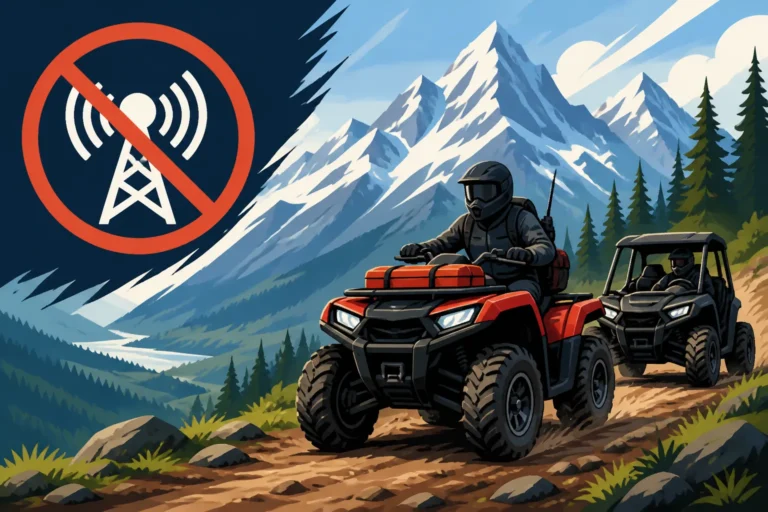
Finally, never underestimate the need for emergency preparedness. Alaska is vast and unforgiving. Always carry a comprehensive first-aid kit, extra layers of warm clothing, emergency blankets, fire starters, and extra fuel. Cell service is unreliable off the road system, so a satellite messenger is a crucial piece of gear for communication in an emergency. For tips on staying connected, see [Carrying a Satellite Messenger for a Backcountry Ride]. And it's always a good idea to let someone know your travel plans and estimated return time. Many Alaskans wisely travel in pairs when heading into the backcountry; learn why in [Why Alaska Riders Travel in Pairs].
Different Scenarios and Their Implications
Alaska is incredibly diverse, and the rules and expectations for riding your ATV or UTV with a towed sled can vary depending on where you are. Understanding these nuances is key to responsible riding.
Riding on Public Trails vs. Private Land
The distinction between public and private land is crucial when it comes to ATV and UTV operation, especially with specific considerations like towing children in a sled. Generally, regulations tend to be more stringent and strictly enforced on public lands. This includes state parks, national forests, and other federal lands. On these lands, there might be specific rules regarding vehicle types, where you can ride, and how you operate. While there still might not be a specific statute saying "no children in towed sleds," the general emphasis on safety and avoiding reckless behavior will be very high. If you're planning a trip to a state park, it's always best to check their specific APV regulations, as outlined in articles like [Alaska State Park ATV Rules]. When in doubt, err on the side of extreme caution and stricter interpretation of safety rules.
On private property, the rules are primarily dictated by the landowner. If you own the land, you set the rules for your family, but the underlying responsibility for safety and avoiding negligence always remains. If you're on someone else's private land, you'll need their permission, and it's always a good idea to clarify any expectations they might have regarding safety. While you might have more leeway on private land, the moral and ethical responsibility to ensure the absolute safety of children in your care remains unwavering. After all, nobody wants an accident, regardless of who owns the ground. For more on private land riding, check out [Riding Only on Your Own Ground].
Towed Sleds in Village and Bush Communities
In many of Alaska's rural and bush communities, ATVs and UTVs aren't just recreational vehicles; they are the backbone of transportation, especially in winter. Here, the use of towed sleds, often carrying entire families, is not only common but a traditional and necessary part of daily life. Children riding in sleds to school, to visit family, or to go hunting and fishing with their parents is a sight you'll see every day.
In these communities, while state laws still technically apply, local ordinances and customary practices often shape how vehicles are used. Some villages, like Bethel, might have specific local APV ordinances that dictate speeds or areas of operation, as discussed in [Bethel's ATV Ordinance in Alaska]. However, even within these local frameworks, the emphasis is almost always on practical safety, given the heavy reliance on these machines.
This blend of tradition and necessity doesn't negate the need for safety. Instead, it often fosters a community-wide understanding of safe practices: traveling at appropriate speeds, ensuring children are bundled warmly, and having a general awareness of trail conditions. While you might see practices that seem less formal than on the road system, the underlying goal is always to get everyone, especially the children, to their destination safely. If you're visiting or operating in a village, always be respectful of local customs and, when in doubt, ask community members about their specific expectations for riding, particularly when transporting children. You can often find general guidance in articles like [Alaska Rules for Riding a Village Street].
Remember, whether you're on a groomed public trail in the Mat-Su Valley or navigating a frozen river in a remote village, the well-being of the children in your towed sled is the most important consideration. Stay informed, stay prepared, and ride safe, Alaska.
| Aspect | Safe Practice | Why It Matters |
|---|---|---|
| Speed | Very slow, cautious speeds | Prevents jostling, reduces impact force in a crash |
| Helmets | Required for all children, CPSC approved | Protection against head injury from impacts or rollovers |
| Restraints | Secure seatbelts or harnesses inside the sled | Keeps children contained, prevents ejection |
| Enclosure | Use enclosed or semi-enclosed sleds with roll-bars | Protection from wind, elements, and potential impacts |
| Visibility | Bright colors, flags, reflective tape, lights | Ensures driver and others can see the sled and its occupants |
| Terrain | Smooth, familiar trails; avoid rough or steep areas | Minimizes jarring, reduces risk of tipping |
| Communication | Frequent checks, clear signals (if possible) | Ensures children are comfortable and safe |
| Emergency Gear | First aid, warmth, comms, extra fuel | Preparedness for breakdowns or accidents in remote areas |
Disclaimer
This article is for general informational purposes only and does not constitute professional advice. Laws, prices and regulations vary by location and change over time. Consult a qualified professional for guidance on your specific situation.