Tundra Damage in Summer
You've been itching all winter to get out on your ATV or UTV, and with the long days of an Alaska summer finally here, the trails are calling. But for those of us who love exploring the vast beauty of our state's wild places, there's a serious concern that comes with summer riding, especially in certain areas: the potential for tundra damage. This guide is all about understanding why summer tundra is so fragile, the real impact our machines can have, and how every rider can make responsible choices to protect these vital landscapes for generations to come.
Understanding Alaska's Fragile Tundra Ecosystem
Alaska's tundra isn't just barren ground; it's a living, breathing ecosystem, incredibly rich in biodiversity, even if it doesn't always look lush to the casual eye. It’s also incredibly delicate, far more so than the forested lands you might be used to riding in the Lower 48. This unique environment demands a special kind of respect from anyone traversing it, especially on a powerful machine.
What Makes Tundra So Vulnerable?
At the heart of tundra's vulnerability is permafrost, the permanently frozen ground that lies just beneath the surface. In summer, only the very top layer, known as the "active layer," thaws out. This active layer can be incredibly thin—sometimes just a few inches deep—and is often saturated with water because the frozen permafrost below prevents drainage. On top of this, you find delicate blankets of mosses, lichens, low-growing shrubs, and sedges. These plants grow very slowly in the harsh arctic and subarctic climate. A rut you make in an hour can take decades, even centuries, to heal. Imagine driving over a sponge that's been frozen solid and then thawed just barely on top – it offers little resistance and easily tears. When you break through that thin organic mat, you expose the permafrost, which can then begin to melt, leading to even more instability and further damage.
The Long-Term Consequences of Off-Trail Riding
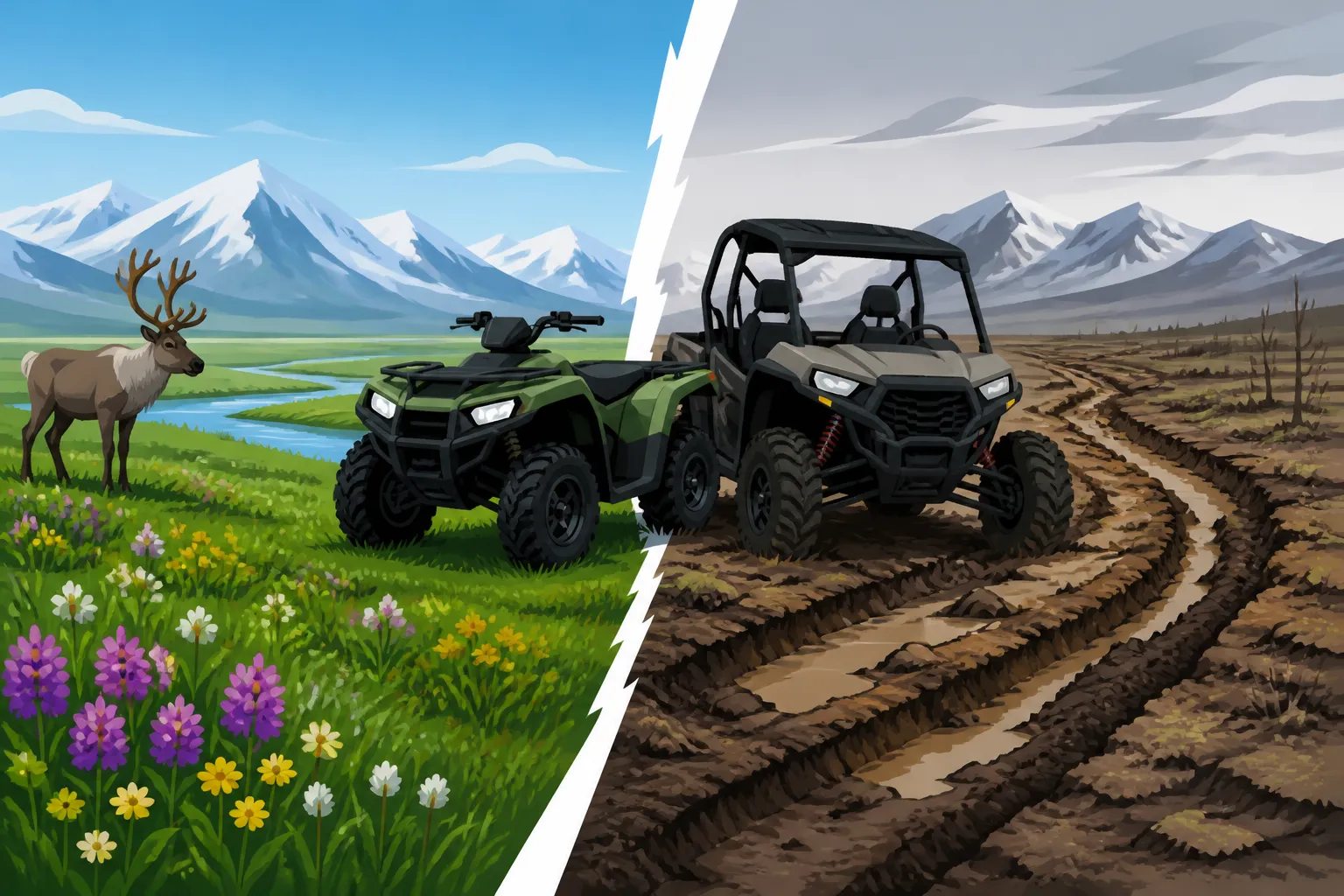
The damage caused by off-trail ATV and UTV riding on tundra isn't just a temporary scuff mark. It sets off a cascade of long-term environmental consequences that fundamentally alter the landscape. Deep tire ruts can disrupt natural drainage patterns, creating channels for water that erode the soil and expand the original damage. These channels can become permanent scars, leading to thermokarst erosion, where melting permafrost causes the ground to collapse and form slumps or ponds. This isn't just about aesthetics; it destroys critical habitat for countless species of birds, small mammals, and even larger game that rely on the tundra for food and shelter. Once the vegetation is removed, the exposed soil is more susceptible to wind and water erosion, further hindering any chance of recovery. We’re talking about environmental changes that can persist for literally hundreds of years, long after our lifetime.
How ATV and UTV Use Impacts Summer Tundra
When we talk about riding in Alaska, especially during the warmer months, the ground conditions are everything. What might be a solid, easy-to-traverse trail in winter when everything is frozen can become an ecological landmine in summer.
The Mechanics of Damage: Tire Ruts and Compression
Every time a tire rolls over tundra, especially off an established, hardened trail, it compresses the delicate active layer. This compression can crush the insulating vegetation, exposing the underlying permafrost to warmer air and sunlight, encouraging it to melt. When the ground is wet and soft, the tires can easily churn through the thin organic mat, creating deep ruts that fill with water. These ruts act as mini-canals, directing water flow in unnatural ways, further eroding the soil and preventing vegetation from re-establishing itself. The weight of your machine, whether it's a lighter ATV or a heavier side-by-side, also plays a role. A bigger, heavier UTV with wider tires might spread the load, but if it's on soft ground, it can still create significant displacement and compression. The goal is to avoid creating any lasting impression on the ground you're crossing.
The Role of Wet Conditions and "Breakup"
Alaska's "breakup" period, when winter snow and ice melt, turns much of the landscape into a saturated sponge. Even long after the snow is gone, the ground can remain incredibly wet throughout the summer due to rainfall and poor drainage caused by the underlying permafrost. Riding an ATV or UTV in these waterlogged conditions dramatically amplifies the potential for damage. Tires sink deeper, churn more easily, and rip through vegetation with less effort. Trying to power through a muddy section can quickly turn a small inconvenience into a deeply rutted, irreparable scar on the landscape. This is why understanding [Alaska Wetland Travel Restrictions Explained] is so crucial, as many tundra areas are technically wetlands or behave similarly when wet. The best rule of thumb is this: if you’re leaving a visible rut, the ground is too wet to ride.
Responsible Riding: Protecting the Tundra While Still Enjoying Alaska
Many of us came to Alaska, or live here, because we love the freedom of the outdoors. The good news is, you absolutely can enjoy our incredible state on your ATV or UTV without contributing to tundra damage. It just requires a mindful approach and a commitment to responsible riding practices.
Stick to Designated Trails and Established Routes
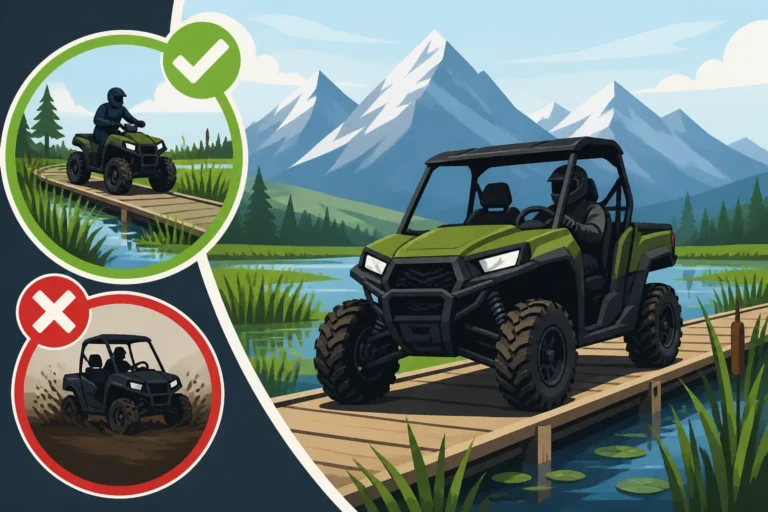
This is perhaps the most critical rule of all. Public land management agencies, local boroughs, and private landowners often designate specific trails or areas for motorized vehicle use. These routes are either hardened to withstand traffic, or they follow historical paths that are less susceptible to damage. Sticking to these trails protects the surrounding undisturbed tundra and concentrates impact to areas that are either already altered or designed to handle it. Think of it this way: these designated routes are like the "sacred ground" for riders who want to responsibly explore. Even if a path looks like an old trail, if it’s not clearly marked or commonly used, it’s often best to err on the side of caution. Always be sure to consult [Alaska ATV Trails: Where to Ride] and local maps before heading out.
The Importance of Timing and Conditions
Beyond sticking to trails, knowing when to ride is just as important as knowing where. As we discussed, summer can be particularly problematic due to thawing permafrost and wet conditions. If the ground is soft, squishy, or visibly muddy, it's best to postpone your ride or choose an alternative location. Sometimes, waiting for a dry spell can make all the difference. Many experienced Alaska riders will tell you that the very best time to ride off-road, especially in more sensitive areas, is during the winter when the ground is frozen solid. This completely eliminates the risk of rutting and disturbing the active layer. Understanding [Alaska Riding Seasons and Breakup] gives you a better idea of when conditions are generally more favorable or, conversely, when you absolutely need to be extra cautious or avoid certain areas altogether. When the ground freezes, the vulnerability of the tundra changes dramatically, as highlighted in [Frozen Ground and Why It Matters].
Gear and Techniques for Low-Impact Riding
While no gear can undo the damage of riding where you shouldn't, certain equipment and riding techniques can certainly help you be a more responsible rider on appropriate terrain. Proper tire pressure is key; it's a balance between traction and minimizing ground pressure. You don't want tires so overinflated that they dig in aggressively, nor so underinflated that they become flat and tear the ground. Carrying essential recovery gear like a winch – perhaps a robust one from a brand like SuperATV – can be a lifesaver if you find yourself momentarily stuck on a designated route. Instead of spinning your tires and churning up the ground, a quick winch pull can get you out with minimal disturbance. Likewise, bringing along a shovel and traction boards can help you self-recover without excessive spinning. The idea is to avoid prolonged wheel spin, which is a major contributor to deep ruts and tearing up the surface. Always ride smoothly, avoid sudden acceleration or braking, and try to maintain a consistent speed to minimize ground disturbance. Thinking about [Skid Plates for River Rock] is about protecting your machine, but protecting the ground is about how you drive it.
Legal and Ethical Considerations of Tundra Damage
Riding an ATV or UTV in Alaska isn't just a recreational activity; it comes with a significant responsibility to the land and to fellow Alaskans. There are not only environmental consequences to consider but legal and ethical ones as well.
Regulatory Frameworks and Penalties
Alaska’s vast landscapes are managed by a patchwork of federal, state, borough, and Native corporation entities, each with its own rules and regulations regarding off-road vehicle use. Generally, riding off-trail on public lands, particularly in sensitive areas like tundra, is prohibited and can result in significant penalties. These can range from fines for trespass and environmental damage to having your machine impounded. The cost of environmental restoration, if such a thing is even possible, can be astronomical, and you might be held liable. It's not uncommon for land managers, or even concerned citizens, to report illegal off-road activity. This is why knowing [Alaska Land Ownership and Who to Ask] is so critical before you even put your keys in the ignition. Ignoring property boundaries or designated trail signs can quickly lead to legal trouble, as detailed in [Alaska Trespass Law for Riders]. Always do your homework and know the land status by checking [Checking a Land Status Map] for your intended route.
The "Leave No Trace" Ethos for Alaska Riders
Beyond the legalities, there's a strong ethical component to riding in Alaska's backcountry. The "Leave No Trace" principles are fundamental for anyone enjoying the outdoors, and they apply just as much, if not more, to motorized recreation. As riders, we have a responsibility to minimize our impact, pack out everything we pack in, and respect the natural environment. Damaging tundra not only harms the ecosystem but also gives all ATV and UTV riders a bad name, potentially leading to further restrictions on access for everyone. It's about being a good steward of the land and ensuring that the wild beauty of Alaska remains intact for those who come after us. Following proper [Alaska Trail Etiquette Locals Expect] fosters a community of responsible riders and helps preserve access to the trails we all cherish. Respecting the land is a cornerstone of the Alaskan lifestyle, and that extends to every tire track we leave (or don't leave) on our summer adventures. It also means being mindful of your impact when considering [Stream Crossing Rules] to avoid disturbing vital fish habitats.
| Condition for Riding | Risk of Tundra Damage | Best Practice |
|---|---|---|
| Summer – Wet Ground | Very High | Avoid riding in this area, or wait for freeze-up. Stick strictly to hardened, designated trails. |
| Summer – Dry Ground | Moderate to High | Stick to designated trails. Even dry tundra can be delicate if active layer is thin. |
| Winter – Frozen Ground | Very Low | Ideal conditions for riding, as permafrost is solid and protected by snow/ice. |
| Breakup/Freeze-up | Extremely High | Avoid riding entirely if possible. Ground is highly unstable and easily damaged. |
Disclaimer
This article is for general informational purposes only and does not constitute professional advice. Laws, prices and regulations vary by location and change over time. Consult a qualified professional for guidance on your specific situation.