Reading the Speed Limit Sign Before You Ride
It’s a common frustration for ATV and UTV riders across Alaska: you’re heading out for a ride, perhaps connecting trails, or just need to get from one point to another, and you wonder, “Can I legally ride my machine on this road?” The answer often feels like a moving target, complicated by state laws, local ordinances, and the ever-present need to understand those seemingly simple speed limit signs. This guide is here to clear up that confusion, helping you decipher Alaska's rules for riding your All-Purpose Vehicle (APV) on or near public roads and ensuring you stay on the right side of the law.
The Tricky Balance of Alaska’s APV Road Rules
Let's be real, the idea of just hopping on your quad and cruising down any paved road in Alaska sounds appealing, especially when you've got a short hop between trails or need to grab some supplies. But Alaska's laws around All-Purpose Vehicles (APVs), which include ATVs and UTVs, riding on public roads are a carefully balanced act. They're designed to keep everyone safe, but they also acknowledge that sometimes, these machines are essential for getting around, especially in rural and remote areas. The state generally prohibits APV use on public roads, but there are some critical exceptions, and understanding these exceptions is where those speed limit signs become incredibly important.
The core of the state's allowance for APVs on public roads hinges on the posted speed limit. It’s not a free-for-all, and it's certainly not about convenience over safety. The intent is to allow APVs on roads where traffic speeds are inherently lower, reducing the risk of a high-speed collision between a slow-moving, less protected APV and a larger, faster-moving vehicle. This is why you'll often hear about the "45 mph rule" – it's the golden number that often determines if a road segment is even a possibility for APV use.
But even with this rule, there’s a labyrinth of additional conditions. Your machine needs to be properly equipped, you need to have the right licensing and insurance, and most importantly, you need to be aware that cities and boroughs can, and often do, create their own, more restrictive rules. So, while the state might allow it under certain conditions, a local ordinance can easily override that permission, making an otherwise legal road ride suddenly illegal within city limits. It’s a puzzle, and every piece has to fit.
What "45 mph or Lower" Really Means for Your Ride
When the law talks about a speed limit of "45 mph or lower," it’s not just a suggestion; it's a hard limit. This means that if a road's posted speed limit is 45 mph, or any number below that, like 35 mph or even 25 mph, your APV might be allowed on that road, provided all other conditions are met. However, if the sign says 50 mph, 55 mph, or anything higher than 45 mph, that road is strictly off-limits for APV travel, no matter how short the distance you need to cover. This includes most major highways and state routes which typically have higher speed limits.
Think of it this way: you're approaching a section of road, maybe a gravel road leading to a trailhead or a village street. You see a speed limit sign that reads "35 MPH." Great, that meets the speed limit requirement! But don't just pull out yet. This rule is often misunderstood as allowing APVs to ride on any road that feels slow or where traffic happens to be moving under 45 mph. That's a dangerous misconception. The law refers to the posted speed limit. Even if everyone is driving 30 mph on a 60 mph highway due to congestion or conditions, your APV is still prohibited because the legal speed limit is above 45 mph.
The logic behind this is purely safety. APVs are not designed for the same speeds or impacts as passenger cars. Their lower profile, lack of enclosed safety cells, and different handling characteristics make them significantly more vulnerable in high-speed traffic. So, that 45 mph ceiling isn't arbitrary; it's a deliberate attempt to keep APV riders out of situations where they are at the highest risk. And remember, even on a 45 mph road, you still need to be operating your APV safely and within the posted speed limits. It’s not an excuse to ride recklessly.
Why a Highway Posted Above 45 Is Off Limits
This concept really hammers home when you consider why major highways, even those with sections that feel slower, are absolutely off-limits for APVs. Imagine yourself on a four-lane highway with a posted 65 mph limit. Even if you're only trying to cross it or ride a very short distance on the shoulder, the danger is immense. Cars and trucks are traveling at much higher speeds, and the difference in velocity between your APV and oncoming traffic creates a huge risk of severe accidents. APVs simply aren't built to withstand those kinds of forces, and other drivers aren't expecting them in those environments.
The prohibition on roads above 45 mph also ties into the overall design and traffic flow of these routes. Highways are typically designed for through traffic, with specific entry and exit points, and often have higher volumes of vehicles. Introducing slower-moving APVs into this mix can create hazards, cause unexpected braking, and contribute to collisions. From a legal standpoint, it simplifies enforcement: if the sign says 50 or above, no APVs are allowed. Period. [Why a Highway Posted Above 45 Is Off Limits] goes into more detail about this.
It's tempting, especially if your destination is "just on the other side" or "only a mile down" a higher-speed road. We've all been there, looking at a map and seeing what seems like a quick shortcut. But succumbing to that temptation could lead to a hefty fine, a citation from a trooper, or, far worse, a serious accident. Troopers are very aware of these rules, and they patrol these areas looking for violations precisely because of the safety risks involved. If you need to transport your APV across such a road, the only legal and safe way to do it is to load it onto a trailer and haul it with a street-legal vehicle.
Beyond the Sign: Other Road Use Considerations for APVs
While the speed limit sign is your first crucial clue, it's far from the only factor determining if you can legally ride your APV on a public road in Alaska. Many other regulations come into play, from local city ordinances that can completely override state allowances to the specific equipment your machine needs to be considered "road-legal." Ignoring these additional requirements can be just as problematic as ignoring a speed limit sign, leading to fines, tickets, or even impoundment of your machine.
It's not enough to just know the state law; you also have to be a local expert. What's perfectly fine in one rural area might be strictly prohibited just a few miles down the road in an incorporated city. This means your pre-ride checklist should always include a quick check of local regulations, especially if you're riding in an unfamiliar area. And even if the road is permissible by speed limit and local rule, your machine still needs to meet certain safety and equipment standards designed to make it more visible and controllable in a mixed-traffic environment.
The sheer complexity of these rules can be disheartening. You want to ride, you want to explore, and you want to do it legally, but navigating the patchwork of regulations feels like a full-time job. But taking the time to understand these nuances will save you a lot of headache and potential legal trouble down the line. It's about being a responsible rider in a state that offers incredible opportunities for APV adventures, but also demands respect for public safety and the law.
Local Ordinances and Communities That Opted Out
This is perhaps one of the most confusing aspects for riders: even if a road has a speed limit of 45 mph or lower, a local city or borough can (and many have) completely prohibit APV road use within their boundaries. This means you could be legally riding on a low-speed road in an unincorporated area, cross an invisible line into a city, and suddenly be in violation of the law. This is why it's so critical to [Checking a City Code Before You Ride].
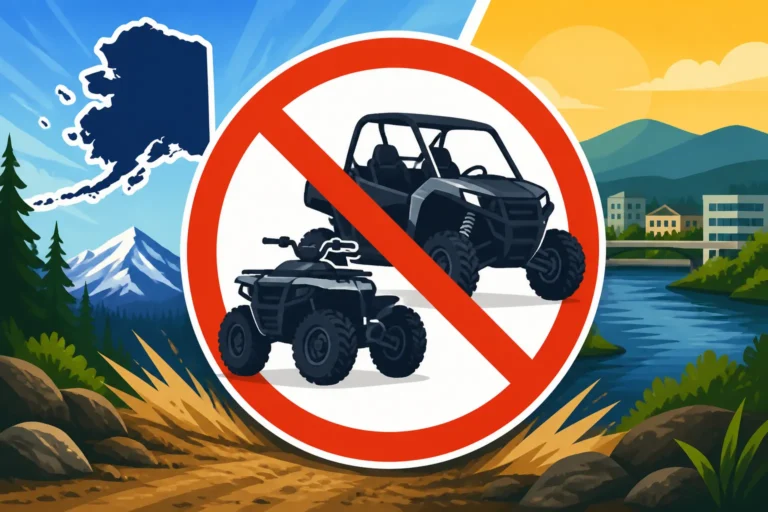
For example, communities like Anchorage, Fairbanks, Juneau, Wasilla, Palmer, Kenai, Soldotna, and Homer have largely banned APVs from public roads within their municipal limits. [Alaska Bans APVs in Anchorage] is a very clear example of this. You might be able to ride your APV on a trail outside of these cities, but attempting to use the streets within them, even those posted 25 mph, is generally not allowed. These bans are often driven by population density, traffic volume, noise complaints, and safety concerns specific to urban environments.
This patchwork of rules means that if you're planning a ride that might involve traversing or connecting through different communities, you absolutely need to research each jurisdiction. Don't assume that because one town allows it, the next one will too. A quick call to the local police department or city clerk's office can save you a lot of grief. It’s also worth looking for local signs posted at city limits or common entry points that specifically address APV restrictions. Ignorance of these local laws is not a valid defense if you're stopped by law enforcement.
Essential Equipment for Road-Legal APVs
Even on a road where APVs are permitted due to the speed limit and lack of local bans, your machine needs to be outfitted with specific safety equipment. An APV isn't street-legal just by being on a low-speed road; it needs to meet certain standards that make it more visible and controllable for mixed traffic. [Alaska OHV Equipment Requirements] outlines these in detail, but let's touch on the key items.
You'll need proper headlights and taillights that are visible at specified distances. This isn't just for night riding; it's about being seen during the day too. Your machine must have working brakes, a muffler that keeps noise levels down, and a spark arrester to prevent wildfires – especially critical during dry Alaskan summers. Reflectors are often required to make your machine more visible from the sides, and some regulations even specify mud flaps behind the tires to prevent spraying other vehicles. A self-closing throttle is also typically a must-have safety feature. Many riders look to aftermarket parts from companies like SuperATV to ensure their machines meet these requirements, as these companies often specialize in robust, compliant accessories.
It's not just about having the equipment; it’s about having it working properly. A headlight that's burned out, brakes that are squishy, or a muffler that's been modified to be louder will likely get you a ticket, even if you're on an otherwise legal road. Troopers and other law enforcement officers are trained to look for these details during a stop. Before you even think about hitting a public road, do a thorough check of your machine. Make sure everything is in top shape and meets the requirements. Your safety, and the safety of others, depends on it.
Practical Advice for Riding on or Near Roads
Navigating the complexities of Alaska's APV laws can feel overwhelming, but with a bit of foresight and adherence to some practical advice, you can enjoy your machine responsibly and legally. It’s about being prepared, informed, and always prioritizing safety – for yourself, your passengers, and everyone else on the road or trail.
Even when you've done all your homework and believe you're on a legal stretch of pavement, maintaining situational awareness and riding defensively is key. Alaska’s roads are unique, and you’ll encounter everything from heavy truck traffic to moose and caribou. Just because you have the legal right to be there doesn't mean you can relax your vigilance. The dynamic between APVs and other vehicles is always one of caution, and anticipating potential hazards will keep you out of trouble.
Ultimately, being a responsible APV rider in Alaska means being a good steward of both the land and the public right-of-way. It's about respecting the rules, understanding the reasons behind them, and setting an example for other riders. The more we collectively demonstrate responsible riding habits, the more likely these limited road access privileges will remain available for future generations to enjoy.
Crossing a Highway on a Quad in Alaska
Even if an APV is generally prohibited from riding on a highway, there are specific allowances for crossing one. This is crucial for accessing trails or property on the other side. However, these crossings are not to be taken lightly and come with strict rules. You can't just dart across whenever you feel like it. [Crossing a Highway on a Quad in Alaska] details the proper procedure.
Typically, when crossing a highway, you must do so at a right angle (as directly perpendicular to the highway as possible), at a designated intersection, or at the safest, most accessible point if there isn't a marked crossing. You must yield to all highway traffic and ensure the crossing is clear and safe before proceeding. This means coming to a complete stop, looking both ways multiple times, and waiting for a significant gap in traffic. You cannot "drive" on the highway shoulder for any distance to find a better crossing point; the crossing must be as immediate and direct as possible.
This also applies to riding on road shoulders. While some areas might permit brief use of a shoulder to access an adjacent trail or property, it is generally not considered legal to travel extended distances on a highway shoulder, regardless of the speed limit. The shoulder is primarily for emergencies or for vehicles pulling over, not for regular APV transit. If you're utilizing the shoulder for legal trail access, keep your speed low, be highly visible, and merge onto the shoulder only for the shortest necessary distance. And again, always yield to any other vehicle that might be legitimately using the shoulder.
What a Trooper Can Ask to See on the Trail or Road
When a state trooper, wildlife trooper, or local law enforcement officer stops you while you're riding your APV, whether on a trail or on a permitted road segment, they are well within their rights to ask for specific documentation and to check your machine. Knowing what they can ask for and having it readily available will make the encounter much smoother. [What a Trooper Can Ask to See] is a helpful resource here.
First and foremost, you should expect to be asked for your driver's license. Yes, even if you’re riding an APV, if you’re operating it on a public road or certain public lands, a valid Class D driver's license is generally required. So, make sure you're carrying your driver's license on every APV ride. They will also likely ask for proof of your APV's registration, which means showing your current decal and registration paperwork. You might also be asked for proof of insurance, as liability insurance is required for APVs operated on public roads or rights-of-way.
Beyond documentation, a trooper can also inspect your machine for compliance with safety equipment requirements. They might check if your headlights and taillights are working, if your brakes are functional, and if your spark arrester and muffler are intact. They can also check for any visible modifications that might make your machine non-compliant. Having all your paperwork in a waterproof bag and your machine in good working order demonstrates responsibility and can significantly improve the outcome of any interaction with law enforcement. It shows you're taking the rules seriously, even if some of them feel a bit complex.
Here's a quick reference for common Alaska APV road-use situations:
| Scenario | Speed Limit (Posted) | Local Ordinance | Required Equipment | Action/Status |
|---|---|---|---|---|
| Direct Road Travel | 45 mph or Lower | Allows APVs | Yes | Permitted (with license, insurance) |
| Direct Road Travel | Above 45 mph | N/A | N/A | Prohibited |
| Direct Road Travel | 45 mph or Lower | Bans APVs | N/A | Prohibited |
| Crossing a Highway | Any | N/A | Yes | Permitted (at right angle, yield to traffic) |
| Using Shoulder for Extended Travel | Any | N/A | N/A | Prohibited |
| Riding on Private Land | N/A | N/A | No (generally) | Permitted (with owner's permission) |
This table is a simplified overview. Always verify current laws and local ordinances.
Always Check Local Rules Before You Ride
We’ve talked about this quite a bit, but it bears repeating: the single most important piece of advice for any APV rider in Alaska, especially concerning road use, is to always check local rules before you ride. The state laws provide a framework, but local municipalities have significant power to add their own restrictions, and these restrictions can vary wildly from one community to the next. What's legal in one borough might land you a ticket in an adjacent city, even if the road and speed limit seem identical.
This means doing a bit of homework before you load up the machine and hit the road. If you're planning a trip to a new area, make it a habit to call the local city or borough office, or check their official websites for ATV/UTV ordinances. Many communities have specific pages dedicated to recreational vehicle use. Don't rely solely on what you hear from other riders, as rules can change, and interpretations can vary. A few minutes of research can save you hours of hassle, potential fines, and the stress of dealing with law enforcement.
The consequences of not checking can range from a simple warning to a costly citation, or even having your machine impounded. Beyond the legal ramifications, riding where you're not allowed can also contribute to negative public perception of APV riders, potentially leading to even stricter regulations in the future. By being proactive and informed, you not only protect yourself but also help preserve access for all responsible riders. It’s an investment in your riding future, and it helps maintain a positive relationship between the riding community and the communities we often share trails and roads with.
Disclaimer
This article is for general informational purposes only and does not constitute professional advice. Laws, prices and regulations vary by location and change over time. Consult a qualified professional for guidance on your specific situation.