No Cross-Country Travel in Camp
A campground can sit beside miles of riding, which makes it tempting to fire up your ATV and cut across camp to reach a trail, another site, or the parking area. At Jim Creek and other Alaska riding campgrounds, that shortcut can break a no-cross-country-travel rule. This guide explains what the rule means, how to move around camp responsibly, and how to plan your ride without creating a problem.
What No Cross-Country Travel in Camp Means
Stay on established campground routes
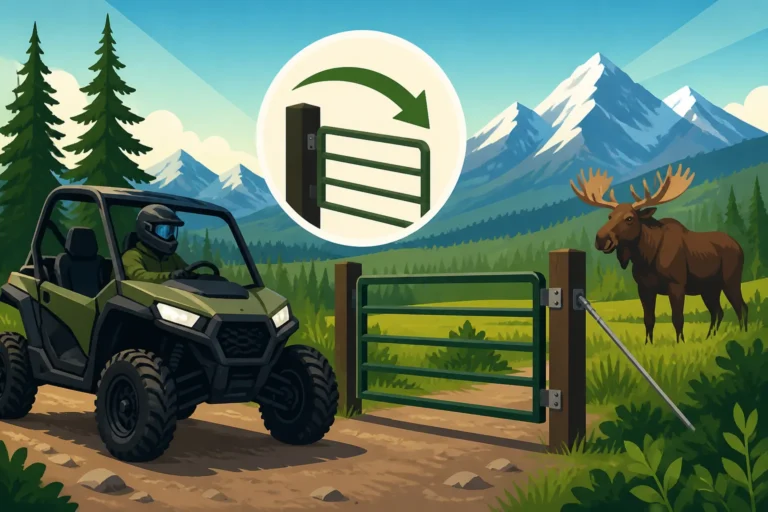
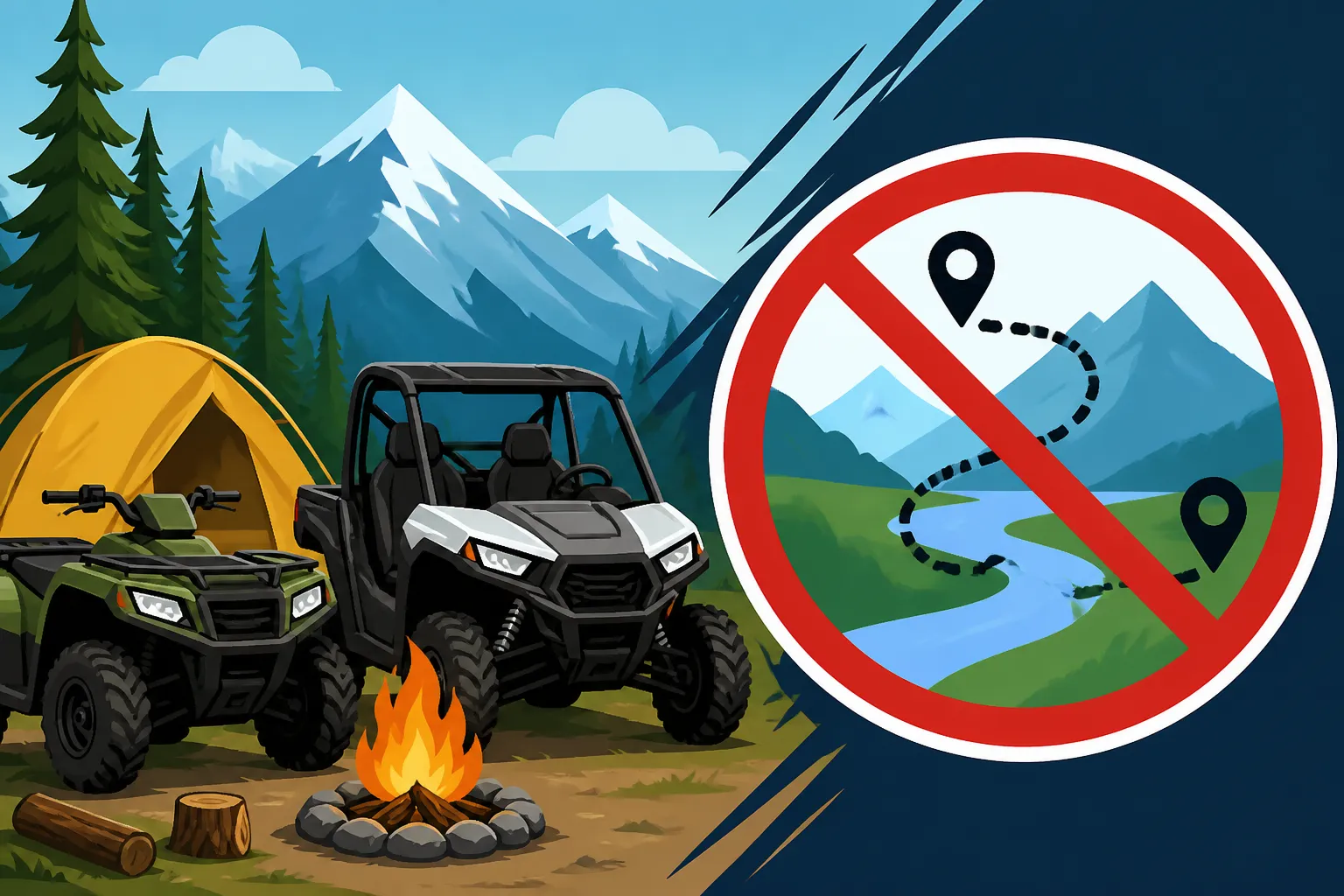
“No cross-country travel” means you should not drive an ATV or UTV across open ground in the campground instead of using an established road or designated route. A grassy gap between sites may look like a convenient shortcut, and a patch of open ground may seem firm enough to cross. Neither makes it an approved travel route.
The practical rule is simple: ride only where campground signs, barriers, staff instructions, or posted information indicate that vehicle travel is allowed. If you cannot tell whether a track is a campground road or an informal path created by previous riders, do not assume it is permitted. Ask before riding it.
This matters at places such as Jim Creek, where camping and trail riding happen close together. A campground can provide access to riding without allowing free movement across every part of the camping area. For a broader look at that kind of setup, see Alaska OHV Camping With Trail Access and Alaska’s 26-Site Campground at Jim Creek.
It is a campground rule, not a statewide shortcut
A no-cross-country rule is specific to the campground or recreation area where it is posted. It should not be treated as a single statewide rule that describes every Alaska campground. At the same time, a statewide permit or permission to ride on certain public land does not automatically give you permission to ride anywhere within a developed campground.
That distinction can be easy to miss. You may be legally allowed to ride on a nearby trail or on land managed for OHV use, yet still be required to keep your machine on campground roads while inside the camping area. Local restrictions, closures, and site rules can narrow where you may ride. Review Alaska’s Statewide General Permit for ATV Use alongside the rules for the specific campground you plan to use.
Why a short cut can cause a real problem
Campgrounds are shared spaces. People may be walking between a tent and a vehicle, children may be moving around a site, and other riders may be backing trailers or unloading machines. A shortcut through an open area can bring a machine close to tents, camp furniture, parked vehicles, and people who are not expecting traffic.
There is also the ground itself to consider. Repeated tire tracks can damage vegetation, widen informal paths, or leave ruts that collect water. In Alaska, soft ground and changing weather can make a seemingly harmless pass more damaging than it looks. The responsible choice is to follow established routes, even if that means taking the longer way around.
How to Move Through Camp Responsibly
Follow signs and use the route you came in on
When you arrive, take a moment to look for campground signs before unloading or riding. Note the entrance road, any marked circulation routes, barriers, one-way directions, and areas where machines are not allowed. If the posted directions are unclear, ask campground staff or the person managing the area before making a trip through camp.
Use the designated route between your campsite, parking area, and trail access. Do not make a new track because the established road feels inconvenient, and do not follow tire marks as proof that a route is allowed. An informal track may have been made in error or may no longer be open.
At Jim Creek, trail access and campground access are related but not interchangeable. Knowing where the trailhead is does not mean you can ride across the campground to reach it from any direction. Check Jim Creek’s Trailhead on Sullivan Road in Alaska and follow the current signs on site to understand how campground roads connect with the riding area.
Keep speed and noise low around campsites
Even when you are on an allowed campground road, ride slowly and predictably. Campground roads are not trails. People can step into the route without warning, especially near tents, parking spaces, and shared facilities. Slow down well before passing anyone, leave plenty of room, and avoid revving or accelerating hard.
Pay attention to any posted speed limit rather than relying on your judgment about what feels safe. Jim Creek has a campground-specific low-speed rule; see Alaska’s 5 mph Campground Limit for more information. A low speed is especially important when visibility is limited by parked vehicles, dust, trees, or a bend in the road.
Noise is part of campground etiquette, too. A machine that is reasonable out on a trail can feel disruptive beside someone’s tent, particularly early in the morning or later in the evening. Keep unnecessary trips to a minimum, shut the machine off when parked, and avoid running it near other campers longer than needed.
Separate campsite travel from trail riding
Before leaving camp, decide where you are going and use an approved route to get there. Avoid wandering around the campground to look for a shortcut or scenic route. If your group is split between sites, agree on a meeting point that is accessible by an established road rather than riding between campsites.
A useful way to think about the boundary is this: campground roads are for campground access; riding areas and marked trails are for riding. Do not treat open space around a site as an extension of the trail network. The same principle supports Alaska Trail Etiquette Locals Expect: stay on established routes, respect other users, and avoid creating new tracks.
| Situation | Better choice | Avoid |
|---|---|---|
| Going from your site to the exit | Use the marked campground road | Cutting across open ground |
| Reaching a nearby trail | Follow signed access directions | Riding between tents or sites |
| Seeing tire marks across grass | Check whether the route is marked or authorized | Assuming previous tracks mean it is allowed |
| Unsure where machines may go | Ask staff or check posted rules | Guessing and riding through |
| Returning after rain | Stay on established, firm routes | Crossing soft ground to avoid a puddle |
Plan Your Route Before You Unload
Check both campground rules and riding-area rules
A riding plan should cover more than the trail itself. Check the campground’s vehicle rules, the designated connection to the riding area, any parking or access requirements, and any temporary closures. A route that appears open on a general map may pass through an area with separate restrictions or may not represent an approved campground path.
If you use onX Offroad to review possible routes, treat it as a planning aid rather than permission to ride. Map details can help you understand the general layout, but campground signs and current instructions should guide your decisions on the ground. For broader map-planning ideas, see Alaska ATV Trail Map Downloads.
Before heading out, check for closures and conditions that could change the route you planned. A storm, wet ground, maintenance work, or a temporary restriction can make a familiar track inappropriate. Alaska Trail Closures After a Storm is a useful reminder to confirm conditions instead of assuming that yesterday’s route is still open.
Make a simple arrival checklist
A short check when you arrive can prevent confusion later. Walk or drive the permitted campground roads slowly, read the signs, and identify where the campground ends and the riding area begins. If something is uncertain, ask before setting off rather than trying to resolve it while your group is already on the machine.
Use this checklist:
- Find the campground’s posted OHV rules and any current notices.
- Identify the approved roads or routes for moving through camp.
- Confirm the connection to the trail or riding area.
- Check for access fees, passes, or other requirements that apply to the area.
- Tell everyone in your group not to cut across campsites or open ground.
- Choose a clear meeting point in case riders become separated.
If the trip includes several machines or families, repeat the key points before anyone starts the engine. It is easy for one person to assume that a shortcut is acceptable while another person follows the posted route. Agreeing on the route ahead of time avoids that mismatch.
Be ready to change plans
Sometimes the route you expected to use is closed, muddy, blocked, or unclear. The right response is not to improvise a new path across camp. Stop, check the notice, ask staff if available, and use another authorized route if one exists. If there is no permitted route to your intended destination, leave the machine parked and revise the plan.
This can be frustrating when you have already unloaded gear or gathered your group. Still, forcing a route across a campsite can disturb other visitors and damage the ground, while riding around a barrier can turn a simple access issue into a bigger one. For questions about passes or payment procedures at a recreation site, What You Need at a Trailhead Pay Kiosk can help you prepare before you set out.
Common Mistakes and Better Habits
Assuming open space is public riding space
A broad, flat area can look like an invitation to ride, especially when it is close to the trail. But open ground inside a campground may serve as a buffer, a walking area, a drainage area, or space between campsites. Its appearance alone does not tell you whether vehicle travel is allowed.
The same goes for a route that seems to be used regularly. Tire marks do not replace a posted route or staff direction. If the route is not clearly designated, pause and confirm before using it. That small check is easier than explaining why your machine crossed a restricted part of camp.
Treating the whole recreation area as one rule zone
Campgrounds, trailheads, public land, and trails can have different rules even when they sit side by side. A general riding permit may apply to some land but not to a developed campground or a separate managed area. Likewise, a campground rule does not necessarily describe what is permitted once you have reached an authorized trail.
Keep the boundaries clear in your mind: follow campground rules while in camp, then follow the requirements for the riding area once you are on an authorized route. If you are unsure where that transition happens, ask or consult the posted information. You can also review Alaska Land Ownership and Who to Ask to understand why land management and access permission matter.
Forgetting that camp is someone else’s resting place
It is easy to focus on getting to the ride, especially when the trail is close and the machine is ready. But a campsite is also where other visitors are trying to sleep, eat, and keep children safe. A few avoidable laps through camp can create more noise and traffic than riders realize.
Build considerate habits into the trip: park where directed, avoid unnecessary machine movement, keep children and passengers away from active routes, and explain the no-cross-country rule to everyone in your group. When a route feels inconvenient, remember that the campground’s roads and boundaries are there to keep the shared space predictable. Staying on the marked route is the simplest way to respect both the riding area and the people camping beside it.
Disclaimer
This article is for general informational purposes only and does not constitute professional advice. Laws, prices and regulations vary by location and change over time. Consult a qualified professional for guidance on your specific situation.