Gates That Close for Wildlife
A gate across an Alaska trail can turn a planned ride into a frustrating dead end, especially when the sign is weathered or the closure dates aren’t obvious. This guide explains why gates may close for wildlife, how to interpret notices, what to check before leaving, and how to respond when a route is blocked—without guessing that a gate is open just because it looks passable.
Why gates close on Alaska riding routes
Wildlife protection can be seasonal
Some gates help keep motorized traffic out of an area during a sensitive period for wildlife. A closure may be intended to reduce disturbance around calving, nesting, migration, or other seasonal activity. When animals are vulnerable, repeated vehicle noise and traffic can affect how they use nearby habitat—even when riders never see them.
The dates and boundaries for these closures can vary by location and managing authority. One trail may close during a particular wildlife season, while another nearby route remains open. A closure may also apply only to motorized vehicles, or it may cover a larger area and affect other kinds of access too. Don’t assume that familiar riding conditions or an open gate last season mean the same route is open now.
Wildlife rules can overlap with broader land-use requirements. Before a ride, check who manages the ground and what access applies to the route. Alaska Land Ownership and Who to Ask is a useful starting point when you’re unsure whether land is managed by the state, a borough, a federal agency, or a private or Native corporation landowner.
A gate does not always mean a wildlife closure
A gate may be used for reasons beyond wildlife protection. It can mark a seasonal road closure, protect a maintenance area, restrict access during unsafe conditions, or control entry onto land where permission is required. A gate might also be closed temporarily because of damage, construction, fire danger, or changing trail conditions.
The sign is your best immediate clue, but it may not tell the whole story. Read all posted notices, including smaller signs on the gateposts or nearby boards. Look for the specific route name, vehicle restrictions, dates, contact information, and language about whether foot or other nonmotorized access is allowed. If a sign is missing, faded, or difficult to understand, don’t treat the uncertainty as permission to continue.
Alaska has many kinds of public and private land, and a route that appears continuous on the ground can cross between different jurisdictions. General access permission for one area doesn’t automatically authorize travel through another. For the broader picture, see Alaska State Land Riding Explained and Alaska Native Land Access Permits.
How to read a gate and verify a closure
Start with the sign and the route, not the map line
When you reach a gate, stop in a safe place without blocking other users or the road. Read the full notice before deciding what to do. A sign might specify a closure period, name a protected area, limit certain vehicle types, or direct riders to another route. Take note of the wording rather than relying on a quick glance from the seat of your machine.
A digital map can help you understand where you are, but it cannot replace a current closure notice or permission from the land manager. For example, a route displayed on a map may continue past a gate even if access is temporarily restricted. Apps such as onX Offroad can help riders review mapped routes and prepare for navigation, but treat map information as a planning aid—not confirmation that a gated route is open or that you have permission to use it.
If the closure notice gives a managing office or contact, use that information to ask about the route and the conditions for reopening. If there is no contact listed, identify the land manager through an official map or local office. Checking a Land Status Map can help you work out which agency or owner to contact before riding.
Check for updates before you leave
A gate can be open one weekend and closed the next. Conditions may change because of wildlife activity, weather, fire risk, trail damage, or a land manager’s decision. Check for current notices close to your departure, especially if your ride depends on one access road or a single crossing.
Use several clues where possible: posted information at the trailhead, notices from the responsible land manager, and recent local updates. onX Offroad may help you organize a route and notice where mapped roads or trails meet, but don’t rely on any mapping app alone to confirm live access status. If the information conflicts, contact the land manager or choose a route you can verify.
This is especially important in shoulder seasons, when breakup and changing ground conditions can make a route unsuitable even without a wildlife closure. A trail that looks passable may still be closed to protect the land or prevent damage. See Alaska Riding Seasons and Breakup and Alaska Trail Closures After a Storm for related planning considerations.
| What you find | A sensible next step |
|---|---|
| A clear sign with dates and closure boundaries | Follow the posted restriction and plan around it |
| A gate closed with no readable notice | Stop, do not bypass it, and seek clarification from the land manager |
| Conflicting signs or online information | Treat the route as uncertain and verify access before proceeding |
| An open gate with a nearby closure notice | Follow the notice; an open gate alone does not establish permission |
| A route that crosses into land with a different owner or manager | Confirm access for each section of the route |
What to do when a gate blocks your ride
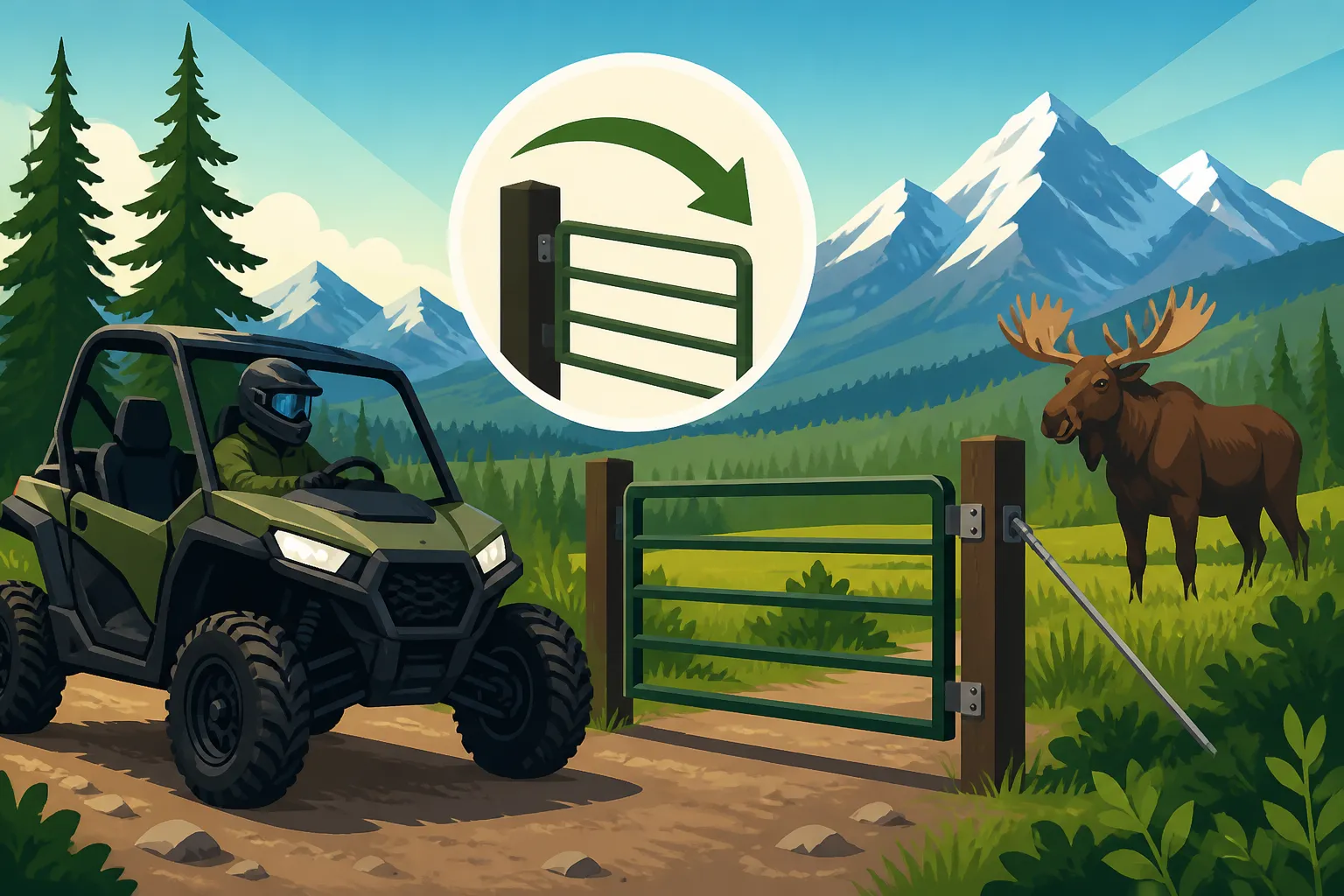
Don’t go around, over, or through a closed gate
A closed gate is a clear reason to pause, not an obstacle to work around. Don’t drive around the side, lift a barrier, move a lock, or follow another rider through. Going around can damage vegetation, create a new unauthorized track, or lead onto land where access is restricted. It can also put you farther from a safe turnaround point without knowing what lies ahead.
If the gate is locked or has a closure notice, turn around unless the land manager has explicitly directed otherwise. Don’t assume that a gate left unlocked is an invitation to pass. Likewise, an open gate may have been left that way for an authorized user, maintenance crew, or emergency access. The notice and the access rules matter more than the gate’s position.
Before turning around, check for other trail users and make sure there’s enough room to maneuver safely. On a narrow route, use a suitable pullout if one is available. Avoid widening the trail by cutting into soft ground or brush. Alaska Tundra Damage and Riding explains why leaving the established route can create lasting harm, particularly in sensitive terrain.
Make a practical backup plan
A blocked route can unravel a day’s plans if you have no alternative. Before leaving, identify a second trail or turnaround point and estimate whether you have enough fuel, daylight, and supplies to use it. If the planned ride depends on one gated corridor, tell someone your route and when you expect to check in.
When you discover a closure, don’t improvise a detour across land you haven’t checked. A nearby track on the ground may be private, restricted, or unsuitable for motorized travel. Instead, use a verified alternate route or head back to a known access point. If you’re riding in a group, make sure everyone understands the decision; it’s easy for one rider to press ahead while others are turning around.
For remote rides, build a little flexibility into your schedule. Leave room for a longer return, changing weather, or a route closure, and carry the gear you need if you have to wait or retrace your path. Alaska Group Ride Planning and Filing a Trip Plan With Someone cover practical ways to prepare for a ride that may not go exactly as expected.
Wildlife-aware riding habits beyond the gate
Give animals room and reduce disturbance
A gate closure is only one way of managing human impact. Even on an open route, slow down when you see wildlife, give animals plenty of space, and avoid chasing or surrounding them for a closer look. If an animal is near the trail, wait for it to move away when it is safe to do so. Don’t use your machine to push it along or block its direction of travel.
Keep your group together and avoid unnecessary stops in a way that blocks the route. Loud revving, repeated passes, or leaving the established trail can add disturbance without improving the ride. If animals appear stressed or are moving away, give them more space rather than trying to get a better view.
These habits matter across seasons and types of terrain. Alaska Wildlife on the Trail offers more context for encountering animals while riding, and Alaska Trail Etiquette Locals Expect is useful for thinking about how to share trails responsibly.
Keep your information and decisions grounded
It can be tempting to rely on hearsay: a friend says the gate is usually open, a social post shows someone riding the route last week, or an app displays an uninterrupted trail line. Those clues may help you decide what to investigate, but they don’t replace current instructions from the land manager. Conditions, access permissions, and closures can change.
A simple pre-ride routine can prevent a lot of stress:
- Identify the trailhead and the land manager for the route.
- Check current closure notices and any posted restrictions.
- Review your route and mark a practical turnaround or alternate.
- Confirm access again at the trailhead, including signs at gates and junctions.
- If the status remains unclear, don’t proceed beyond the point you can verify.
The goal isn’t to make every ride complicated. It’s to avoid losing time, damaging a trail, or finding yourself on restricted ground because a map or an old memory suggested the way was open. When a gate closes for wildlife—or for another reason—the safest and most respectful choice is to follow the notice, verify what you can, and ride a route you know is available.
Disclaimer
This article is for general informational purposes only and does not constitute professional advice. Laws, prices and regulations vary by location and change over time. Consult a qualified professional for guidance on your specific situation.