Winches for a Stuck Machine
A machine that sinks into glacial silt, boggy ground, or a muddy trail can turn an Alaska ride into a long, tiring recovery. A winch helps when the machine can be pulled toward a stable anchor, but using one carelessly can damage equipment or injure someone. This guide explains what to carry, how to set up a recovery, and when to stop and choose another plan.
Choosing a winch for an Alaska ATV or UTV
Match the winch to the machine and the terrain
A winch that is too small for the machine or the conditions may stall, overheat, or struggle to move a loaded vehicle. Check the manufacturer’s recommendations for your ATV or UTV, including the machine’s loaded weight and any limits for mounting points. As a general selection principle, riders often look for a winch rated above the machine’s weight; a heavy load, steep pull, deep mud, or an obstructed path can call for more capacity. The winch rating alone does not tell you whether the whole setup is suitable.
Think about what you actually carry. A side-by-side with passengers, tools, extra fuel, and hunting gear is a different recovery load from a lightly equipped quad. In Alaska, wet ground can add resistance, while mud, roots, and rocks can keep tires from rolling freely. If you regularly ride where a clean, straight pull is unlikely, discuss the setup with a qualified installer and follow the winch and vehicle manufacturers’ instructions.
A well-matched winch also needs a sound mounting plate and proper recovery points. The force travels through the winch mount and into the machine’s frame or approved structure. A strong winch attached to a weak mount is not a safe system. Before buying or installing equipment, check whether the mount is made for your machine and whether the connection points are intended for recovery loads.
Carry the supporting gear, not just the winch
The winch is only one part of a recovery kit. Carry gloves that let you handle the line without bare-hand contact, a tree-protection strap, a suitable shackle, and a line damper or other recommended safety device. A snatch block can change the pull direction or create a mechanical advantage when used correctly, but it adds another loaded component that must be rated and inspected.
For Alaska rides, gear should be easy to reach and protected from mud, water, and freezing conditions. A recovery strap can be useful for some situations, but it is not interchangeable with every winch accessory. Use components that are designed for the intended load, and check their working limits and directions before the trip. Do not improvise with a tow ball, luggage rack, bumper cover, or an unverified frame point.
Before leaving, inspect the rope or cable for damage, check the hook and safety latch, and make sure the remote and connections work as intended. Synthetic rope can be lighter and easier to handle than steel cable, but it still needs protection from abrasion and sharp edges. Steel cable can develop broken strands that are difficult to spot and can injure hands. Follow the maker’s care guidance for whichever line your winch uses.
Plan the route around recovery options
A winch is not a reason to attempt every crossing or muddy shortcut. Look ahead for a place where you could anchor safely, assess whether the machine has a clear path, and consider where the line would run if the pull changes direction. If the only possible anchor is unstable, or the machine is near moving water, a steep drop, or a fragile surface, backing out may be the safer choice.
Use maps and local information to understand the kind of ground ahead, but treat mapped routes as a planning aid rather than a guarantee of trail conditions. onX Offroad can help riders review routes and terrain before setting out; pair that planning with current land-access information and an on-the-ground assessment. It is especially important to understand where a route crosses wetland or tundra, since recovery attempts can widen damage. See Alaska Tundra Damage and Riding and Alaska Trail Difficulty Ratings when deciding whether a route fits your machine and experience.
Setting up a safe winch recovery
Stop and assess before pulling
The first step is to stop spinning the tires. Continued throttle can dig the machine deeper, bury the frame, or churn up sensitive ground. Turn off the engine if needed, check that everyone is clear, and identify what is holding the machine: a buried tire, a high-centered frame, a snagged skid plate, or a slope that the machine cannot climb.
Look over the full recovery path. Check for rocks, roots, branches, holes, and loose ground that could shift under tension. Consider where the machine will move once it is free. A vehicle can lurch forward or sideways when resistance releases, so keep people out of its path and avoid standing between the machine and an anchor. If the machine is partly in a river or the water is rising, do not let urgency push you into a hazardous setup.
Decide whether a winch is the right tool at all. If the machine is on its side, trapped beneath an obstacle, or in a position that could roll during the pull, take time to stabilize it or seek experienced help. A winch can pull hard in one direction; it does not automatically make an unstable machine safe.
Choose an anchor and attach correctly
Use a stable anchor designed to handle the pull. A healthy tree may be an option when the location and land rules allow it, but wrap a tree-protection strap around the trunk rather than putting the winch line directly around the bark. Avoid small or damaged trees, loose rocks, fence posts, and anything that could break, slide, or be pulled over. If no suitable anchor is available, do not substitute an uncertain one just to get moving.
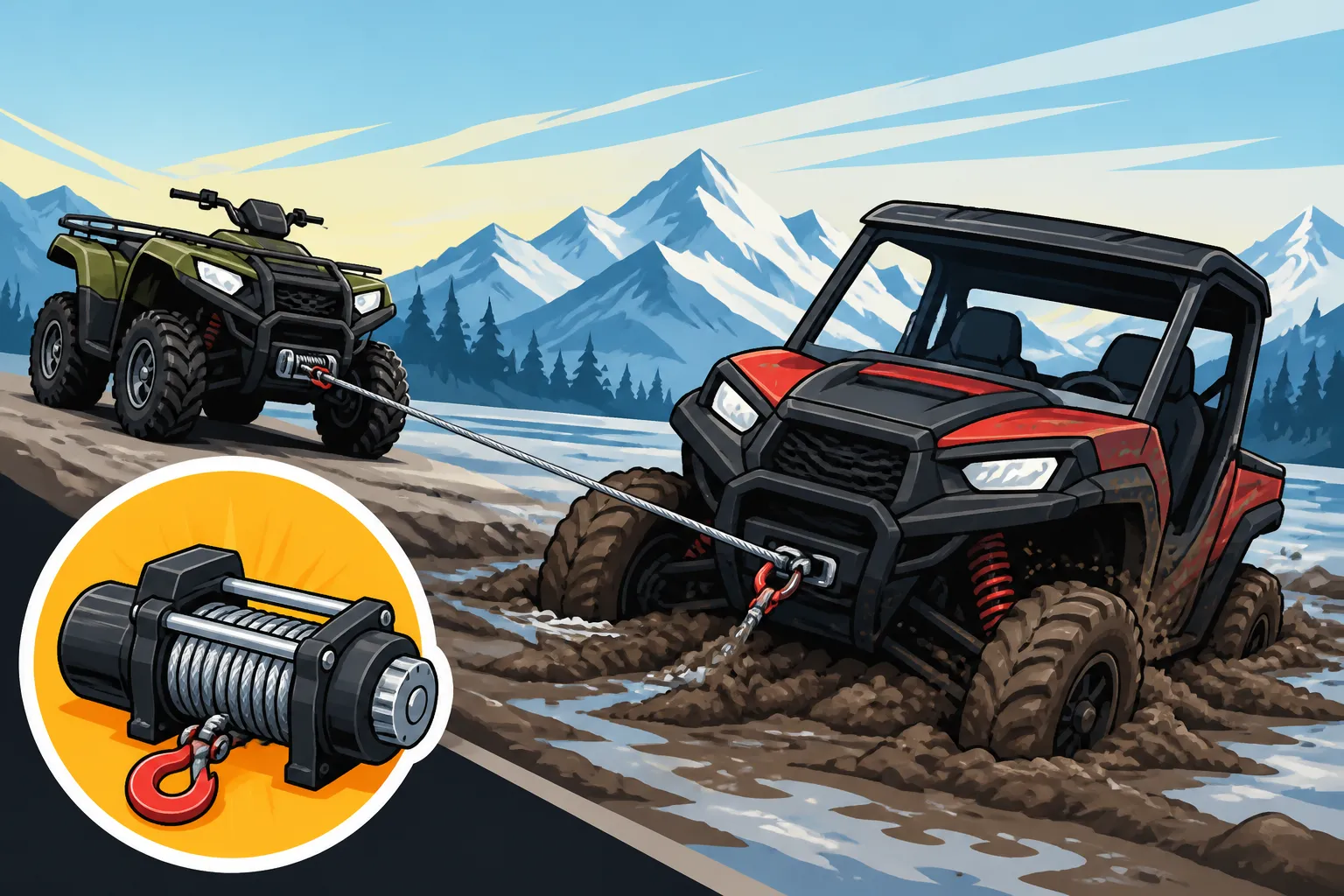
Attach the winch line to a manufacturer-approved recovery point on the stuck machine. Never attach it to a tow ball or an unapproved accessory. Keep the line as straight as practical, and use a strap or line guide to reduce the chance of rubbing against sharp edges. If a snatch block is part of the setup, follow its instructions and confirm that every attachment point can handle the resulting forces.
Once the setup is ready, clear people from the line’s path and follow the equipment instructions for operating the winch. Keep hands away from the drum, fairlead, and loaded line. Use the line damper as directed, and do not step over a line under tension. If anything shifts, frays, bends, or makes an unexpected sound, stop and reassess rather than trying to power through it.
Pull steadily and stop when conditions change
Take up slack carefully before applying a pull. Use a controlled pace and avoid sudden acceleration from the machine being recovered. If the tires can regain traction without making the situation worse, a small amount of careful wheel movement may help, but aggressive throttle can worsen the hole. Riders should communicate clearly and agree on one person to direct the recovery.
Watch both the line and the machine throughout the pull. Stop if the anchor starts moving, the mount flexes, the line catches, or the winch struggles. A winch motor can become hot during extended work; follow the manufacturer’s guidance about duty cycle and cooling. Repeatedly pulling without a break can damage equipment, especially when the load is heavy or the machine is deeply stuck.
After the machine is free, release tension in a controlled way and inspect the setup before packing it away. Check for rope or cable damage, bent hardware, loosened mounting points, and anything caught under the machine. Do not assume a successful pull means the route ahead is safe. If the ground has become more difficult or the water level has changed, turning around may be the better call. For stream and river decisions, review Reading a Glacial River Before You Cross and Turning Back at a Deep Channel.
Alaska conditions that make recovery harder
Mud, glacial silt, and wet ground
Mud and glacial silt can behave differently from firm dirt. A tire may appear to be moving while the chassis sinks or the wheels dig deeper. A winch pull over soft ground can also drag the machine sideways, especially if the line is angled or one tire is buried more deeply than the other. Look for a path that lets the machine roll rather than scrape across the ground.
Repeated attempts can turn a small stuck spot into a damaged trail. Avoid widening the track to reach a better angle if that would push you onto fragile vegetation or wetland. If a recovery requires tearing up the surrounding area, stop and reconsider. Alaska Glacial Silt and Machines offers useful context for why fine, wet material can be especially hard on both machines and trails.
Assess the conditions before you ride, not only after getting stuck. Recent rain, thaw, or changing water can make a familiar route much softer than it was on a previous trip. Map planning can help identify known trail corridors, but it cannot show every new rut or flooded section. onX Offroad may help you review a planned route and orient yourself, while local trail reports and direct observation help fill in the conditions on the ground.
Rivers, ice, and steep ground
A winch is not a substitute for careful judgment around water. A rising channel, unstable bank, or deep crossing can make an anchor unreliable and put the machine or rider at risk. Do not wade into moving water to attach a line if the footing or current is unsafe. If a machine is being pulled from a river, consider the risk of water entering the engine, electrical system, or drivetrain, and seek appropriate mechanical advice afterward.
Frozen ground and ice bring their own hazards. The surface can hide overflow, weak spots, or channels that are difficult to read. Do not assume a winch anchor will hold on snow or ice, and do not place people where a machine could slide during a pull. When the safest recovery point is uncertain, retreating to firm ground or getting help may be wiser than attempting a pull.
On steep terrain, assess the direction the machine could move if it comes free. A sideways pull can lead to a rollover, and an anchor above or below the vehicle can change the load and movement in ways a rider may not expect. If you cannot keep the machine stable and the recovery path clear, pause and seek someone with suitable recovery experience. The same caution applies to narrow or crowded trails: other riders need room to pass safely, which is part of the reason Alaska Trail Etiquette Locals Expect matters during a recovery.
Have a plan for being delayed
A winch can help with a stuck machine, but it cannot solve every problem. A failed battery, damaged mount, broken line, injured rider, or worsening weather can leave a group delayed. Carry clothing, food, water, basic first aid, and communication gear appropriate to the route and season. Tell someone where you are going and when you expect to return, particularly if you will be beyond reliable cell coverage.
Route planning is also a safety tool. onX Offroad can support pre-ride route review, but riders should check access, land status, and closures through the relevant managers or local sources. A trail that looks like a useful escape route on a map may cross private property, a restricted area, or ground that is unsafe in current conditions. For longer or remote trips, Choosing a Satellite Messenger for a Backcountry Ride and Filing a Trip Plan With Someone can help you prepare for delays beyond the reach of a winch.
Winch recovery checklist for the trail
| Before the ride | Before the pull | After the recovery |
|---|---|---|
| Check the winch, line, mount, remote, and connections | Stop wheel spin and assess the machine’s position | Release tension slowly and keep people clear |
| Pack gloves, rated accessories, a tree strap, and a line damper | Choose a stable anchor and approved recovery point | Inspect the line, hook, mount, and machine |
| Review route, access, weather, and likely terrain | Clear bystanders from the line and vehicle path | Decide whether to continue or turn back |
| Carry communication and emergency supplies | Stop if the anchor, line, or mount shifts | Report trail damage or hazards when appropriate |
Keep the recovery kit where you can reach it without unloading half the machine. Make sure everyone in the riding group knows where it is and understands the basic safety rules. A winch can be a valuable tool on an Alaska ride, but the safest recovery is the one that matches the terrain, the equipment, and the limits of the people using it. If the conditions do not support a controlled pull, stop and get help rather than escalating a bad situation.
Disclaimer
This article is for general informational purposes only and does not constitute professional advice. Laws, prices and regulations vary by location and change over time. Consult a qualified professional for guidance on your specific situation.