Alaska Excludes Three-Wheelers
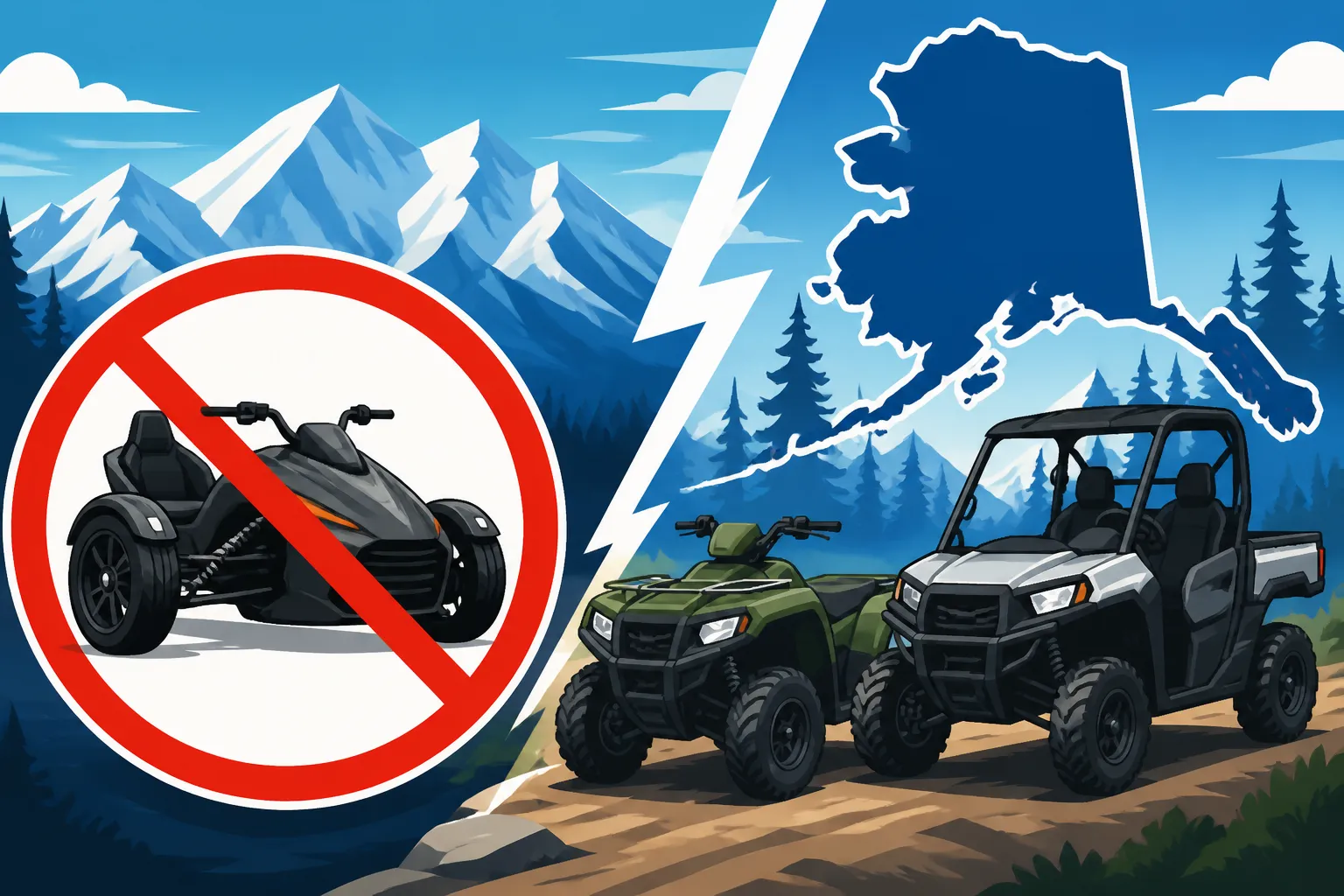
It's truly a bummer when you're excited about hitting the trails or heading out to your favorite fishing spot with your trusty three-wheeler, only to discover that Alaska's rules for registering All-Purpose Vehicles (APVs) simply don't include it. Many folks moving here or inheriting an older machine are surprised to learn that their beloved three-wheeled off-road vehicle doesn't fit the state's definition for registration. This guide will walk you through why three-wheelers are excluded from Alaska's APV registration, what that means for owners, and how you can still enjoy off-road adventures within the state's guidelines.
Understanding Alaska's All-Purpose Vehicle APV Definition
When the State of Alaska talks about All-Purpose Vehicles, or APVs, they're referring to a very specific type of off-highway machine. This definition is crucial because it dictates whether a vehicle can even be considered for registration, which in turn determines where you can legally ride on public lands. For many Alaskans, their ATV or side-by-side is an indispensable tool for hunting, fishing, trapping, or just exploring the vast wilderness, and understanding these foundational definitions is the first step to staying compliant.
What Constitutes an APV in Alaska Law
Alaska law defines an All-Purpose Vehicle as a motor vehicle that has two to six tires, is designed for off-highway travel, and has an engine of 100 cubic centimeters or more. Crucially, the operator is either designed to straddle the vehicle, like on a quad or dirt bike, or to sit within it, as is common with side-by-sides (also known as UTVs). This broad definition covers a wide range of popular machines that Alaskans use, from the two-wheeled dirt bike to the four-wheeled ATV, all the way up to a six-wheeled utility vehicle often seen hauling gear in the bush. The key here is that "two to six tires" stipulation, which is where many older or specialty machines, like the three-wheeler, hit a roadblock.
This definition ensures that vehicles registered as APVs meet certain design and safety criteria that the state deems appropriate for the varied and often challenging Alaskan terrain. It means that most modern ATVs and UTVs fit right in, allowing their owners to register them with the DMV and gain legal access to designated public lands and trails. Without fitting this specific classification, a machine simply isn't eligible for the official registration process that the state uses for its off-highway vehicles.
The Rationale Behind the Tire Count
The reason behind the "two to six tires" requirement isn't arbitrary; it's rooted in design, stability, and safety considerations that evolved over decades in the off-road vehicle industry. Three-wheelers, while iconic to a certain era of off-roading, gained a reputation for inherent stability challenges. Their single front wheel and two rear wheels could make them prone to roll-overs, especially during turns, on uneven terrain, or when climbing hills. This was a significant concern for riders, leading to numerous incidents and injuries.
Manufacturers eventually shifted away from producing three-wheelers, largely due to safety advocacy and legal pressures, moving towards the more stable four-wheeled ATV design. Alaska's legislative definition reflects this industry shift and the prevailing understanding of off-road vehicle safety. By limiting APV registration to machines with a minimum of two and a maximum of six wheels, the state is essentially aligning its regulations with contemporary safety standards and design principles that aim to minimize common risks associated with off-road travel. It's a way of ensuring that the vehicles granted official recognition for use on public lands offer a baseline level of stability and predictable handling.
The Specifics of the Exclusion: Why Three Wheels Don't Qualify
The exclusion of three-wheelers from Alaska's APV registration isn't a matter of oversight or a loophole; it's a direct result of the state's legislative framework. For owners of these vintage or specialized machines, it can be a frustrating reality, especially if they've purchased a three-wheeler unaware of this specific rule. Understanding the precise legal wording and the underlying safety concerns helps clarify why these machines are treated differently.
Direct Legislative Language
The Alaska statutes that define All-Purpose Vehicles are quite clear, specifying that an APV "has two to six tires." This straightforward language leaves no room for interpretation regarding three-wheeled machines. They simply do not meet the minimum or maximum tire count required to be classified as an APV for registration purposes in Alaska. It’s not about their engine size, their design for off-highway use, or whether the operator straddles or sits; it’s solely about the number of wheels. This means that if you're looking to register an off-highway vehicle in Alaska, and it happens to have three wheels, the DMV simply cannot process it under the current APV statutes.
This exclusion is a deliberate part of the state's vehicle code, not an accidental omission. It means that unlike their four-wheeled counterparts, three-wheelers are specifically categorized among [Machines Alaska Will Not Register as an APV]. This legal distinction has profound implications for how and where these vehicles can be used within the state, particularly concerning access to public lands that mandate registered vehicles. Without meeting this fundamental definition, a three-wheeler cannot legally be issued an Alaska APV decal.
Practical Safety Concerns and the Exclusion
Beyond the clear legislative wording, the exclusion of three-wheelers from Alaska's APV definition is heavily influenced by practical safety concerns that have been well-documented over the years. Three-wheeled ATVs, due to their design, exhibit different handling characteristics compared to four-wheeled quads or side-by-sides. The single front wheel provides less stability, making them more susceptible to rollovers, especially during aggressive turns, when traversing side hills, or encountering obstacles. This instability can be particularly pronounced in the varied and unpredictable terrain often found in Alaska, from rocky trails to boggy wetlands and snowy slopes.
The state's regulations, therefore, reflect a broader public safety objective. By limiting registered APVs to vehicles with two to six wheels, Alaska is implicitly endorsing vehicle designs that are generally considered more stable and safer for a wider range of operators and conditions. While individual skill and experience play a huge role in safe riding, the inherent design characteristics of a vehicle contribute significantly to its overall safety profile. This regulatory stance aims to reduce the risks associated with operating machines with known stability challenges on public lands, where diverse users and varying levels of experience are common.
What This Means for Three-Wheeler Owners in Alaska
For those who own a three-wheeler in Alaska, discovering it can't be registered as an APV can be a significant letdown. This exclusion carries several important implications that directly affect where and how you can use your machine, as well as considerations for ownership, resale, and even insuring your vehicle. It's a reality that requires careful navigation to avoid legal issues and ensure your enjoyment of the Alaskan outdoors.
Limitations on Public Land Riding
The most immediate and impactful consequence of a three-wheeler not being eligible for APV registration is the severe limitation on where it can be legally ridden. In Alaska, riding an off-highway vehicle on most public lands, including state parks, recreation areas, and designated trails, requires the machine to be properly registered and display a valid APV decal. Since three-wheelers cannot obtain this registration, they are effectively banned from these public areas. Attempting to ride an unregistered machine on public land can lead to serious consequences, including fines and potential impoundment, falling under [Alaska Penalties for Riding Unregistered].
This means that owners of three-wheelers cannot simply head out to popular spots like Jim Creek or the Knik River Public Use Area with their machine and expect to be compliant. These areas are patrolled by state troopers and park rangers who enforce registration requirements. The spirit of this rule is to ensure that vehicles using these shared resources are accounted for and meet the state's defined criteria. For a three-wheeler enthusiast, this often means that the only legal place to ride is on private property, which we'll discuss further in the next section.
Implications for Sale, Transfer, and Insurance
While you can still own a three-wheeler in Alaska, the lack of official state registration and titling options, as they apply to APVs, does create some unique challenges, particularly when it comes to proving ownership, transferring the machine, and securing insurance. Since Alaska's APV titling requirements, which have been in place since 2022, don't apply to three-wheelers, these machines exist in a bit of a gray area within the state's official vehicle records.
For sales and transfers, it becomes even more critical to maintain impeccable personal records. When you buy or sell a three-wheeler, a robust bill of sale is your primary proof of ownership. Services like LawDepot can be incredibly useful for drafting legally sound documents like a [Alaska Bill of Sale for a Used Machine] or [Alaska Affidavits Naming a Seller] to formally document the transaction, protecting both the buyer and seller. Without state registration records to fall back on, these private documents are your best defense against future disputes. Regarding insurance, while Alaska has [Alaska Insurance Requirements for an APV] for registered APVs, finding coverage for an unregistered three-wheeler might be more challenging. Some insurance providers might offer off-road vehicle policies that don't hinge on state registration, but it's essential to disclose the vehicle's status (unregistered, three-wheeled) clearly to ensure your policy is valid. Expect to do some extra legwork to find a provider willing to cover it, and be clear about the coverage you're seeking, whether it's for liability on private land or against theft.
Alternatives and Considerations for Three-Wheeler Enthusiasts
Understanding the limitations is one thing, but finding practical ways forward is what truly matters for three-wheeler enthusiasts in Alaska. While the state's APV laws are restrictive for these machines, there are still avenues to enjoy off-road riding or to transition to vehicles that offer broader access. It's about adjusting expectations and exploring the options that fit within the legal framework.
Private Land Riding as the Primary Option
For owners of three-wheelers in Alaska, the most straightforward and often only legal avenue for riding is on private property. If you own land, you have the freedom to ride your three-wheeler on your own ground, provided you adhere to any local ordinances regarding noise, hours of operation, or property lines. This is the simplest way to enjoy your machine without worrying about state registration requirements or public land restrictions. Just like [Riding Only on Your Own Ground] for other unregistered machines, your three-wheeler is welcome there.
If you don't own private land suitable for riding, you might be able to secure permission from other private landowners. This requires direct communication, obtaining explicit permission, and respecting any conditions set by the landowner. Always get permission in writing if possible, especially if you plan to be a regular visitor. This not only protects you but also shows respect for the landowner's property. Remember, even on private land, common-sense safety practices, proper gear, and responsible operation are paramount. Understanding that [When a Quad on Private Land Needs No Alaska Decal] can also apply to your three-wheeler – as long as it stays strictly on private property and doesn't venture onto public access points or rights-of-way.
Considering Four-Wheelers or Side-by-Sides
For many three-wheeler enthusiasts who find the public land restrictions too limiting, transitioning to a four-wheeled ATV or a side-by-side (UTV) becomes a highly attractive alternative. These machines directly fit Alaska's APV definition, allowing for full state registration and access to the vast network of trails and public lands that require it. The benefits of making such a switch are numerous:
- Wider Trail Access: With a registered APV, you unlock the ability to ride in popular areas like the Knik River Public Use Area, Jim Creek, and numerous other state lands and trails across Alaska. This dramatically expands your riding opportunities.
- Enhanced Safety and Stability: Modern four-wheelers and side-by-sides are designed with greater stability in mind, offering a more forgiving ride for many operators, especially on challenging terrain. This aligns with the safety rationale behind Alaska's APV definition.
- Easier Resale: A registered APV has a much broader market in Alaska. Buyers are often looking for machines they can legally use on public lands, making the resale process much smoother compared to an unregistered three-wheeler.
- Simpler Insurance: Obtaining comprehensive insurance for a registered APV is typically more straightforward, as providers are accustomed to these vehicles within the state's legal framework.
If you're considering this path, you'll find the process for [Registering an ATV Under Alaska's All-Purpose Vehicle Class] to be relatively simple once you have the right machine and paperwork. It opens up a whole new world of exploration in Alaska's backcountry.
Out-of-State Registration for Three-Wheelers
A common question that arises is whether registering a three-wheeler in another state, where such registration might be possible, would then grant access to Alaska's public lands. Unfortunately, this approach typically does not work for vehicles that do not meet Alaska's core APV definition. Alaska law is quite specific about what kind of vehicle qualifies as an APV within its borders (two to six wheels).
While Alaska does have provisions for [Does an Out-of-State Machine Need Alaska Registration?] for visitors, these provisions generally apply to vehicles that would qualify as an APV under Alaska's definition if they were registered here. If your three-wheeler inherently fails to meet the "two to six tires" requirement, then its out-of-state registration status doesn't magically override Alaska's foundational definition. The state's intent is to regulate the types of off-highway vehicles that can be used on its public lands, regardless of where they might be registered elsewhere. Therefore, a three-wheeler registered in another state would still be considered an unregistered and non-APV vehicle under Alaska law when attempting to ride on Alaskan public lands.
Navigating Ownership Without Official Registration
Owning a three-wheeler in Alaska when it can't be officially registered introduces some unique challenges, particularly around proving ownership, managing its perceived value, and implementing effective security measures. Since these machines won't appear in state databases like other APVs, it's up to the owner to create and maintain a robust paper trail for their own protection and peace of mind.
Proving Ownership and Value
Without an official state registration or title issued by Alaska, your personal documentation becomes incredibly important for establishing and proving ownership of your three-wheeler. This is crucial for several reasons: if the machine is ever stolen, if there's a dispute over its ownership, or even if you simply want to sell it down the line. It's not enough to simply have possession; you need verifiable records.
Always keep the original bill of sale, any previous titles (if it was titled in another state before coming to Alaska), and any warranty cards for a new machine. These documents serve as your primary evidence. When buying or selling a three-wheeler privately, it's wise to use a formal bill of sale, even if it's not a state-mandated form. Tools like LawDepot are excellent resources for creating customized, legally robust bills of sale. This ensures all parties are clearly identified, the machine's VIN and description are accurate, and the transaction terms are explicitly stated. Think of it as creating your own mini-registry, proving your claim to the machine. You might not have the official [Alaska APV Titling Required Since 2022] paperwork for your three-wheeler, but comprehensive personal records go a long way.
The Reality of Resale Value and Market
The market for unregistered three-wheelers in Alaska is, by necessity, quite niche. Because these machines cannot be legally ridden on most public lands, potential buyers are largely limited to those who either own private property suitable for riding or have explicit, long-term permission to ride on someone else's private land. This significantly shrinks the pool of interested parties compared to the vibrant market for registered four-wheeled ATVs and side-by-sides.
Consequently, the lack of official registration and the associated riding restrictions can negatively impact the resale value of a three-wheeler. Buyers will likely factor in these limitations, meaning you might not command the same price as a comparable registered APV. Be transparent about the machine's registration status and the legal riding limitations when you advertise it. This manages buyer expectations and helps ensure a smoother transaction. Emphasize its condition, history, and any unique features, but be realistic about the specific market for such a vehicle in Alaska.
Security and Anti-Theft Measures
Since your three-wheeler won't be listed in Alaska's official APV registration database, recovering it if it's stolen can be more challenging. There won't be a state record linking your name directly to that specific VIN for a three-wheeler, unlike a registered quad. This means proactive security measures are absolutely paramount to protect your investment.
Beyond the usual security advice for any off-road vehicle, such as always storing it in a locked garage or shed and using heavy-duty chains or locks when parked, take detailed photographs of your three-wheeler from multiple angles. Crucially, photograph the Vehicle Identification Number (VIN) in clear, well-lit conditions. Keep these photos, along with your bill of sale and any other ownership documents, in a safe place separate from the machine. Should your three-wheeler ever disappear, these records will be essential for filing a police report and potentially identifying your machine if it's ever recovered. While you can't officially [Checking an Alaska Machine for a Theft Report] through Alaska's APV registry for a three-wheeler, your detailed personal records can still aid law enforcement in national databases or if the machine is found. Furthermore, consider installing a GPS tracker if the value warrants it, as this can be a lifesaver for recovery.
Comparing Registered APVs and Three-Wheelers in Alaska
To help clarify the distinctions and impacts of Alaska's APV laws, here's a comparison between a typical registered All-Purpose Vehicle (like a quad or side-by-side) and a three-wheeler.
| Feature | Registered Alaska APV (e.g., Quad, Side-by-Side) | Three-Wheeler (ATV) |
|---|---|---|
| Tire Count | 2 to 6 tires | 3 tires |
| Alaska APV Status | Qualifies | Does NOT qualify |
| State Registration | Required for public land use | Cannot be registered as an APV in Alaska |
| Public Land Access | Permitted on designated trails/areas (with decal) | Generally NOT permitted on public lands |
| Primary Legal Use | Public and private land | Primarily private land only |
| Titling in Alaska | Yes, if registered (since 2022) | No state-issued title as an APV |
| Proof of Ownership | State registration/title, bill of sale | Bill of sale, old titles, affidavits (e.g., via LawDepot) |
| Market/Resale | Broad market, higher demand | Niche market, often lower demand due to limitations |
| Insurance | Generally straightforward to obtain | Can be more challenging to find, specific coverage may be needed |
| Safety Perception | Generally seen as more stable, modern design | Known for stability challenges, older design |
This comparison table highlights the core differences that three-wheeler owners face in Alaska. While the nostalgia and unique riding experience of a three-wheeler are undeniable, the practical realities within Alaska's regulatory environment mean understanding these limitations is key to responsible ownership.
Disclaimer
This article is for general informational purposes only and does not constitute professional advice. Laws, prices and regulations vary by location and change over time. Consult a qualified professional for guidance on your specific situation.