Alaska Registration for a Rental Fleet
Running an ATV or UTV rental business in Alaska means navigating a unique set of challenges, not least of which is ensuring every single machine in your fleet is properly registered and ready for your customers to hit the trails. It can feel like a mountain of paperwork and confusing rules, especially when you're dealing with multiple units, but this guide is here to break down the Alaska All-Purpose Vehicle (APV) registration process specifically for rental fleet operators.
Why Your Rental Fleet Needs Proper Alaska APV Registration
When you're running an adventure business in Alaska, providing customers with an exhilarating ride is your top priority. However, that experience hinges entirely on your machines being legally compliant. The State of Alaska requires nearly all ATVs and UTVs used on public lands to be registered as All-Purpose Vehicles, and this requirement extends directly to commercial operations and rental fleets. Ignoring this crucial step doesn't just put your business at risk; it also puts your customers in a precarious position should they encounter law enforcement.
Think about the sheer number of places in Alaska that require a registered APV decal. From the expansive Knik River Public Use Area to various state trails and even designated village roads, if your customers are going to enjoy the vast beauty of Alaska’s backcountry, your machines need to display that current decal. It’s not just about avoiding fines; it’s about ensuring smooth operations, protecting your investment, and providing peace of mind to both you and your clients. An unregistered machine means lost rental opportunities, potential impoundment, and a big headache you simply don't need in a fast-paced business.
Public Land Access and Compliance
The primary driver behind registering your rental fleet is access to public lands. Most of Alaska's incredible riding areas, whether they're managed by the Department of Natural Resources, local boroughs, or sometimes even federal agencies with specific agreements, will require a valid APV registration decal to be visibly displayed. This isn't just a suggestion; it's law. A park ranger or Alaska State Trooper can, and will, check for current registration.
Imagine a group of excited tourists, ready for their once-in-a-lifetime Alaskan adventure, only to be turned back at a trailhead because the UTV they rented doesn't have a current decal. Not only is that a terrible customer experience, but it also reflects poorly on your business and can lead to immediate citations. Each machine in your fleet represents a potential point of contact with these regulations, making bulk compliance absolutely essential. It’s not just about the big, well-known trails; it also applies to many of the smaller access points and routes that crisscross the state.
Legal and Insurance Implications for Businesses
Beyond access, there are significant legal and insurance implications for operating an unregistered fleet. Should one of your rental machines be involved in an accident, even a minor one, an absence of proper registration can complicate everything. Insurance claims might be denied or contested, liability issues could escalate, and your business could face hefty penalties that far outweigh the simple cost of registration.
It's about demonstrating due diligence as a commercial operator. Ensuring every machine meets the state's registration requirements is a fundamental part of responsible business practice. Your insurance carrier will expect it, and your customers deserve to know they're operating legally. Taking shortcuts with registration can open your business up to unnecessary legal exposure and financial risk, which no entrepreneur wants to face in the Last Frontier. [Alaska Insurance Requirements for an APV] are quite clear, and these often hinge on proper registration.
Understanding Alaska's All-Purpose Vehicle (APV) Class for Fleets
Alaska's definition of an All-Purpose Vehicle, or APV, is quite broad and covers most of the machines you'd typically find in an ATV or UTV rental fleet. This includes four-wheelers, side-by-sides, and even some six-wheelers. However, it's not a blanket definition, and there are specific exclusions that rental operators need to be aware of. Understanding what qualifies and what doesn't is the first step in ensuring your entire fleet is eligible for registration and can legally operate where your customers want to ride.
The "All-Purpose Vehicle" class was established to create a unified framework for off-highway vehicles that often share similar characteristics and usage patterns. For a rental business, this means you’re largely dealing with one category, streamlining your registration efforts. However, vigilance is key; if you diversify your fleet, you'll need to double-check that new machine types fall within the APV definition.
What Machines Qualify as an APV
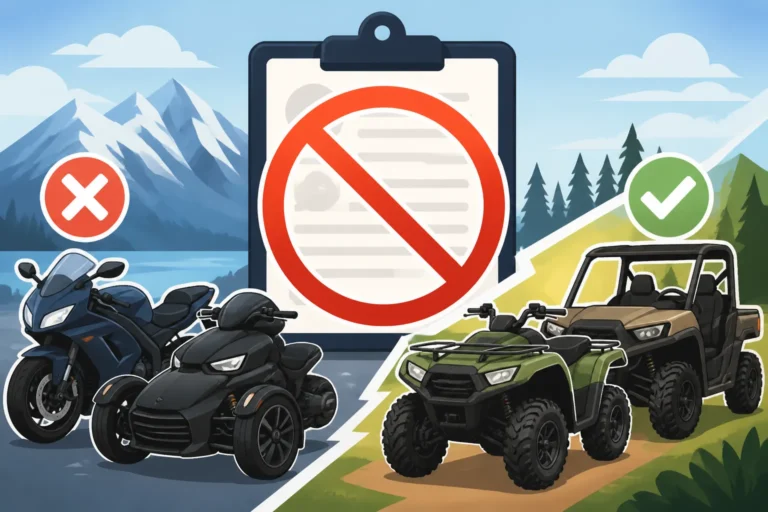
Generally, an APV in Alaska is a motorized vehicle designed for off-highway use, weighing 1,500 pounds or less, with a width of 60 inches or less, and not exceeding 45 miles per hour on a paved surface (if it were allowed, which generally it is not for APVs). This encompasses the vast majority of consumer-grade ATVs (quads) and many smaller, two-seat UTVs or side-by-sides. When you're acquiring new machines for your rental fleet, always check their specifications against these general guidelines.
Most common rental fleet machines, like Polaris Sportsman ATVs or Ranger UTVs, and Can-Am Outlander ATVs or Defender UTVs, typically fit within these parameters. The key is their design intent – built for rugged off-road performance rather than highway travel. For a rental operator, consistency across your fleet in terms of APV classification simplifies paperwork and ensures that the machines you offer are all good to go for public land adventures. It's a fundamental aspect of [Registering an ATV Under Alaska's All-Purpose Vehicle Class].
Machines Excluded from APV Registration
While the APV class is broad, it doesn't cover everything. Significantly, snowmobiles (often called snow machines in Alaska), tracked vehicles (like utility vehicles with track conversions), homemade ATVs, and three-wheelers are specifically excluded from the APV designation. If your rental fleet includes any of these machine types, they will not be registered under the same APV system and may have entirely different regulations or no registration pathway at all for public land use.
This is a critical distinction for rental businesses. If you offer snow machine rentals in the winter, those machines have their own separate registration system. Similarly, if you're considering a unique, highly specialized tracked vehicle for certain terrain, you need to be aware that it won't be an APV. It's vital to know these exclusions to avoid purchasing machines for your fleet that cannot be legally registered for the public land use your business relies on. Always verify the classification before making a large investment in new inventory. [Machines Alaska Will Not Register as an APV] provides more detail.
The Registration Process for a Rental Fleet
Registering a rental fleet in Alaska involves a systematic approach, especially given the volume of machines you might be dealing with. While the core process for each individual APV is similar to that of a private owner, the scale and commercial nature introduce additional considerations. It’s less about a single trip to the DMV and more about establishing a repeatable, efficient process for consistent compliance.
You'll need to gather specific documents for each machine, ensure the paperwork is correctly filled out, and be prepared for potential questions about the commercial nature of your operations. Keeping meticulous records for every vehicle is non-negotiable. This isn't just a requirement; it's good business practice that can save you time and headaches down the road, especially when it comes to renewals or selling off older fleet units.
Required Documents for Each Machine
For each new machine in your fleet, you'll generally need proof of ownership, which typically means an original Manufacturer's Certificate of Origin (MCO) or a Certificate of Title if it's a new purchase from a dealer. For used machines, a properly executed bill of sale from the previous owner is essential, along with the previous registration or title if available. Remember, the state needs to establish a clear chain of ownership for every unit.
Additionally, you'll need to complete the Alaska Department of Administration, Division of Motor Vehicles (DMV) "Vehicle Transaction Application" form (Form V1) for each APV. This form is the cornerstone of the registration process and requires detailed information about the machine and your business as the owner. Having a template for this form and ensuring your staff are trained to fill it out accurately will speed up the process significantly for your fleet. You may also need to provide proof of your business registration with the state. [What Alaska's ATV Registration Form Asks For] has more details on this.
Handling Multiple Registrations at Once
When registering multiple machines for a rental fleet, efficiency is key. While Alaska doesn't typically have a specific "fleet registration" program that bundles all your machines under one application, you can certainly process multiple registrations in one visit to a DMV office or certified partner office. Many rental operators find it beneficial to dedicate specific staff to this task or to schedule a block of time for handling all registrations at once.
Organize your paperwork meticulously for each machine: individual folders or clearly labeled packets containing the MCO/bill of sale, completed V1 form, and any supporting documentation for that specific APV. This structured approach will make the process much smoother for the DMV clerk and reduce errors or delays. Consider reaching out to your local DMV or a [Alaska Partner Offices That Register OHVs] to discuss the best way to handle a large volume of registrations, as they may offer guidance on how to submit them efficiently.
Specific Considerations for Rental Businesses
Operating an ATV/UTV rental fleet comes with unique challenges, especially when it comes to legal documentation beyond just registration. You're not just registering a machine; you're operating a commercial enterprise that requires a robust legal framework to protect both your business and your customers. This includes everything from how you prove ownership to how you structure your rental agreements.
Ensuring every part of your operation is legally sound is paramount. From the moment a customer steps onto your property to the time they return the machine, their interaction with your business needs to be covered by clear, enforceable agreements. This attention to detail isn't just about compliance; it's about minimizing risk and building a professional, reputable business.
Proof of Ownership for Business Entities
As a rental business, the proof of ownership for your APVs will typically be in the name of your company (e.g., LLC, corporation) rather than an individual. This is important to ensure that the assets are clearly tied to the business entity, which has implications for liability, taxes, and asset management. When you receive an MCO or a bill of sale, make sure the purchasing entity's name is accurately reflected.
If you’re purchasing machines used from another commercial entity or even a private seller, ensure the bill of sale clearly identifies your business as the buyer. This detail is crucial for the DMV to register the machine in your business name. If you're drawing up a bill of sale for a used machine you're acquiring, or even one you're selling out of your fleet, consider using a template from a reputable source like LawDepot to ensure all necessary legal language and fields are included. This can help prevent issues with proving ownership down the line. [Alaska Bills of Sale for a Used Machine] explains more about these requirements.
Rental Agreements and Waivers
Beyond state registration, your business needs robust rental agreements and liability waivers for every customer. These legal documents outline the terms of the rental, the responsibilities of the renter, and limit your business's liability in case of an accident or misuse. While not part of the state registration itself, these are absolutely critical for a commercial operation.
A comprehensive rental agreement should cover items like rental duration, fees, fuel policies, damage responsibility, authorized riding areas, and prohibited uses. The liability waiver, signed by every rider, informs them of the inherent risks of ATV/UTV operation and releases your company from certain liabilities. Again, using professional legal templates, perhaps from LawDepot, can be incredibly helpful to ensure these documents are thorough and legally sound. These agreements also help you manage expectations and prevent disputes with customers after their ride.
Dealing with Financing and Liens
Many rental businesses finance their fleet purchases, which means there will likely be a lienholder (the bank or credit union) with a security interest in your machines. When you register these APVs, the state DMV will record this security interest on the registration record. This is a standard procedure, but it's something your business needs to be aware of.
The lienholder will often hold onto the original title (if one is issued for an APV) or other proof of ownership until the loan is paid off. This means you’ll typically receive a registration certificate showing the lien, but not the actual title document. When selling a used machine from your fleet that has an outstanding loan, you’ll need to coordinate with the lienholder to release the lien before you can transfer full ownership to a new buyer. This process is similar to what a private owner would experience, but on a larger scale for a fleet. [Alaska Registration and Lien Records] explains how this works.
Managing Renewals and Updates for a Large Fleet
Once your rental fleet is initially registered, the ongoing task is managing renewals and keeping all records up to date. With numerous machines and varying registration terms, this can quickly become a logistical challenge if not managed proactively. Missing a renewal deadline for even one machine could mean it sits idle, unable to generate revenue, or worse, gets used illegally.
Establishing a clear system for tracking registration expiry dates, updating owner information, and replacing decals is crucial for the smooth operation of your business. This isn't a one-and-done process; it's an ongoing commitment to compliance that directly impacts your bottom line and reputation.
Tracking Expiry Dates and Renewing in Bulk
Alaska APV registrations can be issued for terms of two, four, or six years, but a critical detail for all registrations is that they always expire on September 30th of the final year. This means your entire fleet, regardless of when each individual machine was initially registered, will have renewals concentrated around the fall season. For a rental business, this can be both a blessing and a curse. It simplifies tracking by having a single, universal expiry month, but it also creates a bulk renewal crunch.
You'll need a robust system – whether it's a spreadsheet, specialized software, or a physical calendar – to track when each machine's registration expires. The DMV will typically send renewal notices, but relying solely on these for a large fleet is risky. Plan to renew well in advance of September 30th to avoid any lapse in legal operation. You can process multiple renewals at once by submitting all the necessary renewal forms and fees in a single transaction at a DMV office or partner location. [Alaska Registration Ends September 30] is a key date to remember.
Decal Placement and Replacement
Each registered APV in your fleet will receive a unique decal that must be prominently displayed on the machine. Alaska law specifies that the decal should be placed on the tunnel side, visible when seated, or on the rear fender for quads. For side-by-sides, this often means a visible spot on the rear of the machine or specific body panels. It's crucial that these decals are applied correctly and remain legible.
Given the rough and tumble nature of rental machines, decals can get damaged, scratched, or even lost. You'll need a protocol for inspecting decals regularly and requesting replacements as needed. Damaged or missing decals can still lead to citations, even if the machine is technically registered. Requesting replacement decals is a straightforward process through the DMV, but it's an administrative task that adds up when managing a large fleet. [Alaska Decal Placement on a Side-by-Side] offers specific guidance.
Updating Business Information
If your business's name, address, or other critical contact information changes, it’s essential to update these details with the Alaska DMV for all your registered APVs. This ensures that renewal notices and any other official correspondence reach you correctly. A simple change of address form can be filed, but remember to specify that it applies to all machines registered under your business entity.
Accurate records are vital for legal compliance and smooth operations. If your business undergoes a significant structural change, such as a merger or acquisition, or a complete change of ownership, you'll need to carefully review how these changes impact the registration of your fleet. In some cases, a change of ownership might necessitate new registrations entirely, requiring fresh paperwork and fees. Always consult the DMV or a legal professional when making major business changes to understand their impact on your fleet's APV registrations.
Common Pitfalls and Troubleshooting for Rental Operators
Even with the best planning, managing a large rental fleet's registration can lead to unexpected challenges. From lost paperwork to confused regulations, knowing how to troubleshoot these issues quickly can save your business time, money, and headaches. Proactive problem-solving is a hallmark of successful fleet management in the often unpredictable Alaskan environment.
Understanding where things commonly go wrong allows you to put preventative measures in place. This includes careful record-keeping, regular audits of your fleet's registration status, and clear communication channels with both the DMV and your staff.
Missing or Lost Paperwork
It's an unfortunate reality that paperwork can get lost, especially when you're managing dozens of machines over several years. Original MCOs, bills of sale, or even prior registration documents can vanish. When this happens, registering a machine or proving ownership for renewal becomes much harder. For new machines, always make multiple copies of the MCO and file them securely. For used machines, ensure you receive a comprehensive bill of sale that includes all pertinent information, like VIN, seller details, and purchase date. LawDepot can provide excellent [Alaska Bills of Sale for a Used Machine] templates that are robust.
If original paperwork is truly lost, you might need to pursue alternative methods to establish ownership. This could involve filing an "Affidavit Naming a Seller" with the DMV, where the previous owner (if reachable) attests to the sale. In some cases, you might even have to wait two uncontested years for a "No Title Issued" (NTI) registration to convert to a full title, which is a long time for a rental machine to sit idle. This is why meticulous record-keeping from day one is so important for a rental fleet. [Alaska Registration Without a Bill of Sale] outlines some of these options.
Incorrect Machine Information
Mistakes happen, and sometimes a VIN might be entered incorrectly on an application, or a machine's make and model might be misidentified. These seemingly small errors can lead to major registration problems down the line, potentially invalidating a decal or causing issues during a law enforcement stop. It's crucial to double-check all information before submitting registration paperwork for each machine in your fleet.
When you receive your registration certificate and decal, always cross-reference the VIN and other machine details with your internal records and the physical machine itself. If you find an error, contact the DMV immediately to get it corrected. Timely correction prevents snowballing issues and ensures your fleet remains fully compliant. Taking a photograph of each VIN when you acquire a machine can also serve as a reliable backup reference.
Handling Out-of-State Purchased Machines
If you're expanding your fleet by purchasing machines from dealers or private sellers outside of Alaska, the registration process can introduce additional steps. You'll still need proof of ownership, such as an MCO or out-of-state title, and a bill of sale. However, you might also need to consider sales tax implications if your borough has one, even if Alaska doesn't have a statewide sales tax. Some states may require you to pay their sales tax before you leave their jurisdiction.
Ensure all transfer documents are properly executed according to the originating state's laws before you transport the machines to Alaska. If you’re dealing with a private sale, a comprehensive bill of sale is crucial. Also, if you’re purchasing from Canada, be prepared for customs paperwork. The goal is to arrive in Alaska with clear, undisputed proof of ownership that the Alaska DMV will accept for registration. [Alaska Registration for an Imported Machine] can provide further details.
Disclaimer
This article is for general informational purposes only and does not constitute professional advice. Laws, prices and regulations vary by location and change over time. Consult a qualified professional for guidance on your specific situation.