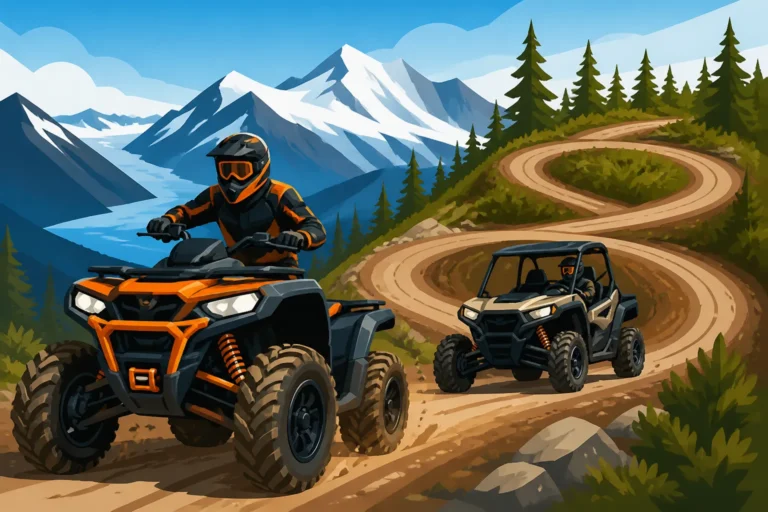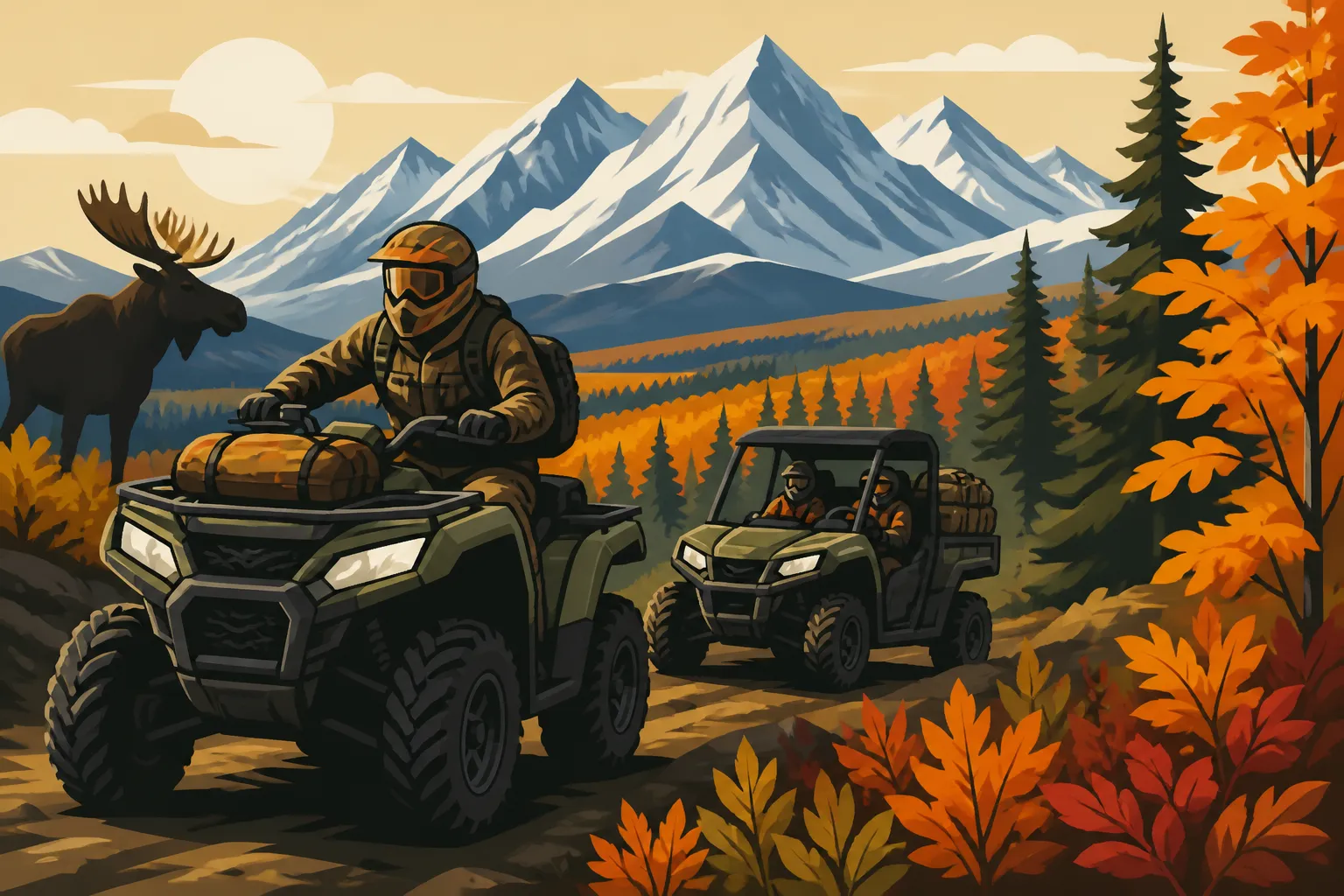
Alaska Riding in Fall Hunting Season
Fall riding in Alaska can put you on the same narrow trail as hunters, game-hauling machines, and people traveling in low light. Add wet leaves, early snow, and changing access conditions, and a familiar route can feel very different. This guide explains how to plan an ATV or UTV ride around hunting activity, respect land access, and prepare for Alaska’s unpredictable autumn conditions.
Plan around hunting activity and shared trails
Expect more traffic and communicate clearly
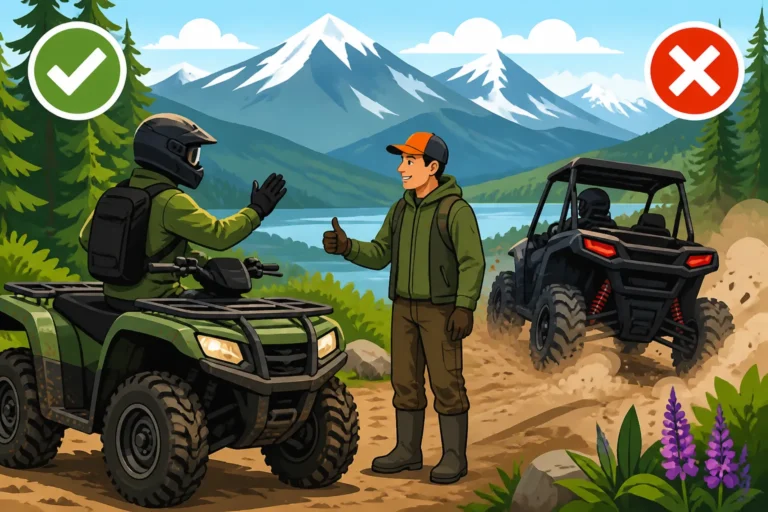
During fall hunting season, trails and access roads may be busier than they are in midsummer. You may meet hunters on foot, trucks towing trailers, ATVs carrying gear, or machines returning with game. Some people may be moving slowly, stopping unexpectedly, or pulling to the side to check an area. Give other trail users room, reduce your speed before blind corners, and avoid assuming that a quiet trail will stay quiet.
Be especially thoughtful near trailheads and places where vehicles can pull off. A parked truck or trailer may mean hunters are nearby, even if you cannot see anyone on the trail. If you meet a group, pause somewhere safe and let them decide how they want to pass. Avoid revving or spinning your tires near people, camps, livestock, or wildlife. A little patience can prevent a tense encounter and keep the trail usable for everyone.
Before setting out, tell someone your route, expected return time, and backup plan. Alaska’s fall weather can make a short ride take much longer than expected, particularly when rain softens the trail or fresh snow hides ruts. If you are riding with a group, agree on hand signals, stopping points, and what to do if anyone gets separated. For practical shared-trail habits, see [Alaska Trail Etiquette Locals Expect].
Keep recreation separate from hunting activity
A trail open to riding does not automatically mean every nearby parcel is open to hunting or cross-country travel. A route may cross several kinds of land, each with different access rules. Private property, Native corporation land, state land, federal land, and designated recreation areas can sit close together, and boundaries may not be obvious from the trail.
Check who manages the land before you ride and confirm whether the route is open to motorized use. A map app can help you understand the general layout, but it should not be treated as permission to cross a boundary or as a final ruling on a closure. Tools such as onX Offroad may help riders inspect mapped routes and land-status information, but verify uncertain access with the relevant land manager. Start with [Alaska Land Ownership and Who to Ask] and [Alaska Land Status Maps].
If you encounter a hunter, camp, or field-dressing site, do not drive closer just to get a better look or find an easier way around. Stop well short, make your presence known without startling anyone, and ask whether there is a safe way to pass. If the route is blocked or the situation feels unsafe, turn around. A ride is optional; a respectful distance is not.
Check access and hunting rules before you ride
Confirm both riding access and hunting access
One common source of confusion is assuming that riding permission and hunting permission are the same thing. They are separate questions. A rider may be allowed on a designated route while hunting is restricted in the surrounding area. Conversely, a hunter may have access to a particular area without having permission to travel across every parcel along the way.
Check the current route conditions, land rules, and any posted restrictions before leaving home. Contact the agency or landowner responsible for the area if a boundary, seasonal closure, or motorized-use rule is unclear. This matters in places where an otherwise familiar route crosses from one land manager’s jurisdiction to another. For additional context, review [Alaska Hunting Access by Machine] and [Alaska Hunting Regulations and Machines].
Do not rely on an old track, a friend’s memory, or a route shown on a map as proof that access is allowed today. Trails can be affected by weather, maintenance, wildlife concerns, fire restrictions, or land-use decisions. If you use onX Offroad to plan, compare its route information with official maps or direct guidance from the land manager, especially where the route approaches private or restricted land.
Understand the limits on machine use for hunting
Rules about using a machine to reach an area, hunt, or retrieve game can depend on the location and the activity. Do not assume that a quad or side-by-side can be used to pursue wildlife simply because motorized travel is allowed nearby. Hunting regulations may distinguish between traveling on an established route, transporting equipment, pursuing game, and recovering harvested animals.
Before a hunting trip, check the applicable regulations for the species, area, season, and method of access. If you are only riding recreationally during hunting season, take care not to interfere with hunters or wildlife. Keep to routes that are open to your machine, and avoid cutting across tundra or wet ground to bypass a slow or crowded section. [Alaska Game Transport by Machine] explains why transporting game and using a machine during a hunt require their own careful checks.
A quick planning table can help keep the separate questions straight:
| Before the ride | What to confirm | Why it matters |
|---|---|---|
| Route planning | The trail is open to your type of machine | A mapped or familiar route may have restrictions |
| Land access | Who manages each section and whether permission is needed | Boundaries and access rules can change along one ride |
| Hunting activity | Applicable area and season rules | Machine use and hunting access are not interchangeable |
| Group preparation | Route, return time, and communication plan | Fall weather and low light can delay a ride |
| Gear check | Lights, tires, recovery gear, and warm layers | Mud, frost, and early snow can change trail conditions |
Ride for fall conditions, not summer assumptions
Prepare for mud, frost, snow, and shorter daylight
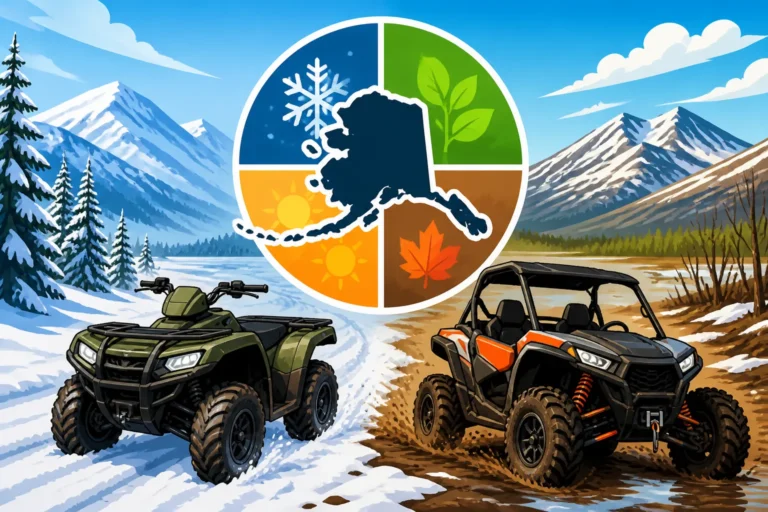
Alaska’s fall riding conditions can shift quickly. A trail that was firm during a dry afternoon may become slick after rain, while shaded sections can hold frost or ice when open ground is still soft. First snow can conceal holes, rocks, drainage cuts, and ruts that you know well from summer. Reduce speed, leave more room between machines, and avoid abrupt steering or braking on slippery surfaces.
Think through your route in terms of exposure and recovery options. A short loop near a road may be a sensible choice when the forecast is unsettled; a remote route with limited communication requires more conservative planning. Bring clothing for a stop, not only for the ride itself. A warm layer, waterproof outerwear, gloves, and dry socks can make an unexpected wait far more manageable.
Daylight also becomes a practical constraint. Plan to finish with a margin rather than aiming to reach the trailhead at dusk. If you expect to ride near or after dark, confirm that your machine’s lighting and required equipment are in working order, and review [Alaska Rules for Riding After Dark]. A headlamp and spare batteries are useful for dealing with a breakdown even if you intend to be back well before nightfall.
Protect soft ground and avoid unnecessary detours
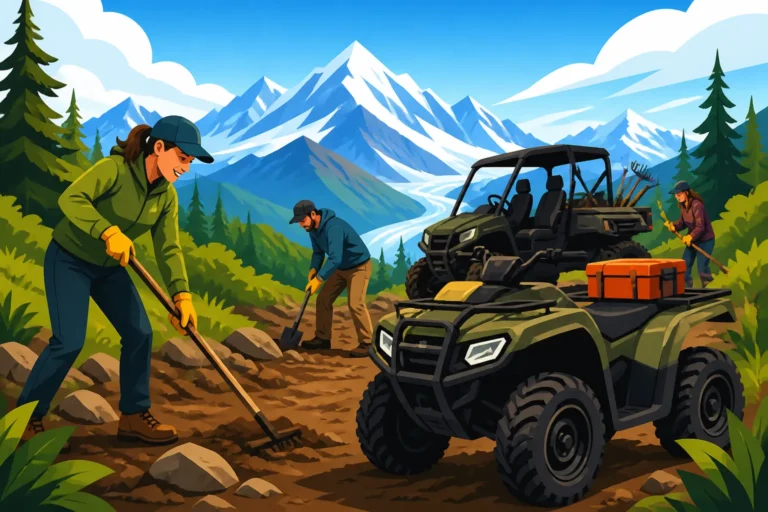
Fall ground can be deceptively vulnerable. Wet tundra, saturated soil, and trail edges may rut under repeated passes, especially when riders leave an established route to go around a puddle or another group. A detour that seems minor can widen into a new track that takes a long time to recover. Stay on authorized routes, use established pullouts where available, and turn around rather than forcing a crossing that could damage the ground or put your machine at risk.
Pay attention to water crossings as well. Rain and changing temperatures can alter stream conditions, while wet leaves and slick rocks make entry and exit points less predictable. Do not enter water if you cannot assess the depth, current, and footing. A group should agree on a safe turnaround point before anyone commits to a difficult crossing. For more on the lasting effects of off-route travel, see [Alaska Tundra Damage and Riding].
If hunters have created a temporary pullout or are staging equipment near a route, give them space rather than making a new bypass. If you need to stop, choose a place where you will not block the trail or force others onto soft ground. Responsible riding is not just about avoiding a ticket; it helps keep routes passable and reduces conflict during a busy season.
Make a practical fall ride plan
Prepare your machine and your group
A fall inspection should focus on the things that become harder to manage when the weather turns. Check tire condition and pressure, brakes, throttle return, lights, battery, and fuel before departure. Carry a basic tool kit, tire repair supplies, a tow strap, and recovery equipment suited to your machine and route. If your ride may pass through dry vegetation, check applicable fire precautions and make sure your spark arrester is in good condition; see [Alaska Spark Arrester Checks].
Pack for a longer day than planned. Bring water, food, a first-aid kit, navigation tools, and a way to communicate if cell service is unavailable. Store important items in waterproof bags. If you use onX Offroad or another mapping tool, consider how you will navigate if your phone battery dies or you lose reception. Save the route for offline use when available, carry a backup power source, and make sure someone outside the group knows where you intend to go.
For a group ride, match the route to the least experienced rider and the least capable machine. Set a pace that leaves room for safe stopping, and decide in advance how the group will handle a mechanical problem or a change in weather. If one machine must turn back, the group should have a clear plan for whether everyone returns together or how riders stay in contact.
Use a simple go, change, or turn-back check
Before leaving, ask three practical questions: Is the route open? Are the conditions suitable for our machines and group? Can we return safely if weather or daylight changes? If any answer is uncertain, choose a shorter route, wait for better conditions, or contact the land manager for clarification.
During the ride, reassess rather than treating the original plan as fixed. Fresh snow may hide the trail, rain may make a slope too slick, or hunting activity may make a narrow route uncomfortable to pass. Agree on turn-back signals before you start. Turning around is a good decision when visibility drops, a crossing looks unsafe, someone is getting cold, or the group is running behind schedule.
A calm, flexible plan makes fall riding more enjoyable for everyone on the trail. Hunters need room to work safely, riders need to respect land boundaries, and changing Alaska weather deserves a healthy margin of caution. Confirm access, stay on permitted routes, make your presence predictable, and be willing to choose another day when conditions do not line up.
Disclaimer
This article is for general informational purposes only and does not constitute professional advice. Laws, prices and regulations vary by location and change over time. Consult a qualified professional for guidance on your specific situation.