Alaska Riding in Winter
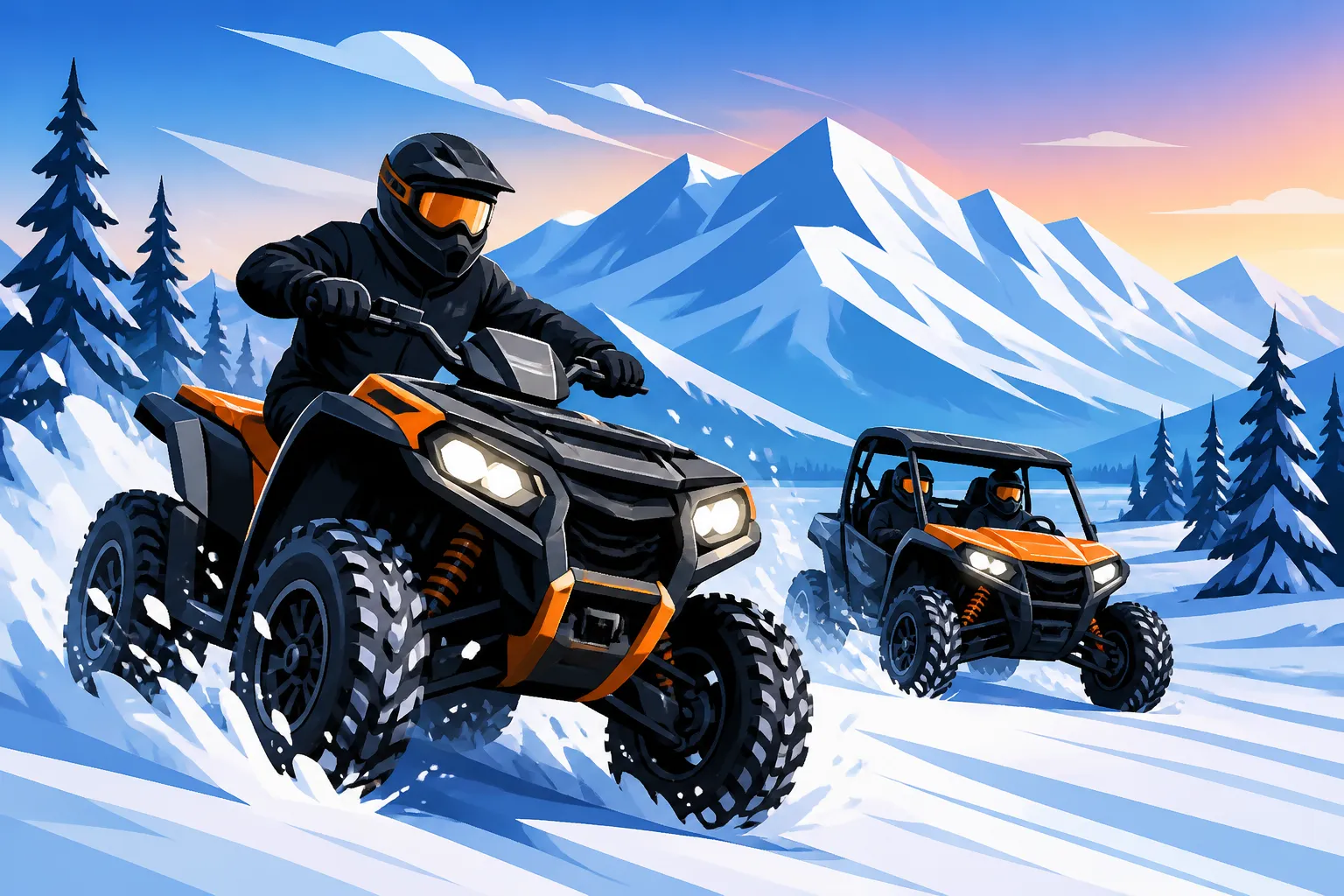
Winter riding in Alaska can turn a familiar trail into a cold-weather route with different hazards, access rules, and turnaround points. A trail that looks firm may hide overflow, thin ice, deep snow, or a closure, and a machine that started easily at home may struggle miles from help. This guide covers how to plan, ride, and prepare for an Alaska ATV or UTV trip in winter.
Plan the route around winter conditions
Check access, land ownership, and closures
Winter access is not automatic just because a route appears on a map or has tire tracks. A trail may cross state land, private property, a state park, federal land, or Alaska Native corporation land, and each owner or manager can set different rules. Seasonal closures, wildlife protections, weather, or trail damage can also change where riding is allowed.
Before leaving, identify who manages the land along your intended route and check for current restrictions. Alaska’s statewide general permit has limits and does not cover every type of land, so do not treat it as permission to ride anywhere. The distinction between state land and other property matters even when the route seems remote. Start with [Alaska Land Ownership and Who to Ask] and [Alaska's Statewide General Permit for ATV Use] if you need to sort out where a permit applies.
Conditions can be especially changeable around the Mat-Su Valley, the Knik River area, and routes near Fairbanks. A trail may be packed one day and drifted over after a storm. A river crossing that was passable earlier in the season can develop overflow or weak spots as temperatures shift. Ask a land manager, local riding group, or knowledgeable operator about access and conditions close to your departure date.
Build a route you can shorten
In winter, a ride plan should include a realistic turnaround point—not just a destination. Estimate how far you can travel at a conservative pace, allowing for cold starts, snow, slow going, stuck machines, and daylight. If the route becomes unsafe, turning around early is good judgment, not a failed ride.
Use a map to identify alternatives such as a return route, a nearby trailhead, or a sheltered place to stop. A mapping app such as onX Offroad can help you review routes and land boundaries while planning. Download or save the information you expect to need before heading out, and carry a separate backup such as a paper map or a second device. Do not assume your phone will have service once you leave a road system or populated area.
| Winter planning question | Why it matters | What to do |
|---|---|---|
| Who manages the land? | Access rules vary by property and agency | Confirm ownership and permission along the entire route |
| Is the trail open? | A familiar summer route may be closed or unsafe in winter | Check for seasonal notices and recent local reports |
| Where can you turn around? | Snow, ice, and weather can make a planned destination unreachable | Choose a conservative turnaround point before departure |
| How will you navigate without service? | Remote routes may have dead zones | Save maps offline and carry a backup |
| What is the crossing condition? | Snow can conceal overflow, open water, or weak ice | Avoid uncertain crossings and never rely on tracks alone |
Use [Alaska Land Status Maps] to understand how land status affects route planning, and remember that a trailhead pass is not the same thing as permission to ride across land. For a broader look at access questions, see [A Trailhead Pass Is Not a Land Permit].
Prepare the machine and carry cold-weather essentials
Make cold starts and equipment checks part of the plan
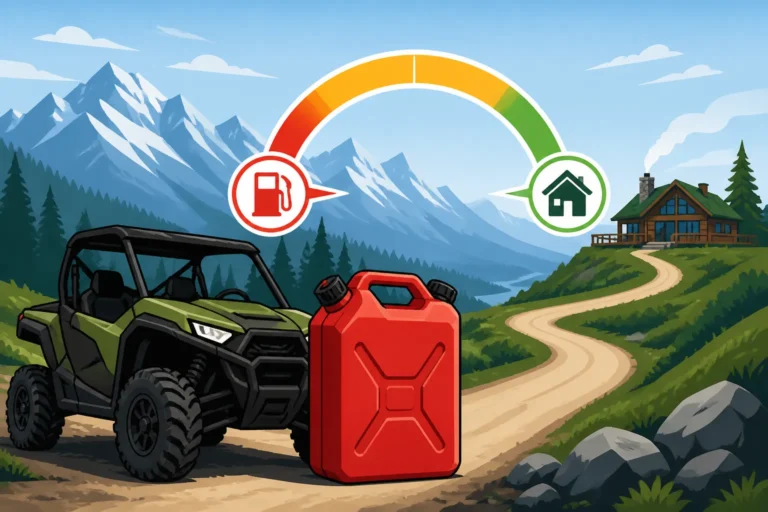
Cold temperatures can expose weak batteries, old fuel, worn belts, soft tires, and other problems that are easy to overlook during warmer months. Before a winter ride, inspect the battery and charging system, tires, brakes, throttle, lights, and any belts or cables your machine uses. Check that your fuel is suitable for the conditions and that the tank is full before you leave the last convenient fuel stop.
Give the engine time to warm up according to the manufacturer’s guidance. Avoid using improvised heating methods that could damage a machine or start a fire. If your ATV or UTV has spent the night outside, expect that it may take longer to start and behave differently until it warms. Test the machine close to home or the trailhead, not after you have committed to a long route.
Cold can also affect the rider’s ability to operate controls. Thick gloves may make it harder to work the throttle, brake, winch, or navigation device. Try your gloves and layers while seated on the machine before heading out. Make sure you can reach and use the controls without removing the protection that keeps your hands warm.
Pack for a delay, not only for the ride
A winter ride can take longer than expected, even on a route you know. Pack clothing that lets you add or remove layers, including warm gloves, dry socks, face protection, and a wind-resistant outer layer. Bring water and food in a way that will not freeze solid, along with a first-aid kit and basic repair tools suited to your machine.
Carry a communication device appropriate for the area. A phone is useful where service exists, but remote coverage can be unreliable. A satellite messenger or other emergency communication option may be a sensible addition for a trip beyond dependable cell coverage. Keep it accessible rather than buried under cargo.
Before leaving, tell someone your route, who is riding with you, and when you expect to check in. Agree on what they should do if you miss that check-in. A short trip near a populated trailhead still deserves a plan if cold, darkness, or a mechanical issue could delay your return.
For more on seasonal preparation, see [Alaska Riding Seasons and Breakup] and [Alaska Winter Storage in an Unheated Shed]. The same cold that makes a ride challenging can also affect the machine once it is parked, so think about where it will be stored when you return.
Ride cautiously on snow, ice, and changing ground
Treat frozen rivers and overflow as serious hazards
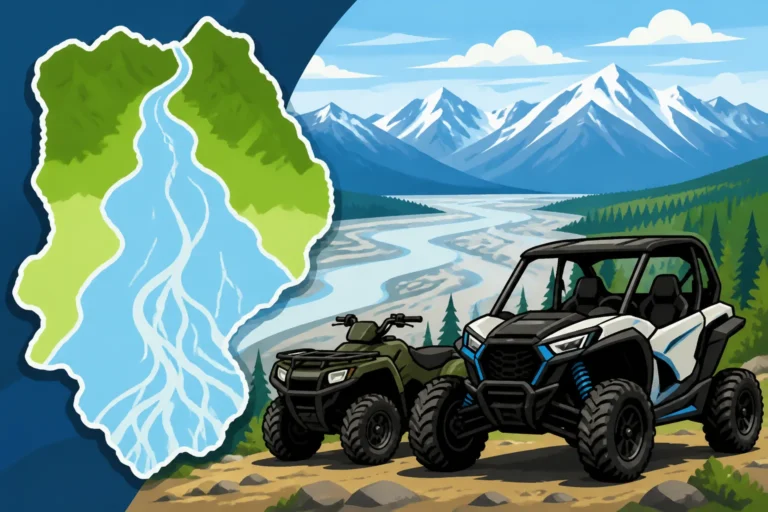
Snow-covered ice can hide cracks, open water, slush, and overflow. A surface that looks smooth from the trail may not be uniformly frozen, and conditions can vary across a river or lake. Do not assume that another rider’s tracks prove a crossing is safe; the route may have changed since they passed, or they may have taken a risk you cannot assess.
If you are not certain about the crossing, turn back or find a safer route. Avoid crossing near moving water, bends, channels, or places where current can weaken ice. If you do cross an approved route, travel with a partner, keep a safe distance between machines, and avoid stopping in a place where a recovery would be difficult. No piece of gear makes an unsafe crossing safe.
Winter travel hazards are not limited to rivers. Wind can load snow over a trail, hide ruts, and reduce visibility. A familiar trail can also become difficult to follow after drifting or snowfall. On a route such as the Denali Highway corridor, conditions and access may differ widely from those on a local trail near town; check with the relevant manager before planning a ride.
Read [Who to Ask Before Riding a Frozen River] and [Alaska Rules for Riding a Frozen River] before including a frozen crossing in your plans. They can help you think through the distinction between legal access and physical safety, which are separate questions.
Adjust speed, spacing, and expectations
Snow changes traction and stopping distance. Ride at a pace that lets you respond to what is visible, not at the pace you would choose on dry ground. Leave extra room between machines so that a sudden stop, slide, or hidden obstacle does not become a pileup. Keep a safe distance from snowbanks and trail edges, where soft shoulders or concealed drop-offs may be present.
A UTV can offer a more sheltered riding position, but its size and weight can make recovery difficult if it becomes stuck. An ATV may be easier to maneuver in some conditions, but it still needs enough traction and ground clearance for the route. Neither machine should be pushed into deep snow or onto uncertain ice simply because it has four-wheel drive or a winch.
Choose a pace that allows the group to stay together. If one rider is cold, tired, or struggling to see, pause somewhere safe and reassess. It is easy to feel pressure to keep up, especially when others in the group know the area. Agree beforehand that anyone can call for a stop or turnaround without having to justify it.
Make a safer winter ride plan
Match the outing to the riders and the machine
A winter route that suits experienced riders may be a poor first outing for someone who has never operated an ATV or UTV in snow. Start with a short, familiar route near a trailhead or community where you can return quickly if conditions are worse than expected. Keep the first ride focused on handling, visibility, and how the machine responds—not on covering a particular distance.
For a mixed-experience group, choose a route based on the least experienced rider and the least capable machine. Confirm that everyone understands the route, the planned turnaround point, and what to do if the group becomes separated. A quick conversation at the trailhead can prevent confusion later, when gloves are on, temperatures are dropping, and it is harder to hear one another.
Check that riders have required documents and equipment for the places they plan to travel. Registration, permits, insurance, and road-use rules may apply differently depending on the machine and route. For a starting point, review [Alaska Registration Before Your First Ride] and [Alaska APV Road Rules Explained]. A winter trail ride does not automatically grant permission to use a road or cross land where riding is restricted.
Use navigation as one layer of preparation
Navigation tools can help you understand where a route goes, but a line on a screen is not proof that a trail is open, maintained, or safe today. Use a tool such as onX Offroad to review route options and land boundaries before the trip, then confirm access with the relevant manager. Save the map for offline use and make sure every rider knows how to orient themselves if the lead machine stops.
If you use onX Offroad, plan with it before you leave coverage and test the saved map while you are still at home or near the trailhead. Bring a backup navigation option, and do not let a phone battery become the single point of failure. Cold weather can drain batteries more quickly, so keep devices protected and carry a power source suitable for the trip.
Finally, set a return time that leaves room for delays and changing light. If snow, visibility, ice, or fatigue makes the route feel wrong, turn back. Alaska winter riding can be rewarding precisely because the landscape is so different, but a good day is one where the group returns with enough warmth, fuel, and energy to ride another time.
Disclaimer
This article is for general informational purposes only and does not constitute professional advice. Laws, prices and regulations vary by location and change over time. Consult a qualified professional for guidance on your specific situation.