Alaska Riding Under the Midnight Sun
A ride that starts after dinner can still be bright at midnight in parts of Alaska, but daylight does not make every trail open, safe, or easy to follow. This guide explains when the midnight sun affects ATV and UTV trips, how to plan a route and return time, and what to prepare for when bright skies disguise fatigue, changing weather, or difficult terrain.
What the midnight sun means for Alaska riding
Expect long daylight, not the same conditions everywhere
Alaska’s summer daylight changes substantially with location and date. Farther north, the sun can remain above the horizon around the clock for a period of the year. In Southcentral Alaska, including Anchorage and the Mat-Su Valley, summer brings very long evenings and brief or absent darkness around the solstice, but not the same pattern as the far north. Even when the sun dips below the horizon, lingering twilight may keep the sky bright.
That distinction matters when you’re choosing a departure time. A route near Palmer or Willow may be easy to see in late-evening light, while a ride farther north can have a different relationship between sunset, twilight, and darkness. Mountains, trees, cloud cover, and local terrain also affect how much light reaches a trail. Check the conditions for the specific place and date, rather than planning around a general idea of “Alaska daylight.”
Long days can stretch your riding window, but they don’t guarantee that a trail is open or that the ground is ready for traffic. Seasonal conditions such as breakup, standing water, and soft tundra can limit where riding is appropriate. For a broader look at how conditions shift throughout the year, see [Alaska Riding Season Month by Month] and [Alaska Riding in Summer].
Long evenings can make it easy to lose track of time
It’s surprisingly easy to ride longer than intended when the sky still looks like late afternoon. You may stop for photos, take an unplanned side trail, or travel more slowly than expected over rough ground. When there’s no familiar darkening sky to signal that it’s time to head back, the clock can become your most reliable cue.
Before leaving, pick a firm turnaround time, not just a destination. For example, a group heading out after work might agree to turn around at a set time even if the glacier viewpoint or trail junction is still ahead. A turnaround rule helps everyone make the decision before fatigue, excitement, or “just a little farther” thinking takes over.
Build extra time into your plan for creek crossings, soft ground, a mechanical issue, or a slower rider. Your estimated travel time may not account for stops or changing trail conditions. If the ride is taking longer than expected, turn back while the group still has energy and daylight is not the only thing keeping you oriented.
Bright skies do not remove nighttime riding rules
A trail that looks bright at midnight can still be subject to rules for riding after dark. Requirements can depend on the location, the type of route, and the equipment on your machine. Do not assume that daylight-like conditions automatically make a ride legally equivalent to daytime travel. Review the rules that apply where you plan to ride, including local restrictions and equipment requirements. [Alaska Rules for Riding After Dark] is a useful place to start.
Also separate land access from road access. Permission to ride on a trail or public land does not automatically mean an ATV or UTV can travel on a nearby road. Municipal rules can vary, and some communities restrict APV road use. Check the route as a whole, including any road segments, rather than treating the trailhead as the only place where rules matter.
Plan the ride around route, access, and a real return time
Confirm who manages the land and where riding is allowed
A route line on a map is not proof that you may ride the ground it crosses. Land can be managed by different agencies or owned by private parties, and access rules can change at boundaries. Before heading out, identify the land manager and confirm the route is open to your machine and intended use.
Digital mapping tools, including onX Offroad, can help you study routes and spot potential access questions while planning. Use a map as a planning aid, not as a substitute for checking land status and current closures with the relevant land manager. If a route approaches private land, Native corporation land, a park, or another agency’s boundary, make sure you have the needed permission before continuing. [Alaska Land Status Maps] explains why checking ownership and management matters.
The same principle applies to trailheads. A trailhead pass, parking permission, or open access road does not necessarily authorize every type of riding beyond the staging area. Verify where the permitted route begins and ends. If anything about a boundary or access point is unclear, choose a route you can confirm instead of relying on a guess.
Choose a route that matches the group and conditions
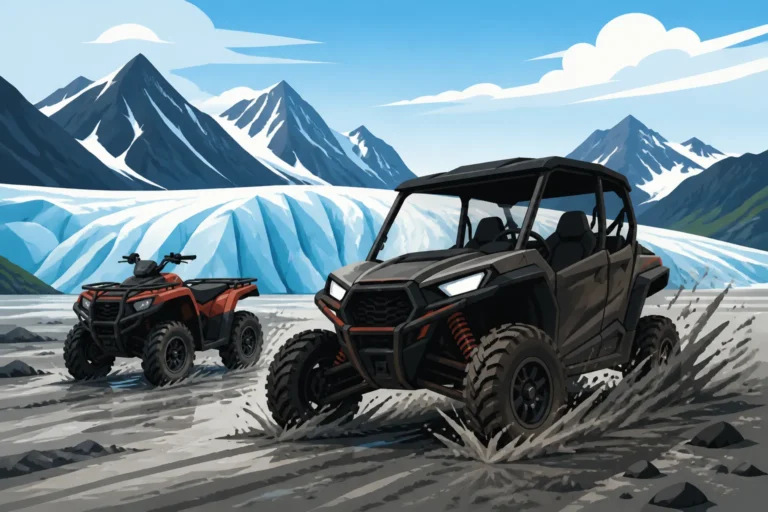
A long, bright evening can make an ambitious route seem manageable. The actual ride, however, may involve mud, glacial silt, river crossings, steep sections, or slow technical terrain. Consider the least experienced rider and the least capable machine in the group when choosing distance and difficulty. A route that’s comfortable for one confident rider may be stressful when a mixed group has to navigate it late in the day.
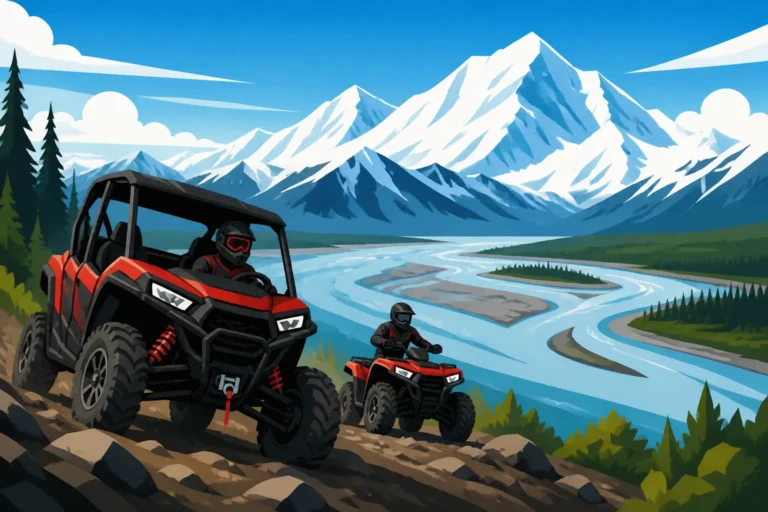
Look for recent information about trail closures and weather impacts before departure. Heavy rain, high water, or a recent storm can change conditions and make a route unsafe or impassable. On a braided river or glacial route, water levels and channels can shift; bright visibility does not make a questionable crossing safe. If a crossing looks deeper or faster than expected, turn around rather than letting the long daylight persuade you to push on.
Apps such as onX Offroad can be useful for reviewing route options and keeping track of a planned line, but download or prepare the information you’ll need before leaving service. Do not assume a phone will have reception or battery for the whole ride. For general trail-planning habits, see [Alaska Trail Etiquette Locals Expect] and [Alaska Trail Closures After a Storm].
Use a written ride plan, even for a familiar area
Tell someone who is not riding with you where you’re going, which trailhead you’re using, who is in the group, and when you expect to be back. Include a time when they should check in or take action if they have not heard from you. “We’ll be out until it gets dark” is not a useful return estimate during the midnight-sun season.
Write down the turnaround time and a backup route. If the planned trail is blocked, conditions worsen, or someone is uncomfortable, the group can make a clear decision without debating the entire plan from scratch. Keep the plan realistic: account for driving to the trailhead, unloading, breaks, and the return ride.
| Planning detail | What to decide before departure |
|---|---|
| Route | The trail or area you intend to ride, plus a backup |
| Access | Land manager, permission, closures, and any local restrictions |
| Turnaround | A specific time or condition that means the group heads back |
| Check-in | Who expects to hear from you and by when |
| Navigation | Map or route information available without cell service |
| Group needs | Fuel range, rider experience, machine capability, and emergency gear |
When using onX Offroad or another mapping app, save the route information in a way you can access offline if the area has no service. Share your plan with the person at home, but don’t rely on a shared digital map as your only emergency arrangement. [No Cell Coverage Off the Road System] and [Choosing a Satellite Messenger for a Backcountry Ride] cover two important parts of staying reachable when a ride goes beyond reliable phone coverage.
Stay comfortable and visible through a very long day
Protect your eyes and manage changing light
Low-angle sunlight can cause glare even when the sky is bright. A route that feels easy to see at one point may become uncomfortable when you turn toward the sun or travel across open ground. Bring eye protection suitable for the conditions, and make sure it fits securely with your helmet. If you use tinted lenses, consider whether you’ll need a clearer option if clouds move in or the route becomes shaded.
Do not count on bright skies to reveal every hazard. Ruts, wet roots, holes, and uneven ground can be hard to judge from a moving machine, particularly when shadows fall across the trail. Slow down in unfamiliar terrain and leave enough distance between machines for dust, mud, or sudden braking. A UTV’s enclosed cab may reduce wind and glare, but it can also make it easier to overlook heat, fatigue, or changes in the outside conditions.
Before riding, check that your headlight and taillight work even if you expect to be home in daylight. Weather, delays, and a mechanical problem can extend the trip. Working lights provide a backup if the sky darkens, visibility falls, or another trail user needs to see your machine.
Dress for a long outing, not just the temperature at departure
Alaska weather can change while you’re out, and a warm start does not guarantee a warm return. Bring layers that can handle wind and rain, along with gloves and clothing that stay comfortable if conditions turn cool. Pack a dry layer in a waterproof bag, especially if your route involves wet ground or water crossings.
Bugs can also make a long stop unpleasant in some areas and seasons. Repellent, suitable clothing, and a head net may help, depending on where you ride and how bothersome insects are. Keep drinking water and food accessible rather than buried under cargo. A hungry, dehydrated, or chilled rider is more likely to make rushed decisions on the way back.
The midnight sun can disrupt your usual sense of when to eat or rest. Schedule breaks deliberately instead of waiting until everyone is tired. If a rider becomes unusually quiet, irritable, unsteady, or slow to respond, treat that as a reason to pause and reassess. Long daylight is not a reason to ignore the body’s normal signals.
Plan around wildlife and other trail users
Wildlife can be active during the same long summer hours that people are riding. Keep a safe distance, avoid chasing or crowding animals, and slow down where visibility is limited. If you encounter a moose or bear, give it room and follow established wildlife-safety practices rather than trying to get closer for a better look.
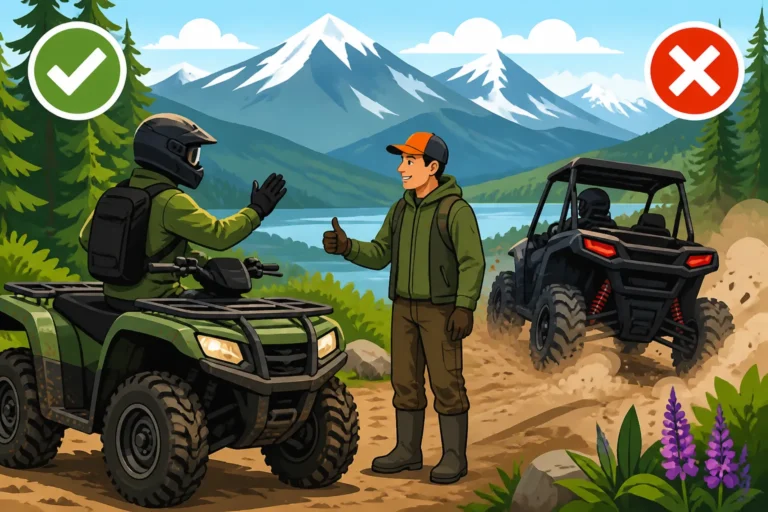
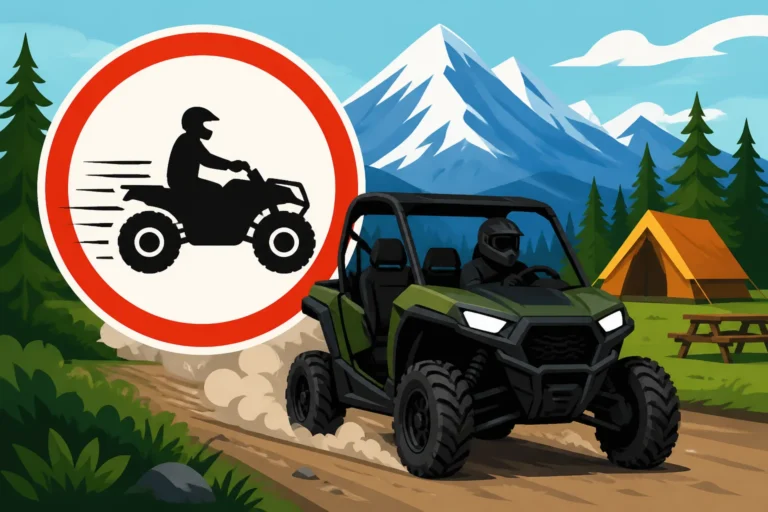
Long evenings can also mean you meet hikers, campers, other riders, or vehicles on access roads at unexpected times. Reduce speed near trailheads, camps, and busy junctions. Be prepared to stop, give others space, and avoid creating dust or noise that unnecessarily affects nearby visitors and wildlife. [Alaska Wildlife on the Trail] offers additional context for sharing riding areas responsibly.
A friendly group habit is to pause at major junctions and make sure everyone is still together before continuing. The lead rider should not disappear around a bend, assuming the rest of the group knows which turn to take. Agree in advance on simple signals and a regrouping point if riders become separated.
Prepare the machine and know when to call it
Check the machine before a late departure
A pre-ride inspection matters whether you’re riding for an hour or taking advantage of a very long evening. Check tires, brakes, throttle operation, lights, fuel, and any equipment needed for the route. Secure cargo so it cannot shift over rough ground, and confirm that a winch or recovery gear is ready if the trail conditions call for it.
Carry the tools and supplies that make sense for your machine and route. That may include a tire repair kit, basic tools, recovery equipment, extra water, first aid supplies, and a way to contact help. The right kit depends on the distance from assistance, weather, terrain, group size, and whether the route includes remote crossings.
Do not let the brightness of the sky create a false sense of security. A breakdown can turn a relaxed outing into a long wait, particularly where there is no cell service. Keep the key items reachable, and make sure more than one person in the group knows where they are stored.
Watch for fatigue and change the plan early
People often recognize fatigue more readily after dark, when they expect to feel tired. In continuous daylight, the signs can be less obvious: slower reactions, missed turns, repeated mistakes, or a rider who stops communicating. Treat those as meaningful warnings. Take a proper break, shorten the route, or head back rather than pressing on because the sky still looks bright.
A practical group rule is that any rider can call for a stop or turnaround without having to justify it. This helps newer riders speak up before they feel overwhelmed and makes it easier to respond to a mechanical issue or changing weather. If the group is split on continuing, choose the more cautious option.
When weather or terrain changes, reassess the route as a group. On a ride near a river, a rising or shifting channel can make a crossing that seemed manageable earlier unsafe later. A route that becomes muddy or poorly visible may also take far longer than planned. Turn back when conditions exceed the group’s experience or equipment.
Treat the return as part of the ride, not an afterthought
Before setting out, preserve enough fuel, daylight, and energy for the trip back. Avoid using your entire fuel margin to reach a viewpoint or distant turn-around point. If the route is unfamiliar, expect the return to take longer than the outbound leg, especially if you need to retrace rough sections or help a rider through a difficult spot.
At the trailhead, take a few minutes to confirm that everyone and every machine is accounted for. Let your contact know you’re back so they are not left wondering whether you are delayed. If your plans change, send an update when you have service or use your planned communication device.
Riding under the midnight sun can be a memorable way to experience Alaska, especially when the group has time to explore without rushing toward darkness. The safest version of that freedom comes from setting limits in advance: confirm access, choose a suitable route, set a turnaround time, and be willing to head back while the sky is still bright.
Disclaimer
This article is for general informational purposes only and does not constitute professional advice. Laws, prices and regulations vary by location and change over time. Consult a qualified professional for guidance on your specific situation.