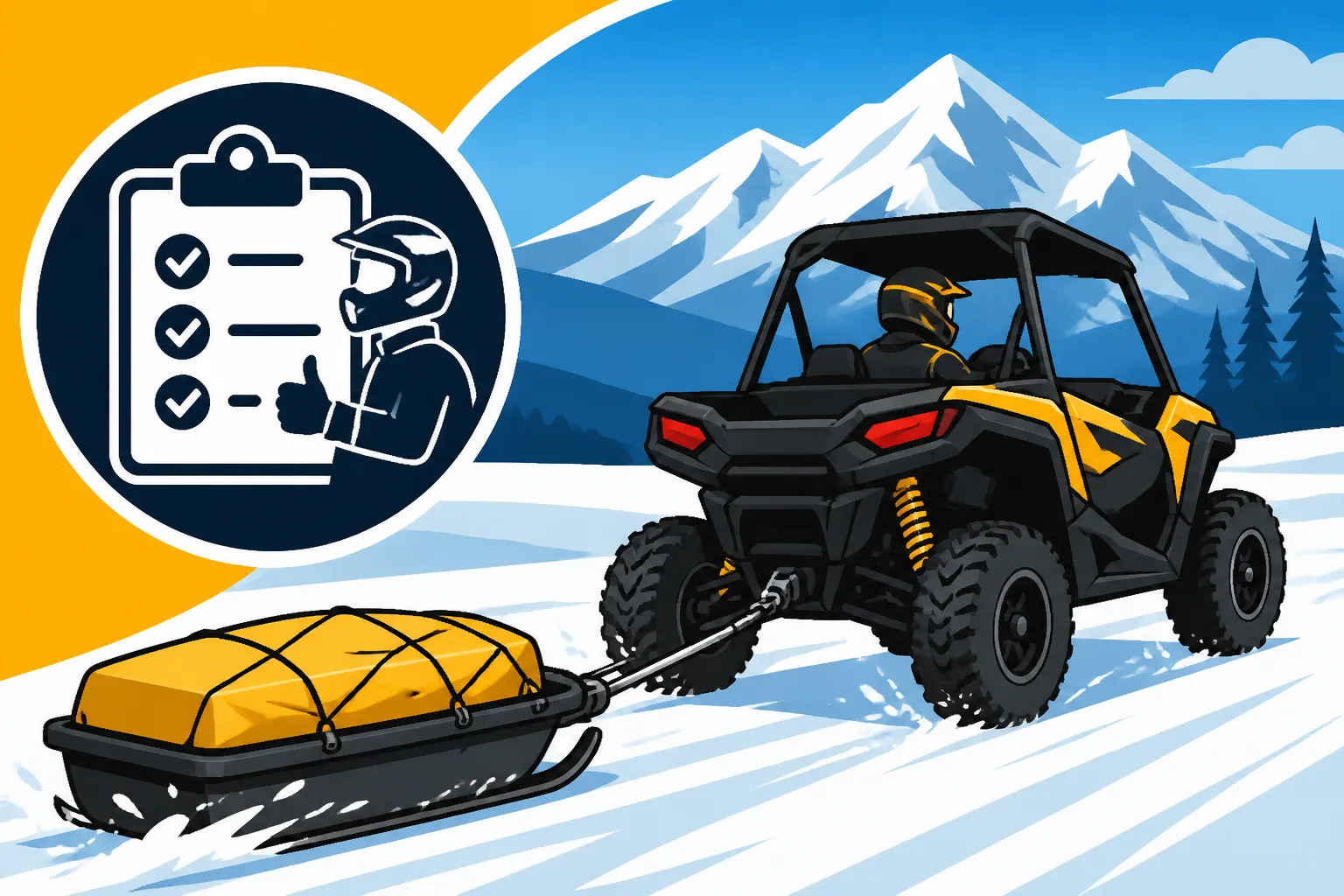
Alaska Rules for Towing a Sled
Towing a sled behind your ATV or UTV in Alaska is a classic part of our outdoor lifestyle, whether you're hauling firewood, bringing supplies to a cabin, or even taking the kids out for some winter fun. But if you’ve ever found yourself wondering if you’re doing it right, or if you’re even allowed to do it on certain trails, you're not alone. It can feel like a maze of unwritten rules and vague guidelines, leaving many folks hesitant or, worse, unknowingly putting themselves or others at risk. This guide is here to untangle those complexities, offering clear, actionable advice on the rules and best practices for safely and legally towing a sled with your all-purpose vehicle here in the Great Land.
The Basics of Towing a Sled in Alaska
When we talk about towing a sled behind an ATV or UTV in Alaska, it conjures up images of wide-open spaces, snow-covered trails, and the freedom to haul what you need, where you need it. But before you hitch up that cargo sled full of supplies for your remote cabin, or even a smaller passenger sled for a family outing, it’s crucial to understand the foundational principles that govern this activity. It’s not just about having a powerful machine; it’s about knowing its limits, the type of sled you’re using, and the fundamental safety checks that keep everyone safe on the trail.
What Constitutes a "Sled" for an APV?
In Alaska, when we refer to a "sled" in the context of an ATV or UTV, we're typically talking about anything from a simple plastic utility sled designed for small loads to a more robust, specialized cargo trailer built for heavy hauling. This can include freight sleds used for hunting or trapping, enclosed cargo sleds for protecting gear from the elements, or even passenger sleds specifically designed to carry people, often with seating and safety restraints. The variety is immense, reflecting the diverse needs of Alaskan riders who use their machines for everything from subsistence to recreation.
The key distinction often lies in its primary purpose: is it for hauling inanimate objects, or is it intended for human passengers? This difference heavily influences the specific safety guidelines and, in some cases, the legal requirements. A simple plastic toboggan might be fine for a few bags of groceries over a short, flat distance, but it’s entirely unsuitable for carrying children over rough, public trails. Understanding the design and intended use of your sled is the first step toward responsible towing.
Moreover, the size and construction of the sled directly impact your ATV or UTV’s towing capacity and handling characteristics. A large, heavy-duty utility sled, especially when fully loaded, will exert significant pull and downward force on your machine’s hitch. This demands more from your engine, brakes, and suspension. It’s a completely different experience than pulling an empty, lightweight sled. Always consider what your sled is designed to do and if your APV can handle that task safely.
General Safety Considerations Before You Hook Up
Before you even think about attaching a sled to your ATV or UTV, a thorough safety check is non-negotiable. This isn't just a suggestion; it's a critical step that can prevent accidents and ensure a smooth, enjoyable ride. Start by examining your machine itself: are the tires properly inflated for the load you intend to pull? Is your braking system in top condition, ready to handle the added weight and inertia of a loaded sled? Remember, stopping with a heavy load is much harder than stopping without one, especially on slippery Alaskan terrain.
Next, inspect your hitch and towing connection. Is it securely mounted to your APV? Is the hitch ball or pin in good condition, free of rust or wear that could compromise its integrity? And crucially, what about the connection point on the sled itself? Ensure that the coupler or tow bar is not bent, cracked, or showing signs of fatigue. Many Alaskan riders invest in heavy-duty aftermarket hitches from companies like SuperATV to ensure their setup can withstand the rigors of our backcountry trails. This proactive approach to maintenance can save you a lot of grief on the trail.
Finally, consider the weight. Every ATV and UTV has a manufacturer-specified towing capacity, which you can usually find in your owner's manual. This isn't a suggestion; it's a hard limit for a reason. Exceeding this capacity strains your engine, transmission, and brakes, leading to premature wear, loss of control, and potentially catastrophic failure. Always factor in the weight of the sled plus its cargo or passengers. When in doubt, err on the side of caution and carry less. It's better to make two trips than to break down miles from anywhere with an overloaded machine.
Legal Considerations for Sled Towing on Public Lands
Riding an ATV or UTV in Alaska means navigating a complex tapestry of land ownership and rules, and this complexity only intensifies when you add a towed sled into the mix. While the freedom to explore is vast, it's never absolute. Understanding where you can legally tow a sled, what equipment is required, and who can ride in it is crucial for avoiding fines, ensuring safety, and respecting the land and other users. It's a fundamental part of [How to Ride Alaska State Land Legally].
Where Can You Legally Tow a Sled?
The legality of towing a sled largely depends on the specific land you're on. On designated ATV trails within public use areas, state forests, or managed recreation sites, towing a sled for cargo or even passengers (under specific conditions) is generally permitted. Areas like the Knik River Public Use Area in the Mat-Su Valley or sections of the Denali Highway are examples where this kind of activity is commonplace. However, even within these areas, there might be specific zones or trails where sled towing is restricted due to environmental concerns, trail conditions, or safety reasons. Always check local ordinances or land manager rules before heading out.
When it comes to road systems, the rules become much stricter. Most primary roads and highways in Alaska prohibit APV use entirely, and by extension, prohibit towing a sled. However, in many rural and bush communities, ATVs and UTVs are a primary mode of transportation, and towing utility sleds for subsistence activities or general hauling is a daily occurrence. These communities often have specific local ordinances that permit this use, even on unpaved village streets or designated access routes. But it's vital to understand that this is often the exception, not the rule, and typically applies only within the boundaries of those specific communities, not necessarily on connecting state roads or highways. For a detailed breakdown of where you can and cannot ride, check out [Alaska APV Road Rules Explained].
Finally, private land presents its own set of considerations. If you're on your own property or have explicit permission from a landowner, you generally have more leeway regarding sled towing, as long as you're not creating a public nuisance or violating any local zoning laws. However, if you're crossing private land to access public trails, always ensure you have the necessary permissions. Trespassing, even inadvertently, can quickly lead to an unpleasant encounter or legal trouble. It's always a good idea to research [Alaska Land Ownership and Who to Ask] before you go.
Equipment Requirements for a Towed Sled
While Alaska’s regulations for APVs primarily focus on the vehicle itself, there are implied and explicit requirements that extend to anything you're towing, especially if you're on public land or crossing a roadway. The fundamental principle is visibility and safety. For any sled, whether it's carrying cargo or passengers, it must be securely attached to your towing vehicle. This means a proper hitch connection, safety chains or cables in case of coupler failure, and adequate tie-downs for any cargo to prevent shifting or falling off. Loose cargo can create a hazard for you and other trail users.
When it comes to visibility, especially if you plan to be out after dark or in low-light conditions (which is a significant portion of the year in Alaska), your towed sled needs to be seen. While a sled isn't typically required to have its own powered lighting system like a car trailer, it should have highly visible reflectors. Think about applying reflective tape to the front, sides, and rear of the sled. This makes it easier for other riders or vehicles to spot you, preventing rear-end collisions. Consider the requirements laid out in [Alaska OHV Equipment Requirements] and apply the spirit of those rules to your towed unit.
For larger, heavier sleds or those designed to carry passengers, the question of braking might arise. While Alaska law doesn't explicitly mandate brakes on a towed sled for an APV, safe operation dictates that if the combined weight of your sled and its cargo/passengers approaches or exceeds your APV's weight, having an independent braking system on the sled is a massive safety advantage, especially on steep descents or icy terrain. While not legally required, it's a best practice that drastically improves control and reduces stopping distances. Companies like SuperATV offer heavy-duty accessories and lighting kits that can enhance the safety profile of your towing setup, even if the primary goal is not full "street legal" status for the sled itself.
Passenger Rules for Towed Sleds
This is where things can get particularly sensitive, especially when children are involved. While towing cargo is often a necessity, towing passengers in a sled behind an ATV or UTV carries significant safety risks and specific legal considerations. Alaska law, particularly Title 13 AAC 02.400, directly addresses passengers on snowmachines and APVs, and while it doesn't explicitly state rules for towed sleds in every scenario, the intent of the law leans heavily towards safety.
The general rule of thumb, derived from common safety practices and the spirit of Alaskan law, is that a person riding an APV or snowmachine must wear a helmet if they are under 16 years of age. This rule extends to passengers. So, if you're towing a child in a sled, especially if it's a "passenger sled" where they are seated, a helmet is absolutely critical. For more information, refer to [Alaska Helmet Law for Riders Under 16] and [Alaska Passenger Helmet Rules]. Even for adult passengers, while not legally mandated in a towed sled, wearing a helmet is a smart safety choice, especially given the unpredictable nature of off-road terrain.
Beyond helmets, consider the design of the sled itself. Is it truly safe for passengers? Does it have proper seating, sides high enough to prevent ejection, and secure seatbelts or harnesses? A simple cargo sled is not designed for passengers and should never be used for that purpose. The risk of injury from bumps, sudden stops, or rollovers is simply too high. Children riding in a towed sled should only do so in a sled specifically designed for passenger transport, and even then, at reduced speeds and on predictable terrain. Always prioritize the safety of your passengers over convenience.
Practical Tips for Safe and Responsible Sled Towing
Beyond the legalities, mastering the art of safe sled towing with your ATV or UTV in Alaska comes down to practical application, preparation, and a healthy dose of common sense. The Alaskan environment can be unforgiving, and a breakdown or accident miles from the nearest road can quickly turn a fun outing into a serious emergency. Taking these practical steps can significantly reduce your risk and enhance your overall experience.
Machine Preparation and Maintenance
Before every trip where you plan to tow a sled, dedicate time to a thorough inspection of your ATV or UTV. Start with the tires: ensure they are properly inflated and have good tread. Underinflated tires can lead to instability and reduced braking efficiency, especially with an added load. Overinflated tires can reduce traction on slippery surfaces. Check your braking system meticulously – test both front and rear brakes, ensure pads aren't worn thin, and that the fluid reservoir is full. The added weight of a sled will put extra strain on your brakes, so they must be in peak condition.
Next, inspect your suspension components. Look for any signs of wear, leaks, or damage. A sagging or compromised suspension will negatively impact your machine's handling, especially when towing. Check the hitch receiver, ball (if applicable), and any mounting bolts to ensure they are tight and free from rust or damage. A loose hitch connection is an accident waiting to happen. Consider upgrading your hitch to a heavier-duty option if you frequently tow substantial loads. Many reputable aftermarket brands offer robust hitches designed to handle more demanding conditions.
Finally, don't forget the engine and drivetrain. Check your oil, coolant (if liquid-cooled), and fuel levels. Ensure your drive belt (on UTVs and some ATVs) is in good condition. The increased load from towing will put more stress on these components, so preventative maintenance is key. Carrying essential tools, spare parts like a drive belt, and fluids appropriate for your machine can prevent minor issues from becoming major headaches in the backcountry.
Navigating Different Terrain
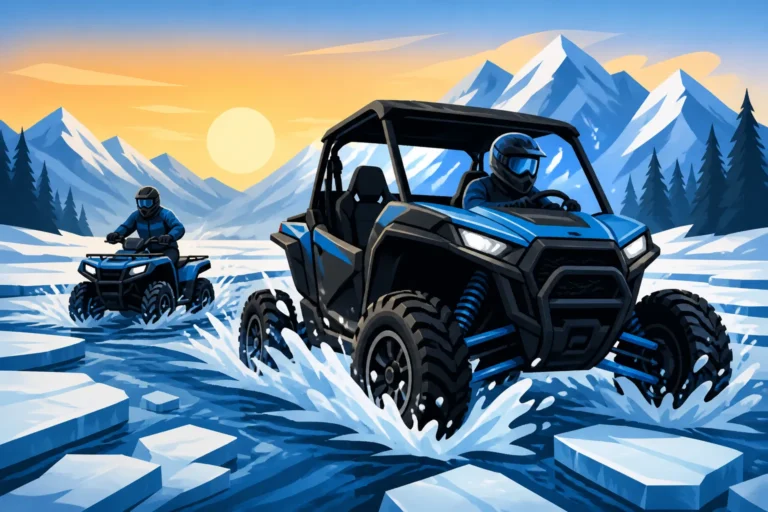
Alaska's diverse landscapes present unique challenges when towing a sled. Snow-covered trails, especially those with varying depths or fresh powder, require a delicate touch on the throttle. Too much power, and your machine could dig in or lose traction; too little, and you might get stuck. On ice, traction is severely compromised, making smooth, gradual movements essential. Avoid sudden braking or acceleration, and maintain a much larger following distance if you're part of a group. On packed snow and ice, your stopping distance will dramatically increase, even with good brakes.
When traversing uneven terrain, such as tundra or rocky trails, maintain a slower speed and be mindful of the sled’s movements. Large bumps or dips can cause the sled to lurch, potentially damaging your machine or unsettling your cargo/passengers. Look far ahead to anticipate changes in terrain and adjust your speed accordingly. Stream crossings, especially those with current or rocky bottoms, require careful planning. Assess the depth and current, and if possible, cross at the widest, shallowest point. Ensure your cargo is waterproofed and securely strapped down before attempting a crossing.
During breakup or freeze-up seasons, be extra vigilant. Soft, muddy trails can quickly become impassable, and ice can be unpredictable. Always check local conditions and forecasts. If a trail is particularly gnarly, consider making multiple, lighter trips instead of one heavy, risky one. The goal is to minimize impact on the environment and keep yourself safe, so if you're ever in doubt about the terrain, it's always better to turn back or find an alternative route.
Loading and Securing Your Cargo or Passengers
Proper loading is just as crucial as machine preparation. For cargo sleds, distribute the weight as evenly as possible. Heavy items should be placed low and centered over the sled's runners to maintain stability. Avoid loading all the weight at the very front or back, as this can either lighten the front end of your APV (reducing steering control) or make the sled prone to fishtailing. Use strong tie-downs, like ratchet straps or cam buckles, to secure your cargo. Imagine hitting a series of bumps – will everything stay put? If not, re-secure it. A loose cooler or a shifting load of firewood can quickly throw your machine off balance or become a projectile.
When towing passengers in a designated passenger sled, safety is paramount. Ensure all passengers, especially children, are wearing appropriate helmets. They should be securely seated and instructed to keep their hands and feet inside the sled at all times. Explain to them that the ride might be bumpy and that sudden stops can happen. Maintain conservative speeds and avoid sharp turns or aggressive maneuvers. The goal is a smooth, predictable ride that minimizes any sudden jolts. If the sled has seatbelts or harnesses, ensure they are properly fastened.
Finally, consider the environmental factors. If you're carrying items sensitive to moisture, cold, or impact, ensure they are protected. Use dry bags, sturdy containers, and insulated wraps as needed. For long trips, pack emergency supplies not just for yourself, but also for any passengers or cargo, including extra blankets, food, water, and a first-aid kit. A well-secured and thoughtfully loaded sled contributes significantly to a safe and successful Alaskan adventure.
Disclaimer
This article is for general informational purposes only and does not constitute professional advice. Laws, prices and regulations vary by location and change over time. Consult a qualified professional for guidance on your specific situation.