Overflow on a Frozen River
Riding an ATV or UTV across Alaska's frozen rivers and lakes is one of the most exhilarating experiences this state offers, but it also comes with unique and often hidden dangers. One of the sneakiest and most treacherous conditions you can encounter is overflow, where water flows on top of or just beneath the surface of seemingly solid ice. This guide is dedicated to helping you understand what overflow is, how to identify it, and most importantly, how to navigate these challenging conditions safely to protect yourself and your machine.
Understanding What River Overflow Is and Why It Happens
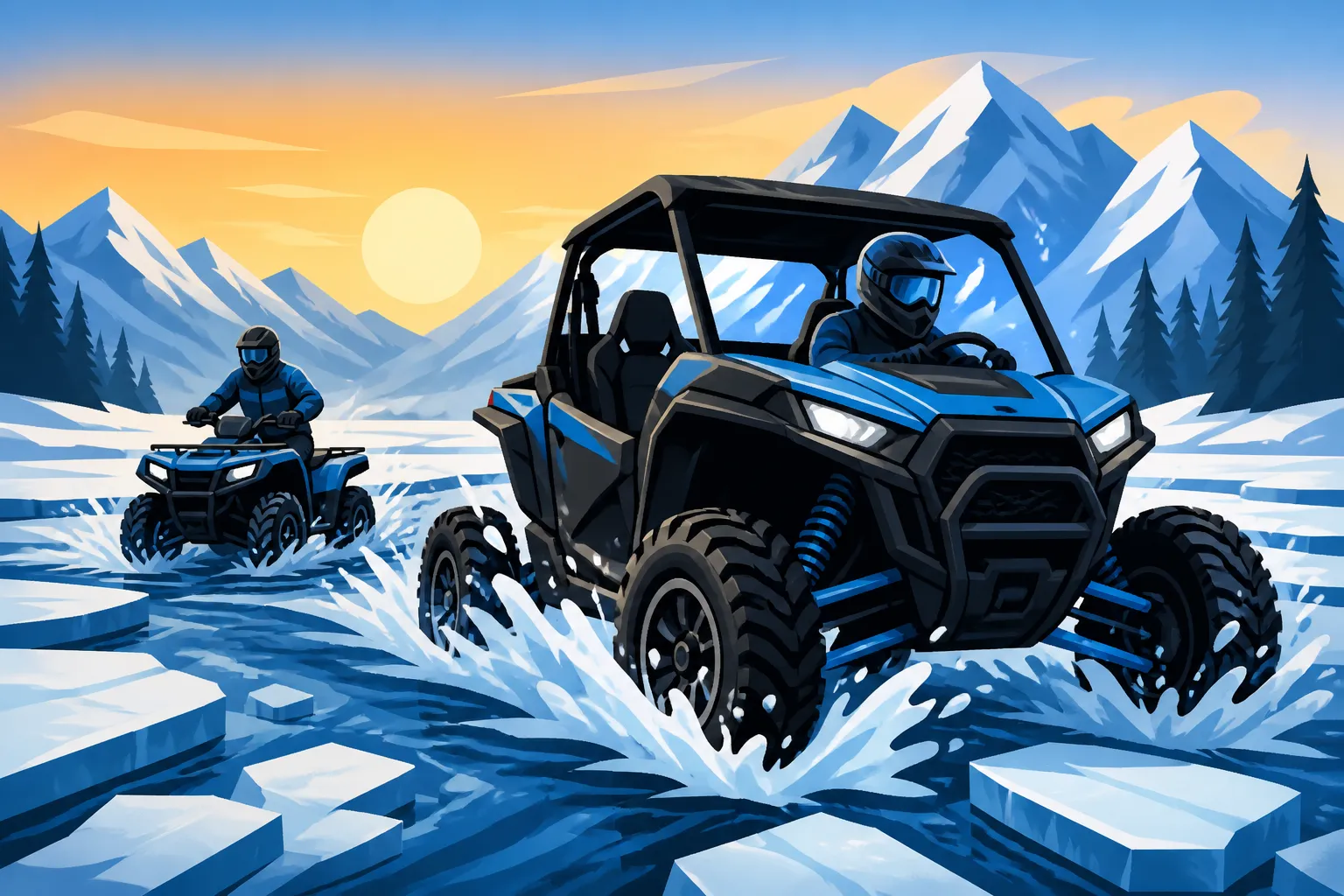
Imagine a river in winter, seemingly locked solid under a thick sheet of ice. You see snowmobile tracks, maybe even some ATV paths, and think it's perfectly safe. But then, you hit a patch where slush suddenly appears, or worse, open water is flowing right over the ice. That's overflow, and it's a phenomenon that can catch even experienced Alaska riders off guard.
At its core, overflow occurs when water from beneath the ice is forced up and out onto the surface. This isn't just a random occurrence; it's a complex interaction of several natural forces at play, often exacerbated by the dynamic nature of Alaska's waterways. Understanding these factors is key to respecting the ice and staying safe.
The Role of Pressure and Ice Dynamics
Frozen rivers are not static. The water underneath is still flowing, and the ice itself is constantly expanding and contracting with temperature changes. As ice forms and thickens, it can create immense pressure on the water below. If this pressure builds up, any weakness in the ice – a crack, a seam, or even a section of thinner ice – can become an escape route for the water. Think of it like a frozen dam that's springing a leak. The water, seeking the path of least resistance, will push up through these openings.
Furthermore, a riverbed isn't perfectly flat. Obstacles like submerged logs, rocks, or changes in gradient can create constrictions or eddies that affect water flow and pressure. These areas are often prime spots for overflow to develop. When the water level beneath the ice rises due to upstream conditions like heavy snowfall or a temporary thaw, it has nowhere to go but up and out.
How Snow and Temperature Fluctuations Contribute
Snowfall plays a dual role in the formation of overflow. On one hand, a deep blanket of snow acts as an insulator, preventing the ice underneath from thickening as rapidly as it would if exposed to the frigid air. This can lead to areas of thinner, weaker ice that are more susceptible to breaking under pressure. On the other hand, heavy snow on top of the ice adds significant weight, further increasing the pressure on the underlying water and ice sheet. It's a delicate balance, and nature rarely keeps it perfectly in check.
Temperature fluctuations are another major contributor. A sudden drop in air temperature can cause the ice to contract rapidly, creating new cracks. Conversely, a warm spell, even a short one, can melt surface snow, adding water that can seep into existing cracks and contribute to overflow when it refreezes or encounters colder water beneath. The freeze-thaw cycle, so common in Alaska, is a constant architect of these hazardous conditions. This is why paying attention to the weather in the days leading up to your ride is so crucial, especially as you plan for something like [Alaska Riding in Freeze-Up] or [Alaska Riding in Breakup].
Identifying Overflow Risks on Frozen Rivers
Spotting overflow isn't always obvious. Sometimes it's a vast sheet of water, shimmering menacingly on top of the ice. Other times, it's a subtle change in the snow, a barely perceptible dampness that can quickly become a full-blown hazard. Learning to read the ice and snow is a skill honed over many winters, but there are definite warning signs that every rider should know. When you're out there, you're not just looking at the trail; you're actively assessing the ground beneath your tires, especially on something like [Alaska Rules for Riding a Frozen River].
Visual Cues and Surface Indicators
The most apparent sign of overflow is visible water on the surface of the ice. This can range from shallow puddles to several inches or even feet of flowing water. Look for:
- Discolored Ice: Areas where the ice looks darker, slushy, or has a murky appearance. This indicates water has seeped into the top layer.
- Wet or Slushy Snow: If the snow ahead looks noticeably darker, wetter, or has a slushy consistency, even in freezing temperatures, it's a huge red flag. This is often meltwater or water from below that has saturated the snow.
- Open Water Patches: In some cases, overflow can create actual open leads or channels of water that appear on the ice surface. These are incredibly dangerous and should be avoided at all costs.
- Ice Heaves or Pressure Ridges: While natural formations, these can sometimes indicate areas of intense pressure, and water might be seeping up around them. Approach such areas with extreme caution.
- Sound: A sudden change in the sound of your machine's tires or tracks on the ice, from a solid crunch to a softer slushy sound, can be a subtle but critical warning.
It's always best to approach any suspicious area slowly and be prepared to turn around. When in doubt, don't go out onto it.
Observing the Surrounding Environment
Your observation shouldn't be limited to just the patch of ice directly in front of you. Take in the broader environment.
- Banks and Shoreline: Look for signs of water seeping from under the ice near the banks. This can indicate high water levels or pressure.
- Upstream/Downstream Conditions: If you can see upstream, look for signs of open water or turbulent flow that could be pushing water down the river. Similarly, observe downstream for any blockages or changes in the river's course that might be causing water to back up.
- Vegetation: Pay attention to any shrubs or trees embedded in the ice near the banks. If they look wet or are coated in ice above the main ice surface, it's a strong indicator of recent or ongoing overflow.
- Tracks of Other Vehicles: While it might be tempting to follow existing tracks, always exercise caution. Another rider could have just barely made it through, or conditions could have changed rapidly since they passed. If you see tracks that suddenly veer sharply, it could be a sign they encountered overflow and turned back. Never assume someone else's path is safe. This is especially true when riding in remote areas, where a mistake could leave you stranded miles from help, requiring careful planning like [Choosing a Satellite Messenger for a Backcountry Ride].
Navigating and Mitigating Overflow Hazards
Encountering overflow in the backcountry is a serious situation that demands quick thinking and a cautious approach. The number one rule is always to avoid it if at all possible. However, if you find yourself face-to-face with overflow, having a plan and the right gear can make all the difference. Remember, the goal is always to get through safely, not to prove how tough your machine is.
Safe Practices When Encountering Overflow
- Slow Down and Assess: As soon as you suspect overflow, slow your machine to a crawl or stop completely if safe to do so. Get off your machine (if the surface is stable) and use a probing stick or even a ski pole to test the depth and consistency of the slush or water ahead. Never drive blindly into unknown conditions.
- Look for Alternate Routes: Can you detour around the overflow? Sometimes, hugging the shoreline (if it's higher and more stable) or finding an entirely different path can be the safest option. The edge of the main current is often where the ice is thinnest due to the warmer, faster-moving water.
- Turn Back: If the overflow looks too deep, too wide, or the ice appears unstable, the safest decision is to turn around. It's far better to add hours to your journey or even postpone it than to risk losing your machine or, worse, your life. There's no shame in exercising caution; it's a sign of a smart Alaskan rider.
- Ride with Others: This isn't just a good idea for moral support; it's a crucial safety measure. [Why Alaska Riders Travel in Pairs] or groups becomes incredibly evident when one machine gets stuck in overflow. Another machine can provide assistance, pull you out, or go for help.
Essential Gear for Overflow Conditions
Having the right equipment on your machine and on your person is non-negotiable for winter riding in Alaska.
- Winch: This is arguably the most critical piece of recovery gear. Having a sturdy winch, perhaps one from a reputable brand like SuperATV, is absolutely essential. Make sure it's in good working order, with a strong rope or cable and a fairlead. You'll also need a tree-saver strap and shackle.
- Recovery Straps and Shackles: Even if you have a winch, recovery straps are invaluable for tugging a stuck machine or extending your winch line.
- Dry Clothes (and a Dry Bag): The moment you get wet in freezing temperatures, hypothermia becomes a very real threat. Pack a complete change of clothes, including socks, in a waterproof dry bag.
- Waterproof Outerwear: Invest in high-quality waterproof and insulated outerwear. This will protect you from the initial shock of getting wet and buy you precious time.
- Navigation and Communication: A GPS, satellite messenger, and fully charged phone (though cell service is often nonexistent in the backcountry) are vital. Tell someone your route and expected return time.
- Probing Stick/Ice Axe: A simple stick can save you from a nasty surprise. Use it to test ice thickness and water depth ahead.
- Shovel and Axe: Useful for clearing snow, digging out a stuck machine, or even chopping firewood for an emergency fire.
- Extra Fuel: Getting stuck or having to take a longer route can burn through fuel quickly. Carry extra. You can learn more about this in [Carrying Extra Fuel Safely].
- Machine Protection: Consider investing in robust skid plates or even full underbody protection from a company like SuperATV to protect your machine's vitals from hidden obstacles and abrasive ice. For those frequently tackling challenging conditions, aftermarket modifications like snorkels or lifted suspension kits, which you might find from SuperATV, can offer an extra layer of protection, though they don't negate the need for caution.
Seasonal Considerations and Overall Safety
Alaska's winters are long and varied, and the conditions on frozen rivers can change dramatically from early freeze-up to late breakup. Being aware of these seasonal patterns is crucial for planning safe rides and knowing when to be extra vigilant. It's not just about the day's weather, but the cumulative effect of weeks and months of conditions.
High-Risk Seasons for Overflow
- Early Winter (Freeze-Up): This is a particularly dangerous time. The ice may seem solid, but it's often irregular in thickness and strength. Water levels can still be fluctuating significantly, leading to hidden pockets of overflow beneath thin ice. Rivers that freeze quickly may have weaker ice than those that freeze slowly and uniformly. This period aligns with [Alaska Riding in Freeze-Up].
- Late Winter/Early Spring (Breakup): As temperatures begin to rise and daylight hours increase, the ice starts to degrade from both the top and bottom. Snowmelt adds water to the surface, and warmer river currents erode the underside. This combination creates prime conditions for widespread overflow and weakening ice. This is also the time when you might start seeing actual breakup of the ice, making many trails impassable. [Alaska Riding in Breakup] details these challenges.
- Throughout Winter with Heavy Snow or Thaw Cycles: Any time there's a significant snowfall or a warm spell followed by a hard freeze, be on high alert. These conditions are perfect for creating the pressure and water movement needed for overflow.
General Winter Riding Safety Reminders
Beyond understanding overflow, a few fundamental safety practices apply to all winter ATV/UTV riding in Alaska.
- Check Conditions Before You Go: Talk to locals, check online resources, and contact land managers about current trail and river ice conditions. Never assume. Remember to also check for things like [Ice Thickness Before You Cross].
- Tell Someone Your Plan: Always inform a reliable person of your route, destination, and estimated return time. If you don't check in, they know to start looking.
- Pack for the Worst: Assume you might get stranded overnight or have to make an unexpected repair. Pack extra food, water, emergency shelter, a first-aid kit, and fire-starting supplies.
- Dress in Layers: This allows you to adjust to changing temperatures and activity levels. Avoid cotton, which loses its insulating properties when wet. Wool or synthetic materials are best.
- Carry a Survival Kit: A small backpack with essential survival items, easily accessible, can be a lifesaver.
- Respect the Power of Nature: Alaska's wilderness is beautiful but unforgiving. Never underestimate the cold, the ice, or the dynamic forces of its rivers. Your caution is your best tool.
| Indicator | Safe Conditions (Generally) | Unsafe Conditions (Potential Overflow) |
|---|---|---|
| Ice Color | Clear, dark, or uniformly white (snow-covered) | Darker, murky, yellowish, or slushy patches |
| Snow Surface | Dry, powdery, or crunchy | Wet, heavy, saturated, or slushy |
| Sound | Solid, distinct crunch under tires/tracks | Muffled, squishy, splashing, or gurgling sounds |
| Visual Cues | Smooth, consistent ice surface | Visible water puddles, flowing water, or seeping water |
| Surroundings | Stable banks, no water seepage | Water seeping from banks, open leads, ice heaves with water |
| Previous Tracks | Consistent, no sudden swerves or turn-backs | Tracks suddenly diverting, or disappearing into water/slush |
This table provides a quick reference, but remember, discretion and caution are always paramount. Enjoy your rides, but ride smart!
Disclaimer
This article is for general informational purposes only and does not constitute professional advice. Laws, prices and regulations vary by location and change over time. Consult a qualified professional for guidance on your specific situation.