Alaska Sales Tax on an ATV Purchase
Thinking about buying an ATV or UTV in Alaska, but feeling a little overwhelmed by all the potential hidden costs? It's a common worry, especially when you're looking at a big purchase like an off-road machine, and you're trying to figure out if you're going to get hit with a hefty sales tax. This guide is here to untangle the confusion surrounding sales tax on ATV and UTV purchases in Alaska, helping you understand exactly what to expect and where you might encounter additional fees.
The Alaska Sales Tax Reality: What You Need to Know
When you're comparing the cost of an ATV or UTV in Alaska to prices you might see in the Lower 48, one of the first things that often jumps out at people is the sales tax situation. Many folks assume that every state handles sales tax the same way, but Alaska is truly unique in this regard.
No Statewide Sales Tax – A Big Relief for Buyers
Let's cut right to the chase: Alaska does not have a statewide sales tax. For many Alaskans and those moving to the state, this comes as a welcome relief, especially when planning a significant purchase like a new-to-you quad or side-by-side. Imagine buying a powerful utility vehicle for your cabin or a nimble dirt bike for the trails, and not having to factor in an extra five, six, or even ten percent onto the sticker price. That's a huge financial advantage that puts more money back into your pocket, perhaps for that winch you've been eyeing, or maybe some extra gear for your next big adventure.
This absence of a statewide tax makes a real difference in the overall cost of ownership. In many other states, a $10,000 ATV could easily become an $11,000 purchase after sales tax. Here in Alaska, you generally don't face that initial bump from the state. It certainly makes shopping for your dream machine feel a little less daunting right off the bat. The price you see on the tag (or the one you negotiate with a private seller) is often much closer to the final cash outlay, at least from a tax perspective. You can learn more about this general concept in [No Statewide Sales Tax].
But Don't Forget the Local Level – Borough and City Taxes
Now, before you go celebrating too loudly, there's a crucial caveat to understand: while the state itself doesn't impose a sales tax, many local jurisdictions do. That's right, while the State of Alaska keeps its hands out of your wallet for sales tax, individual boroughs and cities have the power to levy their own sales taxes. This means that depending on where you purchase your ATV or UTV, you could still encounter a sales tax.
This is where things can get a little tricky and require a bit of homework on your part. You might be buying your machine in a borough that has a sales tax, even if you live in a community that doesn't. Or vice-versa! It's not a uniform system across the state, which can certainly lead to confusion if you're not prepared. For example, some of the more populated areas, or those with stronger commercial activity, are more likely to have a local sales tax in place. Understanding this distinction is key to budgeting accurately for your new ride. It's really important to ask questions and do a little research before you commit to a purchase. We discuss this more generally in articles like [Alaska Borough Taxes on a Machine] and [Do Alaska Cities Add Sales Tax to an ATV?].
Navigating Local Borough and City Sales Taxes on ATV Purchases
Given the fragmented nature of sales tax in Alaska, where some areas have it and others don't, it’s absolutely essential to be prepared. A little bit of upfront research can save you from an unexpected bill or, just as importantly, help you avoid unnecessary stress.
How to Find Out If Your Location Has Sales Tax
The best way to determine if a sales tax will apply to your ATV or UTV purchase is to directly inquire about the specific location where the transaction will take place. If you're buying from a dealership, simply ask them directly. They are required to collect and remit any applicable local sales tax, so they will certainly know the rules for their specific address. Don't be shy about asking; it's a perfectly normal question, and they'll be used to it.
If you're buying from a private seller, especially if you're meeting in a different community or borough, you'll want to check with the local municipal or borough office. Most city and borough websites will have a section dedicated to local taxes, often including their current sales tax rates. A quick phone call to their finance department or city clerk's office can clarify the situation immediately. Remember, these rates can vary, so what applies in one community might be completely different just a few miles down the road. Take the time to confirm before you sign on the dotted line.
The Point of Sale Matters: Where You Buy Versus Where You Live
When it comes to local sales tax, the general rule of thumb is that the tax is applied at the point of sale. This means that if you buy your ATV from a dealership located within a city or borough that has a sales tax, you will likely pay that tax, regardless of whether your home address is in a taxing jurisdiction. Conversely, if you purchase from a dealer in a community without a sales tax, you wouldn't pay sales tax at the time of purchase, even if your hometown does have one.
This can sometimes lead to people exploring options to buy in non-taxing areas to save money, but always ensure any such plan is within legal bounds. For new residents, this can be particularly confusing, as you might be used to a system where the tax follows you based on your residence. In Alaska, for ATV purchases, it's often more about the physical location where the transaction is completed. For private sales, the responsibility for reporting and paying any local use tax (if such a thing exists in that specific borough or city for vehicles) typically falls on the buyer, though not all jurisdictions have this. This distinction is critical and something you should clarify with the local municipality directly, especially if you're crossing borough lines for a deal. [Buying From a Private Seller in Alaska] delves deeper into these types of transactions.
What If You Buy from a Private Seller?
Purchasing an ATV or UTV from a private seller is a common practice in Alaska, offering opportunities for great deals on used machines. In these scenarios, the sales tax landscape shifts quite a bit. Generally, private individuals are not businesses and therefore do not collect sales tax on behalf of a borough or city, even if the transaction occurs within a taxing jurisdiction. This means that when you buy a machine from your neighbor or someone you found online, you typically won't pay sales tax directly to them.
However, this doesn't automatically mean you're off the hook for all local taxes. Some specific boroughs or cities might have what's called a "use tax" that applies to items purchased outside their jurisdiction but brought in for use within it, or to private sales where sales tax wasn't collected. This isn't universally applied to vehicles in Alaska, but it's another reason to check with your local borough or city government. It's always better to be fully informed than to receive an unexpected bill down the road. Regardless of tax implications, a robust bill of sale is absolutely essential for a private sale. This document serves as your proof of ownership, a critical piece of paper you'll need for registration. Services like LawDepot can help you generate a comprehensive bill of sale, ensuring all the necessary details are included to protect both buyer and seller.
Other Financial Considerations Beyond Sales Tax When Buying an ATV in Alaska
While the presence or absence of sales tax is a major financial point, it's far from the only cost you'll encounter when bringing home a new-to-you ATV or UTV in Alaska. Smart buyers look at the whole picture to avoid surprises and ensure they've budgeted appropriately for their new outdoor companion.
Registration and Titling Fees
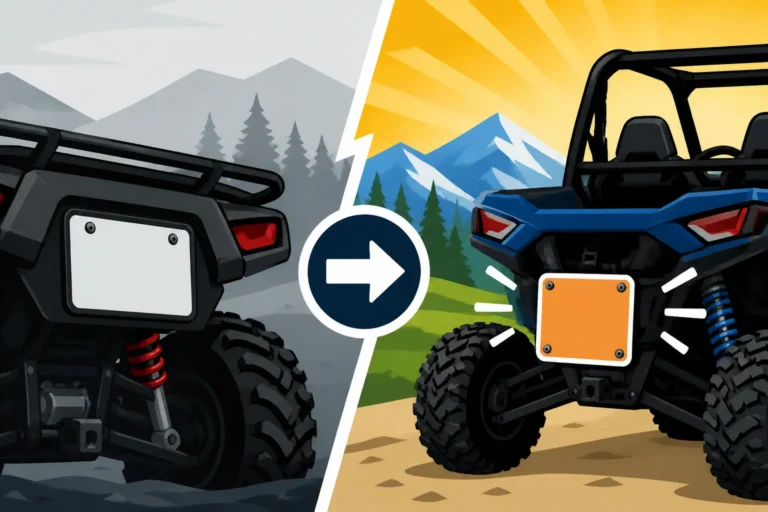
Even though you might not pay sales tax, you'll almost certainly pay for registration and, in many cases, titling. The State of Alaska requires off-highway vehicles (OHVs), including most ATVs and UTVs, to be registered if they are operated on public lands or trails. This isn't an optional step if you plan to enjoy the vast wilderness areas Alaska has to offer. When you register your machine, you'll receive a decal that serves as your proof of registration, as [Alaska Issues a Decal, Not a Plate].
The cost for registration varies depending on the term you choose, typically two, four, or six years. Each term has its own fee, so you can select what works best for your ownership plans. Titling is a separate but often related process, especially for newer machines, and ensures your legal ownership is recorded with the state. While these fees aren't sales tax, they are mandatory government costs that contribute to your overall purchase expense. We cover these fees in depth in articles like [Alaska OHV Registration Cost] and [Two, Four or Six Years at a Time].
Insurance Requirements and Costs
Once you own an ATV or UTV, you'll need to think about insurance. In Alaska, if you plan to operate your all-purpose vehicle (APV) on a road or highway (where allowed), liability insurance is a legal requirement. Even if you only stick to trails and private land, carrying insurance is a very wise decision. Accidents happen, and having coverage can protect you from significant financial burdens if you cause damage or injury.
Insurance costs for an ATV or UTV can vary widely based on several factors: the type and value of your machine, your riding habits, your age and driving record, and the specific coverage limits you choose. Just like with car insurance, you'll want to shop around for quotes to find the best policy for your needs. Don't overlook this crucial cost when budgeting for your ATV, as it's an ongoing expense. For more details, check out [Alaska Insurance Requirements for an APV] and [Alaska Insurance Cost for an ATV].
Dealer Fees and Financing Costs
If you're buying a new ATV or UTV from a dealership, be aware that the sticker price often isn't the final price. Dealerships typically add various fees, which can include things like freight (the cost to ship the machine to the dealer), assembly or prep fees (the cost to get it ready for you to ride), and documentation fees (for processing the paperwork). These fees are standard in the industry, though you can sometimes negotiate parts of them. Always ask for an itemized list of all additional charges before agreeing to a purchase. You can learn more about these in [Alaska Dealer Fees to Expect].
Furthermore, if you plan to finance your purchase, the interest you pay on the loan will add substantially to the total cost of the machine over time. The interest rate you qualify for will depend on your credit history, the loan term, and the lender. Whether you finance through the dealership or a credit union, understanding the total repayment amount, including all interest, is crucial. This is a significant part of the financial puzzle and should be factored into your overall budget. We touch upon this further in [Alaska Registration and Financing].
Paperwork and Due Diligence: Protecting Your ATV Investment
Beyond the monetary costs, the value of proper documentation and smart buying practices cannot be overstated. When you're dealing with a significant purchase like an ATV or UTV, protecting your investment means ensuring you have all your ducks in a row. This is where a little extra effort upfront can save you a mountain of headaches later.
The Importance of a Solid Bill of Sale
Even in Alaska, where statewide sales tax isn't a concern, a clear and comprehensive bill of sale is an absolutely critical document when you purchase an ATV or UTV, especially from a private seller. This isn't just a nicety; it's your primary proof of ownership. Without it, registering your machine, proving it belongs to you, or even selling it later down the line can become a bureaucratic nightmare. A good bill of sale should explicitly state the date of the transaction, the full names and contact information of both the buyer and seller, a detailed description of the ATV (including make, model, year, and crucially, the Vehicle Identification Number or VIN), and the agreed-upon purchase price. Both parties should sign and date the document, and it's a good practice to have it notarized, although not always strictly required, for extra peace of mind.
Think of it this way: if your machine is ever stolen, or if there's a dispute over ownership, that bill of sale is your golden ticket. Without it, you might find yourself in a very difficult position. You might even consider using a reliable online legal document service, such as LawDepot, to help you create a robust, legally sound bill of sale. They offer templates that ensure you cover all the essential information needed for a smooth transaction. You can read more about what's required in [Alaska Bills of Sale for a Used Machine].
What to Do If Paperwork is Missing or Unclear
It's an unfortunate reality in the world of used vehicles: sometimes, the paperwork isn't quite right, or it's missing entirely. You might find a great deal on an ATV, only to realize the seller can't produce a proper title or a legible bill of sale. This is where patience and persistence become your best friends. If the original title is lost, the seller should ideally obtain a duplicate before the sale. However, if you find yourself in a situation where a bill of sale is missing, or the ownership chain is unclear, Alaska has processes to help.
You might need to utilize an affidavit naming the seller, which is a sworn statement detailing the transaction and identifying the previous owner. This document can be used in lieu of a standard bill of sale for registration purposes under certain conditions. The state also has provisions for "No Title Issued" (NTI) registrations in specific circumstances, particularly for older machines. Be prepared for potential delays and extra steps if you go this route, as the DMV needs to ensure legitimate ownership. These situations can be complex, and getting assistance from resources like LawDepot to draft a proper affidavit, or thoroughly understanding the steps outlined in [Alaska Affidavits Naming a Seller] and [Alaska NTI Title Steps], can be incredibly helpful. Navigating a situation where [Registering a Quad When the Paperwork Is Lost] requires careful attention to detail.
Checking the Machine's History
Before you hand over any money, especially to a private seller, exercising due diligence is paramount. Always, always check the machine's history. The most critical step is to verify the Vehicle Identification Number (VIN). Ensure the VIN on the machine matches the VIN on the title or bill of sale. If there's any discrepancy, walk away. You can also run the VIN through online databases to check for theft reports or existing liens. A lien means someone else (like a bank or credit union) still has a financial claim on the machine, and if you buy it, you could be on the hook for that debt.
A quick VIN check can prevent you from inadvertently purchasing a stolen machine or one with an undisclosed financial encumbrance, which would cause you immense legal and financial trouble down the road. It's a small step that offers huge protection for your investment. Don't let the excitement of a new quad overshadow this essential part of the buying process. For more information on this critical step, refer to [Checking an Alaska Machine for a Theft Report].
Costs Associated with an ATV Purchase in Alaska (Beyond the Sticker Price)
When you're ready to buy an ATV or UTV in Alaska, it's easy to focus solely on the asking price. However, a smart buyer looks at the bigger picture to avoid any surprises. Here's a table summarizing the various costs you might encounter:
| Cost Type | Statewide Application | Local Application (Varies) | Notes |
|---|---|---|---|
| Sales Tax | No | Yes (in some areas) | Check with your local borough or city government where the sale takes place. |
| Registration Fees | Yes | No | Mandatory for public land use. Varies by term (2, 4, or 6 years). |
| Titling Fees | Yes (if applicable) | No | Required for new machines or certain transfers. Associated with registration. |
| Liability Insurance | Yes (for road use) | No | Highly recommended even for trail use. Required if riding on roads or crossing highways. |
| Dealer Fees | No (but common) | No (but common) | Freight, assembly, documentation fees. Often non-negotiable from dealers. |
| Financing Interest | No (variable) | No (variable) | If you take out a loan, this adds to your total cost over time. |
| Trailhead/Park Passes | No (but common) | Yes (some local parks) | Required for entry to certain state recreation areas or borough parks with ATV access. |
| Safety Course Fees | No (voluntary) | No (voluntary) | While not mandatory for all, it's a good investment in safe riding. |
Disclaimer
This article is for general informational purposes only and does not constitute professional advice. Laws, prices and regulations vary by location and change over time. Consult a qualified professional for guidance on your specific situation.