Driving the Alaska Highway With a Trailer
Many folks dream of loading up their ATV or UTV and hitting the legendary Alaska Highway, but the sheer logistics of hauling a trailer, let alone your beloved machines, can feel overwhelming. The thought of thousands of miles, border crossings, and the unknown challenges of remote travel can quickly turn excitement into anxiety. This guide is all about cutting through that confusion, giving you the practical advice and crucial considerations you need to confidently plan and execute your epic journey up north with your trailer and all your off-road toys in tow, making sure you're prepared for every mile of the adventure.
Planning Your Epic Alaska Highway Journey: More Than Just Fuel Stops
Embarking on a drive up the Alaska Highway isn't just another road trip; it's an adventure into the vast, wild heart of North America. When you're bringing a trailer loaded with your ATVs or UTVs, the planning takes on an extra layer of importance. You're not just moving people; you're transporting significant assets over some seriously varied terrain, and anticipating the nuances of this journey is key to a successful, enjoyable experience.
Charting Your Course and Understanding the Road Ahead
The Alaska Highway isn't always like driving on a perfectly paved interstate in the lower 48. It’s an iconic route that, at various points, offers stretches of gravel, unexpected frost heaves that can jar your entire rig, and the constant presence of wildlife. Planning your route isn't simply about marking major towns for fuel; it's about anticipating these conditions and building in buffers. Consider where you’ll stop for the night – not all campgrounds or roadside pull-offs are created equal when you’re maneuvering a large trailer. Some might be too small, too steep, or simply unsuitable for a big rig, forcing you to find alternatives that much later in the day.
Road conditions along the Alaska Highway can, and often do, change rapidly. While I can't give you real-time updates, it’s wise to assume that parts of the highway will always be under construction, undergoing repairs, or simply presenting rougher patches due to the extreme climate. This means you need to be prepared to slow down, take your time, and be ready for a cloud of dust if it's dry, or a muddy splash if it's wet. Knowing this upfront helps manage your expectations and makes the journey far more enjoyable than if you anticipate perfectly smooth, high-speed roads all the way. This proactive mindset can prevent a lot of frustration when you encounter an unexpected gravel section.
The journey itself is often as much a part of the destination as the final arrival, and that’s certainly true for the Alaska Highway. Many seasoned travelers dedicate several days, sometimes even a week or more, to the drive itself, enjoying the spectacular scenery, countless wildlife viewing opportunities, and the charming small towns along the way. Resist the urge to rush. Your tow vehicle, your trailer, your precious ATVs, and your own sanity will all thank you for taking a relaxed, deliberate pace. This allows for unexpected stops, photo opportunities, and truly soaking in the unique landscape.
Packing Smart for Remote Travel
When you’re packing for a trip up the Alaska Highway, especially with an ATV or UTV in tow, you absolutely need to think about self-sufficiency. This isn't just a weekend camping trip to the local state park where help is a quick phone call away. You'll be crossing vast stretches of wilderness where services are minimal, and cell phone reception can be non-existent for hours. Essential tools for your trailer and machines, like a full-size spare tire for both your tow vehicle and your trailer, a heavy-duty jack capable of lifting your combined heavy load, and a comprehensive repair kit for minor issues, are not just optional extras—they’re non-negotiable necessities.
Beyond mechanical preparedness, consider your personal supplies. Extra water, easily accessible non-perishable food, warm blankets or sleeping bags (even in summer, nights can be chilly), and a robust first-aid kit are paramount. Since cell service is spotty at best once you leave populated areas, a satellite messenger or an emergency radio can be a literal lifesaver, allowing you to call for help even when off the grid. Think about what you’d genuinely need if you were unexpectedly stranded for 24-48 hours. This isn't about fear-mongering; it's about practical, realistic preparation for the unique realities of remote travel in the North.
And don't forget the essentials for your machines themselves. Spare parts like extra belts, spark plugs, a tire repair kit specifically for your ATV/UTV, and even a small, portable air compressor can save you from a major headache far from the nearest repair shop. Imagine getting a flat tire on your quad a hundred miles from the closest town; a simple repair kit can turn a potential disaster into a minor delay. Remember, the ultimate goal is to enjoy the journey and the amazing riding once you arrive, not to spend your precious vacation time stranded on the side of the road because of an oversight in packing.
Essential Documentation for Your Machines and Trailer
Navigating the various checkpoints and regulations during your Alaska Highway adventure means having your paperwork in order is paramount. From international borders to local Alaskan enforcement, demonstrating legitimate ownership and compliance for your tow vehicle, trailer, and ATVs/UTVs is non-negotiable.
Proof of Ownership and Identity
Crossing international borders, like the one into Canada, and then potentially dealing with Alaskan authorities means you need rock-solid proof of who owns what. For your tow vehicle, you'll need its current registration and, of course, your valid driver's license. For your trailer, have its registration and title or manufacturer's certificate of origin (MCO) readily available. And for each ATV or UTV you're hauling, make sure you have the original title or MCO, or a detailed bill of sale if it's a used machine. These documents aren't just bureaucracy; they prove you didn't just "find" your expensive toys. Having everything organized in a waterproof folder can save you stress.
If you’ve recently purchased a machine and are still waiting on a formal title to be issued by your state's DMV, a notarized bill of sale can be absolutely crucial. Services like LawDepot can help you generate comprehensive and legally sound bills of sale, ensuring all the necessary details are captured, especially if you're buying from a private seller and don't have a dealer's standardized paperwork. This kind of preparation helps prevent awkward questions at the border or from any state trooper or other law enforcement officer you might encounter along the way. Having clear, concise documentation for every single item in your convoy provides immense peace of mind. [Alaska Bills of Sale for a Used Machine] offers more insights into what’s needed for second-hand purchases.
Speaking of personal identification, everyone in your vehicle, including passengers, will need a valid passport for crossing the Canadian border. Border patrol officers are thorough, and you should never underestimate the scrutiny you might face, especially when hauling a trailer full of recreational vehicles, which can sometimes raise additional questions. It’s always, always best to have too much documentation than not enough. If you're coming from the Lower 48, [Customs Paperwork From Canada] is a good read to ensure you're fully prepared for that initial international crossing.
Insurance and Alaska's Unique Requirements
Your existing vehicle insurance policy likely covers your tow vehicle for liability and collision, but what about the trailer it's pulling and the machines loaded onto that trailer? It's absolutely critical to check with your insurance provider before you leave to understand your exact coverage. Some policies automatically extend liability to a trailer when it's attached, but collision or comprehensive coverage for the trailer itself, or for your ATVs/UTVs while in transit, might require specific additional endorsements or a separate policy. This is not the place to skimp; imagine the financial burden of replacing a high-value UTV if it's damaged in an accident or stolen while en route. [Insuring a Machine Before Your First Ride] is a vital consideration.
Once you arrive in Alaska, you'll find that the state has specific requirements for ATVs and UTVs, which fall under its "All-Purpose Vehicle" (APV) class. A key point to remember is that [Alaska Requires Liability Insurance for an APV] if you plan to operate them on public roads where allowed, or sometimes even on certain designated trails. While many states don't mandate insurance for off-road vehicles, Alaska does. Ensure your policy meets these minimums, even if you’re only visiting for a short time. An unexpected stop by a trooper could lead to fines if you're not compliant.
And what about the trailer itself? [Do Alaska Trailers Need Their Own Registration?] This is a common question for those moving to or visiting Alaska. Generally, if your trailer weighs over a certain amount, or if it's a commercial trailer, it will require its own registration in Alaska. However, for a personal trailer hauling recreational vehicles, Alaska typically honors registrations from other states and provinces. But it's always good to be aware of the specific rules if you plan to become a permanent resident. Always confirm these details before you depart, as laws can change, and you don't want surprises.
Handling Missing or Incomplete Paperwork
It happens to the best of us. You buy a used machine from a private seller, and the previous owner was a bit lax with record-keeping. Or perhaps you've owned a beloved machine for years, and the title got lost during a house move or a particularly enthusiastic spring cleaning. This doesn't necessarily mean you can't bring it to Alaska, but it does mean you need to prepare proactively. For older machines with missing titles, an affidavit of ownership can sometimes suffice. LawDepot offers templates for affidavits, which can be a valuable resource for drafting these documents, ensuring they cover all necessary points. [What an Affidavit Naming the Seller Must Include] can guide you.
Alaska has specific procedures for situations like [Alaska Registration Without a Bill of Sale] or [Alaska Registration When the Paperwork Is Lost]. Often, this involves providing sworn statements, waiting periods to establish clear ownership, or in some cases, a trip to the DMV to explore options like a "no title issued" registration. If you're coming from out of state, having these pre-prepared documents, even if they're not formal titles, can help demonstrate your legitimate claim to the vehicle. Don't leave it to chance at the border or a DMV counter in Alaska; address these issues long before you pull out of your driveway.
Make multiple copies of all your important documents – both paper and digital. Keep one set of paper copies with you in the vehicle, one set in a separate bag or a secure spot on your trailer, and perhaps a digital copy saved on your phone or in a secure cloud storage account. If you lose your originals on the road, having copies can significantly expedite the process of replacing them or at least proving your situation to authorities. Losing paperwork thousands of miles from home is a nightmare scenario, so plan for it by creating robust backups.
Table: Essential Documents for Your Alaska Highway Trip
| Item / Entity | Key Documents Required (Minimum) | Additional Considerations |
|---|---|---|
| Driver | Valid Driver's License | Valid Passport (for Canada border crossing) |
| Proof of Insurance (Tow Vehicle) | Emergency contact info, medical info | |
| Tow Vehicle | Current Registration | Vehicle Title (copy recommended) |
| Valid Insurance Card | Proof of financing/lienholder info (if applicable) | |
| Trailer | Current Registration | Trailer Title or MCO; Bill of Sale (if recently acquired) |
| Proof of Insurance (check policy coverage) | Weight limits, brake system compatibility, safety chains | |
| ATV/UTV (Each) | Title or MCO; Bill of Sale | Alaska APV Registration/Decal (if staying) |
| Proof of Insurance (Alaska APV liability) | [Checking an Alaska Machine for a Theft Report] | |
| All Travelers | Passport (for Canada border) | Emergency contacts, medication lists, travel insurance |
Preparing Your Trailer and Machines for the Rugged Journey
The Alaska Highway is an incredible feat of engineering, but it’s still a demanding route. Ensuring your tow vehicle, trailer, and the machines they carry are in peak condition before you start will save you immense grief and potential expense on the road. This isn’t just about making it to Alaska; it’s about making it safely and without unnecessary stress.
Trailer and Tow Vehicle Readiness
The Alaska Highway will test your equipment in ways that short weekend trips might not. Before you even think about hitching up, give your tow vehicle a comprehensive inspection. Check all fluids (oil, transmission, brake, coolant), brakes (pads, rotors, fluid levels), and tires (including the spare, and make sure it’s properly inflated and accessible). Pay particular attention to your cooling system; pulling a heavy load through varied terrain for thousands of miles demands a system that's up to the task. A breakdown far from a service center isn't just an inconvenience; it can be a dangerous and extremely expensive situation.
Your trailer needs just as much, if not more, attention. Inspect all trailer tires for wear, dry rot, and proper inflation, and don’t forget the spare. Wheel bearings are a notoriously common failure point on long hauls, so have them serviced, greased, or thoroughly checked by a professional to ensure they're in excellent condition. Test all trailer lights—running lights, brake lights, turn signals—and ensure your trailer brakes are functioning perfectly. Finally, confirm your hitch, safety chains, and breakaway cable are all in excellent working order and correctly connected. When you’re finally [Hauling a Machine to a Mat-Su Trailhead] after the long drive, you’ll be glad you did this prep.
Overloading your trailer is a common, and dangerous, mistake. Know your tow vehicle's maximum towing capacity and your trailer's Gross Vehicle Weight Rating (GVWR). Never exceed these limits. Distribute the weight evenly, with approximately 10-15% of the total trailer weight resting on the tongue (the part connecting to your hitch) for optimal stability. This isn't just about avoiding potential tickets or straining your equipment; it's fundamental for maintaining control, especially when encountering strong crosswinds, sudden stops, or rough sections of road. Proper weight distribution prevents dangerous swaying.
Securing Your ATVs and UTVs Properly
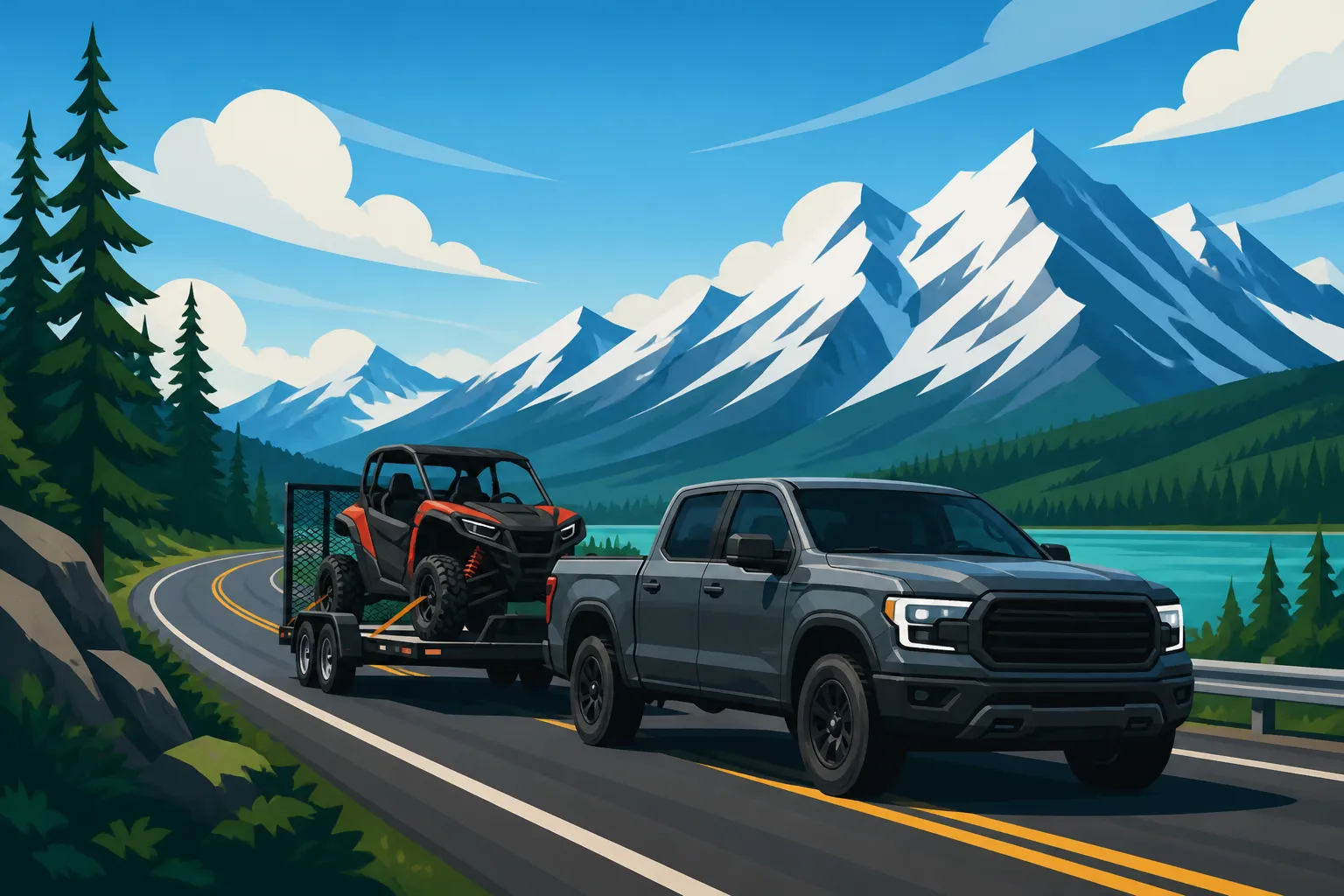
This might seem like an obvious point, but properly securing your machines isn't just about getting them onto the trailer; it's about ensuring they stay on the trailer, and don't shift around, for thousands of miles over potentially jarring, rough roads. Forget bungee cords; they are not adequate. Use heavy-duty, high-quality ratchet straps rated for the weight of your machines. Strap down each corner of your ATV or UTV to a solid anchor point on the trailer frame, not just the wheels or suspension components. The goal is to compress the suspension slightly, which helps prevent bounce and movement during travel.
Think about secondary securing methods for added peace of mind. Some experienced travelers run a robust cable lock through the frames of multiple machines or from a machine directly to the trailer itself. This not only adds a significant layer of theft deterrence—a very real concern when you stop for the night—but also acts as a critical backup if a primary strap were to loosen or fail. Remember, constant vibration and rough roads can cause even the best straps to loosen over time, so plan to check them regularly, especially at fuel stops or during extended breaks.
Finally, protect your machines from the relentless onslaught of road grime, dust, and debris. A sturdy tarp or a fitted cover can help keep them cleaner, but ensure it's securely fastened so it doesn't flap loose, potentially damaging your machines or itself during high-speed travel. Consider wrapping exposed areas or delicate components with plastic film for added protection against rock chips, mud, and dust. You want your machines ready to hit the trails the moment you arrive, not caked in a layer of highway grit that requires hours of cleaning.
Navigating the Alaska Highway: Tips for a Smooth and Safe Drive
After all your meticulous planning and preparation, the moment finally arrives to hit the road! The drive up the Alaska Highway is an unforgettable experience, filled with stunning scenery and the thrill of adventure. However, it's also a drive that demands respect and certain considerations, especially when you're pulling a heavy trailer.
Driving Etiquette and Road Conditions
The Alaska Highway, while a major route connecting the contiguous United States and Canada to Alaska, is not always a multi-lane freeway. Speed limits can vary, and road conditions often demand a slower, more cautious approach, especially when you're pulling a trailer with ATVs. Expect significant stretches of gravel. When you hit gravel, slow down immediately. Your stopping distance will increase dramatically, and maintaining control, particularly with a heavy trailer that could sway, becomes much more challenging. Additionally, dust kicked up by other vehicles or even your own can severely limit visibility, making passing or encountering oncoming traffic hazardous.
Wildlife is incredibly abundant and active along the entire route. Moose, caribou, bears, and even smaller animals like foxes or porcupines frequently cross the highway, often without warning. Drive defensively, especially at dawn, dusk, and throughout the night when animals are most active and harder to see. Colliding with a large animal, particularly a moose, can total your vehicle and trailer, and endanger lives. Be vigilant, scan the shoulders and ditches, and be prepared to brake suddenly if an animal darts out.
Be courteous to other drivers on the road. If you're driving slowly with a heavy load, which is often necessary, use designated pull-outs or even the wide shoulders to let faster traffic pass safely. It's a long road, and everyone appreciates a moment of consideration. Passing can be tricky on narrow, winding, or gravel sections, so only attempt to pass when you have a clear view and absolutely plenty of room to do so without rushing. Remember that most other drivers are also on an epic journey and appreciate a shared sense of adventure and safety.
Border Crossing and Alaskan Arrival
When you approach the US-Canada border (or vice-versa), have all your documents immediately ready: passports for everyone in the vehicle, your tow vehicle’s registration, and crucially, proof of ownership (titles or MCOs) for your trailer and each of your ATVs/UTVs. Be prepared to answer questions about your destination, the precise purpose of your trip, and what you're bringing into the country. Honesty and politeness go a long way with border patrol agents. If you are carrying any firearms or restricted items, ensure they are declared and transported strictly according to both Canadian and US regulations. Failure to declare items can lead to serious legal consequences and delays.
Once you've successfully crossed into Alaska, you're officially in the Last Frontier! While you might be eager to unload your machines and hit the trails, remember to be mindful of local regulations first. Many Alaskan communities have specific ordinances regarding ATV/UTV use, especially on public roads or within city limits. For example, [Alaska Bans APVs in Anchorage] and similar restrictions exist in other towns and boroughs. Don't assume that because you're "in Alaska" you can ride anywhere. Always check local rules and ordinances before you unload your machines and venture out.
Consider stopping at the first major visitor center or Alaska DMV office to gather information specific to your destination, or even to complete any necessary [Alaska Registration for a New Resident] if you plan on staying for an extended period or moving permanently. Getting clarity on local riding rules and registration requirements early on can prevent frustrating issues or citations down the line. It's much easier to clarify things in a town with internet access or a helpful clerk than to get pulled over miles deep in the bush.
Staying Safe and Enjoying Your Ride
The Alaska Highway is an incredible and rewarding experience, but it demands respect and thorough preparation. Always carry robust emergency supplies, and crucially, communicate your detailed travel plans to someone reliable back home, providing regular check-ins if possible. Don't hesitate to pull over and rest if you're feeling fatigued; fighting sleep behind the wheel of a heavy rig is incredibly dangerous. The scenery is spectacular, and the journey itself is a huge part of the adventure, so savor it.
Once you arrive at your destination and are ready to ride, remember to follow all local Alaska ATV rules. This includes important things like [Alaska Helmet Law for Riders Under 16], insurance requirements for APVs, and crucial rules for public land access. Always take the time to check [Alaska Land Ownership and Who to Ask] before venturing off onto unfamiliar ground, as private or Native Corporation lands almost always require explicit permission or a specific land use permit. Ignorance of land ownership is not a valid defense.
Embrace the remoteness and the profound beauty that Alaska offers. Your diligent efforts in planning and preparing will pay off, allowing you to fully enjoy the vastness of this incredible state and the unparalleled riding opportunities it presents. From the sprawling Knik River Public Use Area in the Mat-Su Valley to the wild expanses of the Kenai Peninsula, there's a lifetime of exploration awaiting you and your machines. Ride safe, ride smart, and make unforgettable memories.
Disclaimer
This article is for general informational purposes only and does not constitute professional advice. Laws, prices and regulations vary by location and change over time. Consult a qualified professional for guidance on your specific situation.