Subsistence Priority on Some Ground
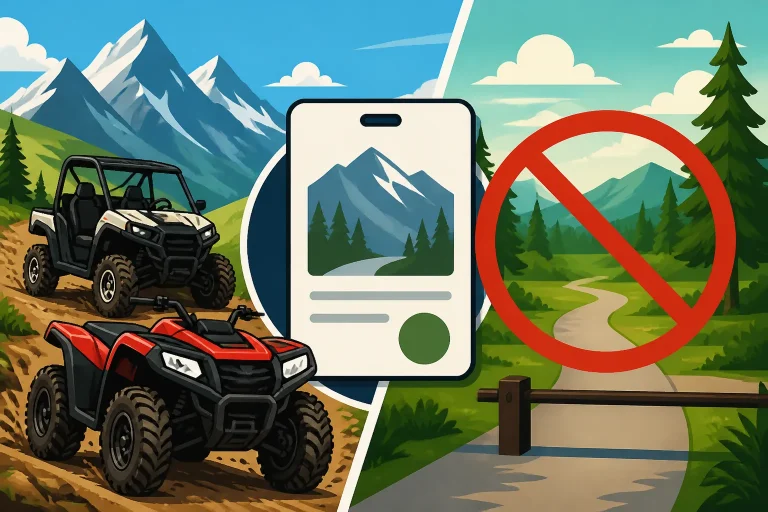
Subsistence priority can affect who may harvest fish or wildlife on certain Alaska lands, but it does not automatically give riders permission to cross those lands. If you plan to use an ATV or UTV while hunting or traveling through subsistence-use areas, separate the harvest rules from land access, vehicle permits, and local closures. Each answers a different question.
What subsistence priority means for riders
In Alaska, “subsistence” generally refers to customary and traditional uses of wild resources for food and other personal or community needs. The legal rules depend on who manages the land and resource. A priority that applies to harvesting does not, by itself, authorize a machine trip.
On federal public lands in Alaska, federal subsistence rules provide a harvest priority for eligible rural residents when limits on taking fish or wildlife are needed for conservation. The rules govern the harvest and who may qualify for that priority; they do not turn every federal parcel into an unrestricted riding area. Land managers can still regulate motorized access, close areas, limit vehicle types, or restrict travel to designated routes.
State-managed land and wildlife are governed by state rules, which are not identical to the federal subsistence system. Private property, including Native corporation land, has its own access requirements. A rider should not assume that the word “subsistence” on a map or in a regulation settles who may ride there.
| Question | What it concerns | What it does not automatically provide |
|---|---|---|
| Is a harvest subsistence use? | Whether a fish or wildlife activity falls under applicable subsistence rules | Permission to ride across land |
| Is there a subsistence priority? | Who may receive preference for a harvest under the applicable system | A general right to enter a parcel |
| Is ATV or UTV travel allowed? | The land manager’s motorized-use rules, route limits, and closures | Permission to hunt or take fish |
| Is a permit required? | Land access, vehicle use, harvest, or another regulated activity | Exemption from other rules |
This distinction matters in practice. A person may be allowed to hunt under the rules that apply to a particular area but still need permission to cross a private parcel. Conversely, a rider may be allowed to travel on an authorized route but still need the appropriate harvest authorization and must follow seasons, limits, and other hunting rules.
The safest way to think about a subsistence priority is as a rule about resource use, not a land-access pass. The broader Alaska Hunting Regulations and Machines cover the connection between hunting activity and vehicle use; for a general overview of the permit issue, see Alaska Hunting Access by Machine.
Why subsistence rules do not create an ATV access right
An ATV or UTV trip involves several separate permissions and restrictions. A machine can be registered and properly equipped but still be prohibited from a particular route. A land-use permit can cover one area without covering a neighboring parcel. A hunting authorization does not erase either limitation.
Before riding, identify the land manager and check the rules for the specific route or parcel. Depending on the location, responsibility may rest with a state, federal, borough, municipal, private, or Native corporation land manager. Boundaries can be close together, and a route that appears continuous on a trail map may cross more than one ownership or management area. Alaska Land Ownership and Who to Ask explains why identifying the manager is an essential first step.
Alaska’s statewide general permit is not a universal riding permission. It applies to eligible state land under its terms, while other land categories have separate rules. State parks, private property, and land managed by other agencies may not be covered. Review Alaska’s General Permit Covers State Land and Alaska Land Managed by Other Agencies before treating a route as open.
Private and Native corporation land calls for particular care. A trail used by local residents or hunters is not necessarily open to every rider, and customary use does not automatically grant a visitor permission to cross. Find out whether access is allowed, whether a land-use permit is required, and whether the authorization covers motorized travel. See Alaska Native Corporation Land Permits and Alaska Rules for Riding Native Corporation Land for related access questions.
Harvest permissions are separate, too. A general land-use permit does not authorize a hunt, and a hunting license or harvest permit does not substitute for landowner approval. Rules may differ by species, area, season, residency, and the authority managing the resource. Check the current rules with the agency responsible for the harvest before traveling.
A useful practical distinction is:
- Land access: May you enter or cross this parcel?
- Motorized access: May you use an ATV or UTV there, and on which routes?
- Harvest eligibility: May you take the resource under the applicable rules?
- Vehicle compliance: Does the machine meet registration and equipment requirements for the intended use?
A “yes” to one question does not answer the others. Riders coming from outside Alaska should not treat a home-state permit, decal, or hunting credential as permission to ride on Alaska land. For vehicle registration questions, start with Does an Out-of-State Machine Need Alaska Registration? and verify the rules for the land and route separately.
How to check a route before a subsistence trip
A map is a starting point, not final proof that riding is permitted. It may show a trail without displaying current closures, seasonal restrictions, parcel boundaries, or the land manager’s motorized-use conditions. Confirm the route with the responsible agency or landowner, especially if the trip crosses several types of land.
Use this process before loading the machine:
- Mark the entire route. Include the trailhead, intended riding area, hunting or fishing location, and return route. Do not check only the destination; access corridors can have different rules from the area where you plan to stop.
- Identify who manages each segment. Use official land status information where available, then confirm uncertain boundaries with the relevant manager. Alaska Land Status Maps and Alaska Land Ownership Lookups can help you find the right starting point.
- Ask about motorized travel specifically. Confirm whether an ATV or UTV is allowed, whether travel is limited to designated trails, and whether seasonal, weather-related, or resource-protection closures apply.
- Ask whether permission or a land-use permit is needed. Get the terms for the exact route and dates. If permission is verbal, clarify the area covered, permitted vehicle type, and any limits on passengers, camping, or off-trail travel.
- Check harvest rules separately. Confirm eligibility, licenses or permits, open seasons, species-specific rules, and any subsistence restrictions with the appropriate wildlife or fisheries authority. Do not rely on an access map for harvest requirements.
- Recheck shortly before departure. Access conditions and closures can change. Verify current notices rather than relying solely on an old map, a previous trip, or a route shared by another rider.
When speaking with a land manager, be precise. Give the trail name or access point, the parcel or area if known, the dates, your machine type, and whether you will be hunting or fishing. Ask whether the answer covers the complete route or only the managed area. If one agency says its land is open, that does not confirm that the next segment is open.
Keep the relevant permission and route information available during the trip. A waterproof document pouch can help protect paper maps, permits, and contact details from rain and mud; some riders shop for one through retailers such as Amazon. Digital copies can be useful, but cell service may be unavailable, so save important maps and documents for offline use and carry a backup when practical.
Common mistakes and a safer way to plan
The most common mistake is treating “subsistence access” as a blanket right to ride. The phrase can describe a recognized use or harvest priority, but the rider still has to follow the land manager’s access rules. A route used to reach a subsistence hunting area may pass through land with separate restrictions or require permission from a landowner.
Another frequent error is assuming that a local trail is public because it is visible, maintained, or regularly used. Those facts alone do not establish legal access. Likewise, seeing tracks on the ground does not prove that off-trail travel is allowed. Stay on routes confirmed as open and avoid crossing property boundaries based only on a general-area map.
It is also easy to confuse a land permit with a vehicle permit. A land-use permit may authorize a particular use on a particular area, while registration, equipment, insurance, or road-use rules are separate matters. The reverse is also true: registering a machine does not grant permission to ride anywhere. If you are unsure which documents apply, ask the relevant land manager and check Alaska General Permit Requirements.
Plan for conditions as well as paperwork. A route that is legally open may still be unsafe or unsuitable because of water, soft ground, weather, or changing trail conditions. Avoid widening trails or creating new tracks to get around a difficult section. Where land or resource rules prohibit motorized travel, turning back is safer than treating a hunting purpose as an exception.
Keep your questions focused on the exact activity. For example: “Can I ride this UTV on this route during these dates to reach my hunting area?” is more useful than asking whether “subsistence access” is allowed in a broad region. Then separately ask what harvest rules apply to the species and area. If a route crosses multiple ownerships, repeat the access check for every segment.
A short pre-trip record can prevent confusion:
- The route and land manager for each segment
- Any permit or written permission and its conditions
- Current motorized-use restrictions and closure notices
- Harvest licenses, permits, and applicable season information
- A backup route that is also confirmed as open
- Offline maps and contact details for the responsible offices
The central rule is straightforward: subsistence priority may affect harvest opportunities on some Alaska ground, but it is not a substitute for landowner permission, motorized-access approval, or compliance with vehicle rules. Confirm each of those separately before riding.
Disclaimer
This article is for general informational purposes only and does not constitute professional advice. Laws, prices and regulations vary by location and change over time. Consult a qualified professional for guidance on your specific situation.