Twenty-Six Sites at a Campground
A 26-site campground can make a Jim Creek riding weekend feel easy to plan, until you start wondering whether there will be room for your trailer, where riding is allowed, or what rules apply after you set up camp. This guide explains how to approach camping near the Knik River, prepare for a site, and keep your riding plans separate from campground access rules.
What the 26-site campground means for ATV and UTV riders
A useful base, not a guaranteed reservation
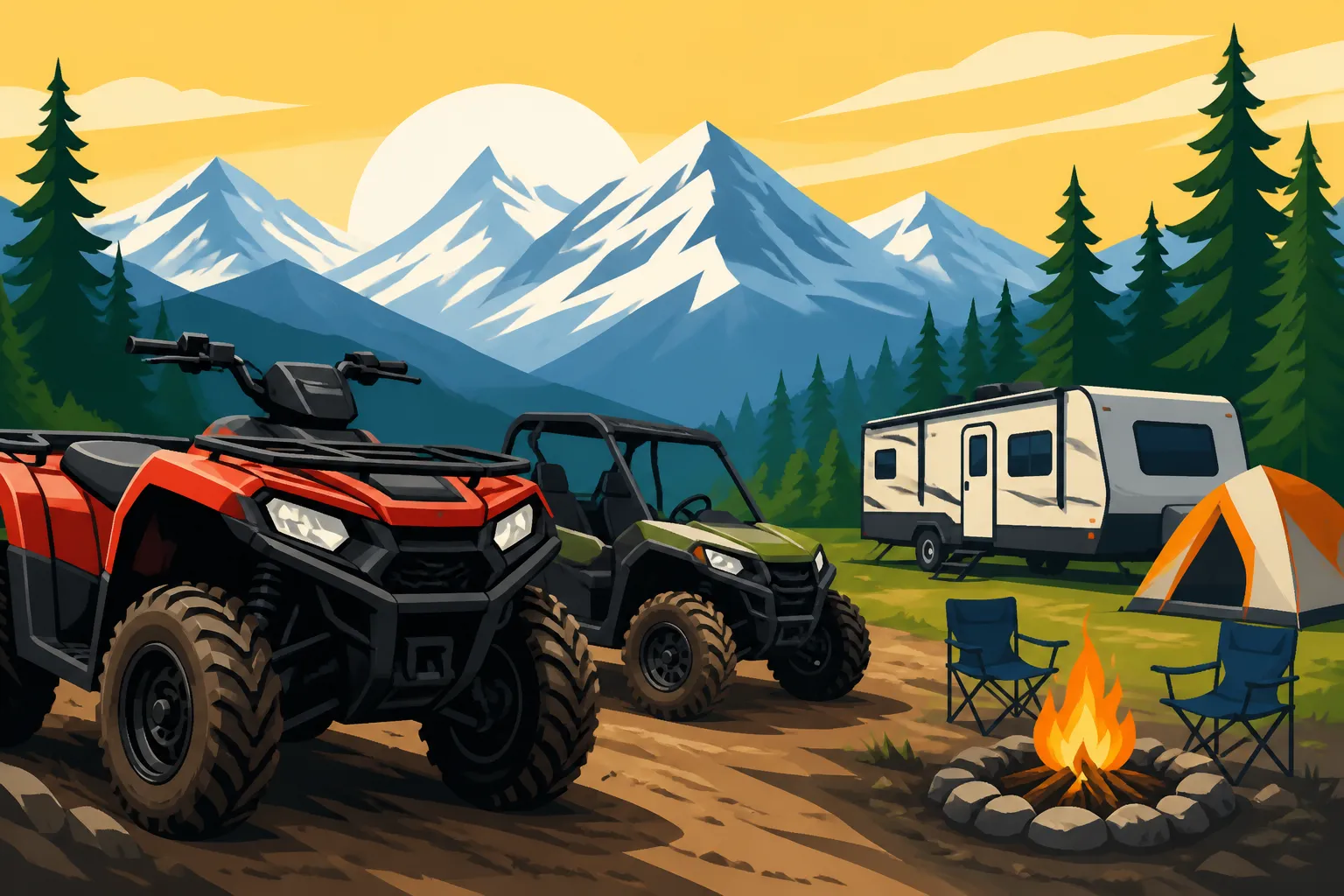
Jim Creek’s campground is a practical staging point for riders who want to spend more than a few hours in the Knik River area. Having camp close to a riding destination can save the repeated drive from the Mat-Su Valley, give your group a place to regroup, and make an early start more manageable. The campground is described as having 26 sites, but that number does not mean a site will always be available when you arrive. If your trip depends on camping there, check the current booking arrangements before setting out.
A finite number of sites also affects how you plan with friends. A group arriving in several trucks and trailers may need more room than a small family with one vehicle, even if everyone expects to share a campsite. Discuss the number of vehicles, tents, and machines before you book, and ask how the campground handles group arrangements. Do not assume that an open-looking patch beside a site is available for parking or camping.
For trip planning, start with Alaska’s 26-Site Campground at Jim Creek and Booking a Site at the Jim Creek Campground. Confirm the details that matter to your party directly with the campground or managing office: reservation requirements, site setup, vehicle limits, check-in and checkout expectations, and whether the site you select suits your equipment.
Where the campground fits into the riding area
The campground is associated with the Jim Creek area, reached via Sullivan Road. Before you leave home, make sure everyone in your group understands the route to the campground and the route to the intended trail or riding area. A campsite gives you somewhere to stay; it does not automatically give you permission to ride every nearby road, trail, or piece of land.
That distinction can surprise visitors. A trail may look like a natural continuation of the campground, yet pass onto land with a different manager or access rule. The broader Knik River Public Use Area in Alaska includes more than one kind of land and recreation setting, so do not treat the whole region as one open riding zone. Check the access information for the particular route you plan to use.
A mapping tool such as onX Offroad can help you preview routes and orient yourself around the area, especially when several people are arriving separately. Use it as a planning aid, not as the final word on land ownership, closures, or permission. Before riding, compare your route with current information from the relevant land manager and pay attention to posted signs and barriers.
Plan the trip around the whole group
A campground can make a weekend more comfortable, but it also adds coordination. One rider may want to leave at first light, while another family is still packing breakfast and checking the kids’ helmets. Agree on a departure time, a meeting place, and a plan for anyone who is delayed. If your group is large, settle these details before vehicles and machines are scattered among different sites.
Think about what you will do if weather changes or a machine needs attention. Rain can turn a relaxed campground evening into a wet gear-management problem, while a mechanical issue can leave part of the group needing to return early. Bring basic repair supplies, a first-aid kit, food and water, and warm layers. Cell coverage can be unreliable away from developed areas, so make sure someone outside the ride knows your general plan.
Booking and setting up camp
Check the site details before you pack
A site count alone does not tell you what a campground can accommodate. A trailer that fits one family’s setup may be difficult to position alongside a second vehicle, and a site suitable for tents may not work for a group bringing multiple machines. Ask what the site includes and what restrictions apply rather than relying on assumptions based on a map or an old trip report.
When checking booking information, confirm the arrival and departure expectations, payment process, and any rules about quiet hours, fires, waste, or vehicle placement. Rules and operating details can change, so verify them before traveling. If you plan to arrive late, ask whether late arrival is allowed and how to find your assigned site in low light.
| Planning question | Why it matters |
|---|---|
| Do I need to reserve before arriving? | A 26-site campground may not have space when you reach the area. |
| How many vehicles and trailers can use the site? | Your group’s parking needs may exceed what the campsite can comfortably hold. |
| What are the check-in and checkout expectations? | Timing affects your ride start, return, and packing schedule. |
| Are there seasonal closures or access changes? | Conditions and campground operations can vary through the year. |
| What facilities are available? | Knowing what is and is not provided helps you pack appropriately. |
| Where can machines be unloaded or staged? | Unloading in the wrong place can disrupt other campers or violate site rules. |
The linked guide Jim Creek’s Trailhead on Sullivan Road in Alaska can help you understand the area’s approach. Still, use current directions and local signs when you travel. Road conditions, temporary restrictions, and access arrangements are more useful to confirm close to the trip than to guess from a saved route.
Arrive with a simple setup plan
Before you pull into the campground, decide who will guide the trailer and where the other vehicles should wait. This small step can prevent a crowded entrance from becoming a reversing puzzle, especially when several friends arrive together. Keep the access lane clear, unload only where permitted, and avoid blocking another camper’s parking or turning space.
Set up your campsite so that riding gear, food, and sleeping equipment do not become one tangled pile. Store fuel and other potentially hazardous items according to campground rules, and keep food secured rather than leaving it out overnight. If children are with you, establish clear boundaries around parked machines, trailer ramps, and nearby traffic before the adults start unloading.
A calm arrival also helps protect the campground experience for everyone. Keep engine noise and unnecessary idling down, particularly when other campers are settling in or going to bed. The area is a shared recreation space, not a private staging lot. A little courtesy makes it easier for families, other riders, and people who are there simply to camp to coexist.
Campground rules and riding boundaries
Follow the posted speed and camping limits
Treat campground roads as places where people may be walking between sites, unloading equipment, or supervising children. The area’s campground guidance includes a 5 mph limit, covered in Alaska’s 5 mph Campground Limit. Keep speed low, look for pedestrians, and avoid assuming that a quiet road is clear just because no one is visible at first glance.
Pay close attention to stay limits, too. The linked guides explain Alaska’s 14-Night Camping Limit and Alaska’s 45-Night Annual Cap. These limits matter for riders who use the area repeatedly, not only for visitors planning a long vacation. If you are arranging an extended stay or returning throughout the season, check how the rules apply to your particular situation before counting on additional nights.
You may also encounter a day-use charge or separate access requirement. Review Jim Creek Day Use Fee Per Person and confirm whether any fee or pass applies to your specific activity. Do not assume that a campground reservation covers every riding, day-use, or trailhead requirement.
A campsite is not permission to ride cross-country
One of the most important distinctions is the difference between camping at a permitted site and riding beyond it. No Cross-Country Travel in Camp addresses the restriction on riding across campground areas rather than staying on allowed routes. Keep your machine on designated or otherwise authorized paths, and do not use open ground between sites as a shortcut.
The same caution applies after leaving the campground. A nearby track on a map does not necessarily mean it is open to ATV or UTV use. Check land status, access permissions, seasonal closures, and any posted limits for the specific route. If a route is unclear, stop and verify before proceeding rather than relying on tire tracks left by another rider.
onX Offroad may be useful for reviewing a proposed route and keeping your group oriented, but a mapped line is not a permit. Use onX Offroad alongside official land-management information, local signs, and any required access authorization. If the map and a sign appear to disagree, do not ride through on the assumption that the digital route is correct.
Leave the site ready for the next visitor
Before checkout, give yourself enough time to pack without rushing. Walk the site for small items that are easy to miss in gravel or grass, including straps, food wrappers, zip ties, and pieces of broken equipment. Pack out what you brought in, and follow the campground’s instructions for waste and fires.
Check that your machines and trailers are secured before moving through the campground. Keep speed low on departure, watch for people backing vehicles, and avoid revving engines while you wait for your group. A clean, quiet checkout is part of being a good neighbor, and it helps preserve access for other campers and riders.
A practical checklist for a Jim Creek camping ride
Before you leave home
Start by confirming that a campsite is available and that your group understands the current rules. Make sure your towing vehicle, trailer, and machine are suited to the trip, and check that the machines are in safe working condition. If your group includes less-experienced riders, talk through basic hand signals, regroup points, and what to do if someone becomes separated.
Review your intended route and identify where permissions or restrictions may change. onX Offroad can help you discuss the route with your group before arrival, but check the relevant official information as well. Save useful details in a form you can access without dependable cell service, and leave a trip plan with someone who is not riding.
Pack for both camping and riding rather than assuming one set of gear will cover everything. Include weather-appropriate layers, rain protection, food, water, lights, first-aid supplies, and basic recovery or repair equipment. If you are traveling with children, check that helmets and other protective gear fit properly before you reach the trailhead.
At the campground
After arrival, confirm your site and set up without blocking shared access. Review posted signs and make sure everyone in your party knows the campground speed limit and the boundaries of the campsite. If a rule or route is unclear, ask the managing office rather than guessing.
Before heading out, tell someone in camp where you are going and when you expect to return. Carry the documents, communication tools, and emergency supplies appropriate for the ride. Keep the group together at decision points, and turn back if water, weather, trail conditions, or land access make the route unsafe or uncertain.
| Before the trip | At camp | Before riding |
|---|---|---|
| Confirm site availability and current rules | Park and unload only where allowed | Check route access and land status |
| Plan parking for trucks and trailers | Observe the campground speed limit | Carry protective and emergency gear |
| Review the route and identify closures | Keep food, fuel, and equipment managed safely | Share your route and expected return |
| Prepare for weak or absent cell coverage | Respect quiet and shared-use areas | Stay on authorized routes |
A well-planned stay at Jim Creek’s 26-site campground can give your group a convenient place to rest between rides. The key is to plan the campsite and the ride as separate parts of the trip: confirm your booking, follow campground rules, and verify that each route is open and authorized before you head out.
Disclaimer
This article is for general informational purposes only and does not constitute professional advice. Laws, prices and regulations vary by location and change over time. Consult a qualified professional for guidance on your specific situation.