What Alaska’s ATV Registration Form Asks For
Navigating government paperwork can often feel like trekking through thick Alaskan bush without a clear trail map – confusing, frustrating, and prone to making you want to turn back. When it comes to registering your all-purpose vehicle (APV) in Alaska, the process of filling out the required form can seem daunting, especially if it’s your first time or you’re dealing with a unique ownership situation. This comprehensive guide will demystify the Alaska ATV registration form, detailing every section and helping you gather exactly what you need to get your machine legal and ready for the trails.
Understanding the Form: The Basics of Alaska's Vehicle Transaction Application
Before you even pick up a pen, it’s helpful to understand that the State of Alaska uses a multi-purpose form for various vehicle transactions, not just for ATVs or UTVs. This means some sections might not apply directly to your APV registration, which can sometimes add to the confusion. However, knowing which parts are relevant to you is half the battle. This form, officially called the "Vehicle Transaction Application," is the starting point for nearly all interactions you'll have with the state regarding your recreational machine.
Why the Form Looks Familiar (Not Just for ATVs)
You might notice that the form looks quite comprehensive, covering everything from cars and trucks to motorcycles and, yes, APVs. The state's Department of Administration, Division of Motor Vehicles (DMV), designed it this way to streamline processes across different vehicle types. While it might seem like overkill for your quad or side-by-side, it’s simply a universal tool. Don't let the extra checkboxes and sections intimidate you. Our focus here is to highlight the specific fields that pertain to your APV, making sure you don't waste time on irrelevant information. It's about efficiently getting your machine registered so you can enjoy the vast wilderness Alaska offers.
Because it serves such a broad purpose, the form can sometimes feel like it's asking for information you don't have for an ATV, such as odometer readings for a new machine that likely doesn't have one, or a "weight" that isn't typically tracked for an OHV. It's perfectly normal to leave some of these non-applicable fields blank. The key is to fill in all the required fields correctly, and understand that the general nature of the form means not every single line will be pertinent to your specific ATV or UTV. When in doubt, it’s always better to ask a DMV clerk or refer to a guide like this one, rather than guessing.
Before You Start: Gathering Your Personal Information
Just like any official document, the Alaska ATV registration form will ask for your personal identifying information. This typically includes your full legal name, your current mailing address, and your physical address if it's different. They'll also need a contact phone number and sometimes an email address. Having your Alaska driver’s license or state ID handy is crucial, as you'll need to accurately transcribe your license number onto the form. Make sure all names and addresses match other official documents you might be presenting, like your proof of ownership, to avoid any discrepancies that could delay your application.
Think of this step as getting your "house in order" before the big trip. You wouldn't hit the trails without checking your fuel and gear, right? Similarly, having all your personal details ready ensures a smooth start to the registration process. If you’ve recently moved, ensure your address with the DMV is updated or that you provide your most current information. Discrepancies between your ID and the form can cause unnecessary delays, forcing you to go back and correct things. A little preparation here saves a lot of headaches later.
Section by Section: Your Personal Details as the Applicant
The first major section of the Vehicle Transaction Application will be all about you, the person applying to register the APV. This is where you establish your identity and provide the state with the necessary contact information. Accuracy is paramount here, as this information will be linked to your machine's registration record and used for any future correspondence regarding your APV.
Filling Out Your Name and Contact Information
The form will usually have clear fields for your legal first name, middle name, and last name. If you have a suffix like "Jr." or "III," be sure to include that as well. Next, you'll provide your current mailing address, including city, state, and zip code. This is where your registration decal and any official notices will be sent. Below that, there's typically a spot for your physical address if it differs from your mailing address – which is common for many Alaskans who might have a P.O. Box. You'll also need to include your telephone number and, optionally, an email address. Don't forget to write in your Alaska driver's license or state ID number, as this helps the DMV confirm your identity.
It might seem tedious to write out all these details, especially if you feel like the DMV already has them on file. However, each form is processed individually, and ensuring every field is complete and correct prevents clerks from having to chase down missing information. Imagine the frustration of waiting an extra week for your decal just because a digit was wrong in your phone number. Taking a few extra moments to double-check these simple fields can prevent delays and get you out on the trails sooner. This section is often the easiest to complete but also one of the most critical for proper record-keeping.
Residency Requirements and How They Apply
For most Alaskans, confirming residency is straightforward – you live here, you have an Alaska ID, end of story. However, the form implicitly asks for residency information through your address. If you’re a new resident, or perhaps splitting time between Alaska and another state, it’s important to understand that your primary residence will determine certain aspects of your registration. While Alaska doesn't have an explicit "new resident" checkbox on the APV form itself, the address you provide is crucial. It confirms that you are registering the vehicle within the state system, which is required for operation on public lands. [Alaska Registration for a New Resident] touches on this in more detail.
It's less about proving you've lived here for a certain number of years, and more about establishing a clear, current mailing and physical address within the state. For instance, if you're a military member stationed here, or someone who recently moved for work, your Alaska address is what the DMV needs. The state isn't looking to trip you up on this; they simply need to know where to send your official documents and how to classify your registration. Ensure the address provided on the form is your most legitimate and consistent Alaska address to prevent any issues with receiving your decal and supporting documents.
Diving Into Your Machine's Information
Once your personal information is out of the way, the form shifts its focus to the star of the show: your all-purpose vehicle. This section is all about identifying your machine specifically, providing details that allow the state to create a unique record for it. Gathering this information before you start filling out the form will save you from running back and forth between your paperwork and your garage.
Identifying Your ATV or UTV: Make, Model, and Year
The form will ask for the make, model, and year of your APV. This might seem obvious, but sometimes people get confused, especially with custom builds or older machines. The "make" is the manufacturer (e.g., Polaris, Honda, Can-Am), the "model" is the specific line of vehicle (e.g., Sportsman, Rancher, Maverick), and the "year" is the model year of the machine. This information is typically found on a manufacturer's sticker on the frame of your ATV or UTV, or on your bill of sale or Manufacturer's Certificate of Origin (MCO). Accuracy here is key, as it helps create a clear and undeniable identity for your machine within the state's database.
Take a moment to truly verify this information. It’s easy to assume you know the model year, but sometimes a machine bought late in one year might technically be the next model year. Always cross-reference with your ownership documents or the VIN tag on the machine itself. For example, if you bought a [Polaris Sportsman 570 for $240 a Day], you'd look for those specific details. Having this data wrong can lead to delays or even a rejected application, requiring you to restart the process. Think of it as providing your vehicle's "birth certificate" details to the state; they need to be precise.
The All-Important Vehicle Identification Number (VIN)
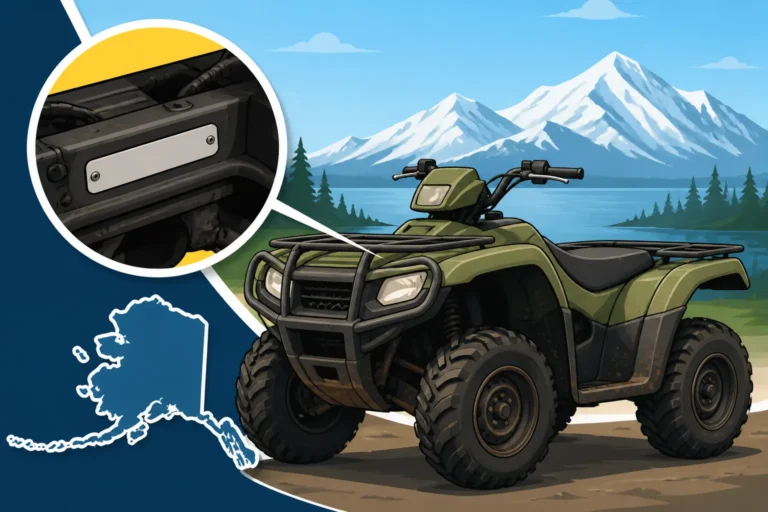
Perhaps the most critical piece of information for your machine is its Vehicle Identification Number (VIN). This unique 17-character alpha-numeric code is your ATV's fingerprint, identifying it unequivocally. The VIN is usually stamped into the frame of your machine, often in an easily accessible location like the front frame, under the seat, or on a crossbar. It’s also present on your MCO, bill of sale, or any previous registration documents. The form will have a dedicated field for you to carefully transcribe this number. [Photographing a VIN Before Winter] is a good practice to ensure you always have it on hand.
Accuracy is absolutely non-negotiable when it comes to the VIN. A single misplaced digit or letter can mean the difference between successfully registering your machine and being stuck in a bureaucratic loop. It could even lead to your machine being incorrectly flagged, or worse, associated with another vehicle's record. Take your time, double-check each character, and even triple-check if you're prone to mixing up similar-looking letters and numbers (like an "O" and a "0," or an "I" and a "1"). This is the number that identifies your specific piece of equipment to law enforcement and the state, so it has to be perfect.
Engine Size and Type: What They're Looking For
The Alaska APV registration form will also likely ask for the engine size, typically expressed in cubic centimeters (cc). This helps further classify your machine. For example, a common utility quad might be a 500cc or 700cc, while a sportier model could be 450cc or even 1000cc. The "type" refers to whether it's a two-stroke or four-stroke engine, though for most modern ATVs and UTVs, it will be a four-stroke. This information is usually found on the manufacturer's spec sheet, your MCO, or listed on your bill of sale.
While not as critical as the VIN, providing accurate engine details ensures the state has a complete profile of your APV. It helps them understand the class of vehicle you're registering and can be relevant for statistical purposes or future regulations. Don't worry if you don't know it off the top of your head; a quick check of your machine's documentation or even a manufacturer's website with your specific model can provide this information quickly. Just like the make, model, and year, these details contribute to the overall identity of your machine on record.
Proving Ownership: What Documents You'll Need to Attach
This section is where many people get tripped up. The state needs to be absolutely sure that you are the rightful owner of the APV you are trying to register. This isn't just a formality; it protects you from potential theft or fraudulent claims. The type of proof you need largely depends on whether your machine is brand new, used, or if you've lost the original paperwork. Always ensure you have the original documents or certified copies, not just photocopies, unless specifically stated otherwise. The state clerk will want to see the real deal.
New Machine Purchases: Warranty Cards and MCOs
If you've just bought a shiny new ATV or UTV from a dealership, proving ownership is usually quite straightforward. The primary document you'll need is the Manufacturer's Certificate of Origin (MCO), also sometimes called a Manufacturer's Statement of Origin (MSO). This document is essentially the vehicle's birth certificate, issued by the factory and assigned to the dealership, then to you. It proves the machine is new and that you are its first retail owner. In some cases, a warranty card filled out by the dealer, confirming your purchase, can also serve as proof. [Using a Warranty Card as Proof of Ownership] is a common practice in Alaska.
The MCO is paramount here. The dealership should provide this to you at the time of purchase. Ensure your name is correctly filled out on it and that it's signed appropriately by the dealer. This document is your direct link to the manufacturer and unequivocally establishes your initial ownership. Without it, even for a brand-new machine, the DMV might not be able to process your registration. Keep this document safe, as it's not just for registration; it's your permanent record of being the original owner.
Used Machine Purchases: Bills of Sale and Affidavits
Buying a used ATV or UTV from a private seller requires a different approach to proving ownership. The most common and accepted document is a clear, detailed bill of sale. This is a legally binding document that transfers ownership from the previous owner to you. A good bill of sale should include: the full names and addresses of both buyer and seller, the date of sale, the make, model, year, and VIN of the machine, the purchase price, and signatures from both parties. If the previous owner had a title, that document, properly assigned to you, would also be critical. [Alaska Bills of Sale for a Used Machine] are essential.
Sometimes, life happens, and people lose paperwork. If the original owner can't provide a bill of sale or has misplaced their previous registration, you might need an affidavit. This is a sworn statement, usually notarized, from the seller confirming the sale of the machine to you. [What an Affidavit Naming the Seller Must Include] is very specific. While an affidavit can help, it's always best to have a robust bill of sale. Tools like LawDepot can be incredibly helpful for creating legally sound bills of sale or affidavits, ensuring all necessary information is included and properly formatted, giving both buyer and seller peace of mind. Without proper documentation for a used machine, you could face significant delays or even be unable to register it.
Special Cases: Missing Paperwork and NTI Registrations
What if you've got an older machine, or one that was passed down, and the original paperwork is long gone? Alaska has provisions for what's called a "No Title Issued" (NTI) registration. This process is designed for owners who genuinely cannot provide traditional proof of ownership due to lost documents, the age of the machine, or other circumstances where a title was never issued. The application will still require you to provide as much detail as possible about the machine and your claim to ownership. You might need to fill out additional forms or provide a sworn statement explaining the situation. [Alaska No Title Issued Registrations] explains this in detail.
The NTI process usually involves a waiting period, typically two years, during which your machine is registered, but a title is not immediately issued. This period allows time for any potential claims against the machine to surface. After this period, and assuming no conflicting claims arise, you can then apply for a full title. This is a lifesaver for many Alaskans who have inherited older machines or purchased them from remote areas where paperwork wasn't always a priority. It's a testament to the state's understanding that not every transaction fits into a neat box, and providing this pathway helps ensure more machines are legally registered.
Choosing Your Registration Term and Fees
After you've provided all the details about yourself and your machine, the form will guide you to select your preferred registration term. This is a straightforward decision, but it's important to understand the options and the associated costs. Alaska offers flexibility here, allowing you to choose a term that best suits your needs and budget.
Two, Four, or Six Years: Making Your Selection
Alaska offers three distinct registration terms for APVs: two years, four years, or six years. Each option provides a different length of time before your registration expires and needs to be renewed. This choice is usually presented as a set of checkboxes on the form. Think about how often you want to deal with paperwork and how long you plan to keep the machine. A longer term means less frequent trips to the DMV, which is a definite plus for many Alaskans who live far from an office. [Two, Four or Six Years at a Time] helps you decide.
Most people tend to pick the longer terms for convenience, knowing they won't have to think about it again for a good while. However, if you're unsure how long you'll own the machine or just prefer to handle things in shorter increments, the two-year option is there. The key is to select the term that makes the most sense for your situation, knowing that each choice has a different upfront cost but ultimately saves you time in the long run.
Understanding the Associated Registration Costs
Each registration term has a corresponding fee. Alaska’s fees are generally quite reasonable. For example, a two-year registration typically costs [Alaska Charges $10 for Two Years], a four-year term costs [Alaska Charges $20 for Four Years], and a six-year term costs [Alaska Charges $30 for Six Years]. These fees are clearly listed on the form, and you'll simply check the box for your chosen term, then add that amount to your total payment. These fees help fund the state's APV programs and maintenance of public lands.
The form will usually have a section to calculate your total fees, which might include the registration fee itself and any other applicable charges, such as replacement decal fees if you're renewing a lost one. Always verify the current fee schedule on the form itself or the DMV website, as costs can change. Having the exact amount ready, whether by check, money order, or debit/credit card (if processing in person), will ensure a smooth transaction. You don't want to get all the way to the counter only to find you're short on funds!
Signing on the Dotted Line and Submission
You're almost there! Once all the details are filled in and you've selected your registration term, the final steps involve signing the document and physically submitting it to the DMV. These might seem like minor details, but incorrect signatures or improper submission methods can cause just as many delays as missing vehicle information.
Who Needs to Sign and Why
The applicant – meaning you, the person whose name is on the registration – must sign and date the form. This signature is a legal declaration that all the information provided on the form is true and accurate to the best of your knowledge. If there are multiple owners listed, all owners usually need to sign. This ensures that everyone involved in the ownership agrees to the registration details. For businesses or organizations, an authorized representative will sign on behalf of the entity.
The signature section is often overlooked, but it's a critical legal component. It solidifies your responsibility for the information and attests to your ownership. Imagine the legal headaches if a form could be submitted without a verified signature! Always sign in blue or black ink, and make sure the date is current. Any alterations or unsigned forms will likely be returned, causing further delays in getting your APV registered.
Where to Submit Your Completed Form and Payment
Once your form is complete and signed, you have a few options for submission. The most common method is to register in person at an Alaska DMV office or one of their partner offices. This allows you to have a clerk review your paperwork on the spot, catch any errors, and often receive your decal immediately. [Registering in Person at a Counter] or [Registering an OHV at a DMV Partner Office] are convenient choices for many. Make sure you have your payment ready, whether it’s cash, check, money order, or a credit/debit card.
While you might be used to online options for many transactions, it's important to remember that [Alaska Has No Online OHV Registration]. You cannot register a new APV online; it must be done in person or by mail. If mailing, ensure you include the completed form, all necessary supporting documents (copies, not originals, unless specified), and a check or money order for the correct fee. Always make a copy of everything for your records before sending it off. Mailing takes longer due to processing and transit times, so if you're in a hurry, an in-person visit is usually the fastest route.
Common Pitfalls and How to Avoid Them
Even with the best intentions, it's easy to make small mistakes on official forms. Recognizing these common pitfalls can help you avoid them, saving you time, frustration, and perhaps even an extra trip to the DMV. The goal is to submit a perfect application the first time around.
Incomplete Forms and How They Delay Your Ride
One of the most frequent reasons for a rejected or delayed registration is an incomplete form. This could be anything from a missing signature, an empty field for your contact number, or forgetting to write down the VIN. Clerks are trained to spot these omissions, and they have to return forms that aren’t fully filled out. Imagine finally getting to the counter, only to be told you've missed a critical piece of information. It's a deflating feeling, especially when you're eager to get your new decal.
To prevent this, treat the form as a checklist. Go through each section carefully, line by line. If a section doesn't apply to your APV (like an odometer reading for a quad that doesn't have one), it's generally acceptable to leave it blank, but make sure you haven't skipped something truly relevant. A good strategy is to fill it out, set it aside for an hour or so, and then come back to it with fresh eyes. Or, even better, have a trusted friend or family member review it for any missed fields. This extra step can save you days or weeks of waiting.
Payment Errors and What to Double-Check
Another common issue arises with the payment. Submitting the wrong amount, whether too much or too little, will undoubtedly cause delays. If you send too little, the DMV can't process your application. If you send too much, they'll have to process a refund, which takes time. Using an expired check, an invalid credit card, or simply miscalculating the total fee can all lead to your application being put on hold.
Before finalizing your payment, especially if mailing it, double-check the fee schedule against the term you've selected. For instance, if you chose a four-year term, ensure your payment matches [Alaska Charges $20 for Four Years]. If paying by check, make sure it's current, signed, and payable to the correct entity (usually "State of Alaska DMV"). If paying in person, confirming the total with the clerk before swiping your card or handing over cash is a good practice. Accuracy in payment is just as crucial as accuracy in your personal and vehicle details.
What Happens After You Submit Your Registration
You've done it! The form is filled out, signed, and submitted, and the payment has been made. Now comes the waiting game, which for many Alaskans, can feel like the longest part. Understanding what to expect after submission can help manage anticipation and ensure you know what to look for in your mailbox.
Processing Times and What to Expect
If you submit your registration in person at a DMV office, you might walk out with your new APV decal and registration card on the same day. That’s definitely the quickest route! However, if you mail your application or if the office is particularly busy, processing times can vary. It’s not uncommon for mailed applications to take a few weeks to process, especially during peak seasons like spring, when everyone is getting ready for summer riding. [Alaska Registration Processing Time] can fluctuate.
While you're waiting, resist the urge to call every other day. The DMV is often swamped, and constant inquiries can actually slow down their process. If you submitted by mail and haven't heard anything after a reasonable amount of time (say, 3-4 weeks), then a polite inquiry might be appropriate. In the meantime, keep a copy of your submitted application and payment receipt handy. This serves as proof that you've done your part while you await the official decal.
Receiving Your Decal and Where to Place It
Once your application is processed, the DMV will mail you your official APV registration decal and a small registration card. The decal is what you'll affix to your machine, proving it's registered. It will display your unique registration number and the expiration date. The registration card is a wallet-sized document that summarizes your machine's details and registration status, and you should carry it with you whenever you ride. [Alaska Issues a Decal, Not a Plate] for APVs.
The decal itself needs to be placed on your machine in a specific way to ensure it's visible. For ATVs, this usually means on the left side of the machine's tunnel or fender, in a clear, unobstructed location. For side-by-sides, it's often on the left-hand side near the driver's position. The exact placement is detailed in state regulations, and clerks can provide guidance. [Alaska Decal Placement on the Tunnel Side] ensures it's easily seen. Making sure the decal is properly affixed and kept clean means a trooper can quickly verify your registration, allowing you to focus on enjoying the ride rather than worrying about paperwork.
Disclaimer
This article is for general informational purposes only and does not constitute professional advice. Laws, prices and regulations vary by location and change over time. Consult a qualified professional for guidance on your specific situation.