Every OHV Registration Term Expires on September 30
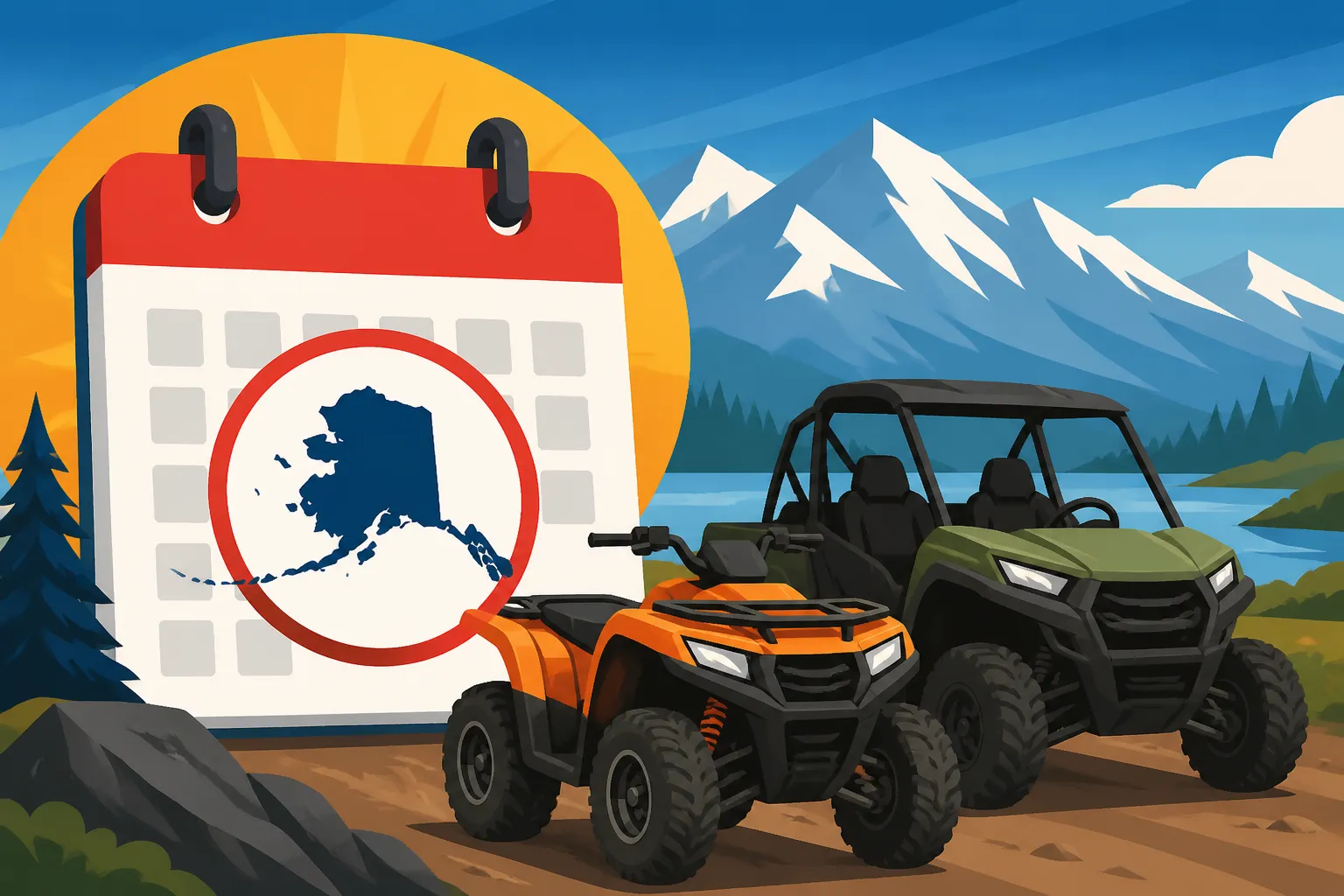
One common frustration for Alaska ATV and UTV owners is the seemingly arbitrary nature of registration expiration dates. You might register your machine in the spring, only to find the decal expires much sooner than a full two, four, or six years later. This guide is here to untangle the confusion and clearly explain why every Alaska OHV registration term, regardless of when you initially register, consistently expires on September 30th.
Understanding Alaska's Uniform Expiration Date
It can feel a bit counterintuitive when you pay for a multi-year registration only to have it expire on a specific date that doesn't quite line up with your purchase anniversary. Many folks assume a two-year decal means exactly 24 months from the day they walk out of the DMV. But in Alaska, the system is designed with a single, universal expiration date for all off-highway vehicles, and that date is always September 30th. This uniformity, while sometimes surprising to new registrants or those unfamiliar with the system, streamlines administrative processes for the state and aims to align with seasonal riding patterns.
Why September 30th? The Logic Behind the Date
The choice of September 30th isn't random; it's a practical decision by the Alaska Division of Motor Vehicles (DMV) to simplify their records and the overall management of the state's vast fleet of OHVs. Imagine trying to track thousands upon thousands of individual registration anniversaries spread out across every single day of the year! It would be an administrative nightmare. By setting a single, annual cutoff, the DMV can process renewals in batches, forecast workload, and manage inventory more efficiently.
Think about it from a seasonal perspective, too. September often marks the winding down of the prime summer and fall riding seasons for many areas of Alaska before the deep snows of winter truly set in. For some, it's a natural transition point, providing a clear deadline before the snow machines come out in force, which have their own specific registration class and rules. This alignment with the changing seasons provides a consistent reminder for riders to check their decals. It also means you’re typically renewing before the full swing of winter riding, giving you time to get your paperwork in order.
The Impact on Two-Year, Four-Year, and Six-Year Terms
So, what does this fixed September 30th expiration mean for the different registration terms offered? If you register your ATV or UTV for a two-year term, you might not get a full 24 months, depending on when you initially purchase that decal. For instance, if you register in October, you'll get almost two full years before the next September 30th. But if you register in August, you'll only get about 13 months before that first September 30th rolls around again the following year. The system essentially "prorates" that initial period to align with the September 30th cycle.
This applies equally to [Alaska Charges $20 for Four Years] and [Alaska Charges $30 for Six Years] registration terms. You pay for the chosen number of years, but the end date is fixed at September 30th. The start date of your term effectively backs up from the next September 30th. It means you're always buying a block of time that terminates on that specific date. For someone who consistently registers for a two-year term, they'll always be looking at the next odd-numbered year's September 30th for expiration if they registered in an even year, and vice versa. It’s crucial to be aware of this, not just for planning your renewal, but also when considering the actual value of your registration term. You can look at the article [Picking a Four-Year Term Over a Two-Year One] to help with this choice.
Navigating Renewal: Timing and Terms
Knowing that every OHV registration term expires on September 30th brings a certain predictability to the renewal process. It removes the guesswork of trying to remember your exact registration anniversary and instead gives you a fixed window to plan for. This can be a huge help, especially if you have multiple machines or if you're managing other responsibilities that pull your attention away from administrative tasks.
When to Renew to Avoid Lapse
The Alaska DMV typically sends out renewal notices, but relying solely on these can be risky, as mail can sometimes get delayed or lost. Since you know the hard deadline is September 30th, it’s a good practice to set a reminder for yourself in early to mid-September. This gives you ample time to gather your documents and complete the renewal process without feeling rushed. You don't want to find yourself scrambling on September 29th, only to discover the DMV office is closed for a holiday or has unusually long wait times.
Renewing a few weeks before the deadline ensures your new decal arrives in time and that you can continue riding legally without any interruptions. If you prefer to renew in person, aiming for earlier in the month also means you'll likely encounter shorter lines and less stress. Remember, you can't officially ride public land with an expired decal, so planning ahead is truly your best strategy. The goal is to have that fresh decal on your machine before October 1st rolls around.
Choosing Your Registration Term Wisely
Alaska offers [Alaska Registration Terms of Two, Four or Six Years], and each comes with its own cost and convenience factor. A two-year term, currently costing around $10, is the cheapest upfront and offers flexibility if you think you might sell your machine or move out of state in the near future. However, it means you'll be dealing with renewals more frequently.
A four-year term, typically around $20, strikes a good balance for many riders. It’s still relatively affordable and cuts down on the frequency of paperwork compared to the two-year option. For the serious, long-term Alaskan rider who knows they’ll be keeping their machine for years to come, the six-year term, at approximately $30, offers the greatest convenience. You essentially set it and forget it for a longer period, minimizing trips to the DMV or the hassle of online renewal. When choosing, consider how long you plan to own the machine, your budget, and how much you dislike administrative tasks. For many, choosing a longer term upfront is a no-brainer for the convenience it offers.
The Practicalities of an Expired Registration
Nobody wants to deal with legal trouble, especially when you're out enjoying Alaska's vast wilderness on your OHV. An expired registration might seem like a minor oversight, but it can lead to frustrating and potentially costly consequences. Understanding these repercussions is key to ensuring you always ride legally and responsibly.
Consequences of Riding with an Expired Decal
Riding an OHV on public land with an expired registration is essentially riding unregistered, and Alaska State Troopers or other law enforcement officers can issue citations for it. At best, you might get a warning if it's a very recent expiration or a first offense, but there's no guarantee. At worst, you could face fines, and in some situations, your machine could even be impounded, though this is less common for just an expired decal compared to more serious infractions.
Think about a scenario: you're out on a beautiful fall day near Jim Creek, enjoying the last of the season's colors. A trooper doing routine checks spots your faded, expired decal. They pull you over. Now, what started as a relaxing ride has turned into a roadside stop, a potential ticket, and a disruption to your day. This can be particularly frustrating if you've simply forgotten the deadline. The fines can add up quickly, not to mention the court costs and the time taken away from your life to deal with it. It’s simply not worth the risk, especially when renewal is straightforward. Just like you wouldn't drive a car with expired tags, don't ride your OHV with an expired decal.
What to Do If Your Registration Has Already Expired
If you've realized your OHV registration has already passed the September 30th deadline, don't panic, but do act quickly. The good news is that Alaska does not typically impose late fees for OHV registration renewals. You won't be penalized for renewing a month or two late beyond the fact that you couldn't legally ride during that time.
Your immediate steps should be to:
- Stop Riding: Do not ride your OHV on any public land until it's properly registered.
- Gather Your Documents: Make sure you have the necessary paperwork, which usually includes your previous registration, proof of ownership, and a completed [The Vehicle Transaction Application Every OHV Owner Files] form (Form V1).
- Choose Your Method: You can renew in person at an Alaska DMV office or one of the authorized [Alaska Partner Offices That Register OHVs]. Many people find this the quickest way to get their new decal in hand.
The key is to rectify the situation as soon as possible. It’s better to be a month late with a valid decal than to continue riding on an expired one. While you cannot register an OHV online in Alaska, the in-person process is generally efficient.
Exceptions and Special Considerations
While the September 30th rule is pretty universal for OHV registrations in Alaska, there are a few nuances that can impact how and when this date affects you. These often come into play with brand-new registrations or when you're buying or selling a machine. Being aware of these specific scenarios can help you navigate the process smoothly.
New Registrations and the September 30th Rule
When you register a brand-new ATV or UTV, or an older machine that has never been registered in Alaska before, that initial registration is also tied to the September 30th expiration date. This means that if you buy a new quad in, say, July, your very first decal might only be valid for a little over a year before the next September 30th. You pay the full two, four, or six-year fee, but the effective duration of that first term is shortened to align with the statewide system.
For example, if you register on July 1st, 2024, for a two-year term, your decal will still expire on September 30th, 2025. You won't get until July 1st, 2026. This is why it's especially important to understand this rule when making a new purchase. The cost structure remains the same, but the initial window can be shorter. It’s just how the system works to maintain that uniform expiration, and it's something every new owner in Alaska quickly learns.
Selling or Transferring an OHV Near Expiration
Selling or transferring an OHV close to the September 30th deadline can introduce a few considerations for both the buyer and the seller. As a seller, if your registration is due to expire soon, you might consider renewing it before the sale. A machine with a fresh decal can be more appealing to a buyer and potentially avoid immediate hassle for them. You don't want the buyer to discover on October 1st that they can't legally ride the machine they just purchased.
For the buyer, if you're purchasing a used OHV in August or September, check the expiration date on the current decal very carefully. If it's about to expire, factor that into your immediate plans. You'll need to transfer the registration into your name and renew it shortly after purchase. The transfer process will require the seller's documentation, like a bill of sale, and for you to fill out the necessary forms. Services like LawDepot can provide a robust template for a [Alaska Bills of Sale for a Used Machine], which will make the transfer of ownership clear and legally sound, ensuring you have the proper proof for registration. Make sure you get all the required paperwork from the seller to avoid delays when you go to register.
Essential Documentation and Process Reminders
Registering or renewing your OHV registration in Alaska isn't overly complicated, but it does require the right documentation. Being prepared with everything you need beforehand can save you a lot of time and a return trip to the DMV or partner office. This attention to detail ensures a smooth and successful transaction.
Required Paperwork for Renewal
When it's time to renew your existing OHV registration, the process is usually quite streamlined. You'll typically need:
- Your most recent registration certificate: This is the easiest way for the DMV to look up your machine's record.
- A completed Vehicle Transaction Application (Form V1): This form is mandatory for nearly all OHV transactions in Alaska. You'll fill out your personal information, the machine's details, and indicate that you're renewing.
- Proof of ownership (if applicable): While generally not required for a simple renewal if your name hasn't changed, if there's any discrepancy or if it's been a long time since your last renewal, they might ask for it. This could be a [Alaska Warranty Cards for a New Machine] for newer machines, or a [Alaska Affidavits Naming a Seller] if you acquired it without a formal title or bill of sale.
- Payment: Be ready to pay the applicable fee for the two, four, or six-year term.
It's always a good idea to bring your driver's license or state ID for identification, even if it's not strictly listed as a requirement for renewal. Having all your documents neatly organized, perhaps in a folder, makes the process much quicker for both you and the DMV clerk.
Where and How to Renew Your Alaska OHV Registration
As mentioned, Alaska does not currently offer [You Cannot Register an Alaska OHV Online]. This means you'll need to handle your registration in person. You have a couple of primary options:
- Alaska DMV Offices: The state's Division of Motor Vehicles offices are the main hubs for all vehicle registrations, including OHVs. You can find locations in major cities like Anchorage, Fairbanks, and Juneau, as well as several smaller communities. Wait times can vary, so consider going during off-peak hours if possible.
- DMV Partner Offices: Alaska has authorized various partner offices, often local title and registration services or auto dealers, to process OHV registrations. These can sometimes offer more convenient locations or shorter wait times. It’s worth checking if there’s a partner office near you.
When you go in person, you’ll present your paperwork, pay the fee, and often receive your new decal on the spot. Make sure to affix it correctly to your machine so it's clearly visible. For placement on a quad, refer to [Where the Decal Goes on a Quad]. Having a fresh decal in hand before September 30th ensures you're ready for whatever adventures the trails hold. If you’re a new resident, the process is similar but may require additional proof of residency, so check out [Alaska Registration for a New Resident].
Alaska OHV Registration Term Expiration Summary
To help clarify the fixed expiration date, here's a quick summary:
| Registration Term | Fee (Approx.) | How Term is Calculated | Expiration Date |
|---|---|---|---|
| Two Years | $10 | Aligns to next Sep 30th | September 30th |
| Four Years | $20 | Aligns to next Sep 30th | September 30th |
| Six Years | $30 | Aligns to next Sep 30th | September 30th |
Remember, the initial purchase date determines how much time you get out of your first term, but the end date is always September 30th. Subsequent renewals will then grant the full two, four, or six years, always ending on that fixed date. This consistent deadline truly simplifies the administrative side of things for everyone involved, even if it requires a little planning on your part!
Disclaimer
This article is for general informational purposes only and does not constitute professional advice. Laws, prices and regulations vary by location and change over time. Consult a qualified professional for guidance on your specific situation.