Why Alaska Riders Travel in Pairs
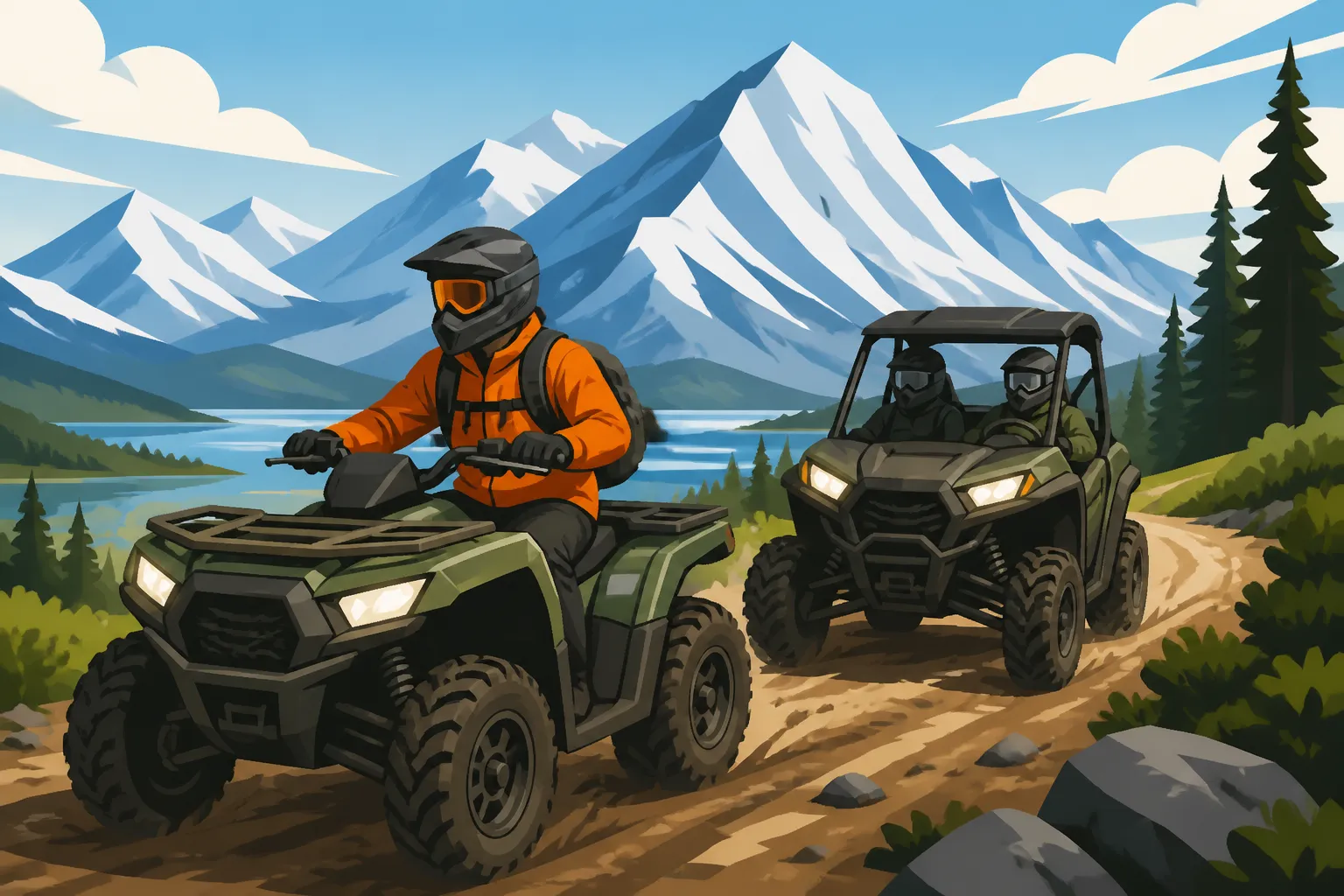
Riding an ATV or UTV in Alaska offers unparalleled freedom and access to some of the most breathtaking wilderness on Earth. However, the sheer scale and unpredictable nature of the Alaskan backcountry present unique challenges that can quickly turn a thrilling adventure into a perilous ordeal, especially when you're alone. That's why, time and again, you'll hear seasoned Alaskan riders emphasize one crucial piece of advice: never ride solo. This guide will delve into the very real reasons why traveling in pairs or a small group isn't just a good idea, it's often a matter of safety and survival here in the Last Frontier.
The Harsh Realities of Alaskan Backcountry Riding
Alaska's wilderness is majestic, but it's also incredibly unforgiving. The vast, remote landscapes demand respect and a proactive approach to safety. When you venture beyond the road system, you're entering an environment where minor mishaps can escalate rapidly.
Unpredictable Terrain and Weather
Imagine a perfect bluebird morning, the sun glinting off the vast expanse of the Knik River Public Use Area, and you're ready for an epic day. Then, within an hour, the clouds roll in, the temperature drops, and a sudden downpour turns what was once a firm trail into a slick, muddy trench. This isn't an exaggeration; it's a common reality in Alaska. Terrain can shift dramatically – from rocky climbs and deep mud bogs to braided glacial river crossings that can rise in depth within hours. You might be riding over what feels like solid ground, only to hit a hidden pocket of overflow ice or a deceptively soft spot that swallows your machine.
Getting stuck is almost an inevitability for any serious Alaskan rider. Whether it's a deep mud hole, a technical section of rocky riverbed, or a machine that just won't start in freezing temperatures, these situations are far easier to manage with an extra set of hands, and ideally, an extra machine. If you're alone and your machine is buried to the frame, or worse, damaged beyond simple trailside repair, you're facing a long, arduous walk out – if you even know which way to go.
Remote and Unforgiving Environment
One of the greatest joys of riding in Alaska is escaping the crowds and finding true solitude. But that solitude comes with a significant trade-off: a near-total lack of infrastructure and communication. Cell service is virtually non-existent once you leave populated areas or the main highway corridors. This means that if something goes wrong, you can't just dial 911. You are truly on your own.
A simple flat tire can become a multi-day ordeal if you don't have the tools or a way to get help. A broken control arm, a fouled spark plug, or a dead battery can leave you stranded miles from any form of civilization. Beyond mechanical issues, there's the ever-present wildlife. Encounters with moose, and particularly bears, are a distinct possibility, especially in areas like the Denali Highway riding corridor or deep in the Mat-Su Valley. While most encounters are non-aggressive, being alone can heighten the danger if an animal feels threatened. [Bear Encounters on a Trail] are a genuine concern, and having another person can offer an additional layer of safety and confidence.
Safety in Numbers: Why a Buddy Is Your Best Bet
The argument for never riding alone isn't about being scared; it's about being prepared and realistic about the unique challenges of the Alaskan backcountry. Having a riding partner (or a few!) provides a crucial layer of safety and problem-solving capability.
Mechanical Failures and Breakdowns
Let's face it, machines break. It's not a question of if, but when. Whether it's a rock tearing a hole in your tire, a branch snagging a brake line, or an electrical gremlin deciding to show up miles from the nearest road, a mechanical failure can bring your ride to a grinding halt. If you're riding with a buddy, that broken machine suddenly doesn't mean your adventure is over. Your partner's machine can often be used to tow yours back to the truck or the nearest accessible point. They can carry spare parts or tools you might not have on your own machine.
Consider a scenario where your quad has a catastrophic breakdown, like a snapped axle. If you're alone, you're looking at potentially abandoning your machine or facing an incredibly difficult extraction. With a partner, one of you can stay with the machine while the other rides out for help or to retrieve a trailer. This dramatically reduces the risk and stress associated with a serious breakdown. Having reliable recovery gear from a company like SuperATV, such as a robust winch or a well-stocked tool kit, becomes even more effective when you have two machines working together.
Medical Emergencies and Accidents
This is perhaps the most critical reason to ride with a partner. Accidents happen, even to the most experienced riders. A rollover, a sudden fall, or an unexpected medical event can leave you injured and incapacitated. If you're alone and unable to move or communicate, help isn't coming unless someone knows exactly where you are and checks in on you regularly.
With a riding buddy, immediate first aid can be administered. Your partner can help stabilize an injury, make you comfortable, and, most importantly, go for help. Whether that means riding out to find cell service, activating a satellite messenger, or performing basic life support, those initial moments after an accident are crucial. [First Aid Hours From a Hospital] in the remote Alaskan wilderness can be dauntingly long, so having someone who can act immediately is invaluable. Even a seemingly minor injury can become life-threatening if you're alone and exposed to the elements.
Navigation and Getting Lost
Alaska's landscapes are vast and can be disorienting, even with a GPS. Trails can fade, snow can obscure landmarks, and dense fog can reduce visibility to mere feet. Two sets of eyes on a map or GPS are always better than one. A partner can help confirm your route, spot subtle trail markers, or notice when you've inadvertently veered off course.
Furthermore, when navigating challenging terrain like river crossings or steep, technical climbs, having a spotter is incredibly helpful. Your buddy can dismount, check the depth of the water, scout the best line, and guide you through tricky sections, preventing you from getting stuck or making a dangerous mistake. They can also ensure that you both stay together, especially if one machine is faster or slower than the other, preventing separation in unfamiliar territory.
Practical Preparations for Group Riding
Riding with a partner significantly enhances safety, but it's not just about showing up with a friend. Proper planning and preparation are still paramount.
Communication and Gear
Before you even hit the trail, establish clear communication protocols. This means more than just yelling over engine noise. Consider investing in two-way radios, especially for larger groups, to stay in touch even when spread out. For areas with no cell service, a satellite messenger like a Garmin inReach or Zoleo is absolutely essential. Every group should have at least one, and ideally, each person or pair should carry one. This allows for emergency SOS calls and text communication with family or friends back home, letting them know your progress. [Choosing a Satellite Messenger for a Backcountry Ride] is a critical decision for Alaskan riders.
Beyond communication, ensure everyone has appropriate gear for the conditions. This includes warm layers, rain gear, plenty of food and water, a comprehensive first-aid kit, a repair kit for basic trailside fixes, a shovel, and bear spray. It's also wise for each machine to carry a robust recovery strap or, even better, a winch. SuperATV offers a range of durable recovery equipment that can be a real lifesaver when you or your buddy inevitably get stuck.
Trip Planning and Contingencies
Good planning starts long before you load your machines. As a group, discuss your route, expected duration, and any potential hazards. Share your trip plan with someone responsible back home, including your intended route, when you expect to return, and what to do if they don't hear from you. [Filing a Trip Plan With Someone] is a basic but often overlooked safety measure.
Develop a contingency plan for various "what if" scenarios. What if someone gets injured? What if a machine breaks down beyond repair? What if you get separated? Agree on designated meeting points if communication is lost or if the group splits up. Discuss who carries what essential gear and how responsibilities will be shared in an emergency. Being proactive in these discussions can save critical time and reduce panic when things go wrong.
Matching Skill Levels and Machines
For a safe and enjoyable group ride, it's generally best to pair riders with similar skill levels and machines that are capable of handling the planned terrain. If you have a mix of beginners and experts, or highly capable machines alongside less robust ones, you might find yourselves constantly waiting or pushing someone beyond their comfort zone.
If there's a significant skill disparity, consider having a more experienced rider buddy up with a less experienced one. Ensure everyone is comfortable with the pace and the technical demands of the trail. Nobody should feel pressured to attempt something they're not ready for. The goal is to explore together, and that means everyone making it back safely and having fun.
Common Scenarios Where a Partner is Indispensable
Let's look at a few concrete examples where having a riding partner truly makes all the difference in the Alaskan backcountry.
The Unexpected River Crossing
Alaska is laced with rivers, and many trails require crossing them. Glacial rivers, in particular, are notorious for their shifting beds, unpredictable depths, and cold, swift currents. What might look like a shallow trickle in the morning can become a roaring torrent by afternoon due to glacial melt. Attempting a crossing alone is incredibly risky.
With a partner, you can approach the crossing much more safely. One rider can dismount and walk the bank (if safe) or use their machine to test the depth and current of the water, scouting the best line. The other rider can watch from a safe distance, ready to assist if the first machine gets stuck or swept downstream. If one machine does get stuck, the other can provide a tow or a point to winch from, preventing a potentially disastrous situation. [Reading a Glacial River Before You Cross] is a skill best practiced with a spotter.
Getting Stuck Deep in the Mud
Mud is an inescapable part of Alaskan riding, especially during spring and fall or after heavy rains. It's not uncommon for machines to get buried up to their fenders, or even completely high-centered, making self-extraction nearly impossible. If you're alone and your machine is hopelessly stuck, you're faced with the grim prospect of digging for hours, potentially worsening the situation, or hiking out.
When you're with a partner, getting stuck simply becomes a temporary inconvenience. One machine can use its winch to pull the other out. Two riders can strategically dig and push, using their combined strength to free a bogged-down quad. Having a reliable SuperATV winch on both machines, along with a tree saver strap and snatch block, multiplies your recovery options exponentially. It turns a potential night spent shivering in the cold into a minor delay before continuing your adventure.
Encountering Wildlife
Alaska's wilderness is home to an incredible array of wildlife, from small mammals to apex predators like grizzly bears and moose. While most encounters are peaceful, coming across a sow with cubs, a bull moose in rut, or a territorial bear can be incredibly intimidating, and potentially dangerous, if you're by yourself.
With a partner, you have a greater presence. Two machines and two people create more noise and appear larger, which can often deter curious or aggressive animals. In the event of a close encounter, two people can more effectively deploy bear spray, make noise, and implement evasive maneuvers while maintaining situational awareness. It's a comforting feeling to know someone else is there to back you up, especially when facing something truly wild.
Here's a quick look at the advantages of riding with a buddy:
| Aspect of Ride | Solo Riding Challenges | Paired Riding Advantages |
|---|---|---|
| Mechanicals | Stranded, difficult self-recovery, long walk for help | Towing capability, shared tools/parts, one rides for help |
| Medical | No immediate first aid, no way to call for help | Immediate first aid, one can call/signal for help, moral support |
| Navigation | Easy to get lost, no second opinion on route | Two sets of eyes, spotter for tough terrain, shared decision-making |
| Emergencies | Vulnerable to elements, wildlife, panic sets in | Shared responsibility, safety in numbers, increased confidence |
| Enjoyment | Less shared experience, isolated if things go wrong | Shared memories, collective problem-solving, stronger bonds |
Ultimately, while the call of the wild can be a powerful draw to venture out alone, the smart and seasoned Alaskan rider understands that the safest and most enjoyable way to experience the backcountry is with a trusted companion. It's not about fear; it's about preparation, respect for the environment, and the understanding that sometimes, your best asset in the Alaskan wilderness is simply another human being by your side. [Alaska Rules Riders Get Wrong] often involve underestimating these core safety principles.
Disclaimer
This article is for general informational purposes only and does not constitute professional advice. Laws, prices and regulations vary by location and change over time. Consult a qualified professional for guidance on your specific situation.