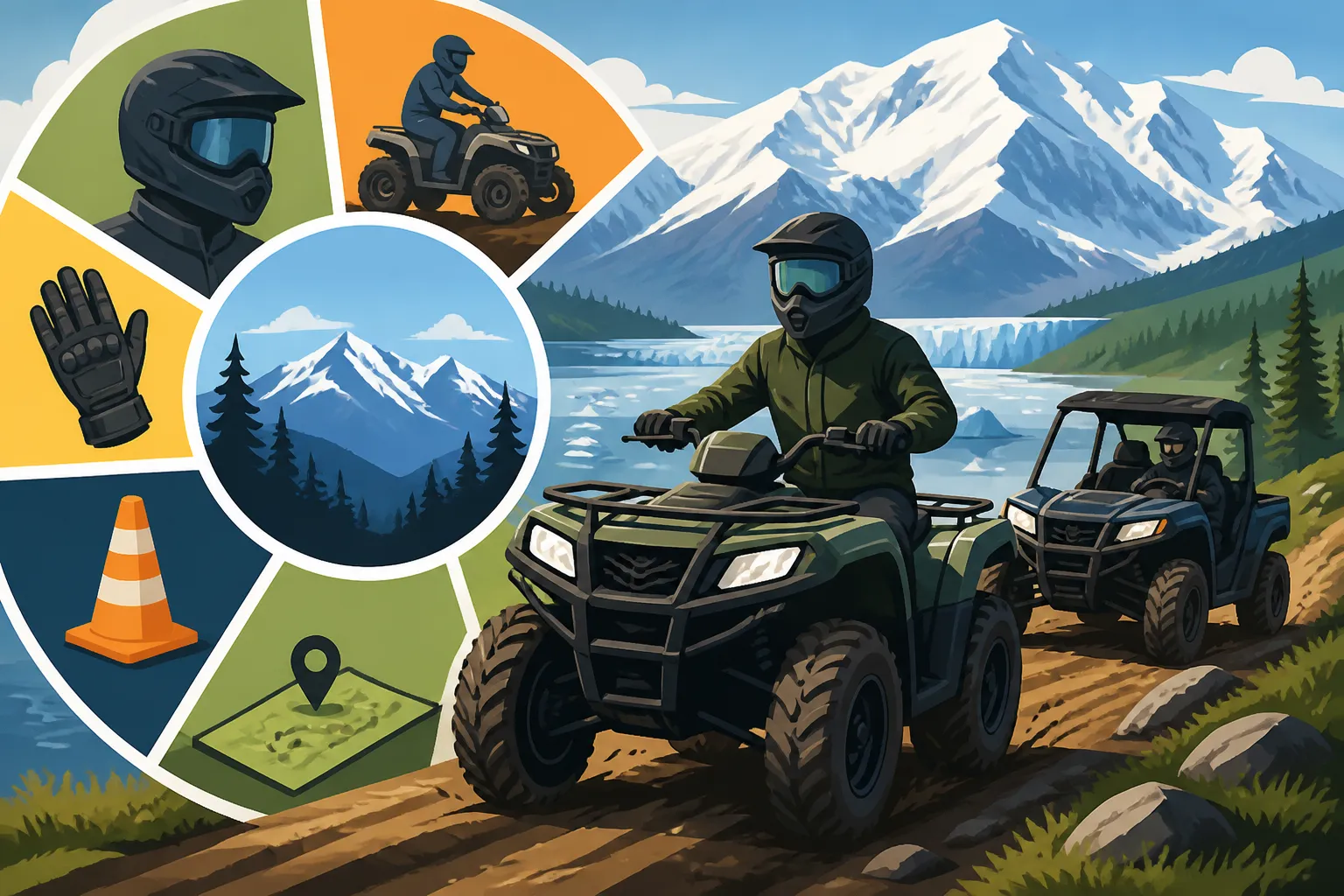
What an Alaska Rider Course Covers
An Alaska rider course can help you feel more in control of an ATV or UTV, but course content and requirements vary. You may be wondering whether it teaches trail skills, satisfies a legal rule, or prepares a young rider for Alaska conditions. Here’s what a course commonly covers, what it can’t replace, and how to decide whether one is right for you.
What an Alaska rider course commonly teaches
There isn’t one universal syllabus for every Alaska ATV or UTV course. A classroom or online course may emphasize knowledge and decision-making, while a hands-on session can give you time to practice controls and riding techniques. Some programs combine both. Ask the provider for its curriculum rather than assuming every course includes the same topics or a practical ride.
Many courses introduce the machine before teaching how to ride it. That foundation can include identifying the controls, understanding the owner’s manual, and learning how an ATV or UTV responds to steering, braking, and acceleration. These basics matter even for experienced riders moving to an unfamiliar machine: controls, handling, and stopping distance can differ between models.
Common topics include:
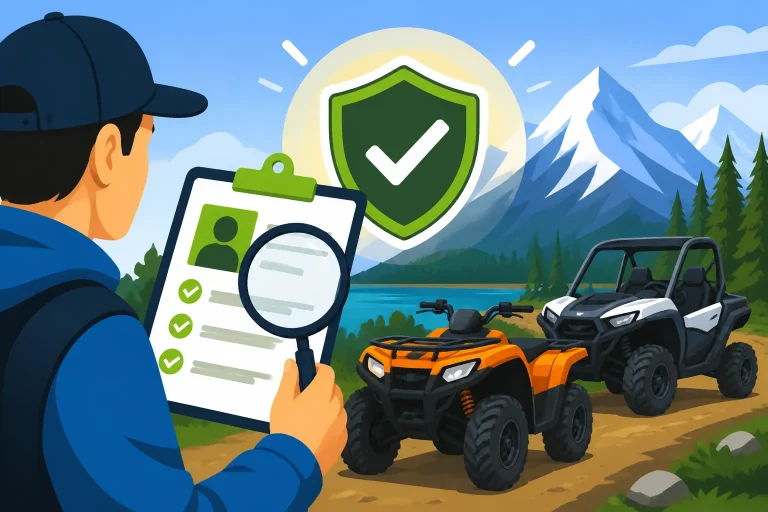
- Pre-ride checks: Looking for visible damage, checking tire condition and pressure, confirming that brakes and lights work, and making sure controls operate as expected.
- Protective equipment: Choosing a properly fitting helmet and appropriate clothing, gloves, and footwear. A course may discuss other protective gear, but its recommendations are not a substitute for checking Alaska’s current requirements. See Alaska ATV Helmet Law Age and Alaska OHV Equipment Requirements.
- Basic control: Starting and stopping smoothly, choosing a manageable speed, steering without abrupt movements, and using the brakes in a controlled way.
- Riding position and balance: Keeping a stable position and adjusting body weight when turning or traveling over uneven ground. The details can differ between a quad and a side-by-side.
- Terrain and hazards: Recognizing that loose gravel, mud, slopes, ruts, water, and changing ground conditions affect traction and control.
- Risk management: Knowing when visibility, fatigue, weather, other trail users, or a machine’s limits make it safer to slow down or turn back.
- Riding responsibly: Respecting posted closures, staying on authorized routes, and avoiding actions that damage trails or land.
A course may also include a walk-around inspection and practice in a controlled area. If the program is classroom-only or online, it may explain safe techniques without giving you a chance to practice them on a machine. That distinction is worth checking before you enroll, especially if your main goal is building confidence with the controls.
| Course element | What it may help you practice or understand | What to ask the provider |
|---|---|---|
| Classroom or online instruction | Safety principles, rules, planning, and hazard recognition | Does the course include Alaska-specific information? |
| Machine familiarization | Controls, basic inspection, and owner’s-manual use | Will the instructor cover the type of machine you ride? |
| Practical exercises | Starting, stopping, turning, and handling selected terrain | Is there hands-on riding, and what skills are assessed? |
| Group discussion | Decisions about passengers, routes, weather, and risk | Can you ask questions about your intended riding area? |
| Completion record | Evidence that you completed that provider’s course | Who accepts the record, and for what purpose? |
Treat this as a general picture, not a promise of what any particular course includes. A provider’s description should say whether it covers ATVs, UTVs, or both, and whether participants ride during the course. If you have a specific concern—such as hill riding, carrying a passenger, or operating a side-by-side—ask directly whether that skill is covered.
Riding skills and judgment that matter in Alaska
Good instruction is about more than memorizing a list of rules. Alaska riding can involve changing weather, remote routes, limited communications, soft ground, water, and long distances from help. A useful course helps riders think through those conditions and recognize when a planned route is beyond their ability or the machine’s capability.
A course might discuss how to assess a slope or an unstable surface, but do not assume a brief class makes every difficult crossing safe. Conditions can change quickly, and terrain that looks manageable from the trail may be unsafe once you approach it. In particular, flowing water and braided channels can hide soft edges, deeper sections, or changing currents. A prudent rider may need to turn around instead of trying to apply a technique learned in a controlled practice area. For more on that decision, see Reading a Glacial River Before You Cross.
Route planning is another valuable subject. Before leaving, riders should consider how long the trip may take, whether the route is open, where fuel is available, and what they will do if a machine breaks down or someone is injured. In areas without cell coverage, a phone may not be a reliable way to call for help. A course may introduce trip planning and emergency preparation, but riders still need to check the route and carry suitable supplies for their own trip.
Courses can also help you think about riding around other people and land uses. A trail may be shared with pedestrians, cyclists, hunters, or other motorized users. Slowing down, leaving room, and avoiding sudden passes can reduce conflict. A course that addresses trail behavior should complement, not replace, local rules and posted signs. Alaska Trail Etiquette Locals Expect offers more context on sharing routes responsibly.
Land access is a separate issue from rider training. Completing a course does not, by itself, give you permission to ride on a particular parcel, open a closed trail, or replace a land-use permit. Before setting out, work out who manages the land and what access rules apply. Alaska’s statewide general permit has limits, and other agencies, private owners, and Alaska Native corporations may have separate requirements. Start with Alaska General Permit Requirements and confirm the rules for the specific ground you plan to use.
A course can help you develop judgment, but it cannot make a route suitable in every season. Wet ground, thawing conditions, and fragile tundra can be damaged by repeated travel. It is important to recognize when riding would cause harm, even if a trail is physically passable. Alaska Tundra and Wetland Conditions explains why ground conditions matter.
Is a rider course required, and what does completion mean?
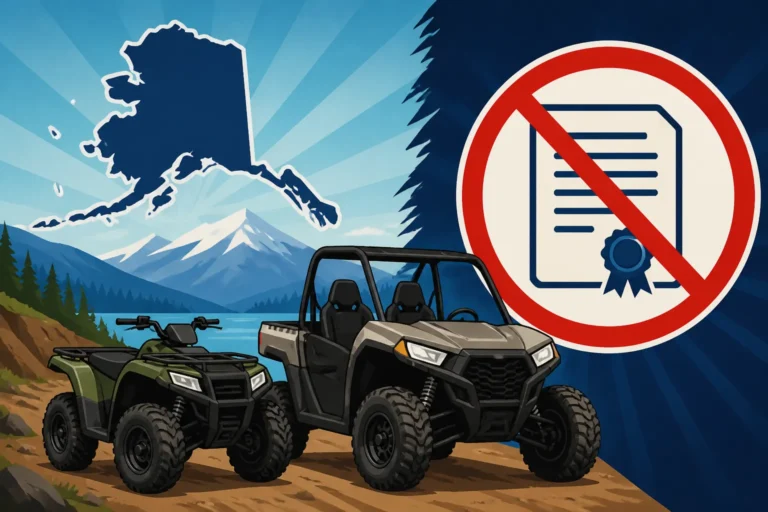
For ordinary ATV riding, Alaska does not have a general statewide safety-certificate rule requiring every rider to complete a course. That does not mean training is unnecessary, or that a course certificate gives you permission to ride anywhere. Registration, land access, equipment, road-use rules, and age-related requirements are separate questions. See Alaska Has No General Safety Certificate Rule for the distinction between a general course requirement and other obligations.
Some locations or organizations may set their own training conditions. A military installation, for example, may require riders to complete specific training before using an ATV or UTV there. Those rules can depend on the installation and the rider’s circumstances, so check directly with the relevant base rather than relying on a general state course certificate. Alaska Military Rider Course Requirements covers that separate situation.
Likewise, a course completion card should not be treated as a permit, registration document, driver’s license, or proof that a machine meets all legal equipment requirements. It shows only what the issuing organization says it shows. If an employer, base, club, or event organizer asks for training, ask which courses it accepts and what documentation it needs.
The same separation matters for riding on public land. A course may teach responsible land use, but it does not automatically satisfy a permit requirement. Conversely, holding a permit does not mean you have received practical instruction or that you can safely manage every trail condition.
For a child or teen, training can be particularly helpful, but it does not replace checking age-related rules, supervision needs, or manufacturer guidance for the machine. A course may teach basic control and hazard awareness; the parent or guardian still has to decide whether a young rider is ready and whether the machine is appropriate. Review Alaska Rules for Young Riders alongside any course information.
Choosing a course and making it useful
Start with your reason for taking a course. You may want to learn basic controls, prepare a young rider, meet a requirement set by an installation or organization, or improve your judgment before a backcountry trip. The best fit depends on that purpose. A course designed to meet a particular organization’s requirement may not provide the hands-on practice you want, and a general safety class may not meet that organization’s criteria.
Before enrolling, ask the provider:
- Does the course cover ATVs, UTVs, or both?
- Is instruction classroom-based, online, hands-on, or a combination?
- Will participants ride a machine, and what skills will they practice?
- Does the course address Alaska riding conditions and local rules?
- Is the course appropriate for the rider’s age and experience?
- What record or certificate is provided after completion?
- Does the organization that requires training accept this specific course?
If the provider describes a hands-on component, find out what machine will be used and whether you may bring your own. Ask about required clothing and protective equipment before the session. A course may provide some equipment or expect participants to arrive prepared; don’t assume either. You should also ask whether beginners are grouped separately from experienced riders and how instructors handle a participant who is not comfortable continuing an exercise.
If you are taking a course to satisfy a requirement, confirm acceptance with the organization that set it before paying or attending. A course title that sounds appropriate is not proof that it meets the organization’s standard. For a general overview of the different training approaches, see Alaska Safety Course Options.
To get more from any course, bring questions tied to real riding decisions. For example, ask how the instruction applies to the kind of machine you operate, what a rider should do when a route becomes unsafe, or how to prepare when communication is limited. Afterward, read the owner’s manual for your own machine and practice basic skills in a permitted, controlled area. Training is most useful when it connects to the machine and terrain you will actually encounter.
Finally, check the current rules for the location where you plan to ride. Course material can become outdated, and a general class may not cover every local restriction. Confirm land access, road-use rules, required equipment, and any applicable permit or registration obligations before the trip. A course gives you tools for safer decisions; it does not replace those checks.
Disclaimer
This article is for general informational purposes only and does not constitute professional advice. Laws, prices and regulations vary by location and change over time. Consult a qualified professional for guidance on your specific situation.