Transporting Meat by Machine
Transporting meat by ATV or UTV in Alaska can make a remote harvest manageable, but the ride is only one part of the job. You also need to confirm that motorized access and game retrieval are allowed where you are hunting, then keep the meat clean, secure and cool. A few checks before departure can prevent a legal problem or a spoiled load.
Check the rules before using a machine
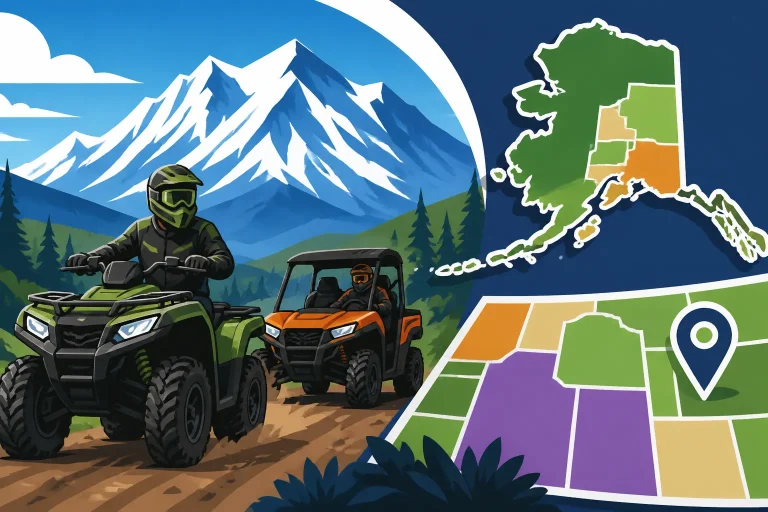
An ATV or UTV is not automatically legal for every part of a hunt. Rules may differ by species, hunting area, season, land manager and type of motorized vehicle. A route that is open for travel may still have restrictions on hunting from a machine, transporting a hunter or gear, or retrieving harvested game.
Read the current regulations for the species and hunt area, including any conditions on your permit or harvest ticket. Pay particular attention to rules about vehicle type, travel route, machine weight, dates and whether a vehicle can be used before or after the harvest. Alaska Hunting Regulations and Machines is a useful starting point for separating general machine access from hunting restrictions. For a specific harvest, Hunting Regulations That Limit Machines and Alaska Game Retrieval by Quad can help you identify the questions to check.
Do not assume that “retrieval” means you can ride anywhere to reach a carcass. Some rules may allow a machine for retrieving game but limit where it can travel or how it can be used. Other rules may prohibit motorized access altogether in a particular area. If the regulation is unclear, contact the agency responsible for that land or ask Alaska Department of Fish and Game about the hunt regulation before you go. Keep any answer tied to the exact area, species and dates you plan to hunt.
Confirm land access as well as hunting rules
Hunting authorization and permission to cross land are separate issues. A hunting license or permit does not necessarily give you permission to ride across private property, Native corporation land, a closed area or land managed by another agency. Check the route, not just the destination. Alaska Land Ownership and Who to Ask explains why identifying the land manager matters, and Alaska Native Land Access Permits covers a common access question.
If you are using a trailhead or staging area, check its parking or day-use requirements too. A trailhead pass does not grant permission to travel across land beyond the trailhead, and a land-use permit does not override hunting restrictions. For public land, confirm which permit or access rules apply to the specific parcel; Do You Have to Carry Alaska’s General Land Permit? can help clarify that distinction.
Keep the airborne rule in its lane
Alaska’s same-day airborne rule is often discussed alongside hunting access, but it is not a general ban on using an ATV or UTV. It concerns aircraft and hunting on the same day. Do not apply it to a ground machine, and do not assume that the rule settles whether a quad can be used to hunt or retrieve game. Those questions depend on the applicable area and species regulations. The Same-Day Airborne Rule for Alaska Hunters explains the aircraft restriction.
| Before the ride | What to verify |
|---|---|
| Hunting rules | Species, area, season, vehicle restrictions and retrieval conditions |
| Land access | Ownership, permission, closures and permitted routes |
| Machine | Whether your ATV or UTV fits the rule’s vehicle definition or limits |
| Harvest documents | Tag, ticket and any required proof or parts that must stay with the animal |
| Route conditions | Trail status, crossings, weather and whether travel could damage the ground |
Prepare the meat before it goes on the machine
Safe transport starts with careful field care. Follow the legal salvage requirements for the species you harvest. The required meat, evidence of sex or other identifying parts can vary by hunt, so check the current regulations rather than relying on a general rule from another area. Keep the required parts with the appropriate meat or documentation as directed, and do not discard, cut away or hide anything that must be presented or retained.
After field dressing or processing, keep meat away from dirt, fuel, exhaust, standing water and the machine’s oily or dirty surfaces. Use clean game bags or other suitable breathable covers. A tarp can protect a load from mud and rain, but tightly wrapping warm meat in an impermeable cover can trap heat and moisture. Protect the meat from insects and contamination while still allowing heat to escape.
Keep meat in manageable, labeled loads. If several animals or hunters are involved, mark bags so you can identify the source and keep each person’s harvest documents straight. Do not combine loads in a way that makes it difficult to identify which meat belongs to which animal or hunter. When regulations require specific parts to remain identifiable, keep those parts with the correct animal’s load.
Before the hunt, pack clean bags, gloves, cord or straps and a way to keep meat off the rack or cargo bed. A small tarp can be useful as a clean work surface, but do not use a dirty tarp that has been in contact with fuel, mud or machine parts. If you are comparing gear online, Amazon is one place to find game bags and tie-downs, but check that bags are breathable and straps are suitable for securing a shifting load.
Choose a load your machine can control
A UTV’s cargo rating or an ATV’s rack capacity is not the same as a guarantee that the machine can handle a load safely on a rough trail. The load, passengers, fuel, tools and other equipment all count. Check the owner’s manual for the machine’s limits, and account for the terrain and route. A heavy load can change braking distance, steering, stability and how the machine reacts on a slope.
Divide meat into smaller loads when needed instead of stacking everything high. Keep the heaviest items low and centered, without blocking lights, controls, the driver’s view or access to required equipment. Secure each load so it cannot slide sideways, fall off over bumps or become caught in a wheel or suspension component. Use rated tie-downs in good condition, and avoid fastening meat where straps can contact hot exhaust parts or sharp edges.
Do not carry more people or cargo than the machine is designed for. A passenger should not be used as a counterweight, and a passenger seat is not a cargo platform. If the machine feels unstable, turns poorly or struggles to stop, reduce the load or make another trip.
Load and haul the meat with care
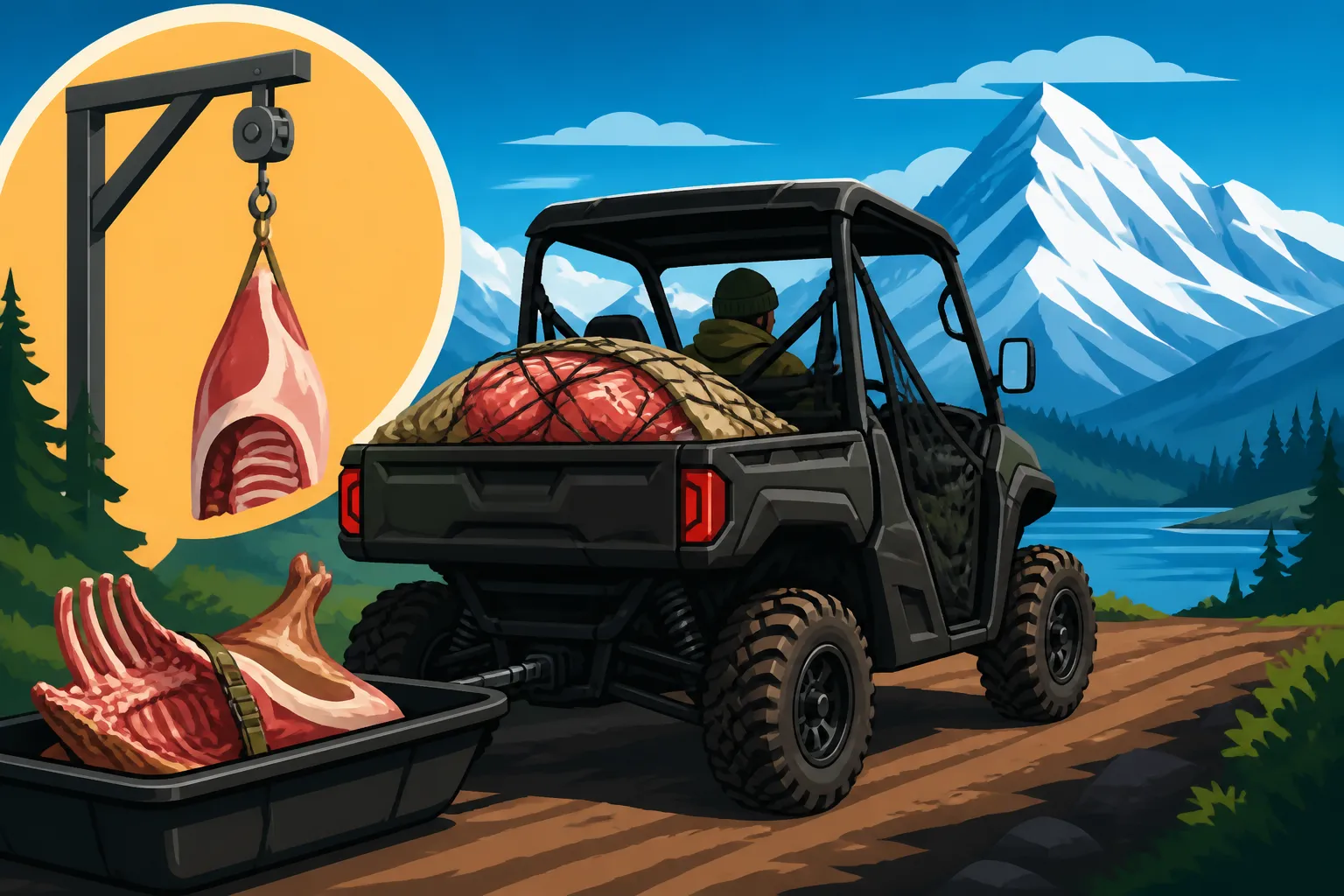
Loading a carcass or quarters onto a machine can be strenuous and risky. Plan the work before lifting: park on firm, level ground if possible, turn the machine off, set the brake and keep helpers clear of moving parts. Use a winch or ramp only if it is designed for the task and attached to a suitable anchor point. Never stand in the path of a tensioned cable or beneath a suspended load.
Once loaded, check that the meat is protected from the rack, bed or trailer surface. Keep it away from exposed metal edges and any place where vibration could rub through a bag. Secure the load, then walk around the machine to check clearance and visibility. Make sure the load does not cover the registration decal or prevent access to controls and safety equipment.
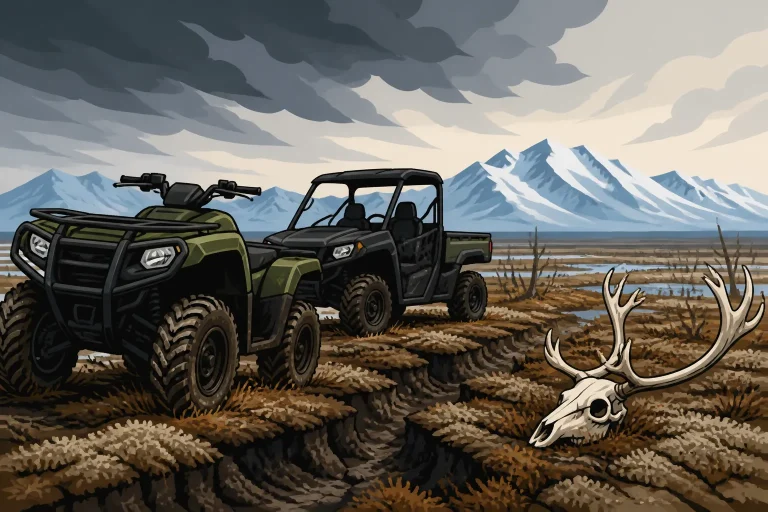
Ride at a pace that lets you respond to uneven ground, washouts, other trail users and wildlife. Sudden turns and hard braking can shift a heavy load. Avoid rough shortcuts that could damage the trail or tundra, and stay on routes permitted for your machine. In wet or thawing conditions, a route that appears passable can become damaging or unsafe quickly. If crossing water is not clearly safe and allowed, turn back rather than risking the machine, the meat or a rescue situation.
For a trip that requires more than one load, secure and transport the first load to a clean, cool location before returning for more if conditions allow. Do not leave meat unattended in a warm machine or in a place where scavengers can reach it. Keep the route and schedule flexible; a change in weather, water level or trail condition may make a planned return unsafe.
A machine failure can complicate meat care. Carry basic repair supplies and a way to communicate if the route has no cell coverage. No Cell Coverage Off the Road System and Filing a Trip Plan With Someone cover practical planning for remote travel. Tell someone your route and expected return, and do not continue deeper into the backcountry just because meat is already loaded.
Cool, inspect and document the load after the ride
At the destination, unload promptly and continue cooling the meat. Keep it in a clean, shaded, ventilated place while you arrange further processing or storage. In cold weather, protect meat from freezing solid before it has cooled appropriately, and in warm weather, prioritize airflow and shade. The right handling depends on conditions and the size of the load; a machine ride does not substitute for proper field care.
Inspect bags and straps when unloading. If a bag has torn or meat has contacted mud, fuel, oil or another contaminant, separate the affected portion and deal with it promptly. Do not leave meat in a closed cargo box or sealed vehicle simply because it is out of the sun. Warmth and trapped moisture can undermine otherwise careful handling.
Keep your harvest documents and identifying parts together and accessible during transport. If an officer or land manager asks about the harvest or the route, being able to show the required paperwork and explain where you traveled can make the interaction clearer. Keep documents dry in a protected pouch, but do not store them somewhere you cannot reach without unloading the machine.
If you are unsure whether a route or retrieval method was allowed, stop before making another trip and seek clarification from the relevant land manager or wildlife office. Do not try to solve a rule question by taking a different route through land you have not checked. Alaska Game Transport by Machine and Alaska Proof of Ownership on the Trail offer related information about carrying and presenting records.
A practical pre-ride routine is simple:
- Match the hunt area and species to the current regulations.
- Confirm that both access and game retrieval by machine are permitted.
- Check land ownership, closures, trail conditions and any required passes or permissions.
- Pack clean game bags, gloves, secure tie-downs and communication equipment.
- Keep the load within the machine’s limits, low, balanced and firmly secured.
- Transport meat promptly, protect required documents and parts, and cool the load after arrival.
The main takeaway is to treat a machine as a tool for transport, not as permission to travel or hunt wherever it can go. Confirm the rules first, then plan a load and route that protect both the meat and your control of the vehicle.
Disclaimer
This article is for general informational purposes only and does not constitute professional advice. Laws, prices and regulations vary by location and change over time. Consult a qualified professional for guidance on your specific situation.