Hunting Regulations That Limit Machines
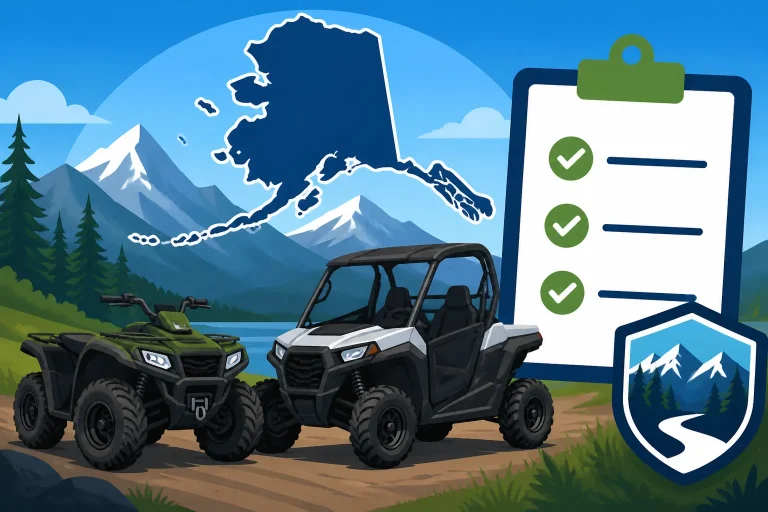
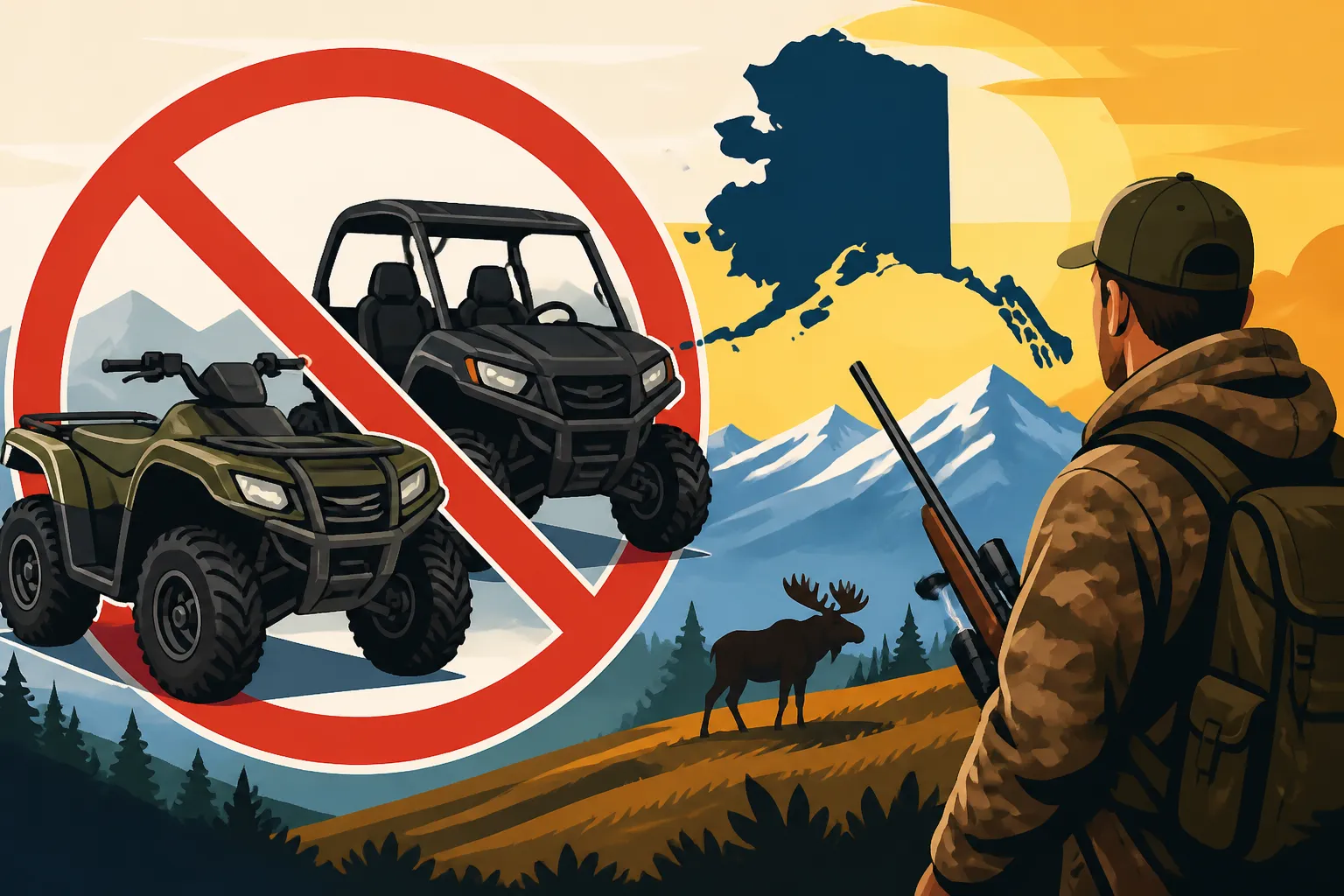
Alaska hunting regulations can make an ATV or UTV legal for one part of a trip and prohibited for another. The answer may depend on the hunt area, season, land manager, machine, and whether you are traveling to hunt or retrieving game. The safest approach is to check those rules separately before you ride.
Why hunting rules can limit ATV and UTV use
A machine can be subject to several different sets of rules at once. Hunting regulations may restrict motorized access for a particular hunt, while land managers set separate rules for the ground you plan to cross. Registration, permits, road-use rules, and access permissions may also apply.
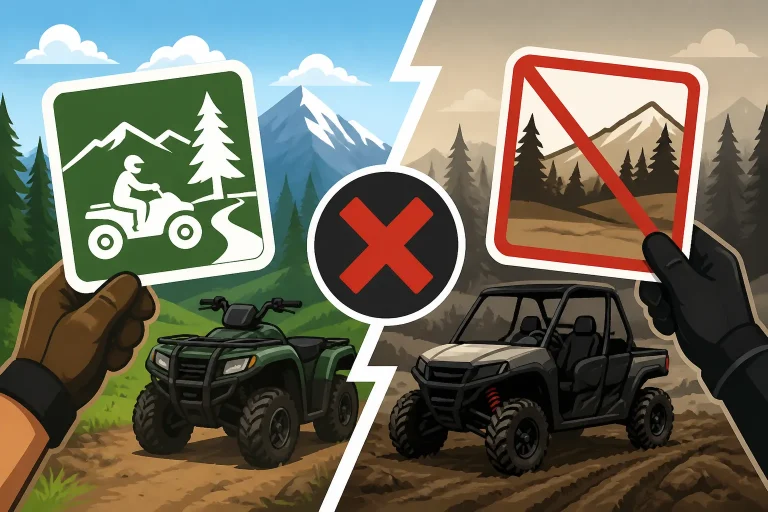
That means an ATV being registered, or a rider having permission to use a trail, does not automatically make the trip lawful for hunting. A route can be open to recreational riding but closed to motorized hunting access. A hunter may also be allowed to travel to a location but not use a machine to pursue or retrieve certain game there.
The details often vary by hunt area and species. Restrictions may apply only during a specified season, to particular kinds of machines, or to certain activities such as transporting hunters, pursuing game, or hauling harvested animals. A rule for one hunt cannot safely be assumed to apply to a neighboring area or a different species.
Separate the trip into its activities
Before heading out, identify what you plan to do with the machine. “Use an ATV for hunting” can mean several things:
- Riding from a trailhead to a hunting location
- Carrying a hunter and gear
- Searching for or pursuing game
- Recovering a harvested animal
- Hauling meat, antlers, or a camp load
- Crossing land to reach a public road or trail
Regulations can treat those activities differently. A rule that limits using a motorized vehicle to hunt or pursue game may not be worded the same way as a rule about transporting a harvested animal. Conversely, being allowed to retrieve an animal does not necessarily mean a machine can be used to locate or pursue it.
Read the wording for the specific hunt rather than relying on a general statement such as “ATVs are allowed in the area.” If the rule is unclear about an activity you intend to do, ask the relevant land manager or wildlife office before the hunt.
Check hunt-specific restrictions first
Start with the current hunting regulations for the species, hunt area, and season. Look for provisions that mention motorized vehicles, off-road vehicles, aircraft, access, retrieval, or transport. Restrictions may appear in the general rules, special hunt conditions, or area-specific descriptions, so checking only the general section can leave out a key limitation.
Alaska Hunting Regulations and Machines is a useful place to understand how hunting rules can affect machine use. The central point is that machine access is not one statewide yes-or-no question: the applicable hunt conditions matter.
Check land access separately from hunting rules
After checking the hunt conditions, determine who manages the route and the ground where you plan to ride. Alaska land can be managed by different agencies or belong to a private owner, a Native corporation, or another entity. Permission or a permit for one parcel does not necessarily grant access across the next one.
A trail can cross more than one kind of land. Check the full route, not only the destination, and confirm whether motorized use is allowed on each segment. Also distinguish between permission to enter land and permission to hunt there. Access does not replace a hunting license, tag, permit, or compliance with hunt conditions.
Alaska Land Ownership and Who to Ask can help you identify the access question to resolve. If you are relying on a statewide permit for state land, verify its boundaries and exclusions before assuming it covers the whole route. Alaska’s General Permit Covers State Land explains the scope of that permit, while Alaska’s Permit Excludes State Parks addresses an important boundary: a state-land permit should not be treated as authorization for every state-managed area.
Private and Native corporation land requires particular care. Public access nearby does not mean a rider may cross private ground, and a hunting license does not itself grant permission to enter land owned by another party. Confirm the owner’s current access requirements before crossing. Alaska Native Land Access Permits provides more context on permission for Native corporation land.
| Question | What to verify | Why it matters |
|---|---|---|
| Is the hunt open to motorized access? | Species, hunt area, dates, and special conditions | A restriction may apply only to a particular hunt or season |
| Is the route open to the machine? | Land manager, trail status, closures, and machine limits | A route may cross land with different rules |
| Do you have access permission? | Permit, landowner authorization, or other required permission | Hunting authorization does not automatically grant land access |
| What will the machine be used for? | Travel, pursuit, retrieval, or transportation | The rules may treat each activity differently |
| Is hauling game allowed by machine? | Current species- and area-specific regulations | Retrieval and transport can have distinct restrictions |
| Are other requirements met? | Registration, equipment, and local rules | Separate riding requirements may still apply |
The table is a planning aid, not a substitute for the actual regulations. Where land status or hunt boundaries are uncertain, resolve that before leaving the road system rather than relying on a map line that may be hard to identify on the ground.
Distinguish hunting access, retrieval, and meat transport
One of the most common sources of confusion is assuming that permission to ride in an area settles every question about using a machine during a hunt. It does not. The rules may distinguish between getting to a location, using a vehicle to pursue game, and moving an animal after a lawful harvest.
Getting to the hunting area
A rule may limit motorized access in a hunt area even when a road, trail, or nearby public land is open to other users. Check whether the restriction concerns a particular type of vehicle, off-road travel, or use within a defined area. Pay attention to dates: seasonal closures can change whether a route is available during the hunt.
Do not infer permission from tracks left by other riders. They may have been made by someone with different authorization, during a different season, or in violation of a closure. Likewise, a route shown on a general recreation map may not be open for hunting access under the applicable regulations.
For broader context on how machine access and hunting intersect, see Alaska Hunting Access by Machine. It is useful to keep the access decision separate from the question of whether you may hunt a particular species in that location.
Pursuing or taking game
Rules can restrict using a machine to pursue, harass, or take game, even where riding itself is allowed. Do not use an ATV or UTV to chase an animal, push it toward another hunter, or otherwise use the vehicle as part of taking game unless the current regulations clearly allow the conduct.
The same-day airborne rule is a separate example of a hunting restriction that can affect a trip. Its application depends on the current regulation and the hunt involved. It is not an ATV access rule, and it does not grant permission to ride or hunt from a machine. Check The Same-Day Airborne Rule for Alaska Hunters and the applicable hunt conditions rather than assuming that an aircraft-related rule answers questions about ground travel.
Retrieving an animal and hauling meat
Retrieval can raise different questions from pursuit. A hunter may have to move an animal from where it was harvested, but that does not automatically authorize driving off an established route or crossing closed ground. Check the current rules for the hunt area, including any restrictions on motorized retrieval and the handling or transportation of game.
Plan the recovery route before the hunt. A legal harvest can still lead to an access problem if the easiest way out crosses land where motorized travel is prohibited. Consider whether the machine can reach the animal without leaving an allowed route, whether the route is safe for the load, and whether another method of retrieval is needed.
Meat transport requirements are also separate from vehicle access. You may need to preserve or transport meat in a way that satisfies the applicable game regulations, regardless of the machine you use. Transporting Meat by Machine covers this issue. Do not treat an ATV’s cargo capacity as proof that a particular transport method is allowed.
A practical pre-ride check for hunters
A short check before the trip can prevent a long return, a citation, or an avoidable access conflict. Make it specific to the planned hunt and route instead of asking only whether ATVs are generally allowed in Alaska.
- Identify the exact hunt. Record the species, hunt area, dates, and any special permit or hunt conditions. Do not rely on rules from another hunt that appears geographically close.
- Read the current regulations for machine use. Search the applicable provisions for motorized access, off-road travel, pursuit, retrieval, and transportation. Check both general rules and the hunt-specific section.
- Trace the entire route. Identify the trailhead, route, crossing points, hunting location, and exit route. Note where the route changes land ownership or management.
- Confirm permission and permit coverage. Determine whether the land manager, private owner, or corporation requires permission or a separate permit. A general land-use permit may not cover every parcel or designated area.
- Define the machine’s role. Decide whether the ATV or UTV will carry people and gear, support retrieval, or transport meat. Check each planned use against the rules.
- Check other riding requirements. Hunting authorization does not replace applicable registration, equipment, road-use, or local requirements. Alaska Registration Before Riding Public Land and Alaska Hunting Regulations and Machines address separate parts of trip planning.
- Carry the information you may need. Keep relevant permits, licenses, and hunt details accessible and protected from weather. Save maps or boundary information for offline use if service is unreliable.
- Have a backup plan. Be prepared to turn around if a route is closed, a boundary is unclear, or conditions make a crossing unsafe. A legal route on paper can still become impractical in the field.
If you cannot confirm a rule, contact the agency or landowner responsible for the specific area. Ask a precise question that describes the hunt, machine, dates, route, and intended use. “Can I ride an ATV there?” may not provide enough detail for a useful answer; “Can I use this machine on this route during this hunt, and may I use it to retrieve and transport harvested game?” is more likely to clarify the relevant limits.
Treat machine access as a series of permissions, not a single approval. The hunt rules determine what you may do as a hunter; land rules determine where you may go; and riding requirements determine whether the machine may be used as planned. Confirm all three before setting out.
Disclaimer
This article is for general informational purposes only and does not constitute professional advice. Laws, prices and regulations vary by location and change over time. Consult a qualified professional for guidance on your specific situation.