Alaska Charges $10 for Two Years
Finding out that registering your all-purpose vehicle (APV) in Alaska can cost as little as $10 for two years might feel like a breath of fresh air, especially when you consider other places where fees can quickly add up. But here in the Last Frontier, that initial low price tag for a two-year registration often sparks more questions than it answers for new and even experienced riders. This guide is here to untangle the details of Alaska's two-year APV registration, what that $10 really covers, and all the crucial information you need to avoid surprises and ensure your machine is properly documented for the trails and beyond.
Understanding Alaska's APV Registration Terms
When you're ready to get your ATV or UTV officially recognized by the state of Alaska, you'll quickly realize that the process isn't just a flat fee or a single term. Alaska offers a few different options for how long your registration will last, and understanding these choices is the first step toward making an informed decision. It's not just about the cheapest option, but about what makes the most sense for your riding habits and ownership plans.
The Basic Registration Options
Alaska gives you the flexibility to choose between two, four, or six-year registration terms for your all-purpose vehicle. This is a pretty unique system compared to many other states that often stick to a one or two-year cycle. While the initial thought might be to just pick the longest term for convenience, there are genuine reasons why someone might opt for a shorter term, like the two-year option. Each term has its own specific fee, with the cost increasing proportionally with the length of the registration. This tiered structure aims to accommodate different riders, whether you're a seasonal user, someone testing the waters with a new machine, or a long-time enthusiast committed to years of trail riding. It's important to remember that these fees are set by the state and are specifically for the registration, which gets you that all-important decal. For a full breakdown of the available options, check out our guide on [Alaska OHV Registration Terms Explained].
What "All-Purpose Vehicle" Means
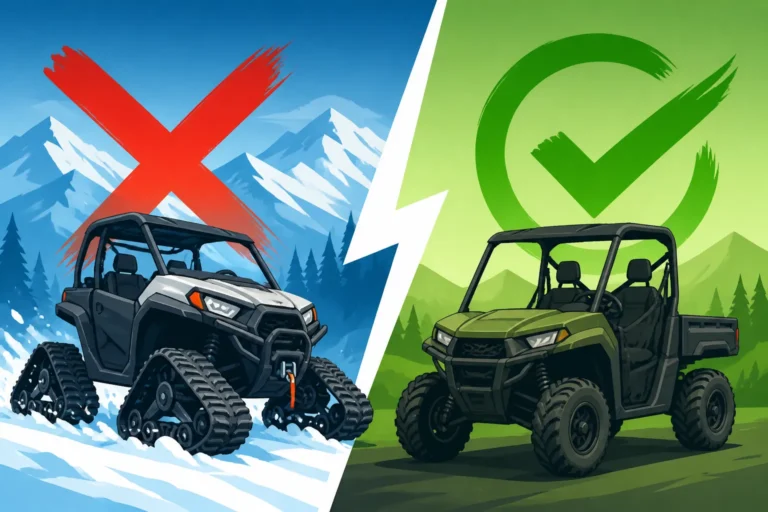
Before we dive deeper into the $10 two-year term, it's crucial to understand what kind of machines Alaska categorizes as an "All-Purpose Vehicle," or APV. This isn't just a fancy name; it defines which vehicles are eligible for this type of registration. In Alaska, an APV is generally a motor vehicle, not a motorcycle, designed to travel on land other than a highway, with a width of 70 inches or less, an unladen weight of 1,200 pounds or less, and a wheelbase of 60 inches or less, or a width of 64 inches or less, an unladen weight of 2,000 pounds or less, and a wheelbase of 90 inches or less. This includes your typical four-wheel ATVs and many side-by-sides (UTVs) that fit these dimensions. Snowmachines, tracked vehicles, homemade ATVs, and most three-wheelers typically fall outside the APV classification and have different or no registration requirements. Understanding this definition is key to knowing if your machine even qualifies for the $10 two-year registration. For a comprehensive look at what falls under this category, read our article on [Alaska's APV Class Explained].
The $10 Two-Year Term: What It Really Means
So, you've heard about the $10 registration fee for two years. For many, that sounds almost too good to be true, especially considering the cost of just about everything else these days. It's a genuine figure, but like much of life in Alaska, there are a few nuances to understand so you're not caught off guard. This isn't a trick, but it does require paying attention to the details of how Alaska handles its APV registrations and what that simple fee actually entails.
Breaking Down the $10 Fee
The $10 fee for a two-year APV registration is the base state fee that covers the issuance of your registration certificate and the all-important decal. This decal is what you'll proudly display on your machine, signifying that it's registered with the state. Unlike cars or trucks, APVs in Alaska don't get traditional license plates; instead, you'll receive a registration decal. This decal includes your registration number and indicates the expiration year. The fee itself goes towards the administration of the state's APV program, helping to manage records and ensure compliance. It's a remarkably low cost for two years of official state registration, making it accessible for many riders. When you complete your registration, this is the amount you'll pay directly to the state for the registration portion of the process. You can learn more about what you receive instead of a plate by reading [Alaska Issues a Decal, Not a Plate].
The September 30th Expiration Rule
Here's where that $10 two-year term gets a little interesting, and it's a detail that often trips up new riders or those accustomed to other state's systems. Regardless of when you register your APV, every Alaska APV registration term, whether it's two, four, or six years, expires on September 30th. This means that if you register your machine in, say, March of 2024, your "two-year" registration won't last until March of 2026. Instead, it will expire on September 30th, 2025.
What this effectively means is that your actual registration period for a two-year decal can range from just over one year (if you register in October) to nearly two full years (if you register in late September). The state doesn't prorate the fee based on the remaining time until September 30th. So, while the fee is indeed $10 for two years, the clock starts ticking from when you register until the next September 30th, and then to the September 30th of the following year. This is a critical point to understand when choosing your registration term, as it directly impacts the actual duration of your registration. It's a common point of confusion, and we dive deeper into it in [Every OHV Registration Term Expires on September 30].
When a Two-Year Registration Makes Sense
Given the September 30th expiration rule, choosing a two-year term for your APV registration isn't always about maximizing value per year. Sometimes, it's the most practical, strategic, or necessary choice for your unique situation. Understanding these scenarios can help you decide if the $10 two-year option is the right fit for you and your machine.
Short-Term Ownership or Uncertainty
There are several reasons why you might only plan to own an APV for a shorter period, or why your ownership status might be uncertain. Perhaps you're moving out of state in the near future and don't want to pay for a longer registration you won't fully use. Maybe you've purchased a machine primarily for a specific project or a short hunting season, with intentions to sell it once that purpose is fulfilled. Or, you might be someone who enjoys frequently upgrading your machines, and a two-year term aligns better with your typical trade-in cycle.
Another common scenario involves a new-to-you used machine. If you're not entirely sure about the machine's long-term reliability or if it's the right fit for your needs, starting with a two-year registration allows you to get it legally on the trails without committing to a larger upfront fee for a longer term. It offers a kind of trial period for your registration, giving you flexibility without the pressure of a longer commitment. This approach can save you money if your plans change sooner than expected, avoiding the hassle of trying to get a refund for an unused portion of a longer registration term.
Budgeting and Initial Costs
For many Alaskans, managing finances means making choices that reduce immediate out-of-pocket expenses. Even if the per-year cost of a two-year registration might technically be slightly higher than a four or six-year term when you account for the September 30th rule, the initial $10 outlay is significantly less than the $20 for four years or $30 for six years. This lower upfront cost can be a major factor for individuals or families on a tight budget, especially when combined with the other expenses of acquiring an APV, such as the purchase price, gear, and potentially insurance.
Sometimes, riders just need to get their machine legal now without delay, and the $10 fee is the most accessible entry point. It allows them to hit the trails or access their cabin promptly, deferring the decision about a longer-term registration until their next renewal cycle. While a four or six-year registration can offer more convenience and a better "per-year" value in the long run, the two-year option provides crucial financial flexibility and a lower barrier to entry for many Alaskan APV enthusiasts.
Waiting for a Title or Other Paperwork
One of the most practical reasons to opt for a two-year registration is when you're dealing with a machine that lacks proper titling paperwork or is in the process of getting it sorted. Alaska has specific provisions for [Alaska No Title Issued Registrations], which can sometimes involve a waiting period before a title can be issued. In these situations, you might be able to register your machine for a two-year period, but a title won't be immediately generated.
If you've bought an older machine with a lost title, or from a private party who never formally titled it themselves, you might find yourself in a situation where you can only secure a two-year registration initially. This gives you time to gather the necessary documentation or fulfill the requirements for a future title. For example, Alaska has a [Alaska's Two-Year NTI Waiting Period] during which your machine is registered, but no title is issued. A two-year registration aligns perfectly with this waiting period, allowing you to legally operate your APV while the title process unfolds in the background. Once that period is over and all conditions are met, you can then apply for a full title. This temporary registration allows you to enjoy your machine without being stuck in bureaucratic limbo.
The Full Registration Process and What to Expect
Paying your $10 for a two-year registration is just one step in the broader process of getting your APV legally ready for Alaska's vast wilderness. There's paperwork to fill out, documents to gather, and specific places you need to go. Understanding the entire sequence will help you prepare and ensure a smooth experience, so you can spend less time at the DMV and more time on the trails.
Required Paperwork for Registration
Registering an APV in Alaska requires specific documents to prove ownership and properly identify your machine. The exact paperwork can vary slightly depending on whether your machine is new or used, and where you acquired it.
For a new APV purchased from a dealer, you'll typically need the Manufacturer's Certificate of Origin (MCO) or a similar ownership document, often provided at the time of sale. If you're buying a used machine from a private party, a bill of sale is crucial. This document needs to clearly identify the machine (make, model, VIN) and the seller and buyer, along with the purchase price. Sometimes, if a bill of sale isn't available or sufficient, an affidavit naming the seller might be required, especially for older machines or those passed down through families. For machines that have been titled in other states, you might need the out-of-state title.
It's always a good idea to gather all relevant paperwork before heading to the DMV. If you're unsure about what a valid bill of sale should include, or need an affidavit, online legal document services like LawDepot can be incredibly helpful for generating state-specific templates. They can provide a structured framework to ensure you have all the necessary information for documents like [Alaska Bills of Sale for a Used Machine] or [Alaska Affidavits Naming a Seller]. When you go to register, you'll also fill out the "Vehicle Transaction Application," which is the main form for all APV registrations. Our article [What Alaska's ATV Registration Form Asks For] details what information you'll need to provide on this form.
Where and How to Register
Once you have all your paperwork in order, the next step is to actually submit it and pay your $10 fee. Unlike many other state services, you cannot register an APV online in Alaska. This means a trip to a physical location is necessary.
You have a couple of options:
- Alaska Division of Motor Vehicles (DMV) Offices: These are the primary locations for vehicle transactions, including APV registrations. You can find DMV offices in larger communities across the state, such as Anchorage, Fairbanks, Juneau, and Palmer.
- DMV Partner Offices: In more remote areas or smaller communities, the DMV partners with certain businesses or local government offices that are authorized to process vehicle registrations. These partner offices can be a lifesaver for those who don't live near a main DMV branch.
Regardless of where you go, be prepared for potential wait times, especially during peak hours. Bring all original documents and be ready to pay your $10 fee. After processing, you'll receive your registration certificate and the decal. Remember, [Alaska Has No Online OHV Registration], so plan accordingly. Many Alaskans find it helpful to call ahead or check the local DMV website for operating hours and required documents. For a list of authorized locations, check out [Alaska Partner Offices That Register OHVs].
The Decal: What You Get Instead of a Plate
As mentioned, APVs in Alaska do not receive traditional metal license plates like cars and trucks. Instead, you'll be issued a registration decal. This decal is usually a sticker that displays your registration number, the expiration year, and sometimes the registration term (e.g., "2YR"). This decal serves as your proof of registration and must be visibly displayed on your machine when operating on public lands or trails.
The state has specific rules about where the decal should be placed to ensure it's easily seen by law enforcement or land managers. For most ATVs, the decal is typically placed on the left-hand side of the machine, on the tunnel side, or a similar visible, flat surface. For side-by-sides, there might be slightly different instructions, often on the left rear fender or a specific panel. The key is visibility. It needs to be placed so that someone can clearly read the information on it without difficulty. Keeping it clean and free from mud or snow buildup is also important. For detailed instructions on placement, consult [Alaska Decal Placement on the Tunnel Side] and [Alaska Decal Placement on a Side-by-Side].
| Registration Term | Alaska State Fee | Expires On | Typical Use Case |
|---|---|---|---|
| Two Years | $10 | Sept 30th | Short-term ownership, budgeting, NTI processing |
| Four Years | $20 | Sept 30th | Standard ownership, less frequent renewal |
| Six Years | $30 | Sept 30th | Long-term ownership, maximum convenience |
Beyond the $10: Other Potential Costs and Considerations
While the $10 two-year registration fee is indeed attractive, it's essential to understand that it’s just one piece of the financial and legal puzzle for APV ownership in Alaska. There are other potential costs and vital considerations that riders often overlook, which can lead to unexpected expenses or legal issues if not addressed. Being prepared for these additional factors will ensure you’re truly ready to hit the trails responsibly and legally.
Titling Fees (If Applicable)
It's a common misconception that registration and titling are the same thing, or that a single fee covers both. In Alaska, they are separate processes, though often handled at the same DMV counter. Since 2022, [Alaska APV Titling Required Since 2022] for most machines, meaning if your APV meets certain criteria, it will need both a registration and a title. The $10 fee covers only the registration decal and certificate. If your machine also requires a title, there will be an additional, separate fee for the titling process. This fee is typically a one-time cost for the initial issuance of the title or when transferring ownership. It's crucial to confirm whether your specific APV needs a title and to budget for this additional cost. Ignoring the titling requirement can create significant problems down the line, especially if you plan to sell the machine.
Borough or Local Taxes
Alaska is famous for not having a statewide sales tax, which is a fantastic benefit for residents and visitors alike. However, this doesn't mean you're entirely exempt from sales taxes on purchases. Many boroughs and municipalities in Alaska levy their own local sales taxes. This means that when you purchase an APV, whether new from a dealer or used from a private seller, you might be subject to a local sales tax depending on where the transaction takes place.
These local taxes are completely separate from your state registration fee and can add a significant amount to the overall cost of acquiring your machine. For example, if you buy an APV in a borough with a 4% sales tax, that percentage will be applied to the purchase price, not just to your $10 registration. It's wise to research the sales tax rates in your specific borough or the borough where you intend to make your purchase. This information can often be found on the local government's website. Being aware of these potential [Alaska Borough Taxes on a Machine] will help you accurately budget for your APV investment.
Transferring Ownership and Affidavits
When you buy a used APV from a private seller, or if you're selling one yourself, accurately transferring ownership is paramount. A properly executed bill of sale is typically the primary document for this. This document should clearly list the buyer and seller, the machine's vehicle identification number (VIN), make, model, year, and the agreed-upon sale price. Without a clear chain of ownership, future registration and titling can become a bureaucratic nightmare.
In situations where a formal title isn't available (e.g., for very old machines, or in states where titles weren't issued for ATVs), or if the previous owner has simply lost critical paperwork, an affidavit naming the seller can be used as supplementary proof of ownership. This legal document essentially swears under penalty of perjury that a person sold the machine to another. This is where services like LawDepot can be invaluable. They provide templates and guidance for creating legally sound documents, ensuring that you have the correct format and content for an affidavit or a comprehensive bill of sale, protecting both buyer and seller. This proactive step can prevent headaches during the registration process and protect your investment.
Insurance and Safety
The $10 you pay for a two-year registration ensures your APV is recognized by the state for legal operation on public lands. However, it does not include or cover insurance. In Alaska, liability insurance is a requirement for APVs operated on public roads and highways, even if you're just crossing them or riding on a designated shoulder. While it's not universally required for all off-road use, carrying APV insurance is always a smart decision for protecting yourself, your machine, and others.
Insurance costs will be a separate, ongoing expense beyond your registration fee. Policies can vary widely based on the type of machine, your riding habits, location, and the level of coverage you choose (e.g., liability, collision, comprehensive). It's crucial to factor insurance into your overall cost of ownership. Beyond insurance, consider investing in safety gear such as helmets, goggles, and appropriate riding apparel. While not directly tied to the $10 registration fee, these are essential components of responsible and enjoyable APV use in Alaska, helping to prevent accidents and ensure you're compliant with rules like [Alaska Helmet Law for Riders Under 16]. For more details on what's required, review [Alaska Insurance Requirements for an APV].
Disclaimer
This article is for general informational purposes only and does not constitute professional advice. Laws, prices and regulations vary by location and change over time. Consult a qualified professional for guidance on your specific situation.