Do You Need to Register an ATV in Alaska?
Navigating the rules for owning and operating an ATV or UTV in Alaska can feel like trying to find your way through a thick fog without a map. Many Alaskans get their new machine, eager to hit the trails, only to realize they’re not entirely sure if it needs to be registered with the state. This guide is here to clear the air, breaking down exactly when and why your all-purpose vehicle needs to be registered in the Last Frontier, and what steps you'll need to take to do it right.
The Short Answer: Yes, If You Ride on Public Land
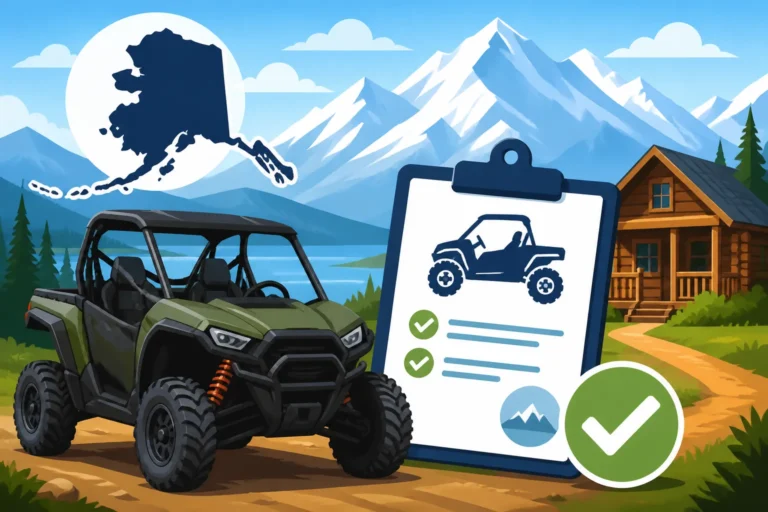
Let's cut right to the chase: In Alaska, if you plan to operate your all-purpose vehicle (APV) on public lands, you absolutely need to register it. This isn't just about official trails; "public land" encompasses a vast range of areas, including state lands, borough lands, and even certain public easements and frozen waterways. The moment your tires touch ground that isn't exclusively private property, the requirement for registration kicks in. It's a fundamental aspect of responsible off-road vehicle ownership here, ensuring that you're compliant with state regulations and contributing to the maintenance and management of our shared outdoor spaces.
What is an All-Purpose Vehicle (APV) in Alaska?
Before we dive deeper into the "where and when," it's crucial to understand what the state of Alaska actually considers an "All-Purpose Vehicle" for registration purposes. The term "APV" is broad, but it generally covers the types of off-road machines most Alaskans think of when they talk about ATVs and UTVs. This class includes your traditional four-wheel ATVs (quads), side-by-sides (UTVs), and dirt bikes. If it's designed for off-highway use and doesn't fall into specific exclusions, it's likely an APV.
However, it's important to note that not every off-road machine fits into this category. For instance, Alaska specifically excludes snowmobiles (often called snowmachines here) and certain tracked vehicles from the APV definition. Snowmachines have their own distinct registration system, reflecting their unique operational environment. Similarly, a specialized tracked vehicle used perhaps for heavy-duty remote work might not be considered an APV. Understanding [Alaska's APV Class Explained] is the first step in knowing if your machine needs to follow these rules. For most recreational riders, if you're on a quad, a side-by-side, or a dirt bike, you're likely operating an APV.
The Public Land Trigger for Registration
The distinction between private and public land is the lynchpin of Alaska's APV registration requirements. You could own a sprawling private property, miles from any public road or trail, and ride your ATV exclusively within its boundaries. In such a scenario, the state does not require your machine to be registered. This exemption is quite clear: [Riding Only on Your Own Ground] means no state decal is needed. This is a common situation for those who use their machines primarily for work on their own homesteads, cabin properties, or remote private land holdings.
However, the moment your planned route takes you off your private land and onto any piece of public property, the registration mandate becomes active. This includes designated public trails, state park lands, Bureau of Land Management (BLM) property, borough land, and even crossing publicly maintained roads or frozen rivers. Many remote cabins in Alaska are accessed via a mix of private and public easements or trails. Even if you're only traversing a short section of public ground to get to your private parcel, that act of using [Public Property as the Trigger] means your machine needs to be registered. For those who frequently transition between private and public parcels, such as riding to a fishing spot or hunting grounds, understanding this trigger is critical. [When a Quad on Private Land Needs No Alaska Decal] is a crucial piece of knowledge, but it's equally important to know when that exemption no longer applies.
Understanding Alaska's Registration Exemptions and Unique Situations
While the general rule is to register for public land use, Alaska's diverse geography and unique lifestyle create several scenarios where the rules might be different. Knowing these exemptions and exclusions can save you time, money, and potential headaches down the trail. It's not always a simple yes or no, and understanding the nuances is part of being a responsible Alaskan rider.
When You Might Not Need to Register Your ATV
Beyond the clear-cut private land exemption, there are a few other situations where your APV might not require registration. The most straightforward is simply keeping your machine entirely on your own property. If you bought a quad for yard work or to traverse your large, private homestead and have no intention of ever taking it off that ground, then [Alaska Private Land Registration Exemption] applies. This is common for older machines or those used purely for utility functions on a private farm or ranch.
Another scenario involves machines that are essentially stored or used very infrequently and never on public land. For example, a machine kept at a remote cabin that is only used to run between the cabin and a small private airstrip, and never touches a public trail, technically wouldn't need registration. However, many "cabin machines" eventually see use on trails that cross state land, making registration a necessity. Similarly, some subsistence users might believe their machines are exempt, but if they travel over public land to reach their hunting or fishing grounds, registration is required. The key is always the "public land" factor. If you own a machine solely for use on a [Alaska Registration for a Mining Claim Machine] that is entirely enclosed within private property, for instance, you'd be exempt.
Specific Exclusions from APV Registration
Alaska also has a list of specific machines that, by definition, are excluded from the APV registration class altogether. This doesn't mean they're exempt; it means they fall under different rules or simply cannot be registered as an APV. Knowing [Machines Alaska Will Not Register as an APV] is important, as attempting to register one of these as an APV will be a frustrating and ultimately unsuccessful endeavor.
For example, [Alaska Excludes Homemade ATVs] from APV registration. While creative Alaskans might craft incredible custom vehicles, the state's APV definition requires manufacturer-produced machines with verifiable Vehicle Identification Numbers (VINs). Three-wheeled ATVs are another category that cannot be registered as an APV in Alaska. Due to safety concerns and differing design standards, [Alaska Excludes Three-Wheelers] from this class. If you own one of these, you'll find the DMV cannot process it under the APV designation. Similarly, certain large or specialized tracked vehicles, while off-road capable, are not classified as APVs, as [Alaska Excludes Tracked Vehicles] from this registration category. It's crucial to confirm your machine's classification before heading to the DMV to avoid a wasted trip.
The Alaska ATV Registration Process: What to Expect
Once you've determined your ATV or UTV needs to be registered, the process itself is fairly straightforward, though it does require gathering the right paperwork and making an in-person visit. Unlike some states, Alaska does not offer an online registration option for APVs, so planning a trip to a Department of Motor Vehicles (DMV) office or a partner office is part of the deal.
Required Documents for a Smooth Registration
To register your APV, you'll need to provide proof of ownership. This is often where things get a little tricky, especially for used machines or those that have been passed down through generations. The most common forms of proof of ownership include:
- Manufacturer's Certificate of Origin (MCO): This is for brand-new machines, provided by the dealer at the time of purchase.
- Bill of Sale: For used machines purchased from a private seller, a detailed bill of sale is essential. It should include the seller's and buyer's information, the machine's VIN, sale price, and date. You can find customizable templates for such documents from resources like LawDepot, which can help ensure all necessary information is included. This helps cover both parties and establishes a clear ownership chain. [Alaska Bills of Sale for a Used Machine] are critical for used purchases.
- Warranty Card: Some new machines might come with a warranty card that serves as proof of initial purchase from a dealer. [Alaska Warranty Cards for a New Machine] can sometimes be used in lieu of an MCO, particularly if the MCO was misplaced but the machine is clearly new.
- Affidavit: In cases where traditional paperwork like an MCO or a clear bill of sale is unavailable (perhaps for an older machine, or one acquired through unusual circumstances), you might need to complete an affidavit attesting to your ownership. This is a sworn statement, and services like LawDepot offer templates that can guide you in creating a legally sound affidavit. [Alaska Affidavits Naming a Seller] are particularly useful when the original owner is unknown or unreachable, or if the machine has been in the family for years without formal title transfer. The affidavit needs to be comprehensive, detailing how you came into possession of the machine.
Beyond ownership, you'll also need to complete the official "Vehicle Transaction Application," which is the core form for nearly all vehicle-related transactions with the Alaska DMV. Ensuring all your documents are in order before you go will prevent unnecessary delays. For example, [What Alaska's ATV Registration Form Asks For] includes basic information about the machine, its VIN, and your personal details.
Where and How to Register Your Machine
As mentioned, APV registration in Alaska is an in-person affair. You cannot register your machine online, which means a trip to a physical location is required. You have a couple of options:
- Alaska DMV Offices: These are the primary locations for all vehicle registrations. You'll go to the counter, present your paperwork, pay the fee, and receive your decals on the spot. [Registering an ATV at an Alaska DMV] is the most common route for many riders.
- DMV Partner Offices: Alaska has a network of authorized [Alaska Partner Offices That Register OHVs], particularly in smaller communities where a full DMV office might not be available. These partners, often local government offices or designated businesses, are equipped to handle routine vehicle transactions, including APV registrations. This can be a huge convenience for those living outside major population centers, saving them a long drive to a larger city.
No matter where you go, be prepared for a bit of a wait, especially during peak seasons. Ensure you have all your documents, and a valid ID. Remember, [You Cannot Register an Alaska OHV Online], so don't plan on handling this from your living room.
Understanding Registration Terms and Costs
Alaska's APV registration system offers flexibility in how long you want your registration to last, with corresponding costs. This allows riders to choose a term that best fits their usage patterns and budget. The options are:
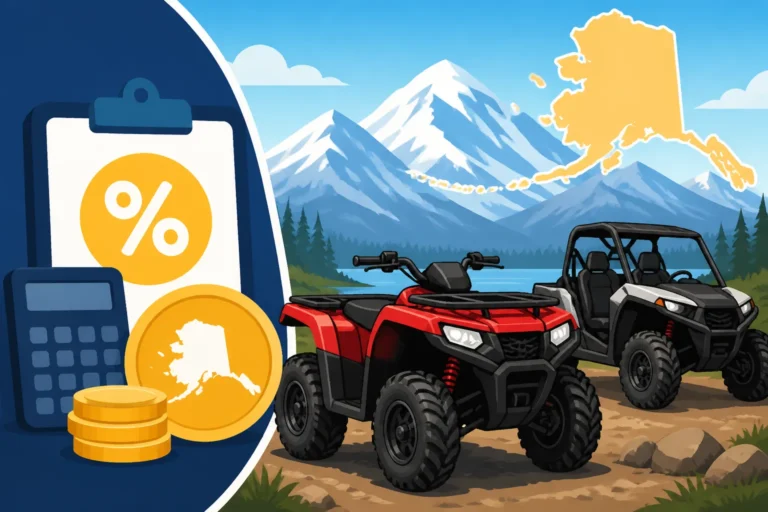
- Two-Year Term: This is the shortest option and costs [Alaska Charges $10 for Two Years]. It's a good choice if you're unsure how long you'll own the machine or if you only plan to ride for a short period.
- Four-Year Term: A popular middle-ground, this term costs [Alaska Charges $20 for Four Years]. It offers a balance of convenience and cost-effectiveness for many long-term owners.
- Six-Year Term: The longest available term, costing [Alaska Charges $30 for Six Years]. This is ideal for those who plan to keep their machine for many years and prefer to handle registration as infrequently as possible.
Regardless of the term you choose, all APV registrations in Alaska share a common expiration date: September 30th. This means that if you register your machine in, say, March, your two-year decal will still expire on September 30th of the next year, giving you less than a full two years. This is a common point of confusion, so it's good to be aware that [Every OHV Registration Term Expires on September 30].
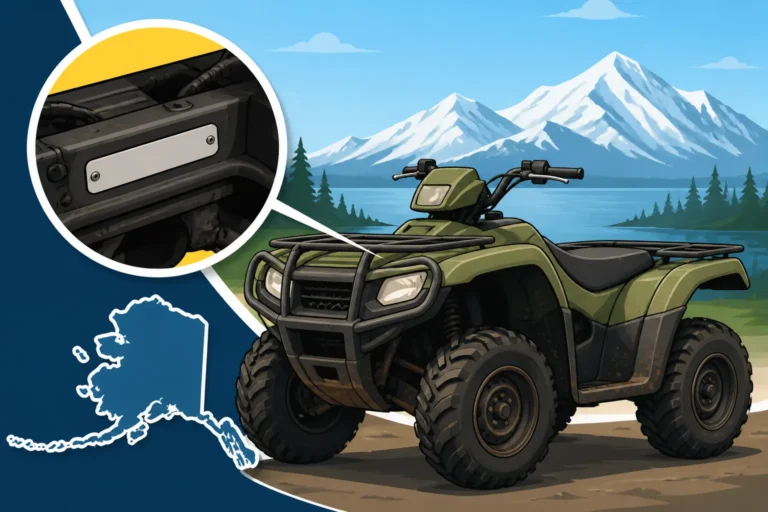
What you receive after successful registration is not a license plate, but rather a set of numbered decals. These decals are your proof of registration and must be visibly affixed to your machine. For most ATVs and UTVs, the decals are placed on the tunnel side, in a location that is clearly visible when you are seated on the machine. [What You Get Instead of a License Plate] is a set of decals, and knowing [Alaska Decal Placement on the Tunnel Side] ensures you're displaying them correctly and avoiding potential issues with law enforcement. These decals typically show the year of expiration and your unique registration number, which is effectively your machine's ID for public land use.
| Scenario | Registration Required? | Proof of Ownership Needed? | Where to Register | Cost & Term Options |
|---|---|---|---|---|
| Riding on public trails | Yes | MCO, Bill of Sale, Affidavit | DMV or Partner Office | $10 (2 yrs), $20 (4 yrs), $30 (6 yrs) |
| Exclusively on private land | No | Not for state registration (good for personal records only) | N/A | N/A |
| Riding between private parcels via public easement | Yes | MCO, Bill of Sale, Affidavit | DMV or Partner Office | $10 (2 yrs), $20 (4 yrs), $30 (6 yrs) |
| New machine, purchased from dealer | Yes | MCO or Warranty Card | DMV or Partner Office | $10 (2 yrs), $20 (4 yrs), $30 (6 yrs) |
| Used machine, private sale | Yes | Bill of Sale (LawDepot templates helpful) or Affidavit | DMV or Partner Office | $10 (2 yrs), $20 (4 yrs), $30 (6 yrs) |
| Homemade machine | No (cannot be registered as APV) | N/A (cannot be registered as APV) | N/A | N/A |
| Three-wheeled ATV | No (cannot be registered as APV) | N/A (cannot be registered as APV) | N/A | N/A |
Disclaimer
This article is for general informational purposes only and does not constitute professional advice. Laws, prices and regulations vary by location and change over time. Consult a qualified professional for guidance on your specific situation.