Alaska Registration Compared to Washington
Moving between states or simply trying to understand the rules for your all-terrain vehicle (ATV) or utility terrain vehicle (UTV) in Alaska versus Washington can feel like trying to compare apples and oranges, especially when it comes to registration. Many riders find themselves scratching their heads, wondering if the process they know from one state applies to the other. This guide is here to untangle that confusion, providing a clear comparison of how Alaska handles ATV and UTV registration, and how it differs from its neighbor to the south, Washington State, so you can ride confidently wherever you roam.
The Fundamental Approach to OHV Registration in Alaska
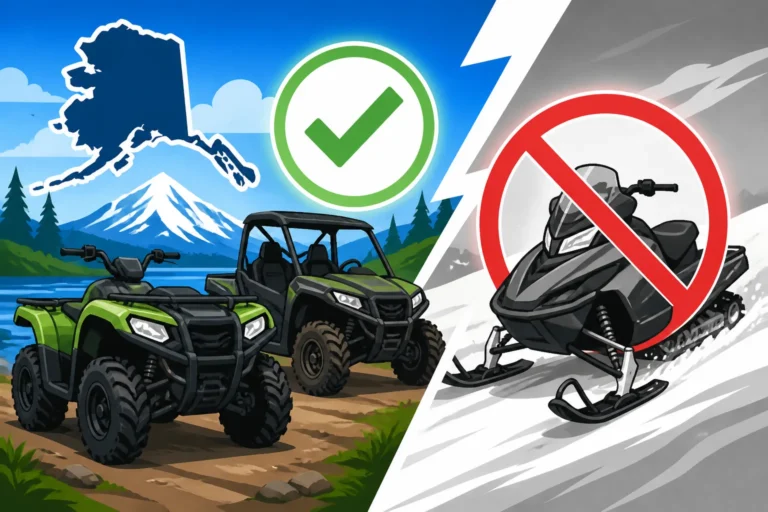
Alaska has a unique way of looking at off-highway vehicles (OHVs), which often takes new residents or visitors by surprise. The state's Department of Administration, Division of Motor Vehicles (DMV), oversees the registration of what it calls "All-Purpose Vehicles" (APVs), a classification that broadly covers ATVs, UTVs, and even certain six-wheelers, but specifically excludes snowmachines and tracked vehicles. Understanding this fundamental classification is the first step in grasping Alaska's system.
Alaska's "All-Purpose Vehicle" Classification
Unlike some states that might have separate categories or specific definitions for ATVs, UTVs, dirt bikes, or other off-road machines, Alaska groups many of these under the umbrella term of "All-Purpose Vehicle" or APV. This means that whether you're bringing in a side-by-side for family adventures or a quad for hunting trips, it generally falls under the same registration process. The state defines an APV as a motorized vehicle, other than a snowmachine or tracked vehicle, that is fifty inches or less in width, has an unladen dry weight of 1,200 pounds or less, travels on three or more low-pressure tires, and has an engine displacement of 1,000 cubic centimeters or less. This classification is critical because it dictates how and if your machine needs to be registered. For instance, if your vehicle doesn't fit neatly into the APV definition, it might not be registrable under this class, which can be a point of frustration for owners of more specialized or oversized machines. It’s also important to remember that snowmachines have their own distinct registration process, separate from APVs, which means owning both types of machines will require familiarity with two different sets of rules. You can learn more by checking out [Registering an ATV Under Alaska's All-Purpose Vehicle Class].
Key Documents and Process for Alaska Registration
Registering your APV in Alaska primarily involves an in-person visit to an Alaska DMV office or one of its authorized partner offices. There's no online registration option, which can be a hurdle for those accustomed to digital convenience. The required documentation typically includes a completed "Vehicle Transaction Application" (Form V1), which you’ll fill out diligently. Proof of ownership is paramount, and this usually comes in a few forms: a manufacturer's certificate of origin (MCO) for new machines, a bill of sale for used machines, or, in some cases, a notarized affidavit if original paperwork is lost or never existed. If you're buying a used machine from a private seller, ensuring you have a clear and comprehensive bill of sale is incredibly important to establish a chain of ownership. Sometimes, people moving from out-of-state might present an old title, but Alaska has specific procedures for how these are handled, especially since [Alaska APV Titling Required Since 2022]. For those situations where paperwork is a bit thin, platforms like LawDepot can be a real help in generating a proper bill of sale or affidavit that meets Alaska's general requirements, ensuring you have robust documentation to present to the DMV. The clerks at the DMV will examine your documents closely to ensure everything is in order before processing your registration.
Alaska's Decal System and Term Lengths
Once your APV registration is processed in Alaska, you won't be issued a traditional license plate like you might expect for a car or even a snowmachine. Instead, [Alaska Issues a Decal, Not a Plate]. This decal is what serves as your proof of registration and must be visibly affixed to the machine, typically on the tunnel side or another prominent location where it can be seen while seated. This decal contains your unique registration number, which is distinct from a VIN, and signifies that your machine is legally registered for use on public lands.
Alaska also offers flexible registration terms: you can choose to register your APV for two, four, or six years at a time. This flexibility allows riders to pick a term that best suits their ownership plans and budget. For example, [Alaska Charges $10 for Two Years], so you can easily calculate the cost for longer terms. However, regardless of whether you choose a two, four, or six-year term, there's a crucial detail that often catches people off guard: [Every OHV Registration Term Expires on September 30]. This means that even if you register your machine in the middle of a year, your decal will still expire on September 30th of the designated end year, not a full two, four, or six years from your registration date. This can sometimes lead to slightly less than the full term, so it's wise to consider when you register.
Navigating Off-Road Vehicle Registration in Washington State
Washington State, while also having vast swaths of public land perfect for OHV riding, approaches registration with a slightly different philosophy and set of rules compared to Alaska. Riders moving south from Alaska or simply comparing the two systems will notice distinctions in how vehicles are classified, what documentation is needed, and the overall process.
Washington's OHV Sticker and Permit System
In Washington, the system revolves around an "Off-Road Vehicle" (ORV) sticker, which is essentially a permit for operation on designated public lands. This classification is broad, encompassing ATVs, UTVs, dirt bikes, and some other recreational vehicles, but it generally distinguishes between snowmobiles (which have a separate registration) and other wheeled ORVs. To legally operate an ORV on public lands in Washington, you must display a valid ORV use permit sticker. This sticker signifies that you've met the state's requirements for off-road use. Unlike Alaska's APV, Washington often categorizes vehicles more specifically for enforcement and safety guidelines, though the core registration sticker applies to most. The focus is on permitting the use of the vehicle on public land, rather than simply registering it as a type of vehicle in the state.
Washington's Documentation and Process
The process for registering an ORV in Washington is typically handled through the Department of Licensing (DOL) or one of its authorized vehicle licensing offices. While not entirely an online process for initial registration, forms can often be downloaded, and renewals might have online options. Required documentation includes proof of ownership, such as a title or a bill of sale, and a completed application for an ORV use permit. For new machines, an MCO is standard. For used machines, a properly signed-off title or a comprehensive bill of sale is crucial. Washington generally has a more traditional titling system for vehicles, including many ORVs, making the transfer of ownership often clearer through a titled document. For those needing solid legal documents for a private sale, particularly if you're coming from a state with less stringent titling, resources like LawDepot can assist in drafting a professional bill of sale to ensure a smooth transfer and proper registration in Washington.
Title Requirements and Exemptions in Washington
Washington State generally requires that most OHVs have a title, similar to road-going vehicles. This title serves as the primary proof of ownership and is essential for selling the machine or registering it. However, there may be some specific exemptions, such as for very old machines or those used exclusively on private property without ever touching public land. It's important to understand that the ORV sticker is your permit to ride on public land, while the title is proof of ownership. These are two distinct but often co-dependent elements. If you plan to ride your ATV or UTV on Washington's extensive network of ORV trails, forest service roads, or other public access areas, having both a valid title and the current ORV sticker is a must. Washington’s titling system has been in place for a long time for many types of off-road vehicles, so it's a well-established process.
Head-to-Head: Key Differences for ATV/UTV Owners
When you lay out the registration systems of Alaska and Washington side by side, a few significant differences become apparent. These distinctions can impact everything from the paperwork you need to keep on hand to how you plan your next ride.
Ownership Proof and Titling Philosophies
Alaska's approach to titling APVs has evolved, with [Alaska APV Titling Required Since 2022] for machines meeting specific criteria. Before this, many ATVs and UTVs in Alaska were registered without a formal title, relying instead on a bill of sale or affidavit. This older system meant that establishing a clear chain of ownership, especially for older machines, could sometimes be tricky. For those instances, where a formal title isn't available, an affidavit naming the seller becomes a critical document. This is where tools like LawDepot can be invaluable, allowing you to create a legally sound affidavit that helps bridge gaps in paperwork.
Washington, on the other hand, has a more traditional vehicle titling philosophy, where a certificate of title is the primary document proving ownership for most ORVs. This means if you're buying a used machine in Washington, you'll almost certainly expect a signed-over title. If you're moving a machine from a non-titling state to Washington, you'll likely go through a process to obtain a Washington title before you can register it.
| Feature / State | Alaska (APV Registration) | Washington (ORV Sticker) |
|---|---|---|
| Primary Proof of Use | Decal | Sticker/Permit |
| Titling Philosophy | Titling required since 2022 for new registrations; older machines might be NTI (No Title Issued) | Traditional titling for most ORVs |
| Where to Register | DMV or Partner Offices (In-person only) | DOL or Licensing Offices |
| Online Options | No online registration | Forms downloadable; some renewals online |
| Proof of Ownership | MCO, Bill of Sale, Affidavit | Title, MCO, Bill of Sale |
| Term Lengths | 2, 4, or 6 years | Typically 1 year (expires Dec 31st) |
| Expiration Date | Fixed September 30th | Fixed December 31st |
| Cost | Varies by term ($10/2yrs, $20/4yrs, $30/6yrs) | Annual fee (check current DOL rates) |
Accessibility and Convenience of Registration
When it comes to the actual act of getting your machine registered, the convenience factor varies significantly. In Alaska, you'll need to make a trip to a DMV office or one of their authorized partner locations. As mentioned, [Alaska Has No Online OHV Registration]. This means planning your visit, gathering all your physical documents, and potentially waiting in line. For many Alaskans, especially those in rural areas, this might involve a significant drive or even a bush flight if no local partner office is nearby.
Washington offers a bit more flexibility. While initial registrations often require an in-person visit to a vehicle licensing office, some renewals and information lookups can be handled online. This blend of options can be more convenient for riders who prefer digital transactions when possible.
Cost and Expiration Similarities and Differences
The financial aspect of registration is also different. Alaska offers tiered pricing based on the chosen term length: [Alaska Charges $10 for Two Years], $20 for four years, and $30 for six years. While these seem like straightforward fees, the fixed September 30th expiration date for all terms means you might not always get a full two, four, or six years depending on when you initially register. This is an important detail to be aware of when you consider how long you want your registration to last.
Washington's ORV stickers typically have an annual fee, and they generally expire on December 31st of each year. This makes for a more predictable annual renewal cycle, but you don't have the option for longer-term registration as you do in Alaska. So, while Alaska offers the convenience of a longer validity period, Washington keeps it on a consistent yearly schedule.
Practical Implications for Cross-State Riders
Understanding these differences isn't just academic; it has very real consequences for anyone who owns an ATV or UTV and might be moving, traveling, or even just selling a machine between Alaska and Washington. Ignoring these distinctions can lead to frustration, delays, or even legal issues.
Moving a Machine from One State to the Other
If you're making the big move from Washington to Alaska with your ATV or UTV, or vice-versa, you'll need to address its registration status. If your machine is currently registered in Washington, once you establish residency in Alaska and plan to ride on public lands, you will need to register it as an APV with the Alaska DMV. This will involve presenting your Washington title and other proof of ownership, filling out the Alaska-specific forms like [What Alaska's ATV Registration Form Asks For], and obtaining an Alaska decal. The process will essentially be a new registration for [Alaska Registration for a New Resident].
Conversely, if you're taking your Alaska-registered APV to Washington, you'll likely need to obtain a Washington title first, if your machine doesn't already have one (especially if it was a pre-2022 registration). Then you'll need to apply for a Washington ORV sticker. You cannot simply transfer an Alaska decal to fulfill Washington's requirements. Each state wants its own specific documentation and proof of registration for public land use within its borders.
Riding Out-of-State Machines (Visitor Rules)
What if you're just visiting? This is where things get a little more nuanced. Generally, both Alaska and Washington have provisions for out-of-state OHV operators. In Alaska, if your ATV or UTV is properly registered and displaying current decals from your home state (like Washington), you might be able to ride for a limited period on public lands without needing an Alaska APV registration. However, this is usually contingent on your home state offering similar reciprocity. It’s always best to check the most current regulations for visitors, as rules can change. For example, [Does an Out-of-State Machine Need Alaska Registration?] delves into this question specifically.
In Washington, if your ORV is properly registered and stickered in Alaska, you may be permitted to ride on Washington's public lands for a certain period. Again, reciprocity is often key. The intent here is usually to allow tourists to enjoy the trails without requiring a full re-registration for a short visit. However, if you plan an extended stay or move, you'll need to go through the full in-state registration process. Always carry your home state's registration and any proof of ownership with you when riding out of state.
Legal Documentation and Avoiding Pitfalls
The biggest pitfall for cross-state riders often comes down to incomplete or incorrect documentation. Whether you're buying a machine in one state and bringing it to another, or simply want to ensure you're compliant as a visitor, having your paperwork in order is non-negotiable. For private sales, particularly when no formal title is involved (which can be common for older ATVs/UTVs, especially those from Alaska's "No Title Issued" era), a comprehensive bill of sale is your best friend. A robust bill of sale should include the full names and addresses of both buyer and seller, the date of sale, the purchase price, and detailed information about the machine including the VIN, make, model, and year. Using a reliable platform like LawDepot can help you generate a professional and legally sound bill of sale that holds up to scrutiny, whether you are [Selling a Registered Machine in Alaska] or [Buying From a Private Seller in Alaska]. It’s an easy step to ensure you have the proper legal foundation, no matter which state's DMV or DOL you’re dealing with. Always make copies of all important documents and keep them in a safe place.
Disclaimer
This article is for general informational purposes only and does not constitute professional advice. Laws, prices and regulations vary by location and change over time. Consult a qualified professional for guidance on your specific situation.