Alaska’s APV Class Explained
Navigating the world of off-highway vehicles in Alaska can feel like trying to cross a braided river in spring breakup – confusing, constantly shifting, and full of potential pitfalls if you don't know the channels. Many folks assume "ATV" covers everything, but the Alaska Division of Motor Vehicles (DMV) uses a very specific term: All-Purpose Vehicle, or APV. This guide is here to untangle exactly what an APV is in Alaska, what it means for you as a rider, and why understanding this classification is crucial for staying legal on our beautiful trails and lands.
What Exactly is Alaska's All-Purpose Vehicle (APV) Class?
When you first dive into Alaska's regulations for off-road machines, you might encounter the term "APV" and wonder if it's just another acronym to learn. But trust me, understanding the All-Purpose Vehicle (APV) class isn't just about memorizing jargon; it's fundamental to knowing whether your beloved quad, side-by-side, or even dirt bike fits into the legal framework for registration and operation across our vast state. This classification isn't just for bureaucrats; it dictates everything from what kind of decal you need to where you can legally ride.
Defining an APV Beyond Just ATVs and UTVs
At its heart, Alaska's APV class is a broad category designed to encompass a range of motorized vehicles primarily intended for off-highway use. Think of it as the state's way of grouping together many of the popular machines we rely on for hunting, fishing, trapping, subsistence, or just plain old recreation in the backcountry. While the common "ATV" (All-Terrain Vehicle) and "UTV" (Utility Terrain Vehicle, often called a side-by-side) are definitely APVs, the definition is actually a bit wider. It's not limited to machines with four wheels and handlebars, or even those with steering wheels and roll cages. The key is its purpose and design for traversing various terrains off the paved road system. This definition helps clarify what needs to be registered under this specific class, preventing confusion and ensuring that operators are aware of their responsibilities.
The Legal Framework for APVs in Alaska
The APV classification isn't arbitrary; it's laid out in Alaska state statute, specifically Title 28, the motor vehicle code. This legal definition establishes the criteria that a machine must meet to be considered an APV, and by extension, subject to APV registration and titling requirements. Without getting lost in dense legal text, the law essentially defines an APV by its characteristics: it's a motorized vehicle that is not a snowmobile, not a motorcycle, and not a tracked vehicle, designed for off-road travel. It's built for low-pressure tires, can handle various terrains, and typically has a seat for the operator. This framework ensures consistency across the state, from the Mat-Su Valley to the remote villages, so whether you're riding near Palmer or in a village off the road system, the rules for your machine's classification remain the same. This standardized approach is vital for enforcement and public safety, ensuring everyone understands what kind of machine falls under state oversight.
Why the APV Designation Matters for Riders
For us riders, understanding the APV designation is paramount. First and foremost, it directly impacts whether your machine needs to be registered with the Alaska DMV. If your vehicle fits the APV definition, then you're likely required to [Registering an ATV Under Alaska's All-Purpose Vehicle Class] if you plan to operate it on public lands or trails. This isn't just a suggestion; it's a legal requirement that can result in fines if ignored. Furthermore, the APV designation influences titling requirements, insurance considerations, and even specific rules about where and how you can operate your machine, including road use. It's the foundation upon which all other regulations for these types of off-highway vehicles are built. Knowing your machine is an APV means you're equipped to understand the broader set of rules that apply to your adventures, keeping you compliant and safe.
What Kinds of Machines Fall Under the APV Umbrella?
It's easy to think "APV" just means "quad," but Alaska's definition is much broader, designed to cover the incredible diversity of machines we use to access the wild corners of our state. From the traditional four-wheelers we grew up on to the more modern utility vehicles, many types of machines are considered All-Purpose Vehicles, each with its own quirks and uses. Understanding these specific categories, and critically, what doesn't fit, is key to proper registration and avoiding unwelcome surprises out on the trail.
Common Examples: Quads, Side-by-Sides, and Six-Wheelers
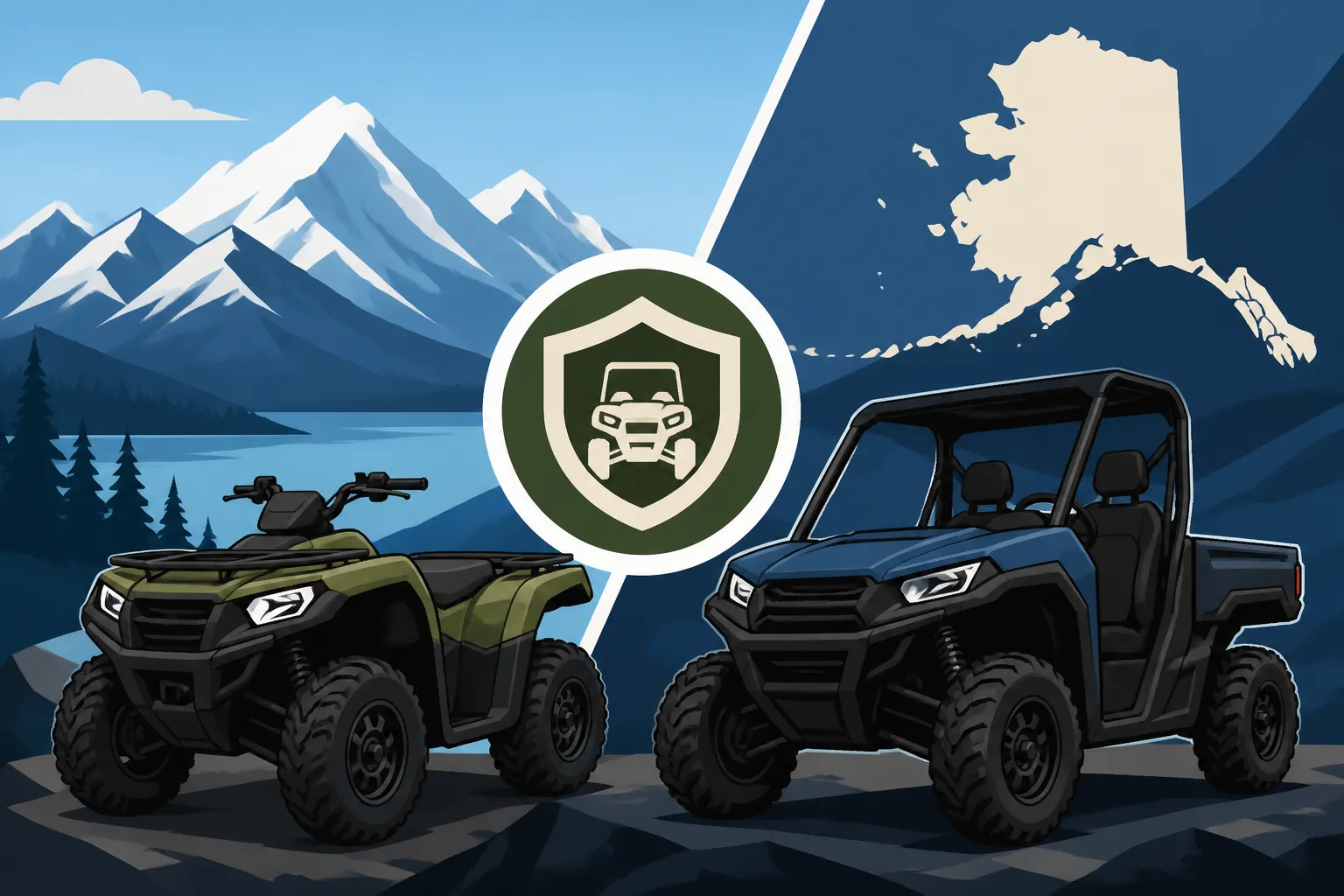
When most Alaskans think of an APV, their minds likely go straight to a quad, also known as an ATV. These four-wheeled machines, often ridden straddle-style with handlebars, are the quintessential off-road vehicles for many. They are absolutely APVs. But the category extends further. Side-by-sides, or UTVs, have exploded in popularity in recent years, offering seating for multiple passengers, a steering wheel, and often a small cargo bed. Whether it's a nimble two-seater or a larger four- or six-seater utility vehicle, these too are firmly within the APV class. Even the less common six-wheelers, often used for heavy hauling or navigating extremely challenging terrain, are also considered APVs, subject to the same registration and titling rules. These machines are all built for traversing rough, unpaved surfaces, which is the core characteristic that places them under the APV umbrella.
Less Obvious Additions: Dirt Bikes and Trail Motorcycles
Here's where it can get a little tricky for some folks, as the APV definition might catch a few machines you wouldn't immediately expect. While the state statute specifically excludes motorcycles from the general APV definition, it makes an important distinction for "off-highway motorcycles" or "dirt bikes." If your motorcycle is designed and used exclusively for off-road operation—meaning it's not street legal and doesn't meet requirements for highway use—then it can be registered as an APV. This is a crucial point for riders who enjoy tearing up trails on two wheels rather than four. It means that while your street-legal Harley isn't an APV, your dedicated Kawasaki KX or Honda CRF dirt bike, intended for trails and backcountry, absolutely could be. This inclusion ensures that these off-road-specific two-wheelers are also part of the regulated system for public land use.
Important Exclusions from the APV Definition
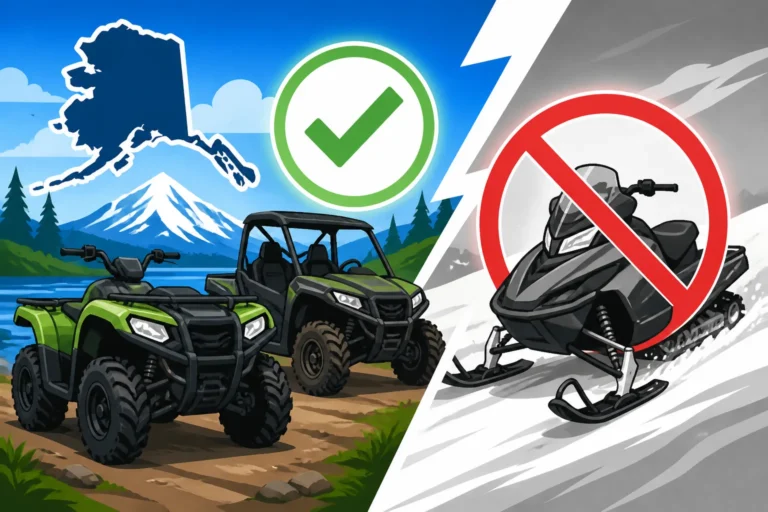
Just as important as knowing what is an APV is understanding what isn't. Alaska's regulations are very clear about certain exclusions. Snowmobiles (often called snowmachines here in Alaska) are explicitly not APVs; they have their own separate registration and rules. So, that shiny new Polaris RMK you bought for winter rides won't be registered as an APV. Similarly, any vehicle that primarily relies on tracks instead of wheels for propulsion, like a Hagglund or many purpose-built tracked utility vehicles, is also [Machines Alaska Will Not Register as an APV]. These types of machines often fall into other classifications or may not be registerable at all depending on their specific design and intended use. Even three-wheeled ATVs, while once popular, are now generally excluded from new APV registrations due to safety concerns and outdated designs. This distinction is vital, as attempting to register a snowmachine or tracked vehicle as an APV will lead to frustration and rejection at the DMV counter. You'll want to ensure your machine fits the current criteria before heading in.
The Core Requirements for Registering an APV in Alaska
Alright, you've got your APV, whether it's a quad, side-by-side, or a dedicated dirt bike, and you're itching to hit the vast trails of Alaska. Before you can legally do that on public land, though, you'll need to get it registered. This process, while not overly complicated, requires specific paperwork and attention to detail. Skipping steps or showing up unprepared can lead to multiple trips to the DMV, which nobody wants when there's riding to be done!
Proof of Ownership: Bills of Sale, MCOs, and Affidavits
The absolute cornerstone of registering any vehicle, including an APV, is proving that you legally own it. Without this, the DMV simply cannot issue a registration. If you bought your APV new from a dealership, you'll typically have a Manufacturer's Certificate of Origin (MCO) or a Manufacturer's Statement of Origin (MSO). This document is like the birth certificate for your machine and unequivocally establishes the initial ownership. For used machines, a properly executed bill of sale is crucial. This document needs to clearly identify the buyer and seller, the machine's year, make, model, and most importantly, its Vehicle Identification Number (VIN). You can find reliable bill of sale templates online, with resources like LawDepot offering customizable forms that ensure all necessary information is included. If, for some reason, you don't have a bill of sale—perhaps it was an older family transfer or a lost document—an affidavit of ownership might be accepted, often requiring notarization and specific details about how you came into possession of the machine. The DMV has specific requirements for what an [Alaska Affidavits Naming a Seller] must include, so be sure to check their guidelines.
Completing the Vehicle Transaction Application (Form V1)
Once you have your proof of ownership in hand, the next critical step is to complete the Alaska DMV's Vehicle Transaction Application, often referred to simply as Form V1. This form is the standard application for nearly all vehicle-related transactions, from initial registration to transfers of ownership and titling. It's comprehensive, asking for details about the vehicle (VIN, make, model, year, fuel type), the owner(s) (name, address, Alaska driver's license number), and the specific type of transaction you're requesting (in this case, initial registration and potentially titling). Take your time filling out [What Alaska's ATV Registration Form Asks For] to avoid errors that could delay your application. Make sure the VIN on the form exactly matches the VIN on your proof of ownership and the machine itself. Any discrepancies will halt the process until they are resolved. It’s a good idea to bring a copy of the form with you to the DMV, or fill it out there, to ensure it’s accurate and complete.
Understanding Registration Terms and Costs
Alaska offers a few different options for the length of your APV registration term, which also dictates the cost. You can typically choose between a two-year, four-year, or six-year registration period. For instance, a two-year registration might cost [Alaska Charges $10 for Two Years], while a four-year term could be [Alaska Charges $20 for Four Years]. The longer the term you choose, the better the value, as it generally works out to be less per year than continually renewing a two-year decal. However, it’s important to remember that regardless of when you register your machine, all APV registrations in Alaska expire on September 30th of the final year of your term. This means if you register for two years in August, you'll still renew on September 30th two years later, effectively getting a bit less than two full years. Be sure to budget for the registration fee and be prepared to pay it at the time of application. While the exact amounts can change, the multi-year options provide flexibility for riders to choose what works best for them.
When is APV Registration Absolutely Necessary in Alaska?
So, you've got your machine, you understand what an APV is, and you're ready to tackle the paperwork. But do you always need to register your APV in Alaska? This is a question many riders ponder, especially those who only use their machines in specific ways or on certain types of property. The answer isn't always a simple yes or no, as Alaska law provides some important distinctions and exemptions.
Riding on Public Land and Designated Trails
The clearest and most common scenario requiring APV registration in Alaska is when you operate your machine on public lands or designated trails. This includes state-managed lands, federal lands (like those managed by the Bureau of Land Management or the National Forest Service, where permitted), and any trails specifically designated for off-highway vehicle use. If you're heading out to the Knik River Public Use Area, Jim Creek, or any of our vast public trail networks, your APV must be registered and display a current decal. This requirement helps state agencies manage and maintain these resources, and ensures that all users are contributing to the system. Without proper registration, you could face fines from Alaska State Troopers or other law enforcement officers patrolling these areas. Think of it as your passport to explore the incredible wilderness Alaska has to offer.
The Private Land Exemption: What It Means and What It Doesn't
One significant exemption to the APV registration rule is for machines operated exclusively on private land. If you own a large tract of land, or have explicit permission from a private landowner, and you never take your APV onto public roads, trails, or state-managed areas, then it generally does not need to be registered. This exemption is really important for homesteaders, farmers, or those who simply use their quad to putz around their own property. However, it comes with a critical caveat: "exclusively." The moment even one wheel touches a public thoroughfare, a state trail, or any land not privately owned and permitted, the machine technically needs to be registered. This means no quick runs across the street to a neighbor's house or a short hop onto a public easement to get to another part of your property. Understanding [Alaska Private Land Registration Exemption] is vital to avoid unwittingly breaking the law.
Special Considerations for Businesses and Rental Fleets
For businesses that utilize APVs, such as tour operators, guides, or rental companies, the registration requirements are often even more stringent. If you're running a guided tour or renting out side-by-sides, every single machine in your fleet that will operate on public lands must be properly registered and maintained. This also applies to businesses that use APVs for commercial purposes, like mining operations, logging, or accessing remote sites for infrastructure maintenance. While the basic APV registration process remains the same, these businesses often have additional insurance and permitting requirements to consider. Ensuring a fleet is up-to-date on its registrations and decals is a routine, but critical, part of business operations, often checked by regulatory bodies. It’s not just about compliance; it's about projecting professionalism and safety to customers and employees alike.
Beyond Registration: Titling Your APV in Alaska
For years, many Alaska riders didn't bother with titles for their APVs, as it wasn't a strict requirement. But as of 2022, things changed significantly. The state of Alaska now requires titling for all APVs, bringing these machines more in line with standard automobile regulations. This shift has created some confusion and new steps for riders, especially for those with older machines that have never had a title.
The Shift to Required Titling Since 2022
Prior to 2022, APV titles were largely optional in Alaska. You could register a machine with just a bill of sale or an MCO, and many people did, especially for older or less expensive units. However, this often led to issues with proving ownership, especially when selling a machine or when disputes arose. Recognizing the need for clearer ownership records and to curb potential theft, the state enacted legislation making titling mandatory for all APVs. This means that if you're acquiring a new or used APV, or if you have an existing one that's only ever been registered, you will now need to go through the titling process. This change impacts every APV owner, new and old, and requires a fresh look at your paperwork. Understanding that [Alaska APV Titling Required Since 2022] is the first step to ensuring your machine is fully compliant.
Navigating the No Title Issued (NTI) Process
For many Alaskans with older APVs, a common challenge is the lack of a traditional title. Perhaps the original title was never issued, or it's long lost, or the machine has changed hands multiple times without proper titling. This is where Alaska's "No Title Issued" (NTI) process comes into play. The NTI process allows owners of machines without a traditional title to establish a legal record of ownership. It usually involves registering the machine for a two-year period, during which the DMV searches for any outstanding liens or previous title records. If after this two-year period no conflicting claims arise, the DMV can then issue a title based on your long-standing registration. This process provides a pathway to clear ownership for machines that might otherwise be stuck in legal limbo. However, it does require patience and diligence to complete. Be prepared for a waiting period and ensure all your current registration details are accurate. It's not a quick fix, but it's a necessary one for many. To better understand the ins and outs, you might want to review information on [Alaska No Title Issued Registrations].
Dealing with Liens and Security Interests on an APV
Just like with cars, APVs can be subject to liens or security interests, especially if they were purchased with financing. A lien signifies that a lender, such as a bank or credit union, has a legal claim on the vehicle until the loan is fully repaid. When you go to title your APV, the DMV will check for any recorded liens. If a lien exists, the title will often be held by the lienholder or issued with the lien noted on it. This means you generally can't transfer ownership or get a clean title until that lien is satisfied and released. This is particularly important for anyone buying a used APV; always perform a title search or ask the seller for proof that any outstanding loans have been paid off. Resources like LawDepot can also provide forms for lien releases or security agreements, which can be useful if you're engaging in private sales or lending. Ignoring a lien can lead to significant legal headaches down the road, so it's always best to be upfront and clear about any financial interests in an APV.
Common Misconceptions and Clarifications About APVs
Despite the clear definitions and requirements, the world of APVs in Alaska is still ripe with misconceptions. Because these machines are used in so many diverse ways across our vast and varied landscapes, it’s easy for confusion to creep in. Let's clear up some of the most common misunderstandings, especially regarding what an APV is not, and how their use is restricted in specific contexts.
APV vs. Snowmobile: Different Rules for Different Machines
Perhaps the most common mix-up in Alaska is between an APV and a snowmobile. While both are off-highway vehicles, and many Alaskans own both, they are distinctly different in the eyes of the law. Snowmobiles (or "snowmachines" as we call them here) have their own registration class, their own set of rules for operation, and are explicitly excluded from the APV definition. You cannot register your snowmachine as an APV, and vice-versa. The state recognizes their different primary uses and operational characteristics: APVs are generally for year-round, multi-terrain use, while snowmobiles are built specifically for snow and ice. Trying to apply snowmobile rules to an APV, or attempting to register one as the other, will only lead to frustration. If you're a multi-season rider, be sure you understand the separate requirements for each machine. For a deep dive into this distinction, check out [Alaska Excludes Snowmobiles From APV].
The Role of Homemade Machines and Modified Vehicles
Another area of frequent misunderstanding involves homemade machines or heavily modified vehicles. Many Alaskans are resourceful and enjoy fabricating their own custom off-road rigs or heavily modifying existing ones. The question then arises: can these be registered as APVs? Generally, if a homemade machine meets the core design criteria of an APV (e.g., it has the required number of wheels, is designed for off-highway use, and meets safety standards), it might be registerable. However, proving ownership and ensuring it has a valid VIN (or applying for one) can be a significant hurdle. For modified vehicles, as long as the modifications don't fundamentally change its classification (e.g., turning a wheeled vehicle into a tracked one) or make it unsafe, it's generally still considered an APV. The challenge often lies in inspection and verification of the VIN, especially if it's obscured or altered. It's always best to consult with the DMV directly if you have a custom-built or heavily modified machine, as each case can be unique.
Understanding Road Use Restrictions for APVs
One of the biggest areas of confusion, and unfortunately, one that often leads to citations, is the belief that because an APV is registered, it can be driven anywhere, including on paved roads. This is a significant misconception. While some states allow certain street-legal conversions for ATVs/UTVs, Alaska generally has very strict limitations on APV road use. With few exceptions, APVs are not designed or permitted for travel on public roads and highways, especially those with speed limits above 45 mph. Even on lower-speed roads, specific local ordinances often prohibit APV use. There are exceptions for crossing roads at designated intersections or using shoulders to access private property, but these are highly conditional. Simply having a registration decal does not grant you carte blanche to cruise down the highway on your quad. Ignoring these rules can lead to hefty fines and puts both you and others at risk. A thorough understanding of [Alaska APV Road Rules Explained] is critical before venturing near any road surface.
| Machine Type | APV Classification | Typical Use Case | Key Registration/Titling Notes |
|---|---|---|---|
| Quad/ATV | Yes | Hunting, fishing, recreational trail riding | Standard APV registration and titling required for public land use. Proof of ownership is crucial. |
| Side-by-Side/UTV | Yes | Utility work, family trail riding, guided tours | Standard APV registration and titling required. Often used by businesses; needs proper fleet management. |
| Six-Wheeler | Yes | Heavy hauling, extreme terrain access | Falls under APV. Often used for commercial or subsistence, requiring diligence in paperwork. |
| Dirt Bike (Off-Road) | Yes | Trail riding, motocross, backcountry access | Must be exclusively off-road design; street-legal motorcycles are excluded. |
| Snowmobile/Snowmachine | No | Winter trail riding, ice fishing, winter transport | Separate registration class and rules. Explicitly excluded from APV definition. |
| Tracked Vehicle | No | Extreme utility, specific terrain access | Generally excluded from APV. May have other specific regulations or not be registerable as an OHV. |
| Homemade/Custom Build | Potentially | Unique utility, personal projects | Requires careful inspection, VIN verification, and often direct DMV consultation to ensure compliance. |
What Documents to Keep Handy When Riding Your APV
You've done the hard work: you've understood the APV classification, gathered your proof of ownership, completed the Vehicle Transaction Application, and secured your registration and title. Now, as you prepare to head out for your next Alaskan adventure, it's vital to remember that the paperwork doesn't just sit in a drawer at home. Just like with a car, there are certain documents you should always have with you when operating your APV, especially on public lands. This isn't just a suggestion; it’s a legal requirement that helps prove your compliance to any law enforcement officer you might encounter.
Carrying Proof of Registration and Decal Placement
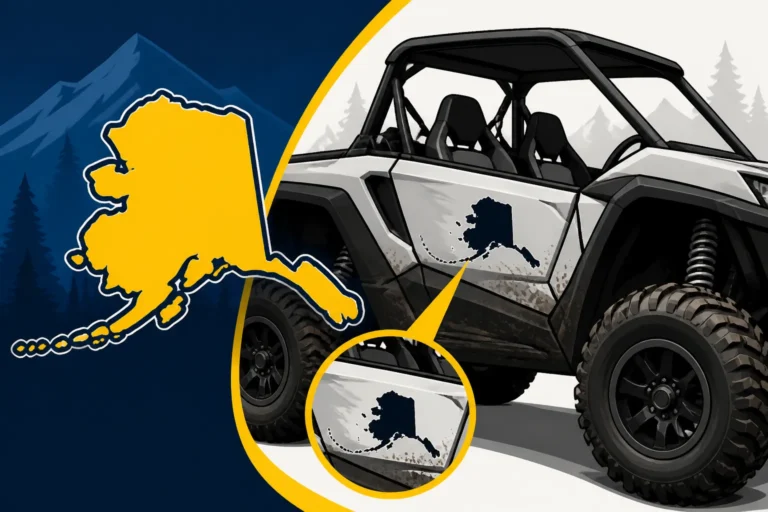
When you receive your APV registration, the DMV will issue you a registration decal. This decal, which typically includes the registration number and expiration date, must be prominently displayed on your machine. Alaska [Alaska Issues a Decal, Not a Plate] for APVs. The general rule is that it should be affixed in a clearly visible location, often on the left-hand side of the machine's tunnel or body panel, in a spot that isn't easily obscured by mud, snow, or accessories. For side-by-sides, this might mean a specific location on the fender or roll cage as detailed in [Alaska Decal Placement on a Side-by-Side]. You should also carry a copy of your physical registration certificate with you. While the decal proves it's registered, the certificate is the official record in your name. Many riders keep this in a waterproof bag or container stored securely on their machine, along with other important papers. Being able to quickly produce this upon request from a State Trooper or park ranger demonstrates your adherence to state laws.
Insurance and Driver's License Requirements for APV Operators
This is an area where confusion often arises, leading to potential issues for riders. In Alaska, if you operate an APV on designated public trails or public land, you are generally required to have liability insurance. This isn't just for road use; it's a general requirement for most public land operation. [Alaska Requires Liability Insurance for an APV], so make sure your policy is current and that you carry proof of insurance with you, similar to how you would for your car. Additionally, the operator of an APV on public lands must possess a valid driver's license, often a standard Class D license. There are specific rules regarding youth riders and supervised operation, but for most adult operators, a valid license is non-negotiable. It's not enough to simply have the machine registered; the operator must also be properly licensed and insured to legally ride.
Essential Safety Gear and Equipment Checks
While not strictly "documents" in the traditional sense, having proper safety gear and ensuring your APV is in good working order are unspoken requirements for any Alaskan ride. Helmets are mandatory for riders under the age of 16 and highly recommended for all operators. Other safety gear like eye protection, gloves, and sturdy footwear can prevent serious injuries. Beyond personal gear, your APV itself needs to meet certain basic equipment standards. This includes working headlights and taillights (especially if you might be riding near dusk or in low visibility), functional brakes, a spark arrester on the exhaust to prevent wildfires, and a muffler to control noise levels. Before every ride, conduct a quick pre-ride inspection of your machine: check tire pressure, fluid levels, brake function, and light operation. These checks, along with carrying the right documents, are all part of responsible APV ownership and ensure you're ready for whatever the Alaskan backcountry throws your way.
Disclaimer
This article is for general informational purposes only and does not constitute professional advice. Laws, prices and regulations vary by location and change over time. Consult a qualified professional for guidance on your specific situation.