Alaska OHV Equipment Requirements
Hitting the trails in Alaska with your ATV or UTV is an incredible experience, but the last thing anyone wants is to have a fantastic day cut short by an equipment violation. It can be incredibly frustrating to think your machine is ready to go, only to find out you're missing a small but critical piece of gear required by state law. This comprehensive guide will walk you through all the essential equipment requirements for operating your All-Purpose Vehicle (APV) on Alaska's public lands and roads, helping you avoid unexpected fines and ensure your ride is safe and legal.
Understanding Alaska's OHV Equipment Mandates
When you're out exploring Alaska's vast and diverse landscapes, whether it's the winding trails of the Mat-Su Valley or the remote routes in the Interior, understanding the regulations governing your off-highway vehicle (OHV) is paramount. These aren't just arbitrary rules; they're in place for the safety of riders, other trail users, and to protect the environment. Ignoring them can lead to a host of headaches, from warnings to costly citations, and even put your safety at risk. It’s always better to be prepared than to face an unexpected interaction with a state trooper or park ranger.
Why Equipment Rules Matter on the Last Frontier
Alaska's environment is notoriously unforgiving, and the equipment requirements for OHVs reflect that reality. Imagine you're deep in the bush, miles from any town, and your headlight gives out after dark. Without a functioning taillight or reflectors, you become a ghost on the trail, a hazard to anyone else who might be out there. Or consider the fire risk from a machine without a proper spark arrester during a dry summer – a single spark could ignite thousands of acres, devastate wildlife habitats, and endanger communities. These regulations are designed to minimize risks in an environment where help can be hours or even days away. They also help ensure that when you share trails, everyone operates under a common set of safety standards, fostering a more harmonious and safer outdoor experience for all. It's about personal responsibility and collective safety in a rugged land.
The Distinction Between Public and Private Land Requirements
One of the most common points of confusion for OHV owners in Alaska revolves around where these equipment rules apply. Generally speaking, if you're riding solely on your own private property, the state's specific equipment requirements for APVs do not apply. Your own land is your domain, and while common sense and personal safety should always dictate your choices, the legal mandates for headlights, mufflers, and the like are largely moot.
However, the moment your tires touch public land—this includes state trails, borough roads where APVs are permitted, federal lands, or even crossing a public right-of-way to get to your private parcel—you are subject to Alaska's APV equipment laws. This distinction is crucial. Many riders might have a machine perfectly suited for their cabin property but inadvertently venture onto a state-managed trail without the necessary gear, opening themselves up to potential enforcement. It’s always best to assume that if you might leave private property, your machine should meet the full suite of equipment requirements. This is particularly relevant if you live in or visit communities where APVs are a primary mode of transportation, as [Can You Ride an ATV on the Road in Alaska?] explains, even short jaunts on public roads fall under these regulations.
Essential Lighting Requirements for Alaska OHVs
Riding in Alaska often means dealing with varying light conditions, from the endless summer days to the short, dark winter ones, not to mention the dense tree cover found in many trail systems. Proper lighting isn't just a recommendation; it's a legal necessity for your safety and the safety of others. Without adequate illumination, you're not only putting yourself at risk of an accident but also risking a citation if encountered by law enforcement after dark or in low-visibility conditions.
Headlights: Illuminating Your Path Forward
Every APV operated on public land or roads in Alaska must be equipped with at least one headlight. This isn't just any old flashlight strapped to your handlebars, either. The law specifies that this headlight must be capable of illuminating persons and vehicles at a distance of at least 100 feet ahead of the machine. Think about the speeds you might be traveling, even on a rough trail; 100 feet gives you enough reaction time to see obstacles, sharp turns, or approaching hazards. Many modern ATVs and UTVs come standard with powerful LED headlights that easily meet this requirement. If you have an older machine, or if your stock lights feel dim, investing in aftermarket upgrades can be a smart move. Brands like SuperATV offer a range of auxiliary lighting options, from LED light bars to pod lights, that can significantly improve your forward visibility, making night riding much safer. Always ensure your headlight is properly aimed so it doesn't blind oncoming riders while still providing maximum illumination for your path. Detailed specifics on visibility are covered in [Alaska Headlight Distance at Night].
Taillights and Reflectors: Being Seen from Behind
Just as important as seeing where you're going is being seen by others, especially when riding in groups or on shared trails. Alaska law mandates that APVs must have at least one taillight and one red reflector on the rear of the machine. The taillight needs to be visible from a distance of 1,000 feet to the rear. This is crucial for preventing rear-end collisions, particularly on dusty trails, in fog, or when riding after dark. The red reflector serves as a passive safety device, reflecting light from other vehicles even if your taillight fails. These elements work together to ensure that a rider approaching from behind can spot you well in advance, giving them ample time to react. It's not uncommon for older machines to have faded or broken reflectors, so a quick check before each ride, especially if you plan on any evening excursions, is a smart habit to cultivate. For more information on requirements for riding after sunset, check out [Alaska Night Riding Equipment Rules] and [Alaska Rules for Riding After Dark].
Night Riding Considerations and Local Ordinances
Riding an OHV in Alaska after the sun goes down, or even during those long winter days with limited light, brings its own set of challenges and specific requirements. Beyond the state-mandated headlights, taillights, and reflectors, some local ordinances might impose additional lighting rules, particularly if APVs are allowed on certain city or borough roads. For instance, some communities might expect turn signals if you're regularly interacting with conventional traffic, even if not explicitly required by state law for trail use.
It's also a good practice to carry additional portable lighting, such as a headlamp or a spare LED light bar, especially if you venture into remote areas where a lighting failure could leave you stranded in the dark. Always ensure your machine's electrical system is in good working order to support all lighting needs. Riding at night demands heightened awareness and equipment that's not just compliant, but robust enough to handle the Alaskan wilderness.
Sound and Emission Controls: Keeping Alaska Wild
Part of the allure of Alaska is its vast, unspoiled wilderness, and preserving that experience for everyone is why specific sound and emission controls are in place for OHVs. These regulations aim to reduce noise pollution that can disturb wildlife and other recreational users, and to prevent environmental damage from uncontrolled emissions. They are fundamental to responsible OHV operation in the state.
Muffler Requirements: Taming the Roar
Alaska law is quite clear: every APV operated on public land or roads must be equipped with a muffler in good working condition. This isn't just about making your machine quieter; it's about minimizing disturbance. The muffler must effectively limit engine noise, and it specifically prohibits the use of a "muffler cutout, bypass, or similar device." This means you can't have a switch or mechanism that allows you to bypass your muffler to make the machine louder.
The intent here is to prevent excessive noise that can startle wildlife, disrupt the tranquility of nature for hikers and campers, and annoy residents in communities where APVs are used. A properly functioning muffler helps maintain the peace that many people seek when they head into Alaska's backcountry. If your muffler is damaged, rusted through, or has been modified to be louder than stock, you're likely in violation. Addressing muffler issues promptly is not just about avoiding a ticket; it's about being a considerate user of public lands. More details can be found in [Alaska Muffler and Noise Rules].
Spark Arresters: Preventing Wildfires
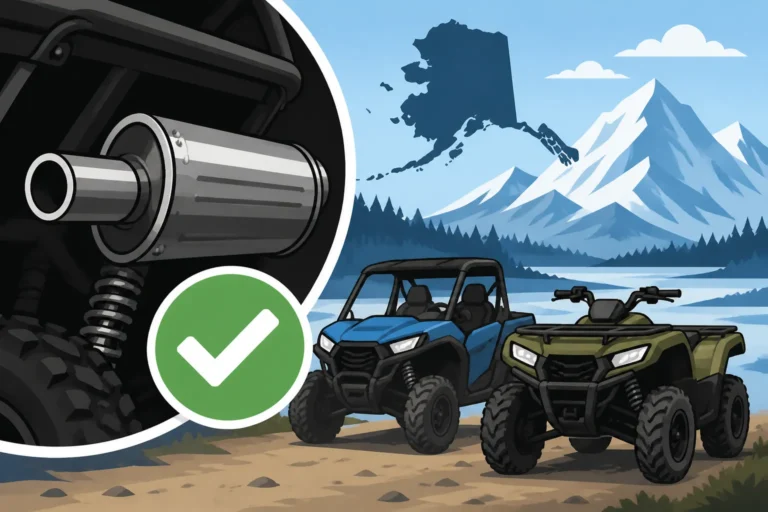
This is a critically important, yet often overlooked, piece of equipment, especially in Alaska's dry summer months. Every APV operated on public land must be equipped with a spark arrester. This device is designed to prevent hot carbon particles from escaping the exhaust system and potentially igniting dry grass, leaves, or other flammable materials along the trail. In a state prone to devastating wildfires, a spark arrester is a non-negotiable safety feature.
The spark arrester must be U.S. Forest Service approved. Most factory-installed mufflers on new ATVs and UTVs come with an integrated, approved spark arrester. However, if you've replaced your exhaust system with an aftermarket part, or if you have an older machine, you need to verify that it has a functioning and approved spark arrester. A quick visual inspection of your exhaust can usually confirm its presence; look for a screen or baffle inside the exhaust pipe. Without it, you're not just breaking the law, you're posing a significant fire risk to the Alaskan wilderness. This specific requirement is highlighted in [Alaska Spark Arrester Requirements].
Emission Control Systems for APVs
While Alaska's specific APV laws don't typically delve into the minutiae of catalytic converters or highly technical emission standards like those for road vehicles, the general expectation is that your machine should be reasonably well-maintained and not emitting excessive smoke or pollutants. Modern ATVs and UTVs are designed to meet federal emission standards, and maintaining your engine, air filter, and fuel system according to the manufacturer's recommendations usually keeps your machine in compliance.
Operating a machine that is visibly spewing black smoke or smelling strongly of unburnt fuel might draw the attention of law enforcement, not just for potential mechanical issues but for environmental impact. While there isn't a roadside emissions test for OHVs, responsible maintenance contributes to cleaner air and reduces your environmental footprint while enjoying Alaska's natural beauty.
Safety and Control: Brakes, Throttles, and More
Beyond lighting and emissions, the core components that allow you to safely control your machine are equally vital. Alaska's trails can be rugged and unpredictable, demanding reliable braking, responsive acceleration control, and structurally sound machines. These components are not merely convenience features; they are critical safety mechanisms that can mean the difference between an exhilarating ride and a dangerous incident.
Reliable Brakes: Stopping Power When You Need It
It goes without saying, but it's legally mandated nonetheless: your APV must be equipped with a braking system that is in good mechanical condition. This isn't about being able to skid to a stop dramatically; it's about having consistent, reliable stopping power across all four wheels (or whatever configuration your machine has). Imagine descending a steep, gravelly hill or needing to make an emergency stop for a moose that just stepped onto the trail. In these situations, properly functioning brakes are your primary defense.
Before every ride, especially after storage or if you notice any changes in performance, check your brake levers or pedals for proper feel, ensure your fluid levels are adequate, and listen for any grinding noises that might indicate worn pads. A trooper performing an [Alaska Equipment Checks by Troopers] might very well test your brakes. If your brakes feel spongy, make excessive noise, or fail to bring your machine to a quick and controlled stop, it's time for maintenance or repair before you head out.
Self-Closing Throttles: A Crucial Safety Feature
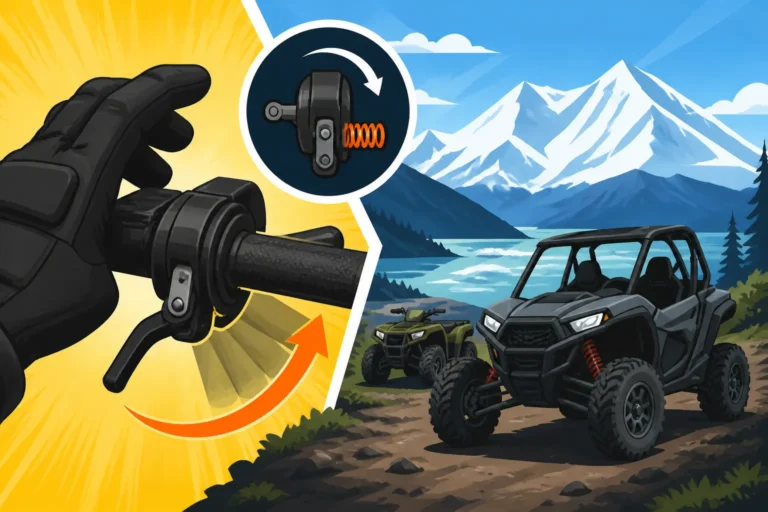
Another vital safety requirement for APVs in Alaska is a self-closing throttle. This means that if you release the throttle control, it should automatically return to the idle position. This feature is a safeguard against accidental acceleration, especially if you lose grip or fall off the machine. Without a self-closing throttle, if you were to release the throttle lever while encountering a bump or unexpected terrain, the machine could continue to accelerate, potentially leading to a runaway vehicle and a very dangerous situation.
This is a standard feature on virtually all modern ATVs and UTVs, but it's worth checking, particularly on older machines or if any modifications have been made to the handlebars or control systems. Ensure that the throttle cable is not sticky or kinked, and that the throttle mechanism moves freely and snaps back crisply when released. This simple check can prevent serious accidents and is a direct safety mandate under Alaska law. For more detailed information, see [Alaska Self-Closing Throttle Rules].
Intact Body Panels and Fenders
While not always explicitly listed with the same specificity as lights or brakes, the general expectation in Alaska is that your APV should be structurally sound and free from major damage that could pose a safety hazard. This includes having reasonably intact body panels and fenders. Fenders, in particular, serve a practical purpose: they help contain mud, rocks, and debris that your tires kick up, protecting both you and other riders from flying projectiles. A missing or severely damaged fender can spray mud and gravel directly at the rider behind you, creating a visibility hazard.
Moreover, intact body panels protect the internal components of your machine from the elements and trail hazards. While a few scratches and dings are part of the adventure, large missing panels or sharp, broken plastic could indicate a machine that is not well-maintained or could create a new snag point on brush or obstacles. A machine that looks like it's falling apart might also suggest other underlying maintenance issues, drawing unwanted attention from law enforcement during an inspection.
Passenger and Cargo Considerations
Riding an OHV in Alaska is often a shared experience, whether it's bringing a friend along, hauling camping gear, or transporting supplies for a remote cabin. However, safely accommodating passengers and securing cargo is not just a matter of convenience; it’s governed by specific regulations to prevent accidents and ensure everyone’s well-being. Overloading a machine or carrying passengers improperly can significantly alter its handling characteristics, making it unstable and dangerous.
Designated Seating and Passenger Safety
Alaska law is clear: an APV should not carry more passengers than it was designed to accommodate and is equipped with designated seating for. This means if your ATV is a single-rider model, it's typically illegal to have a passenger straddling the seat behind you. Many modern ATVs are designed as "two-up" models with an extended seat and footpegs for a passenger. Side-by-sides (UTVs) are typically designed with bench or bucket seating for multiple occupants, complete with seatbelts.
The key is "designated seating." If your machine doesn't have a specific passenger seat, footrests, and handholds (if applicable), it's not meant for a passenger. Carrying an extra person unsafely can shift the machine's center of gravity, making it much harder to control, especially on uneven terrain or during turns. Always check your owner's manual for your machine's specific passenger capacity and ensure any passengers are appropriately equipped with helmets and safety gear, especially if they are minors. [Alaska Passenger Helmet Rules] covers some of these requirements.
Securing Cargo Safely for the Journey
Whether you're packing for a weekend camping trip or hauling firewood, securing your cargo properly is essential. Loose items can shift during a ride, throwing off your balance, becoming entangled in the wheels, or even falling off the machine and creating a hazard for others. Alaska law doesn't detail every tie-down method, but it's implied that any cargo must be secured in a manner that does not interfere with the safe operation of the machine or endanger anyone.
Use strong bungee cords, ratchet straps, or cargo nets to tightly fasten all items to designated racks or cargo beds. Distribute weight evenly to maintain balance, especially on ATVs. Heavy items should be placed low and centered. Never overload your machine beyond its manufacturer's weight capacity, as this can strain the suspension, tires, and frame, compromising handling and braking performance. A well-known brand like SuperATV offers various cargo boxes and racks that can help riders organize and secure their gear effectively for any Alaskan adventure.
Towing Attachments and Sleds
Many Alaskans use their OHVs for utility, which often involves towing sleds, trailers, or other equipment. If your APV is equipped with a towing attachment, ensure it's robust, properly installed, and rated for the weight you intend to tow. Always respect your machine's towing capacity; exceeding it can damage your transmission, engine, and braking system, and severely compromise stability.
When towing a sled or small trailer, ensure the load is balanced and secured. If the towed item obscures your taillights or reflectors, you may need to add additional lighting or reflective tape to the rear of the sled for visibility, especially if you're on public roads or trails after dark. The same principles of visibility apply to anything you tow; if it's behind you, it needs to be seen. Also, be mindful that towing heavy loads will significantly increase your stopping distance and reduce your ability to maneuver quickly. Always adjust your speed and driving style accordingly.
Additional Equipment and Best Practices for Alaska Riders
While state law outlines the bare minimum, being a truly prepared and responsible rider in Alaska often means going beyond the basics. The unpredictable nature of the Alaskan wilderness and the potentially long distances between services call for a more comprehensive approach to equipment. Thinking ahead about what you might encounter can save you a lot of trouble and make your rides more enjoyable and safer.
Mud Flaps: Keeping Trails Clean and Visible
Alaska's trails are famous for mud, and for good reason! Many areas are wet, boggy, or feature glacial silt that turns to a thick, soupy mess. This is where mud flaps come in. Alaska law specifies that APVs operated on public roads or highways must be equipped with mud flaps on the rear. These are not just for aesthetics; they serve a crucial function. [Alaska Mud and Snow Flap Rules] outlines this requirement.
Mud flaps prevent your tires from spraying mud, rocks, and water onto other vehicles or riders, significantly improving visibility for those following behind you. Imagine riding on a dusty trail or a wet gravel road; without mud flaps, the rooster tail of debris can create a blinding cloud. This requirement is especially important when traveling on designated APV routes that might share space with conventional traffic or when riding in groups where visibility is key. Making sure your mud flaps are intact and effective is a simple step that shows consideration for others and ensures compliance. Aftermarket options, like those from SuperATV, can provide durable solutions for effective mud and debris control.
Essential Gear for Backcountry Travel
Beyond the legally required equipment, if you're heading into Alaska's vast backcountry, a few extra items should be considered mandatory. Cell service is spotty to non-existent off the main road system, so a satellite messenger or personal locator beacon (PLB) is a wise investment for emergency communication. A comprehensive first-aid kit is crucial, as help can be hours away. Tools for basic trailside repairs, such as a tire repair kit, small air compressor, wrench set, and spare spark plug, can turn a potential stranding into a minor delay.
Navigation tools, whether a GPS unit pre-loaded with local trails or detailed paper maps and a compass, are also vital. Water, extra food, and appropriate layers of clothing for sudden weather changes are common-sense items that are often overlooked. A winch on your UTV or a portable recovery device for an ATV can be a lifesaver if you get stuck in mud, snow, or a ditch. Preparing for self-sufficiency is a hallmark of responsible Alaskan adventuring.
Pre-Ride Checks and Maintenance Tips
The best equipment in the world won't do you any good if it's not maintained. Developing a consistent pre-ride checklist and adhering to a regular maintenance schedule is perhaps the most important "equipment requirement" of all.
Before every ride, quickly check:
- Tires: Pressure and condition (no cuts or bulges).
- Brakes: Functionality and fluid levels.
- Lights: Headlights, taillights, and any auxiliary lights.
- Throttle: Free movement and self-closing action.
- Fluids: Engine oil, coolant, and brake fluid levels.
- Fasteners: Ensure nuts and bolts are tight, especially on wheels and suspension components.
- Fuel: Enough for your planned trip, plus a reserve.
- Spark Arrester & Muffler: Intact and clear.
Regular maintenance, following your machine's owner's manual for oil changes, filter cleaning, and component lubrication, will ensure all your equipment functions as intended and keeps your machine reliable for years of Alaskan adventures. A well-maintained machine is a safe and compliant machine.
Navigating Local Ordinances and Enforcement
While state law provides a broad framework for OHV equipment requirements, the landscape of regulations in Alaska can become more intricate at the local level. Boroughs, cities, and even specific land management agencies can impose additional rules, especially concerning APV use on or near roads. Understanding this layered regulatory environment and knowing what to expect from law enforcement can prevent unpleasant surprises.
How Boroughs and Cities Can Add Their Own Rules
Alaska's diverse communities often have unique needs and concerns regarding OHV use, particularly when machines are operated within city limits or on specific borough-managed lands. This means that beyond state statutes, local ordinances can introduce additional equipment requirements. For example, some communities that permit APV road use might require turn signals or rearview mirrors, even if state law doesn't explicitly mandate them for all APVs. Others might have stricter noise limits or specific rules about where and when certain lights must be used.
Before riding your APV in an unfamiliar area, especially within or near populated areas, it's always prudent to check the local municipal code or contact the local police department or borough office. Many of Alaska's communities have opted out of general APV road use as discussed in [Eight Communities That Opted Out], but for those that do allow it, be prepared for potentially more stringent rules than you might find on a remote state trail.
What Troopers Look For During an Equipment Check
Alaska State Troopers and park rangers are often out on trails and roads, and they are well-versed in APV regulations. If you're stopped, they'll typically be looking for the fundamental equipment requirements. This includes functional headlights and taillights, an intact and U.S. Forest Service approved spark arrester, a working muffler, proper braking, and a self-closing throttle. They might also visually inspect for general safety concerns, such as severely damaged components or overloaded machines.
While some inspections are routine, others might be prompted by observed unsafe riding, excessive noise, or an accident. Having all your documents—such as your APV registration and proof of ownership—in order and readily accessible is also important, as outlined in [What a Trooper Can Ask to See]. A clean, well-maintained machine with all required equipment in good working order is far less likely to draw prolonged scrutiny and demonstrates you're a responsible rider.
Penalties for Non-Compliance
Operating an OHV without the required equipment in Alaska can lead to various penalties. For minor infractions, you might receive a warning, especially if you're a new rider or the issue is easily rectifiable. However, more serious or repeated violations can result in citations, which typically carry fines. These fines can add up, especially if you have multiple equipment deficiencies.
In some cases, if your machine is deemed significantly unsafe or lacking critical equipment, a trooper might even prohibit you from continuing your ride until the issue is resolved. This could mean having to find a way to transport your machine off the trail or road, which can be a major inconvenience and expense. Ignorance of the law is generally not a valid defense, so taking the time to understand and comply with all equipment requirements is the best way to ensure your Alaskan OHV adventures are safe, legal, and free from unexpected headaches.
Here's a quick reference table for key equipment:
| Equipment Category | Specific Requirement | Purpose | Common Issue to Check |
|---|---|---|---|
| Lighting | Headlight (visible 100 ft) | Illuminates path, makes rider visible to others | Dim bulb, broken lens, improper aim |
| Taillight (visible 1,000 ft) | Makes machine visible from behind | Burnt out bulb, dirty lens | |
| Red Rear Reflector | Passive visibility, especially if taillight fails | Missing, broken, or faded | |
| Sound & Emissions | Muffler (good working order, no cutouts) | Reduces noise pollution, ensures considerate operation | Rust holes, modifications for louder sound |
| USFS-Approved Spark Arrester | Prevents wildfires from exhaust sparks | Missing, clogged, or non-approved aftermarket | |
| Control & Safety | Functional Braking System | Provides reliable stopping power | Spongy feel, grinding noise, low fluid |
| Self-Closing Throttle | Prevents accidental acceleration | Sticky cable, throttle not returning to idle | |
| Intact Body Panels/Fenders | Protects rider/components, contains debris (fenders) | Large missing pieces, sharp broken plastic | |
| Additional/Road Use | Mud Flaps (on public roads/highways) | Prevents debris spray onto other vehicles/riders | Missing, torn, or insufficient coverage |
| Designated Seating for Passengers | Ensures safe and stable passenger transport | Attempting to carry passenger on single-rider machine |
Disclaimer
This article is for general informational purposes only and does not constitute professional advice. Laws, prices and regulations vary by location and change over time. Consult a qualified professional for guidance on your specific situation.