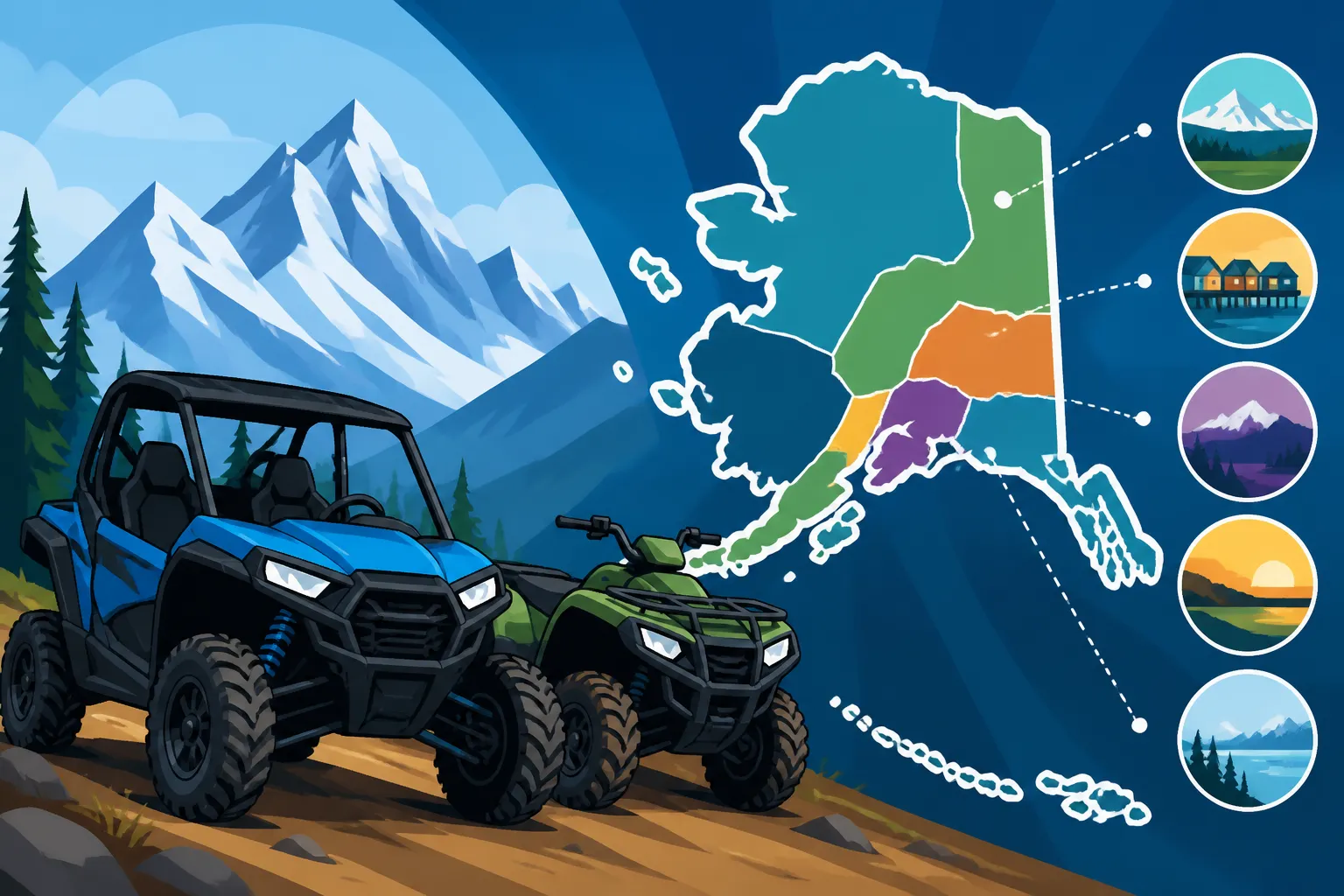
Alaska APV Rules by Community
It can be incredibly frustrating to hit the road (or trail!) on your ATV or UTV, only to wonder if you’re actually allowed to be there. Alaska's vastness and independent spirit might make you think "anything goes," but when it comes to riding All-Purpose Vehicles (APVs) on community roads, local rules can drastically differ from statewide regulations. This guide will walk you through the patchwork of rules, helping you understand where you can ride legally and how to avoid an unexpected citation in different Alaskan towns.
Understanding Alaska's Statewide APV Road Rules
Before we dive into community-specific ordinances, it's essential to understand the baseline established by the state of Alaska. The state generally permits the operation of APVs on public highways and roads if certain conditions are met. This can be a huge convenience, allowing riders to connect trails, access services, or even run quick errands. However, this statewide permission isn't a blanket pass for every road in every town.
The General State Provisions for APV Road Use
Alaska law allows APVs to operate on roads with a posted speed limit of 45 mph or less, provided the vehicle is equipped with specific safety features. This means your quad or side-by-side needs working headlights, taillights, brake lights, and a horn. It also has to have a muffler with an approved spark arrester, and the tires need to be in good shape. Many riders invest in aftermarket parts, perhaps from a company like SuperATV, to ensure their machine meets these road-legal requirements, especially for lighting and mirrors. Remember, having a valid driver's license and proof of liability insurance are non-negotiable for anyone operating an APV on a public road in Alaska. [Alaska APV License and Insurance Rules]
Why the Statewide Rules Aren't Always Enough
The biggest mistake many riders make is assuming that because the state allows APVs on certain roads, every community within that state will follow suit. This is a common misconception that can lead to fines and frustration. Alaska's laws empower individual municipalities and boroughs to enact their own ordinances, which can be more restrictive than state law, especially concerning road access. What's perfectly legal in a rural area like the Mat-Su Valley might land you a ticket in a more densely populated city. It's truly a "know before you go" situation, and neglecting local regulations can quickly turn a fun ride into a costly lesson.
Communities That Have Opted Out of Statewide APV Road Access
One of the most significant aspects of Alaska's APV rules is the provision that allows communities to "opt out" of the state's general permission for APV road use. This means that even if your machine is fully equipped and you're licensed and insured, you simply cannot ride it on public roads in certain towns. These bans are often put in place due to concerns about noise, safety, traffic congestion, or compatibility with local infrastructure. It's a harsh reality for riders who might just want to cross town to reach a trail.
The Eight Alaska Towns That Ban APV Road Use
As of the current understanding of Alaska's municipal codes, there are eight communities that have formally banned or severely restricted APV use on public roads within their municipal boundaries. These aren't just minor restrictions; they are outright prohibitions on riding your ATV or UTV on city streets, regardless of whether you're just trying to get from point A to point B. This list includes some of Alaska's largest population centers, making it crucial for visitors and new residents to be aware. [The Eight Alaska Towns That Ban APV Road Use]
List of Communities with General APV Road Bans (as of my knowledge base):
| Community | APV Road Access Status | Common Reasons for Ban |
|---|---|---|
| Anchorage | Generally Banned | Public safety, noise, traffic |
| Fairbanks | Generally Banned | Public safety, noise, traffic |
| Juneau | Generally Banned | Narrow streets, limited space |
| Wasilla | Generally Banned (with very limited exceptions) | Safety, residential character |
| Palmer | Generally Banned (with very limited exceptions) | Safety, residential character |
| Kenai | Generally Banned | Safety, residential character |
| Soldotna | Generally Banned | Safety, residential character |
| Homer | Generally Banned | Safety, residential character, tourism |
Note: Always double-check current local ordinances as they can change.
What a "Ban" Really Means for Riders
When a community bans APV road use, it typically means that operating an ATV or UTV on any public street, road, or highway within the city limits is prohibited. This isn't just about joyriding; it often includes simply crossing a paved road to get to an unpaved trail, or even driving down a residential street to access your own property. It's a hard stop for APV use in those areas, and enforcement can be quite strict. Troopers and local police are well-versed in these ordinances and will issue citations. The only exceptions might be for emergency services or specific utility work, but these are very narrow and don't apply to recreational riding. You might think about getting aftermarket parts for safety or performance from a company like SuperATV, but those enhancements won't change the fact that you can't ride where a ban is in place.
Navigating Communities with Specific Ordinances or Partial Restrictions
While some communities implement outright bans, many others have more nuanced rules. These ordinances might allow APV use in certain areas, during specific times, or for particular purposes, while restricting it elsewhere. These are the places where understanding the fine print truly matters, as a minor oversight could still lead to a ticket. It's not always a simple yes or no; sometimes, it's a "yes, but…"
Communities That Allow Limited APV Road Use
Outside of the eight communities with general bans, many other towns and boroughs in Alaska permit APV road use in line with the statewide statute, or with their own specific carve-outs. For example, some smaller communities might allow APVs on all gravel roads but prohibit them on paved streets. Others might permit road crossings at designated intersections only, or allow APVs for purposes like subsistence hunting or accessing remote cabins, but not for general recreation within town limits. [Alaska APV Road Rules Explained] You'll find that in many of Alaska's bush communities, ATVs and UTVs are a primary mode of transportation, and local ordinances reflect this by providing much broader access.
Examples of Specific Local Regulations
Let's look at some hypothetical examples of how local rules might play out. In a town like Nome, which has more extensive APV access than many road-system communities, you might be allowed to ride your APV on most city streets, perhaps with specific speed limits or curfews. Meanwhile, a community closer to Anchorage might allow APVs on unpaved borough roads but ban them on all state-maintained roads passing through town. [Nome's Citywide OHV Access in Alaska]
Another common local rule involves trails that double as roads or easements. In some areas, particularly in more rural parts of the Mat-Su Valley or Interior Alaska, unmaintained "roads" might technically be public rights-of-way where APVs are entirely legal, even if they're not fit for conventional vehicles. Always look for signage or check with local authorities. A well-placed [Alaska Trailhead Pass Cost] can get you access to many designated riding areas, but it doesn't give you permission to ride to those areas on banned roads.
Special Cases: Road Crossings and Agricultural Use
Even in communities with restrictions, there are often allowances for quick, direct road crossings to access an authorized riding area or private property. These crossings usually come with strict rules: you must proceed directly across, yield to all other traffic, and often stay within a specific speed limit. Similarly, APVs used for agricultural purposes, such as ranching or farming, might have exemptions for short distances on public roads connecting fields, provided they are clearly marked and operated safely. These are typically very specific and require careful reading of the local code. For instance, if you're using your quad for work, you might consider heavy-duty axles or larger tires from a company like SuperATV to handle the load, but make sure your modifications still comply with road-use safety standards for any brief road travel.
How to Research APV Rules for Your Destination
Given the complex and varied nature of APV rules across Alaska, the most important thing you can do as a rider is to be proactive in your research. Don't assume anything. A few minutes of investigation can save you hundreds in fines and a lot of headaches.
Checking Municipal Codes and Borough Ordinances
The most definitive source for local APV rules is the community's own municipal code or borough ordinance. Most cities and boroughs in Alaska have their codes available online through their official websites. You'll typically find these under sections related to "Traffic," "Vehicles," or "Recreation." Look for terms like "All-Purpose Vehicle," "Off-Highway Vehicle (OHV)," "ATV," or "UTV." Be prepared to read through legalistic language; sometimes the most important details are buried deep within. [Checking a City Code Before You Ride]
Contacting Local Authorities and Visitor Centers
If you can't find clear answers online, or if the language is confusing, don't hesitate to reach out directly. The local police department or borough sheriff's office can provide clarification. Alternatively, visitor centers or local chambers of commerce in smaller towns are often excellent resources; they deal with these kinds of questions frequently and can point you to the correct information or contact person. It's always better to ask a question beforehand than to explain yourself to a trooper after receiving a ticket.
Looking for Signage and Posted Information
When you arrive in an unfamiliar area, pay close attention to signs. Many communities will have explicit signage at their entry points, or along roads and trails, indicating APV restrictions or allowances. These signs might specify speed limits, prohibited areas, or requirements like helmet use for certain age groups. While not all areas are perfectly signed, visible notices are a clear indicator of local intent. Similarly, official kiosks at trailheads or campgrounds often provide crucial local regulations relevant to APV use.
| Type of Community | Typical APV Road Access | Key Action for Riders |
|---|---|---|
| Large Cities (e.g., Anchorage, Fairbanks) | Generally Banned on all public roads | Do NOT assume any road access. Confirm before arriving. |
| Mid-Sized Towns (e.g., Wasilla, Palmer) | Generally Banned, very limited exceptions | High likelihood of restrictions. Check municipal code. |
| Rural Boroughs (e.g., Mat-Su Borough, Kenai Peninsula Borough) | Mixed; some roads allowed, some restricted by local ordinance | Requires research for specific areas/roads. Check borough/city code. |
| Bush Communities (e.g., Nome, Bethel) | Often extensive access, but still check local rules | Likely broad access, but don't assume statewide rules only. Check village council/city. |
| Designated Riding Areas (e.g., Knik River PUA) | Allowed within designated area, but check access roads | Focus on the access points and connecting routes. [Knik River Public Use Area in Alaska] |
Navigating Alaska's APV rules by community can feel like a maze, but with a bit of foresight and research, you can ensure your adventures stay legal and enjoyable. Remember, the beauty of riding in Alaska is immense, but respecting local laws is paramount to preserving access for everyone.
Disclaimer
This article is for general informational purposes only and does not constitute professional advice. Laws, prices and regulations vary by location and change over time. Consult a qualified professional for guidance on your specific situation.